Zuccheri e nucleobasi della spina dorsale
Trovati 1000 prodotti di "Zuccheri e nucleobasi della spina dorsale"
7-Cyano-7-deaza-2’-deoxyguanosine
CAS:7-Cyano-7-deaza-2’-deoxyguanosine is a pyrrole nucleoside analog that has been shown to inhibit the replication of herpes simplex virus type 1 and 2 in human cell lines. 7-Cyano-7-deaza-2’-deoxyguanosine is a synthetic nucleoside analog that is structurally similar to deoxyadenosine, but with a cyanide group instead of an oxygen atom. This compound has been shown to have the same biochemical properties as deoxyadenosine, including inhibiting the incorporation of uridine into RNA and DNA. In addition, 7-Cyano-7-deaza-2’-deoxyguanosine inhibits the synthesis of proteins from amino acids by competitive inhibition of ribonucleotide reductase, which catalyzes the conversion of ribonucleotides to deoxyribonucleotides. The enzyme's functionFormula:C12H13N5O4Purezza:Min. 95%Colore e forma:PowderPeso molecolare:291.26 g/molN2-Boc-guanine-9-acetic acid
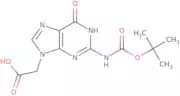
CAS:N2-Boc-guanine-9-acetic acid is a versatile building block that is used as a reagent, speciality chemical and intermediate in the synthesis of complex compounds. It has shown high quality, high purity and usefulness as an intermediate in the synthesis of organic molecules. This compound can be used to generate large quantities of guanine derivatives which are important building blocks for many types of research chemicals. N2-Boc-guanine-9-acetic acid is also useful as a reaction component or scaffold in organic syntheses.Formula:C12H15N5O5Purezza:Min. 95 Area-%Colore e forma:White Off-White PowderPeso molecolare:309.28 g/mol3’-β-Azido-2’,3’-dideoxy-5-fluorouridine
CAS:Please enquire for more information about 3’-beta-Azido-2’,3’-dideoxy-5-fluorouridine including the price, delivery time and more detailed product information at the technical inquiry form on this page
Purezza:Min. 95%N2-Isobutyrylguanine
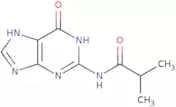
CAS:N2-Isobutyrylguanine is a nucleobase that is synthesized by the activation of formyl group. It has been shown to be an effective inhibitor of RNA synthesis in vitro and in vivo, with a potency similar to that of guanine. The solid-phase synthesis method for N2-Isobutyrylguanine was developed by the use of chloride as a reactive agent. This nucleobase has also been used as monomers to prepare polymers and sulfoxides, which are insoluble polymers with enhanced solubility. N2-Isobutyrylguanine can be obtained by reacting phosphite with tautomers or by using molecular modeling methods.Formula:C9H11N5O2Purezza:Min. 95%Colore e forma:PowderPeso molecolare:221.22 g/mol3-Methyluracil
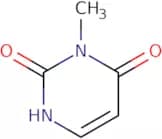
CAS:3-Methyluracil is a molecule with the molecular formula CH3CHO. It has a protonated form, which is NH2CH2COOH, and an unprotonated form, which is NHCH2COOH. The protonation of 3-methyluracil can be seen in the hydrogen bonding between the two molecules. 3-Methyluracil is found in clinical studies as an effective treatment for obesity. It also has been shown to have nucleobase sequence specificity and can be used to detect adenosine in RNA sequences. 3-Methyluracil is a nucleophilic base that can bond with hydroxide ions from water or other protic solvents. This reaction results in the molecule becoming more acidic, which can be seen by the decrease in pH level when it comes into contact with hydrochloric acid.Formula:C5H6N2O2Purezza:Min. 95 Area-%Colore e forma:White Off-White PowderPeso molecolare:126.11 g/molN6-Ethenoadenine
CAS:N6-Ethenoadenine is a nucleoside that is generated during DNA repair. It is formed by the enzymatic activity of the enzyme N6-adenosyltransferase in the presence of ATP and S-adenosylmethionine. It has been shown to be a potent inducer of DNA damage and mutagenesis, as well as an inhibitor of polymerase chain reaction (PCR) and DNA replication. N6-Ethenoadenine is also an agonist for P2Y receptors, which are important in chemical biology. This nucleoside may serve as a potential biomarker for genotoxic events, such as chemotherapy treatments or exposure to ionizing radiation.Formula:C7H5N5Purezza:Min. 95%Colore e forma:White PowderPeso molecolare:159.15 g/mol3’-Deoxy-3’-fluoro-6-thioinosine
CAS:Please enquire for more information about 3’-Deoxy-3’-fluoro-6-thioinosine including the price, delivery time and more detailed product information at the technical inquiry form on this page
Purezza:Min. 95%Xanthine sodium salt monohydrate
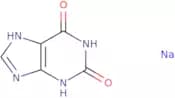
CAS:Xanthine sodium salt monohydrate is a dietary supplement that is used to treat metabolic disorders such as hyperuricemia and gout. It also has antiviral effects against herpes simplex virus-1 (HSV-1) and type-2 (HSV-2). Xanthine sodium salt monohydrate inhibits the production of viral DNA polymerase, which causes cell death by inhibiting the synthesis of proteins vital for cell division. Xanthine sodium salt monohydrate can be used to inhibit the growth of cancer cells in vitro. The mechanism of action is not yet fully understood, but it is thought that xanthine may inhibit phosphodiesterase activity or have a direct effect on the cell membrane.Formula:C5H3N4NaO2•H2OPurezza:Min. 95 Area-%Colore e forma:PowderPeso molecolare:192.11 g/molAdenine hydrochloride
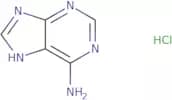
CAS:Purine nucleobase; component of nucleic acids and coenzymesFormula:C5H6ClN5Purezza:Min. 98 Area-%Colore e forma:Off-White PowderPeso molecolare:171.59 g/mol5-Methylcytosine
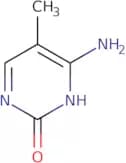
CAS:5-Methylcytosine is a nucleic acid that is found in the DNA and RNA of the cell. It is an important component of methylation, which is the process by which a methyl group is added to a molecule. This process can lead to cellular transformation, a process that can cause cancer. 5-Methylcytosine has also been shown as a molecular pathogenesis factor in infectious diseases such as HIV and herpes simplex virus type 1. The presence of 5-methylcytosine in nuclear DNA has been detected by analytical techniques such as gas chromatography/mass spectrometry (GC/MS). There are many analytical methods, including GC/MS, that can be used to detect 5-methylcytosine in cellular nuclei.
Formula:C5H7N3OPurezza:Min. 95%Colore e forma:PowderPeso molecolare:125.13 g/mol3’-Deoxy-3’-fluoro-6-azauridine
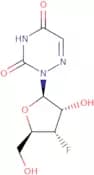
CAS:Please enquire for more information about 3’-Deoxy-3’-fluoro-6-azauridine including the price, delivery time and more detailed product information at the technical inquiry form on this pagePurezza:Min. 95%5-Hydroxymethyluridine
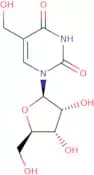
CAS:5-Hydroxymethyluridine is a nucleoside that is synthesized from uridine. It has shown to be effective in the treatment of inflammatory diseases, such as rheumatoid arthritis, and also has antiviral activity against herpes simplex virus. 5-Hydroxymethyluridine has been shown to have a high affinity for hydrophilic interaction chromatography (HIC) and can be used to purify glycosylases. This compound can also inhibit the formation of cancer cells by inhibiting the transcriptional activity of RNA polymerase II. 5-Hydroxymethyluridine has been found to demethylate DNA while maintaining its ability to bind with DNA-dependent RNA polymerase II. This process is catalyzed by glycosylases and hydroxylases that are found in the body.
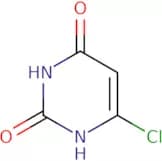
Formula:C10H14N2O7Purezza:Min. 95%Colore e forma:PowderPeso molecolare:274.23 g/mol6-Chlorouracil
CAS:Intermediate in the synthesis of alogliptinFormula:C4H3ClN2O2Colore e forma:White Slightly Yellow PowderPeso molecolare:146.53 g/mol8-Aminopurine
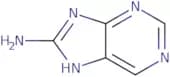
CAS:8-Aminopurine is an aminopurine that is used as a research tool in magnetic resonance spectroscopy. The proton magnetic resonance spectrum of 8-aminopurine shows two characteristic peaks at 3.0 and 4.2 ppm, which are assigned to the aminopurine tautomers (3-HPA, 4-HPA). The kinetic stability of 8-aminopurine in water is pH dependent and has been shown to be strongly dependent on the presence of aldehyde oxidase (AO) activity. AO activity can be inhibited by the addition of dimethylformamide or other non-specific inhibitors such as 2,6-dichloroisonicotinic acid.
Formula:C5H5N5Purezza:Min. 95%Colore e forma:White PowderPeso molecolare:135.13 g/molN9-Benzyladenine
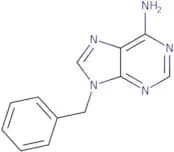
CAS:N9-Benzyladenine is a drug that regulates the activity of adenosine receptors. It is an endogenous substance found in plants and animals, but can also be synthesized chemically. N9-Benzyladenine has been shown to inhibit protein synthesis by binding to cyclic nucleotide phosphodiesterases, resulting in the accumulation of cyclic AMP and activation of adenylate cyclase. This leads to an increase in intracellular cAMP levels that is mediated by Gs protein coupled receptors. N9-Benzyladenine has been shown to have anti-inflammatory properties, which may be due to its ability to inhibit the release of tumor necrosis factor-α (TNF-α).
Formula:C12H11N5Purezza:Min. 95%Colore e forma:PowderPeso molecolare:225.25 g/mol6-Phenyl-2-thiouracil
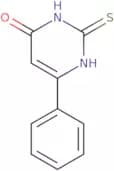
CAS:6-Phenyl-2-thiouracil (6PTU) is an alkylthio group that inhibits the growth of microorganisms by binding to DNA. 6PTU binds to the oxygen nucleophiles in DNA and prevents transcription and replication. It also has a positive effect on the synthesis of proteins, which may be due to its ability to regulate gene transcription. 6PTU has been shown to inhibit cell growth in culture by blocking protein synthesis. This drug is used as an analytical method for determining urinary glucose levels in animals because it reacts with glucose in urine samples. The reaction produces a chromatographic peak that can be quantified using an electrochemical detector.
Formula:C10H8N2OSPurezza:Min. 95%Colore e forma:PowderPeso molecolare:204.25 g/mol6-Methyluracil
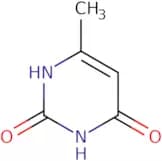
CAS:6-Methyluracil is an antimetabolite that inhibits protein synthesis and is therefore used in the treatment of infectious diseases. 6-Methyluracil has two hydroxyl groups, which are located in adjacent positions on the ring. The optimum concentration for this drug is 3-10 μM, which can be achieved with a malonic acid buffer solution at pH 7.4. 6-Methyluracil reacts with sodium succinate to form an acid complex, which may have antiinflammatory activity. 6-Methyluracil has been shown to inhibit prostaglandin synthesis and exhibits a reaction with radiation to produce photoproducts that can be detected by analytical chemistry.Formula:C5H6N2O2Purezza:Min. 95%Colore e forma:PowderPeso molecolare:126.12 g/mol5-Aminouracil
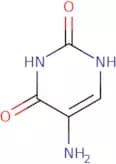
CAS:5-Aminouracil is a pyrimidine nucleoside that is used in the treatment of cancer, psoriasis and other autoimmune disorders. 5-Aminouracil is a prodrug that undergoes intracellular transformation to become an inhibitor of DNA synthesis. It promotes apoptosis by inhibiting the production of RNA and protein synthesis, leading to cell death. 5-Aminouracil has been shown to be effective against malignant cells in tissue culture as well as various types of cancer cells. A study using hydrogen bonding interactions showed that 5-aminouracil binds to the ribosomal protein L10 and inhibits its function in the polymerase chain reaction (PCR). Molecular docking studies have also shown that this drug can bind with redox potentials in both the active site and ligand binding site of human topoisomerase II alpha, which may lead to inhibition of enzyme activity or cell death.Formula:C4H5N3O2Purezza:Min. 95%Colore e forma:White PowderPeso molecolare:127.1 g/molN2,9-Diacetylguanine
CAS:N2,9-Diacetylguanine is a synthetic molecule that can be used to inhibit the replication of herpes simplex virus. It has been found to inhibit the growth of viruses in vitro by binding to the viral DNA and inhibiting viral RNA synthesis. N2,9-Diacetylguanine is also a substrate for acetylation and may undergo this reaction with acetyl coenzyme A to form N4,9-diacetylguanine. The acetylated form of guanine inhibits the virus by blocking its ability to replicate DNA. The potential mechanism for this drug's anti-viral activity includes inhibition of the enzyme ribonucleotide reductase, which converts ribonucleotides into deoxyribonucleotides.Formula:C9H9N5O3Purezza:Min. 95%Colore e forma:Off-White PowderPeso molecolare:235.2 g/mol3’-Azido-3’-deoxyguanosine
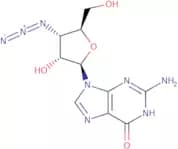
CAS:Please enquire for more information about 3’-Azido-3’-deoxyguanosine including the price, delivery time and more detailed product information at the technical inquiry form on this page
Formula:C10H12N8O4Purezza:Min. 95%Peso molecolare:308.09815