Zuccheri e nucleobasi della spina dorsale
Gli zuccheri dello scheletro e le basi azotate sono componenti essenziali degli acidi nucleici come DNA e RNA. Lo scheletro è composto da gruppi zuccheri e fosfati, mentre le basi azotate formano il codice genetico attraverso l'appaiamento delle basi. Questi composti sono fondamentali nello studio della genetica e della biologia molecolare. Presso CymitQuimica, è possibile trovare una varietà di zuccheri dello scheletro e basi azotate per la ricerca e l'uso in laboratorio.
Trovati 1000 prodotti di "Zuccheri e nucleobasi della spina dorsale"
Ordinare per
Purezza (%)
0
100
|
0
|
50
|
90
|
95
|
100
2-Thioxanthine
CAS:2-Thioxanthine is a hydrated form of xanthine, which is a purine base that occurs in all living cells. This compound has been shown to be able to inhibit the growth of resistant mutants and the formation of atherosclerotic lesions in mice. 2-Thioxanthine also inhibits the transfer reactions that are required for bacterial DNA synthesis. The stability of 2-thioxanthine can be increased by forming stable complexes with hydrochloric acid and by reducing the pH to less than 7. 2-Thioxanthine has been shown to have genotoxic effects on mouse liver cells and human fibroblasts, as well as pharmacological properties against cardiovascular disease.Formula:C5H4N4OSPurezza:Min. 95%Colore e forma:PowderPeso molecolare:168.18 g/mol5-Ethyluracil
CAS:<p>5-Ethyluracil is a nucleobase that is structurally similar to thymine. It inhibits the replication of human mitochondrial DNA and herpes simplex virus type-1 (HSV-1) by binding with the viral nucleic acid. 5-Ethyluracil has been shown to be an effective antiviral agent in clinical trials, where it was found to inhibit the replication of HSV-1 in both HIV-positive and HIV-negative patients. 5-Ethyluracil has also been shown to have an inhibitory effect on mammalian cells and has been used for treatment of certain types of cancer. This drug's low energy makes it useful as a topical analgesic. The glycosidic bond makes this drug water soluble, which allows for its use as an antiseptic or disinfectant. 5-Ethyluracil is metabolized by hydrochloric acid, which produces urate, ammonia, and carbon dioxide. This drug can be</p>Formula:C6H8N2O2Purezza:Min. 95%Colore e forma:PowderPeso molecolare:140.14 g/mol3’-Azido-3’-deoxy-5-fluorouridine
CAS:Please enquire for more information about 3’-Azido-3’-deoxy-5-fluorouridine including the price, delivery time and more detailed product information at the technical inquiry form on this pagePurezza:Min. 95%N6-(2-Isopentenyl)adenine
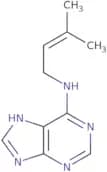
CAS:<p>N6-(2-Isopentenyl)adenine is a component of some nucleic acid molecules and can be synthesized from adenosine. It is used in vitro as a matrix effect to enhance the production of enzymes that are involved in the synthesis of amino acids, peptides, and proteins. N6-(2-Isopentenyl)adenine has been shown to stimulate the activity of enzymes such as urease, glucose oxidase, and horseradish peroxidase. This compound has been found to inhibit the replication of infectious agents by binding to DNA or RNA. The enzyme activities that are stimulated by this substance are important for the synthesis of essential biochemical compounds such as proteins and amino acids. In addition, it has been shown that N6-(2-Isopentenyl)adenine can inhibit autoimmune diseases and cytokinin.</p>Formula:C10H13N5Purezza:Min. 95%Colore e forma:White PowderPeso molecolare:203.24 g/mol9-Deazaguanine
CAS:<p>9-Deazaguanine is an analog of guanine, which has inhibitory properties. It reacts with the hydrogen bond of the enzyme and prevents its reaction with a substrate. 9-Deazaguanine binds to the target enzymes trifluoroacetic acid (TFA) and hydrogen bond interactions with water molecules. The reaction mechanism is based on the competitive inhibition of TFA, which is an important enzyme in DNA synthesis. 9-Deazaguanine inhibits the growth of k562 cells by inhibiting protein synthesis at specific sites in the ribosome. 9-Deazaguanine also shows inhibitory properties against autoimmune diseases and infectious diseases because it inhibits immune system reactions that are mediated by antibodies and T cells.</p>Formula:C6H6N4OPurezza:Min. 95%Colore e forma:PowderPeso molecolare:150.14 g/mol3’,5’-Bis-O-benzoyl-2’-deoxy-2’-fluoro-β-D-arabino-6-azidouridine
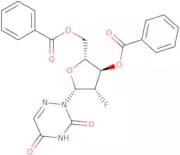
CAS:Please enquire for more information about 3’,5’-Bis-O-benzoyl-2’-deoxy-2’-fluoro-beta-D-arabino-6-azidouridine including the price, delivery time and more detailed product information at the technical inquiry form on this pagePurezza:Min. 95%9N-Trityl Guanine
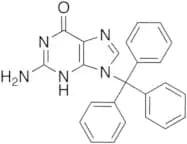
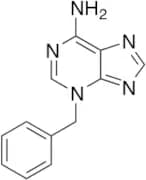
CAS:Prodotto controllato<p>Applications Protected Guanine.<br>References Hakimelahi, G., et al.: J. Med. Chem., 44, 3710 (2001),<br></p>Formula:C24H19N5OColore e forma:NeatPeso molecolare:393.443-Benzyladenine
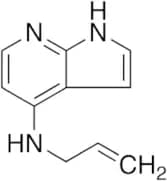
CAS:Prodotto controllato<p>Applications 3-BENZYLADENINE (cas# 7280-81-1) is a useful research chemical.<br></p>Formula:C12H11N5Colore e forma:NeatPeso molecolare:225.25N-Allyl-1,7-dideazaadenine
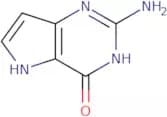
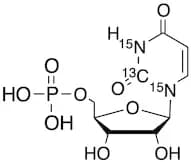
CAS:Prodotto controllato<p>Applications Used in the preparation of pyrrolotriazines.<br></p>Formula:C10H11N3Colore e forma:NeatPeso molecolare:173.21Uracil Lyxonucleoside-13C,15N2 5'-Phosphate
CAS:Prodotto controllato<p>Applications Uracil Lyxonucleoside 5'-Phosphate is an intermediate in the synthesis of Trilithium UDP-glucuronic Acid-13C1, 15N2 (T886287), which is an isotope labelled analog of Trisodium UDP-glucuronic Acid (T886285). Trisodium UDP-glucuronic Acid is a reactant used in the enzymatic preparation of β-glucuronides.<br>References Stevenson, D.E., et. al.: Collect Czech. Chem. C., 65, 117 (2000); Robotham, S.A., Brodbelt, J.S.: Biochem. Pharmacol., 82, 1764 (2011); Kren, V., et. al.: Drug Metab. Dispos., 28, 1513 (2000)<br></p>Formula:C813CH1315N2O9PColore e forma:NeatPeso molecolare:327.161,3-Diethyl-5-nitroso-6-aminouracil
CAS:Prodotto controllato<p>Applications 1,3-Diethyl-5-nitroso-6-aminouracil (cas# 89073-60-9) is a compound useful in organic synthesis.<br></p>Formula:C8H12N4O3Colore e forma:NeatPeso molecolare:212.218-Azahypoxanthine
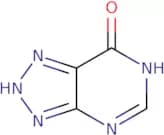
CAS:<p>8-Azahypoxanthine is a hydroxyl analog of hypoxanthine. It contains a nitrogen atom in place of the oxygen atom on the 2-position. 8-Azahypoxanthine has been shown to be an effective inhibitor of purine biosynthesis in yeast cells and can be used as a replacement for xanthine during the synthesis of adenosine triphosphate (ATP) from uracil. 8-Azahypoxanthine was found to have good detection sensitivity, with an estimated detection limit of 0.2 µM. The optimum pH for this compound is 7.8, which is similar to that of wild type strain and tissue culture media. Mutants resistant to 8-azahypoxanthine were generated by exposure to high concentrations (>100 mM) for long periods (>2 days). Mutant strains showed no detectable enzyme activity against orotic acid or glycosidic bond formation with erythromycin</p>Purezza:Min. 95%Colore e forma:PowderPeso molecolare:137.1 g/mol7-Methylguanine
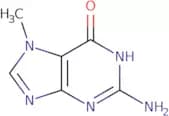
CAS:Temozolomide is an anticancer drug that is used in the treatment of malignant brain tumors. It is a prodrug which undergoes conversion to its active form 7-methylguanine by deamination and oxidation. Temozolomide inhibits viral replication by inhibiting the synthesis of nuclear DNA and blocking the progression of RNA polymerase. The reaction mechanism involves oxidative injury to DNA, leading to crosslinking and breakage with subsequent inhibition of polymerase chain reaction amplification. Temozolomide has been shown to have carcinogenic potential in laboratory animals. This drug has been shown to have biochemical properties that are similar to those found in other drugs such as cisplatin, vinblastine, and adriamycin, which also inhibit cellular growth through reactive oxygen species (ROS) production. Structural analysis has revealed that temozolomide binds tightly to nuclear DNA with a conformation that is similar to the natural substrate for DNA gyrase, topFormula:C6H7N5OPurezza:Min. 95 Area-%Colore e forma:Slightly Brown PowderPeso molecolare:165.15 g/mol5-Bromo-6-azauracil
CAS:5-Bromo-6-azauracil is a nucleophilic compound that can be used to treat wastewater. It is also able to lyse cells and has been used as an immobilizing agent. The reactive nature of 5-Bromo-6-azauracil enables it to undergo nucleophilic substitutions with amines, which are present in the cell wall and other biomolecules. This process results in the formation of amide bonds, which leads to the inhibition of protein synthesis. 5-Bromo-6-azauracil has shown inhibitory effects on glucans, which may be due to its ability to form covalent bonds with glucose molecules.Formula:C3H2BrN3O2Purezza:Min. 95%Colore e forma:White To Off-White SolidPeso molecolare:191.97 g/molN9-Methyladenine
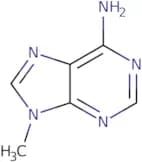
CAS:N9-Methyladenine is a purine derivative that has been shown to be an antagonist at the adenosine receptor. It can be synthesized by reacting N6-benzoyladenine with methanol, followed by treatment with aqueous sodium hydroxide and hydrogen peroxide. The molecule is planar, with a neutral pKa of 7.4. Proton and nitrogen NMR spectra were obtained for this compound, which showed it to have two hydrogen bonds and one intermolecular hydrogen bond. The proton resonances are observed at 2.97 ppm (H1) and 3.27 ppm (H2).Formula:C6H7N5Purezza:Min. 95%Colore e forma:PowderPeso molecolare:149.15 g/mol7-Methyladenine
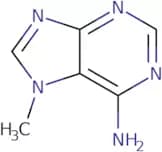
CAS:7-Methyladenine is a nitrogen-containing compound that has been shown to cause an increase in renal blood flow. It is also a synthetic estrogen. 7-Methyladenine is mainly metabolized by methylation, and it can be detected in urine samples. This substance has been shown to have a direct effect on cardiac contractility and blood pressure. 7-Methyladenine also has the ability to stimulate the growth of cells and tissues, as well as being able to inhibit the synthesis of certain proteins.Formula:C6H7N5Purezza:Min. 95%Colore e forma:White To Off-White SolidPeso molecolare:149.15 g/mol6-Chloro-1,3-dimethyluracil
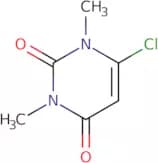
CAS:<p>6-Chloro-1,3-dimethyluracil is a nucleoside analog that has been shown to be cytotoxic in vitro. This compound can be synthesized by reacting naphthalene with a nucleophilic nitrogen source, such as sodium carbonate and chlorinating the resulting product with trifluoroacetic acid. 6-Chloro-1,3-dimethyluracil can also be synthesized by reacting malonic acid with cyclen and uridine in the presence of copper metal. The reaction mechanism is believed to involve photoelectron transfer from the copper metal to the uridine ring.</p>Formula:C6H7ClN2O2Purezza:Min. 95%Colore e forma:White PowderPeso molecolare:174.58 g/mol(R)-(+)-9-(2-Hydroxypropyl)adenine
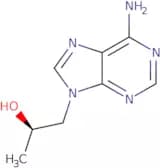
CAS:(R)-(+)-9-(2-Hydroxypropyl)adenine (HPA) is a carbocyclic nucleoside that has been shown to be effective against the human immunodeficiency virus (HIV). HPA inhibits the reverse transcriptase and integrase enzymes, which are necessary for HIV replication. It also inhibits phosphorylation of host cell proteins, leading to decreased viral protein synthesis. The reaction yield of this compound is high and it can be industrially produced with a synthetic process. HPA is synthesized from adenosine by the addition of two hydroxyl groups on the adjacent carbon atoms. HPA has a low energy ring-opening reaction with hydrogen chloride, which leads to its potent inhibition of HIV infection.Formula:C8H11N5OPurezza:Min. 95%Colore e forma:PowderPeso molecolare:193.21 g/mol5-Iodouracil
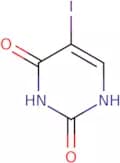
CAS:<p>5-Iodouracil is an irreversible inhibitor of 5-hydroxytryptamine 2B receptor (5-HT2B) that is a group p2 molecule. It has been found to be effective in the treatment of various types of cancer, including colorectal cancer. 5-Iodouracil inhibits cell proliferation by blocking the binding of the growth factor to its receptor on the surface of cells. The drug also inhibits the enzyme activities of human serum albumin and tyrosine phosphatase.</p>Formula:C4H3IN2O2Purezza:Min. 97 Area-%Colore e forma:White PowderPeso molecolare:237.98 g/mol8-Nitroguanine
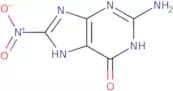
CAS:8-Nitroguanine is a reactive cell factor that can be found in the skin and other tissues. It is an endogenous product of nitric oxide, which can be formed by the reaction of nitric oxide with superoxide in the presence of peroxynitrite. 8-Nitroguanine has been shown to inhibit matrix metalloproteinase-9 activity and to have a protective effect on cells from UV radiation. 8-Nitroguanine also has been shown to be a potential biomarker for bowel disease and damage. The levels of 8-nitroguanine increase in chronic viral hepatitis and cancer tissues. This compound can also be used as an analytical method for detection of inflammation, oxidative stress, or DNA damage.Formula:C5H4N6O3Purezza:Min. 95%Colore e forma:PowderPeso molecolare:196.13 g/mol