Zuccheri e nucleobasi della spina dorsale
Gli zuccheri dello scheletro e le basi azotate sono componenti essenziali degli acidi nucleici come DNA e RNA. Lo scheletro è composto da gruppi zuccheri e fosfati, mentre le basi azotate formano il codice genetico attraverso l'appaiamento delle basi. Questi composti sono fondamentali nello studio della genetica e della biologia molecolare. Presso CymitQuimica, è possibile trovare una varietà di zuccheri dello scheletro e basi azotate per la ricerca e l'uso in laboratorio.
Trovati 1001 prodotti di "Zuccheri e nucleobasi della spina dorsale"
Ordinare per
Purezza (%)
0
100
|
0
|
50
|
90
|
95
|
100
9-[(5-Amino-1,3,4-thiadiazol-2-yl)methyl]-1,3-dimethyl-3,9-dihydro-1H-purine-2,6-dione
CAS:Prodotto controllatoPlease enquire for more information about 9-[(5-Amino-1,3,4-thiadiazol-2-yl)methyl]-1,3-dimethyl-3,9-dihydro-1H-purine-2,6-dione including the price, delivery time and more detailed product information at the technical inquiry form on this pageFormula:C10H11N7O2SPurezza:Min. 95%Peso molecolare:293.31 g/mol1-(Ethyl-3-carboxypropyl)-3,7-dimethylxanthine
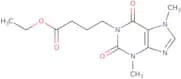
CAS:Prodotto controllatoPlease enquire for more information about 1-(Ethyl-3-carboxypropyl)-3,7-dimethylxanthine including the price, delivery time and more detailed product information at the technical inquiry form on this pageFormula:C13H18N4O4Purezza:Min. 95%Peso molecolare:294.31 g/mol7-Deazaadenine
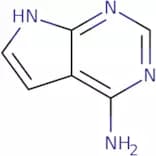
CAS:<p>7-Deazaadenine is a pyrimidine compound that inhibits the enzyme kinase, which is involved in DNA synthesis. 7-Deazaadenine has significant cytotoxicity against cells and has been shown to inhibit the polymerase chain reaction (PCR). It can be used as an analytical tool for investigating enzymatic reactions by selectively inhibiting specific enzymes. 7-Deazaadenine binds to nitrogen atoms in DNA and inhibits the activity of proteases, which are enzymes that break down proteins. This drug also has pharmacokinetic properties such as oral absorption and distribution, metabolism, and elimination.</p>Formula:C6H6N4Purezza:Min. 95%Peso molecolare:134.14 g/mol8-Aminoguanine
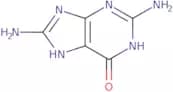
CAS:<p>8-Aminoguanine is an anti-cancer agent that is used to treat leukemia. It is a hydrophobic molecule with a redox potential of −0.20 V and has been shown to inhibit the enzyme ribonucleotide reductase in vitro and in vivo. 8-Aminoguanine inhibits the production of guanine nucleotides, which are necessary for DNA synthesis and cell division. This drug also has angiogenic properties, which may be due to its ability to stimulate the formation of new blood vessels by increasing nitric oxide synthase activity. 8-Aminoguanine has also been shown to improve congestive heart failure by reducing myocardial fibrosis and ventricular hypertrophy through activation of the glycosidic bond cleavage system.</p>Formula:C5H6N6OPurezza:Min. 95%Colore e forma:Off-White PowderPeso molecolare:166.14 g/mol7-Benzyl-1H-Purine-2,6(3H,7H)-Dione
CAS:Prodotto controllato<p>Please enquire for more information about 7-Benzyl-1H-Purine-2,6(3H,7H)-Dione including the price, delivery time and more detailed product information at the technical inquiry form on this page</p>Formula:C12H10N4O2Purezza:Min. 95%Peso molecolare:242.23 g/mol6-Amino-5-nitroso-2-thiouracil
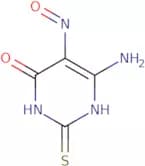
CAS:6-Amino-5-nitroso-2-thiouracil is a water molecule that has been synthesized and characterized by the kinetic method. It has an intense absorption line at 514 nm and can be used as a marker for technetium. 6-Amino-5-nitroso-2-thiouracil is also a ligand, which is a chemical that binds to metal ions in order to form coordination complexes. 6-Amino-5-nitroso-2-thiouracil is formed by the reaction of chloramine with ammonia, as well as other reactions involving chlorine atoms. 6Amino - 5 nitroso - 2 thiouracil can be used as a chelate ring, which is a type of ligand that contains both nitrogen and sulfur atoms. Bleomycin, a five membered ring molecule, reacts with 6 amino - 5 nitroso - 2 thiouracil toFormula:C4H4N4O2SPurezza:Min. 95%Peso molecolare:172.17 g/molN6-Methyladenine
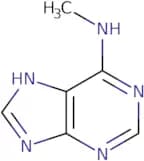
CAS:<p>N6-Methyladenine is a modification of adenine in DNA. It is formed by the methylation of the N6 position of adenine, which is a group P2 purine base. The structural analysis of this compound has been studied using x-ray diffraction data, and it has been found that it may inhibit cancer cells by modifying their DNA. This compound can also be used as an antimicrobial agent to treat infections caused by eukaryotes such as bacteria and fungi. N6-Methyladenine may be useful in transcriptional regulation and cellular transformation.</p>Formula:C6H7N5Purezza:Min. 95%Colore e forma:PowderPeso molecolare:149.15 g/mol6-Amino-1-methyl-5-nitrosouracil
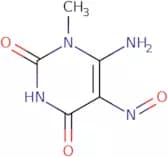
CAS:<p>6-Amino-1-methyl-5-nitrosouracil is a neutral form of the molecule that has both protonated and unprotonated forms. It is a bidentate ligand that can bind to a metal ion. The nitrogen atom in the molecule is an important part of its structure, as it contains two nitro groups and one amino group. 6-Amino-1-methyl-5-nitrosouracil has been used in techniques such as spectroscopies and dinitroso analysis. The neutral form of the molecule can be converted into its ionic form by adding either chlorine or nitrate ions to it, which causes the nitrogen atoms to be more electronegative. This conversion changes the nature of the compound, making it more acidic. Dehydration also occurs when water molecules are removed from 6-amino 1 methyl 5 nitrosourea, which causes a change in shape and shifts its properties to</p>Formula:C5H6N4O3Purezza:Min. 95%Peso molecolare:170.13 g/mol8-Methoxymethyl-1-methyl-3-(2-methylpropyl) xanthine
CAS:Prodotto controllato8-Methoxymethyl-1-methyl-3-(2-methylpropyl) xanthine (8MMX) is an intracellular calcium ion chelator that inhibits enzyme activity in the cyclic nucleotide phosphodiesterase enzyme family. 8MMX has been shown to be a potent inhibitor of both cyclic nucleotide phosphodiesterases and cyclic nucleotide phosphodiesterase isoenzymes. 8MMX has been shown to inhibit bladder contractility and improve bladder function in animal models. It also reduces the incidence of papillary muscle rupture, which can lead to heart failure, and improves ventricular function by increasing the rate of relaxation of the left ventricle. 8MMX is a potential treatment for pulmonary hypertension, which is caused by increased concentrations of intracellular calcium ions.Formula:C12H18N4O3Purezza:Min. 95%Peso molecolare:266.3 g/mol(E)-5-(2-Bromovinyl)uracil
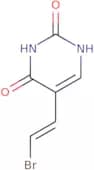
CAS:(E)-5-(2-Bromovinyl)uracil is a drug that has been shown to be effective against leukemic cells. It is a prodrug of 5-bromouracil, which is an antimetabolite and cytotoxic agent. (E)-5-(2-Bromovinyl)uracil has also been shown to be active against solid tumours, such as metastatic colorectal cancer, and bacteria. The mechanism of action involves the irreversible inhibition of the enzyme thymidylate synthase, which catalyzes the conversion of deoxyuridine monophosphate (dUMP) to thymidine monophosphate (dTMP). The drug binds to the dinucleotide phosphate pocket in the enzyme's active site and blocks access by dUMP. This leads to DNA synthesis errors, causing cell death. As a prodrug, it has low toxicity profiles and does not cause bone marrow suppression likeFormula:C6H5BrN2O2Purezza:(¹H-Nmr) Min. 95 Area-%Colore e forma:Off-white to pale orange solid.Peso molecolare:217.02 g/mol1-(3-Carboxypropyl)-3,7-dimethylxanthine
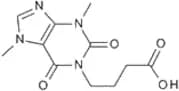
CAS:Prodotto controllato1-(3-Carboxypropyl)-3,7-dimethylxanthine is a drug that belongs to a class of drugs called multidrugs. It has been shown to inhibit the growth of endothelial cells by blocking the binding of tnf-α to its receptor on these cells. 1-(3-Carboxypropyl)-3,7-dimethylxanthine also inhibits cancer cell proliferation and has been shown to be effective in some human cancer models. This drug interacts with other molecules (e.g., proton) and can have significant effects on magnetic resonance spectroscopy assays as well as in humans.Formula:C11H14N4O4Purezza:Min. 95%Colore e forma:PowderPeso molecolare:266.25 g/mol1-Allyl-3,7-dimethyl-8-phenylxanthine
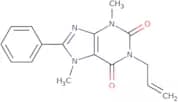
CAS:Prodotto controllatoPlease enquire for more information about 1-Allyl-3,7-dimethyl-8-phenylxanthine including the price, delivery time and more detailed product information at the technical inquiry form on this pageFormula:C16H16N4O2Purezza:Min. 95%Peso molecolare:296.32 g/mol3-Methyl-7-(5-oxohexyl)-1-propylxanthine
CAS:Prodotto controllatoPlease enquire for more information about 3-Methyl-7-(5-oxohexyl)-1-propylxanthine including the price, delivery time and more detailed product information at the technical inquiry form on this pageFormula:C15H22N4O3Purezza:Min. 95%Peso molecolare:306.36 g/mol1,3-Diethyl-8-phenylxanthine
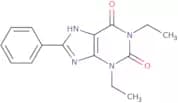
CAS:Prodotto controllato<p>1,3-Diethyl-8-phenylxanthine is a p2y receptor antagonist that inhibits bacterial growth by interfering with the energy metabolism of the cell. It is an analytical reagent that can be used to measure specific DNA sequences and has been shown to have genotoxic effects on cultured human cells. 1,3-Diethyl-8-phenylxanthine has also been shown to inhibit the growth of infectious bacteria such as staphylococcus aureus and Mycobacterium tuberculosis in vitro. This compound may be used as a potential biomarker for the identification of antimicrobial peptides that are active against Mycobacterium tuberculosis in humans.</p>Formula:C15H16N4O2Purezza:Min. 95%Peso molecolare:284.31 g/molDye 937
CAS:Dye 937 is substituted unsymmetrical cyanine dyes and useful in the detection of DNA in electrophoretic gels.Formula:C32H37IN4SPurezza:98%Colore e forma:SolidPeso molecolare:636.634-Thiouracil
CAS:4-Thiouracil is a uridine analog and has been shown to inhibit transcriptional regulation by hydrogen bonding with the dna template. 4-Thiouracil is a prodrug that is converted to its active form, thiouracil, which inhibits DNA synthesis and cell proliferation by inhibiting the enzyme topoisomerase II. This results in the formation of abnormal DNA molecules that are not replicated properly. Thiouracil also has photochemical properties due to its ability to absorb light at wavelengths below 400 nm. The photochemical properties of 4-thiouracil have been studied extensively as models for human tissue culture and the study of cancer cells.Formula:C4H4N2OSPurezza:Min. 97 Area-%Colore e forma:Slightly Yellow PowderPeso molecolare:128.15 g/molAdenine sulfate dihydrate
CAS:Adenine sulfate dihydrate is an important component of the energy-producing process in mitochondria. Adenine sulfate dihydrate is a necessary cofactor for many metabolic reactions, including those that produce ATP and NADH. It has been shown to promote growth factor activity and stimulate cell proliferation. Adenine sulfate dihydrate can be used as a nutrient solution in recombinant protein production, where it is required for the expression of recombinant proteins in E. coli or mammalian cells. This compound also plays an important role in the glycosylation of proteins during their synthesis on ribosomes and may have implications for protein folding and stability.Formula:(C5H5N5)2•(H2O)2•H2SO4Purezza:Min. 95%Colore e forma:PowderPeso molecolare:404.36 g/molCytosine
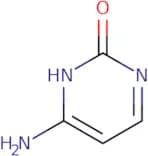
CAS:<p>Pyrimidine nucleobase; component of nucleic acids</p>Formula:C4H5N3OPurezza:(Hplc) Min. 99%Colore e forma:White PowderPeso molecolare:111.1 g/mol5-Chlorouracil
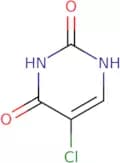
CAS:5-Chlorouracil is a drug that is used to treat cancer. It has been shown to have biological properties, and its mechanism of action is not yet fully understood. 5-Chlorouracil can be synthesized in the laboratory by reacting sodium hydroxide with 5-chloro-2,4(1H,3H)-pyrimidinedione. In wastewater treatment plants, it reacts with organic matter in the water to form nontoxic products, such as carbon dioxide and urea. The reaction solution contains 5-chlorouracil, which undergoes tautomerization spontaneously or through the addition of base. This reaction is reversible, and both the erythro and threo forms are present in solution at equilibrium. The biological properties of 5-chlorouracil have been investigated using sublethal doses in experimental animals. In one study, 5-chlorouracil was found to inhibit xanthine oxidase activity in rats significantly moreFormula:C4H3ClN2O2Purezza:Min. 95%Colore e forma:PowderPeso molecolare:146.53 g/mol2-Mercaptopurine
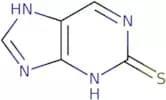
CAS:2-Mercaptopurine (2MP) is a thiopurine drug that is used to treat bowel disease. 2MP inhibits the activity of methyltransferase, which is an enzyme that converts 6-mercaptopurine to 6-thioguanine. This process prevents the conversion of 6-thioguanine into 6-thiouric acid, which is an intermediate in the synthesis of thymine nucleotides. 2MP also inhibits the binding of atp-binding cassette transporter proteins to DNA and blocks the incorporation of purines into RNA and DNA. The drug has been shown to be effective in treating squamous cell carcinoma and other diseases with a high level of activity. 2MP has been shown to be metabolized by erythrocyte polymerase chain reaction and can be detected in biological samples.Formula:C5H4N4SPurezza:Min. 95%Colore e forma:PowderPeso molecolare:152.18 g/mol
![9-[(5-Amino-1,3,4-thiadiazol-2-yl)methyl]-1,3-dimethyl-3,9-dihydro-1H-purine-2,6-dione](/_next/image/?url=https%3A%2Fstatic.cymitquimica.com%2Fproducts%2F3D%2Fthumb-webp%2FFA125300.webp&w=3840&q=75)