Lipidi
I lipidi sono un gruppo diversificato di molecole idrofobiche essenziali per la struttura cellulare, l'immagazzinamento di energia e la segnalazione. Includono grassi, oli, fosfolipidi, steroli e cere, ognuno dei quali svolge ruoli unici nelle membrane biologiche e nei processi metabolici. In questa categoria, troverete una varietà di lipidi adatti alla ricerca in biochimica, biologia cellulare e nutrizione. Da CymitQuimica, forniamo lipidi di alta qualità per supportare i vostri studi sul metabolismo dei lipidi, la dinamica delle membrane e le interazioni lipide-proteina, garantendo risultati affidabili e riproducibili nei vostri esperimenti.
Sottocategorie di "Lipidi"
- Acidi Grassi e Derivati(3.286 prodotti)
- Glicerolipidi(98 prodotti)
- Fosfolipidi(382 prodotti)
- Isopreni(550 prodotti)
- Lipidi fisiologicamente attivi(3.401 prodotti)
- Polyketidi(533 prodotti)
- Sfingolipidi(226 prodotti)
- Steroli(200 prodotti)
Trovati 1431 prodotti di "Lipidi"
Ordinare per
Purezza (%)
0
100
|
0
|
50
|
90
|
95
|
100
1,2-Dimyristoyl-rac-glycerol
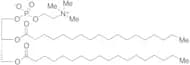
CAS:Prodotto controllatoFormula:C31H60O5Colore e forma:NeatPeso molecolare:512.8051,2-Distearoyl-sn-glycero-3-phosphocholine
CAS:Prodotto controllatoFormula:C44H88NO8PColore e forma:NeatPeso molecolare:790.14514,15-Dihydroxy-5,8,10,12-eicosatetraenoic Acid-D8
CAS:Prodotto controllatoFormula:C20H24D8O3Colore e forma:NeatPeso molecolare:328.50cis-7,10,13,16-Docosatetraenoic Acid Methyl Ester
CAS:Prodotto controllatoFormula:C23H38O2Colore e forma:NeatPeso molecolare:346.547[R-(Z)]-3-[(2R)-3-[(1-Oxohexadecyl)oxy]-2-[[(9Z)-1-oxo-9-octadecenyl]oxy]propyl hydrogen phosphate] D-myo-Inositol Monoammonium Salt-d31
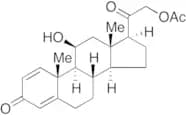
CAS:Prodotto controllatoFormula:C43H50D31O13P·NH3Colore e forma:NeatPeso molecolare:885.291-Dehydrocorticosterone 21-Acetate
CAS:Prodotto controllatoFormula:C23H30O5Colore e forma:NeatPeso molecolare:386.481Alkynyl Palmitic Acid
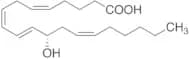
CAS:Prodotto controllatoFormula:C16H28O2Colore e forma:NeatPeso molecolare:252.39212(S)-Hydroxy (5Z,8Z,10E,14Z)-Eicosatetraenoic Acid
CAS:Prodotto controllatoFormula:C20H32O3Colore e forma:NeatPeso molecolare:320.466(4E, 11Z)-Sphingadienine-C18
CAS:Prodotto controllatoFormula:C18H35NO2Colore e forma:NeatPeso molecolare:297.483-β-[N-(N’,N’-Dimethylaminoethane)-carbamoyl]cholesterol
CAS:Prodotto controllato<p>Applications 3-β-[N-(N’,N’-Dimethylaminoethane)-carbamoyl]cholesterol is a cationic liposome reagent. It has been investigated in cancer gene therapy and vaccine delivery system.<br>References Goyal, K., et al.: J. Liposome Res., 5, 49 (1995); Christensen, D., et al.: Exp. Rev. Vac., 10, 513 (2011); Gao, X., et al.: Biochem. Biophys. Res. Comm., 179, 280 (1991)<br></p>Formula:C32H56N2O2Colore e forma:NeatPeso molecolare:500.824(R/S),25-Epoxycholesterol-d6
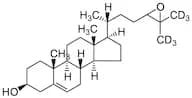
CAS:Prodotto controllatoFormula:C27D6H38O2Colore e forma:NeatPeso molecolare:406.674L-threo-Dihydrosphingosine
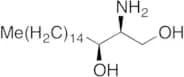
CAS:Prodotto controllatoFormula:C18H39NO2Colore e forma:NeatPeso molecolare:301.508C16 Ceramide-d7
CAS:Prodotto controllatoFormula:C34D7H60NO3Colore e forma:NeatPeso molecolare:544.9441-Tridecanoyl-sn-glycero-3-phospho-(1'-rac-glycerol) Sodium Salt
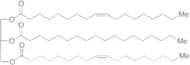
CAS:Prodotto controllatoFormula:C19H38NaO9PColore e forma:Neat1,3-Dioleoyl-2-stearoylglycerol
CAS:<p>Applications 1,3-Dioleoyl-2-stearoylglycerol is a triglyceride found in various natural sources such as coconut oil, palm oil, rice bran oil, sunflower oil and sesame oil.<br>References Reena, M.B. et al.: Eur. J. Lipid Sci. Technol., 111, 346 (2009); Huey, S. et al.: J. Food Sci., 74, E177 (2009)<br></p>Formula:C57H106O6Colore e forma:NeatPeso molecolare:887.47(±)-Tuberonic Acid (~90%)
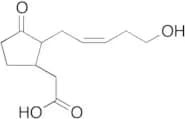
CAS:Prodotto controllato<p>Applications (±)-Tuberonic Acid can be used in biological activity and study for structure-activity relations of substituted, deleted or stereospecifically altered jasmonic acid in gene expression of barley leaves. It can be used and tested to find the structural requirements which induce the expression of jasmonate-responsive genes in barley.<br>References Miersch, O., et al.: Phytochemistry, 50, 353-361 (1998)<br></p>Formula:C12H18O4Purezza:~90%Colore e forma:NeatPeso molecolare:226.2691-(2,4-Dihydroxyphenyl)-2-(4-hydroxyphenyl)propan-1-one
CAS:Prodotto controllato<p>Applications 1-(2,4-Dihydroxyphenyl)-2-(4-hydroxyphenyl)propan-1-one is an antioxidant and also has anti cancer effects on human breast cancer MCF-7 cells and Hep3B human hepatocellular carcinoma cells.<br>References Choi, Eun Jeong, et al.: Mol. Med. Rep., 9(1), 328-332 (2014);Choi, Eun Jeong, et al.: Onco.Lett., 6(6), 1784-1788 (2013);Choi, Eun Jeong, et al.: Inter. J.of Mol. Med., 31(3), 726-730 (2013)<br></p>Formula:C15H14O4Colore e forma:NeatPeso molecolare:258.27




![[R-(Z)]-3-[(2R)-3-[(1-Oxohexadecyl)oxy]-2-[[(9Z)-1-oxo-9-octadecenyl]oxy]propyl hydrogen phosphate…](/_next/image/?url=https%3A%2Fstatic.cymitquimica.com%2Fproducts%2FTR%2Fthumb-webp%2FO847207.webp&w=3840&q=75)



![3-β-[N-(N’,N’-Dimethylaminoethane)-carbamoyl]cholesterol](/_next/image/?url=https%3A%2Fstatic.cymitquimica.com%2Fproducts%2FTR%2Fthumb-webp%2FD470585.webp&w=3840&q=75)