Nucleotidi
I nucleotidi sono composti organici che fungono da mattoni per la costruzione degli acidi nucleici, essenziali per la formazione del DNA e dell'RNA. Ogni nucleotide è composto da una base azotata, una molecola di zucchero e uno o più gruppi fosfato. Questi nucleotidi si uniscono per formare lunghe catene, creando il materiale genetico che porta e trasmette informazioni genetiche in tutti gli organismi viventi. In questa sezione, troverai una vasta gamma di nucleotidi cruciali per la ricerca in genetica, biologia molecolare e biochimica. Sono fondamentali per studiare i processi genetici, sintetizzare acidi nucleici e sviluppare strumenti diagnostici e terapeutici. Da CymitQuimica, offriamo nucleotidi di alta qualità per supportare la tua ricerca scientifica e applicazioni, garantendo precisione e affidabilità nei tuoi esperimenti.
Sottocategorie di "Nucleotidi"
Trovati 2634 prodotti di "Nucleotidi"
Ordinare per
Purezza (%)
0
100
|
0
|
50
|
90
|
95
|
100
N6-Cyclopentyladenosine
CAS:<p>N6-Cyclopentyladenosine is a nucleoside analog that binds to the kappa-opioid receptor. The physiological effects of this drug are mediated through its interaction with the kappa-opioid receptor, which is found in the central nervous system and mediates many of the effects of morphine. N6-Cyclopentyladenosine has been shown to increase blood flow and heart rate in humans. This drug also inhibits tetrazolium dye uptake by papillary muscle cells, suggesting that it may have cardiotonic effects. N6-Cyclopentyladenosine has been used as an analytical probe for adenosine, which is metabolized by cyclic AMP and cyclic GMP phosphodiesterases into adenosine 3',5'-cyclic monophosphate (cAMP).</p>Formula:C15H21N5O4Purezza:Min. 95%Colore e forma:PowderPeso molecolare:335.36 g/mol5-Carboxymethylaminomethyluridine
CAS:5-Carboxymethylaminomethyluridine is a nucleoside analogue that is used in molecular modeling studies to investigate the role and interactions of uridine in the mitochondrial ribosome. It has been shown to bind to the mitochondrial ribosome, which may be due to hydrogen bonding interactions with adenine. 5-Carboxymethylaminomethyluridine also inhibits protein synthesis at the level of translation by inhibiting group P2 of eukaryotic cytosolic ribosomes. This inhibition results in decreased production of proteins necessary for mitochondrial biogenesis.Formula:C12H17N3O8Purezza:Min. 95 Area-%Colore e forma:White Off-White PowderPeso molecolare:331.28 g/mol2'-Deoxyadenosine 5'-O-thiophosphate sodium salt
CAS:2'-Deoxyadenosine 5'-O-thiophosphate sodium salt is a synthetic nucleotide that has antiviral, anticancer and antitumor properties. It is a modified deoxyribonucleoside and it activates the synthesis of DNA by acting as an activator. This drug is not found in nature and it has shown to inhibit the growth of human breast cancer cells in cell culture.Formula:C10H14N5O5PSPurezza:Min. 95%Peso molecolare:347.29 g/mol5-Fluorouridine-5'-triphosphate sodium salt
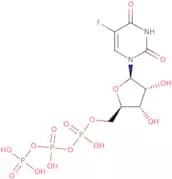
CAS:<p>5-Fluorouridine-5'-triphosphate sodium salt is an analog of uridine that has been used in the treatment of metastatic colorectal cancer. It is a prodrug that is metabolized to 5-fluorouracil, its active form. 5-Fluorouridine-5'-triphosphate sodium salt inhibits the synthesis of thymidylate, one of the precursors to DNA, and blocks the production of nucleotides. This results in cell lysis and death by apoptosis. The drug also inhibits epidermal growth factor receptor (EGFR), which may contribute to its antitumor effects.</p>Formula:C9H14N2O15P3FPurezza:Min. 95%Peso molecolare:502.13 g/mol2'-O-(tert-Butyldimethylsilyl)-5'-O-DMT-N2-isobutyryl-guanosine
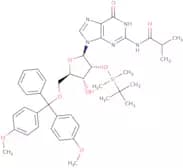
CAS:2'-O-(tert-Butyldimethylsilyl)-5'-O-DMT-N2-isobutyryl-guanosine is a synthetic nucleoside that has been modified with a tert-butyldimethylsilyl group. This modification is used to improve the efficiency of coupling reactions between nucleosides and phosphoramidites in oligonucleotide synthesis. The 2'-O-(tert-Butyldimethylsilyl)-5'-O-DMT-N2-isobutyryl guanosine is also used as a chromophore in spectroscopy experiments and as a ligand in metal coordination chemistry.Formula:C41H51N5O8SiPurezza:Min. 98 Area-%Colore e forma:Off-White PowderPeso molecolare:769.96 g/mol2'-O-Methylinosine
CAS:2'-O-Methylinosine is a nucleoside that is structurally related to inosine. It has been shown to induce apoptotic cell death in HIV-infected cells by inhibiting the synthesis of rRNA and by inhibiting the activity of the transcriptase enzyme. 2'-O-Methylinosine has also been shown to inhibit the replication of RNA viruses, such as herpes simplex virus and cytomegalovirus, and it can be used as an experimental model for studying apoptosis. 2'-O-Methylinosine can be synthesized from inosine using a chromatographic method that utilizes hydroxylamine. The chemical structure of this nucleoside is amphipathic, which allows it to bind both DNA and RNA strands.Formula:C11H14N4O5Purezza:Min. 99 Area-%Colore e forma:White PowderPeso molecolare:282.25 g/mol2'-Deoxy-N2-phenoxyacetylguanosine
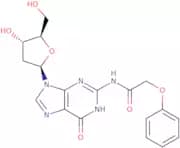
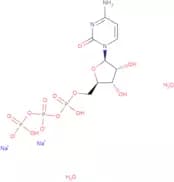
CAS:2'-deoxy-N2-phenoxyacetylguanosine is a synthetic nucleoside that is used as a substrate in experiments to study the properties of guanine. The compound can be synthesized by the reaction of 2'-deoxy-N2-phenoxyacetaldehyde with guanine. The synthesis starts with the condensation of 2'-deoxyribose and N2-phenoxyacetaldehyde, followed by the oxidation of the resulting anhydride to give aldehyde, which reacts with guanine to form a Schiff base. This then undergoes hydrolysis to yield 2'-deoxy-N2-phenoxyacetylguanosine.Formula:C18H19N5O6Purezza:Min. 95%Peso molecolare:401.38 g/molCytidine 5'-triphosphate disodium dihydrate
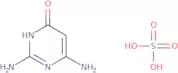
CAS:Cytidine 5'-triphosphate (CTP) disodium dihydrate prevents the action of aspartate carbamoyltransferase, an enzyme involved in pyrimidine biosynthesis. CTP serves as a molecule of high energy and acts as a coenzyme in glycerophospholipid biosynthesis and protein glycosylation.Formula:C9H16N3O14P3•(H2O)2•Na2Purezza:Min. 95%Colore e forma:PowderPeso molecolare:565.17 g/mol2,4-Diamino-6-hydroxypyridine sulphate
CAS:2,4-Diamino-6-hydroxypyridine sulphate is a nucleoside for use in research applicationsFormula:C4H6N4O•(H2SO4)xPurezza:Min. 95%Colore e forma:PowderPeso molecolare:224.2 g/mol3'-Azido-3'-deoxythymidine-b-D-glucuronide sodium salt
CAS:<p>3'-Azido-3'-deoxythymidine-b-D-glucuronide sodium salt is an antiviral and anticancer agent that inhibits the synthesis of DNA, RNA, and protein. It has shown to be effective against a variety of viruses including HIV-1, herpes simplex virus type 1, influenza A virus, vaccinia virus, and vesicular stomatitis virus. 3'-Azido-3'-deoxythymidine-b-D-glucuronide sodium salt also inhibits the growth of cancer cells in vitro. This drug is a modified nucleoside with a phosphoramidite backbone and a 3'-azido group at one end. The other end contains a beta D glucuronic acid moiety. The modifications allow for the inhibition of DNA synthesis by blocking the incorporation of deoxyribonucleotides into DNA chains.</p>Formula:C16H20N5NaO10Purezza:Min. 95%Colore e forma:PowderPeso molecolare:465.35 g/molQueuosine
CAS:Queuosine is a modified nucleoside found in the tRNA of both eukaryotic and prokaryotic organisms. It is primarily sourced from the gut microbiota and obtained through dietary intake, as humans lack the biosynthetic machinery to produce it endogenously. Queuosine plays a crucial role in cellular processes by contributing to the accuracy of protein synthesis, impacting cellular growth and maintenance. Its importance extends to understanding the molecular mechanisms underpinning various physiological processes and the potential for dysregulation in diseases. Ongoing research is exploring queuosine's implications in cellular metabolism, including its role in cancer biology and neurobiology. Understanding the pathways and effects of queuosine incorporation into tRNA may provide insights into novel therapeutic avenues for targeting metabolic disorders and diseases associated with translational fidelity.Formula:C17H23N5O7Purezza:Min. 95 Area-%Colore e forma:PowderPeso molecolare:409.39 g/molN3-Methylthymidine
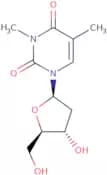
CAS:<p>N3-Methylthymidine is a metalloprotease inhibitor that has been shown to inhibit the activity of epidermal growth factor (EGF). N3-Methylthymidine is also an effective inhibitor of HIV infection. The inhibitory effect on HIV infection is due to the competitive inhibition of viral protease and subsequent degradation of viral proteins. N3-Methylthymidine inhibits the synthesis and release of infectious herpes simplex virus particles. This drug also inhibits the growth of human tumor cells in culture by inhibiting cell proliferation, most likely due to its ability to inhibit EGF. An analytical method for determining the concentration of this drug in plasma using chemical ligation has been developed.</p>Formula:C11H16N2O5Purezza:Min. 95%Colore e forma:White PowderPeso molecolare:256.26 g/mol8-Amino[1''-(N''-dansyl)-4''-aminobutyl]-5'-(1-aziridinyl)-5'-deoxy adenosine
CAS:<p>8-Amino-[1''-(N''-dansyl)-4''-aminobutyl]-5'-(1-aziridinyl)-5'-deoxyadenosine is a novel nucleoside phosphoramidite that has antiviral and anticancer activity. It is currently under development as a potential treatment for Hepatitis C, HIV and cancer. 8-Amino-[1''-(N''-dansyl)-4''-aminobutyl]-5'-(1-aziridinyl)-5'-deoxyadenosine is an activator of the enzyme ribonucleotide reductase, which converts ribonucleotides to deoxyribonucleotides. It also inhibits the synthesis of DNA and RNA by inhibiting the enzyme DNA gyrase and topoisomerase IV. 8-Amino-[1''-(N''-dansyl)-4''-aminobutyl</p>Formula:C28H37N9O5SPurezza:Min. 95%Colore e forma:PowderPeso molecolare:611.72 g/mol2'-Deoxy-4-thiouridine
CAS:<p>2'-Deoxy-4-thiouridine is a pyrimidine nucleoside for a range of applications</p>Formula:C9H12N2O4SPurezza:Min. 98 Area-%Colore e forma:PowderPeso molecolare:244.27 g/mol2'-Deoxyinosine-5'-monophosphate disodium salt
CAS:<p>2'-Deoxyinosine-5'-monophosphate disodium salt is a synthetic nucleoside, phosphoramidite, and diphosphate that is used in the synthesis of DNA. It has been shown to have antiviral effects against HIV and herpes simplex virus type 2 (HSV-2). This drug also has anticancer activity and is an activator of novel nucleosides.</p>Formula:C10H11N4Na2O7PPurezza:Min. 98 Area-%Colore e forma:White PowderPeso molecolare:376.17 g/molGuanosine 5'-monophosphate disodium salt
CAS:Guanosine 5'-monophosphate disodium salt (GMPDS) is an antiviral agent that inhibits the synthesis of viral nucleic acids by competitive inhibition of the enzyme ribonucleotide reductase. GMPDS has been shown to inhibit the replication of a number of RNA viruses, including influenza A and B, herpes simplex virus type 1, and human immunodeficiency virus type 1. This drug also has been shown to decrease cyclic adenosine monophosphate (cAMP) levels in cells by inhibiting phosphodiesterase activity. GMPDS is used for treatment of infectious diseases such as influenza A, herpes, and HIV-1.Formula:C10H12N5Na2O8PPurezza:Min. 98 Area-%Colore e forma:White Off-White PowderPeso molecolare:407.18 g/molGuanosine 3',5'-bisdiphosphate lithium salt - 100mM aqueous solution
CAS:Regulates gene transcription; inhibits the synthesis of tRNA and rRNAFormula:C10H17N5O17P4·xLiPurezza:Min. 85 Area-%Colore e forma:Colorless PowderPeso molecolare:602.16 g/molPolycytidylic acid
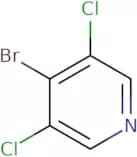
CAS:<p>Polycytidylic acid is a single stranded RNA analog which is combined with Polyinosinic acid to form a stable duplex structure known as Polyinosinic acid-polycytidylic acid (Poly I:C). PolyI:C stimulates the secretion of pro-inflammatory cytokines and type I interferon through its interaction with endosomal Toll-like receptor 3 (TLR-3) and the cytoplasmic receptors melanoma differentiation-associated gene 5 (MDA-5) and retinoic acid-inducible gene I (RIG-I). This immunostimulant activity makes Poly I:C a useful vaccine adjuvant and is used in vaccine formulations. Poly I:C and its stabilized analogs (e.g., poly-ICLC) are also being actively researched for their dual role in oncology: directly targeting tumors and acting as immune potentiators. For example Poly I:C can induce apoptosis in tumor cells and stimulate immunogenic cell death and is therefore being explored alongside chemotherapy, radiotherapy, and checkpoint inhibitors, helping to overcome resistance mechanisms and strengthen treatment outcomes. We can supply PolyI:C to all stages of your project - from R&D and preclinical phases right up to GMP commercial manufacture. Contact our team for custom Poly I:C products.<br>For more on poly I:C read out blog 'Poly I:C: A Vaccine Adjuvant With Oncological Potential.'</p>Purezza:Min. 95%4-Bromo-3,5-dichloropyridine
CAS:<p>4-Bromo-3,5-dichloropyridine is a reactive intermediate that is used as a reagent in organic synthesis. It has low basicity and reacts with lithium to form the lithium salt. The salt can be deprotonated to form the bromide anion, which is more reactive than the chloride anion. 4-Bromo-3,5-dichloropyridine can also be used for the selective isomerization of ketones and related compounds. Bromine is added to prevent side reactions with oxygen. The intermediates are generated at the site of reaction by using an excess of diisopropylamide over bromination agent.</p>Formula:C5H2BrCl2NPurezza:Min. 95%Peso molecolare:226.89 g/mol5'-O-DMT-N2-isobutyrylguanosine
CAS:<p>5'-O-DMT-N2-isobutyrylguanosine is a novel phosphoramidite monophosphate, which has been modified with an isobutyryl group. This compound was synthesized in order to be used as a nucleoside analogue and antimetabolite for the treatment of cancer. It also has antiviral properties and inhibits the replication of DNA by inhibiting transcription. 5'-O-DMT-N2-isobutyrylguanosine is an anticancer agent that can be used to treat tumors that are resistant to other chemotherapy drugs. It also inhibits the growth of cells by preventing the synthesis of proteins needed for cell division.</p>Formula:C35H37N5O8Purezza:Min. 95%Colore e forma:White PowderPeso molecolare:655.7 g/mol





![8-Amino[1''-(N''-dansyl)-4''-aminobutyl]-5'-(1-aziridinyl)-5'-deoxy adenosine](/_next/image/?url=https%3A%2Fstatic.cymitquimica.com%2Fproducts%2F3D%2Fthumb-webp%2FNA16503.webp&w=3840&q=75)