Nucleotidi
I nucleotidi sono composti organici che fungono da mattoni per la costruzione degli acidi nucleici, essenziali per la formazione del DNA e dell'RNA. Ogni nucleotide è composto da una base azotata, una molecola di zucchero e uno o più gruppi fosfato. Questi nucleotidi si uniscono per formare lunghe catene, creando il materiale genetico che porta e trasmette informazioni genetiche in tutti gli organismi viventi. In questa sezione, troverai una vasta gamma di nucleotidi cruciali per la ricerca in genetica, biologia molecolare e biochimica. Sono fondamentali per studiare i processi genetici, sintetizzare acidi nucleici e sviluppare strumenti diagnostici e terapeutici. Da CymitQuimica, offriamo nucleotidi di alta qualità per supportare la tua ricerca scientifica e applicazioni, garantendo precisione e affidabilità nei tuoi esperimenti.
Sottocategorie di "Nucleotidi"
Trovati 2634 prodotti di "Nucleotidi"
Ordinare per
Purezza (%)
0
100
|
0
|
50
|
90
|
95
|
100
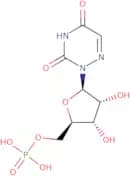
6-Azauridine-5'-monophosphate
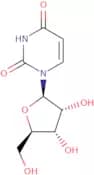
CAS:<p>6-Azauridine-5'-monophosphate (6-AU) is a compound that is synthesized by the enzyme Azoarcus sp. 6-AU synthetase and is a precursor to azauridine, an intermediate in the biosynthesis of purines. It has been shown to inhibit bacterial growth in tissue culture and depression in mice. The kinetic data were obtained using a titration calorimetry assay at 25 degrees Celsius using subtilis. This drug also has convulsant effects on animals and can cause orotic aciduria when administered orally in high doses. 6-AU has been shown to be effective against cancer cells as well as infectious diseases such as tuberculosis and malaria.</p>Formula:C8H12N3O9PPurezza:Min. 95%Colore e forma:PowderPeso molecolare:325.17 g/molUridine
CAS:Glycosylated pyrimidine analog; RNA componentFormula:C9H12N2O6Purezza:Min. 98 Area-%Colore e forma:White PowderPeso molecolare:244.2 g/mol3'-O-(t-Butyldimethylsilyl)-2'-O-(2-methoxyethyl)-5-methyluridine
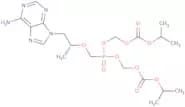
CAS:3'-O-(t-Butyldimethylsilyl)-2'-O-(2-methoxyethyl)-5-methyluridine is a novel, modified monophosphate nucleoside that can be activated to the corresponding diphosphate by adenosine kinase. The antiviral activity of 3'-O-(t-Butyldimethylsilyl)-2'-O-(2-methoxyethyl)-5-methyluridine has been demonstrated in vitro and in vivo against various viruses including HIV. In addition, this nucleoside phosphoramidite is used for synthesizing DNA and RNA. This product is CAS No. 1221967-92-5, Phosphoramidites, High purity and has a high quality.Formula:C19H34N2O7SiPurezza:Min. 95%Colore e forma:PowderPeso molecolare:430.57 g/molTenofovir disoproxil
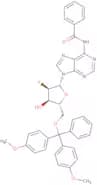
CAS:<p>Anti-viral; reverse transcriptase inhibitor</p>Formula:C19H30N5O10PPurezza:Min. 95%Colore e forma:White PowderPeso molecolare:519.44 g/molN6-Benzoyl-2'-deoxy-5'-O-DMT-2'-fluoroadenosine
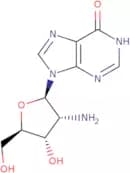
CAS:<p>N6-Benzoyl-2'-deoxy-5'-O-DMT-2'-fluoroadenosine is a sulfur containing compound that is an antibiotic. It has been shown to inhibit the growth of bacteria by binding to their ribosomes, which prevents protein synthesis and cell division. N6-Benzoyl-2'-deoxy-5'-O-DMT-2'-fluoroadenosine also inhibits chemotaxis in roseobacters, which is the movement of cells or organisms in response to certain factors. This antibiotic may be useful for preventing symbiosis between marine bacteria and other organisms, as it inhibits the motility of these bacteria and their cycling. N6-Benzoyl-2'-deoxy-5'-O-DMT-2'-fluoroadenosine also has a genetic determinant that regulates enteric bacteria and clades of ocean bacteria.</p>Formula:C38H34FN5O6Purezza:Min. 95%Colore e forma:White PowderPeso molecolare:675.72 g/mol2'-Amino-2'-deoxyinosine
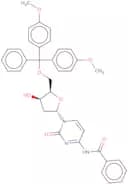
CAS:<p>2'-Amino-2'-deoxyinosine is a modified nucleoside, based on inosine. This compound has a 2'-amino substitution instead of a 2'-hydroxyl group, which has the potential to make the nucleoside more resistant to enzymatic degradation and<br> enhance or alter base-pairing properties.</p>Formula:C10H13N5O4Purezza:Min. 95%Colore e forma:PowderPeso molecolare:267.24 g/molN4-Benzoyl-2'-deoxy-5'-O-DMT-a-cytidine
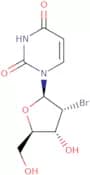
CAS:N4-Benzoyl-2'-deoxy-5'-O-DMT-a-cytidine is a modified nucleoside that is synthesized by the reaction of the 2'-deoxyribonucleoside with 4-benzoylchloroformate and dimethoxytrityl. It has antiviral activity against a variety of DNA viruses, including herpes simplex virus type 1 (HSV), herpes simplex virus type 2 (HSV), varicella zoster virus, human cytomegalovirus, Epstein Barr virus, and human immunodeficiency virus. N4-Benzoyl-2'-deoxy-5'-O-DMT-a-cytidine also has anticancer properties and may be used for the treatment of melanoma. This compound shows good results in animal models and clinical trials.Formula:C37H35N3O7Purezza:Min. 95%Colore e forma:PowderPeso molecolare:633.71 g/mol2'-Bromo-2'-deoxyuridine
CAS:<p>2'-Bromo-2'-deoxyuridine is a synthetic nucleoside analog of deoxyuridine, in which the 2'-hydroxyl group of the ribose sugar is replaced with a bromine atom (Br) at the 2' position. This modification allows it to be incorporated into DNA during DNA synthesis, where it can replace the normal thymidine. This molecule can potentially be used in molecular biology and cell biology as a thymidine analog to study DNA replication, cell proliferation, and DNA repair.</p>Formula:C9H11BrN2O5Purezza:Min. 95%Colore e forma:PowderPeso molecolare:307.1 g/molCytidine 3'(2’)-monophosphate
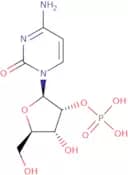
CAS:<p>Cytidine 3’(2’)-monophosphate (CMP) is a biochemical substance that is found in the nucleic acids of cells. It is an equilibrative nucleoside and a precursor to the biosynthesis of uridine and cytidine. CMP is also an intermediate in the synthesis of the coenzyme tetrahydrofolate, which has been shown to inhibit the growth of antibiotic-resistant strains such as Escherichia coli, Pseudomonas aeruginosa, Klebsiella pneumoniae, Staphylococcus aureus, and Enterobacter cloacae. Cytidine 3’(2’)-monophosphate can be converted into cytidine by phosphorylation with ATP or by methylation with S-adenosylmethionine. Cytidine 3’(2’)-monophosphate has been shown to have polymerase chain reaction activity</p>Formula:C9H14N3O8PPurezza:Min. 95%Colore e forma:White PowderPeso molecolare:323.2 g/mol2'-C-Methylguanosine
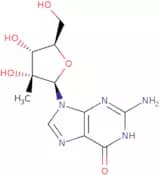
CAS:2'-C-Methylguanosine is a synthetic nucleoside analog of guanosine, modified at the 2'-carbon of the ribose sugar with a methyl group. This modification changes the molecule's biological behavior, making it potential useful in antiviral research and biochemical studies, especially those involving RNA synthesis.Formula:C11H15N5O5Purezza:Min. 95%Colore e forma:PowderPeso molecolare:297.27 g/mol5'-O-Benzoyl-2'-deoxy-N2-isobutyrylguanosine
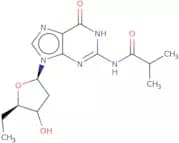
CAS:<p>5'-O-Benzoyl-2'-deoxy-N2-isobutyrylguanosine is a novel nucleoside that is synthesized by the modification of 5'-O-benzoyl-2'-deoxyguanosine with 2',3' -diisobutyrylaminopropylidene. It has shown anticancer, antiviral, and antiretroviral properties in vitro. In addition, this compound has been shown to inhibit the growth of human leukemia cells in vivo in a dose dependent manner. The structure of 5'-O-benzoyl-2'-deoxy-N2-isobutyrylguanosine is similar to that of the natural nucleosides adenosine and guanosine.</p>Formula:C21H23N5O6Purezza:Min. 97 Area-%Colore e forma:Off-White PowderPeso molecolare:441.45 g/mol5-Chloro-2'-deoxycytidine
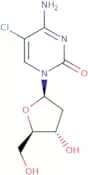
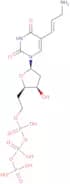
CAS:<p>5-Chloro-2'-deoxycytidine (5-Cl-dC) is a nucleoside analog that inhibits DNA synthesis by blocking the action of thymidylate synthase. It can be used in animal models to study bowel diseases, such as ulcerative colitis and Crohn's disease. 5-Cl-dC has been shown to be effective in treating the effects of radiation and chemical toxicity in HL60 cells, a type of human leukemia cell line. 5-Cl-dC has also been shown to enhance the cytotoxicity of eosinophil peroxidase, which is an enzyme that may be involved in the pathogenesis of asthma. This drug is currently being evaluated for its safety and efficacy in clinical trials involving patients with myelodysplastic syndrome or acute myeloid leukemia who are at risk for developing leukemia.</p>Formula:C9H12CIN3O4Purezza:Min. 95%Colore e forma:PowderPeso molecolare:261.67 g/mol5-Aminoallyl 2'-deoxyuridine 5'-triphosphate lithium salt - 100mM aqueous solution
CAS:5-Aminoallyl 2'-deoxyuridine 5'-triphosphate lithium salt - 100mM aqueous solution is a novel nucleoside analog with antiviral and anticancer activity. It has been shown to inhibit the replication of HIV-1 in human peripheral blood mononuclear cells and to inhibit tumor growth in mice. This drug also inhibits DNA synthesis, which may be due to its ability to inhibit ribonucleotide reductase and deoxynucleotide reductase, enzymes that are necessary for DNA synthesis.Formula:C12H20N3O14P3·xLiPurezza:Min. 95%Colore e forma:Colorless PowderPeso molecolare:523.22 g/mol5-Aminouridine hydrochloride
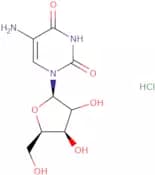
CAS:5-Aminouridine hydrochloride is a novel nucleoside that is an inhibitor of RNA polymerase. It has been shown to be active against cancer cells, and is also effective in the treatment of viral infections such as HIV and hepatitis B. 5-Aminouridine hydrochloride is synthesized by reacting uracil with ammonia and hydrogen chloride. The product can be used as a building block for monophosphate or diphosphate analogs, which are important components in the synthesis of DNA and RNA. This product is available at high purity with low impurity levels.Formula:C9H14ClN3O6Purezza:(%) Min. 95%Colore e forma:PowderPeso molecolare:295.68 g/mol2'-O-tert-Butyldimethylsilyl-5'-O-DMT-1-methylguanosine 3'-CE phosphoramidite
CAS:2'-O-tert-Butyldimethylsilyl-5'-O-DMT-1-methylguanosine 3'-CE phosphoramidite is a synthetic, antiviral monophosphate nucleoside. It is an activator that increases the activity of other nucleosides and can be used in DNA synthesis by incorporation into DNA molecules. 2'-O-tert-Butyldimethylsilyl-5'-O-DMT-1-methylguanosine 3'-CE phosphoramidite has been shown to be effective against Hepatitis C virus, Human Immunodeficiency Virus 1 (HIV), and Herpes Simplex Virus 1.Formula:C47H64N7O8PSiPurezza:Min. 95%Colore e forma:PowderPeso molecolare:914.11 g/mol5'-Amino-5'-deoxyguanosine
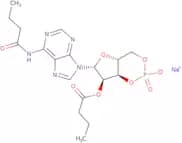
CAS:5'-Amino-5'-deoxyguanosine (5-ADG) is an intermediate in the de novo synthesis of guanine nucleotides. It can be synthesized from 5-aminoimidazole ribonucleotide and guanosine monophosphate (GMP). 5-ADG is a substrate for the enzyme GTP cyclohydrolase, which converts it to GMP. This intermediate can also be formed by the action of phosphoryl chloride on 5-aminoimidazole ribonucleotide. The reaction of 5-ADG with malonic acid leads to the formation of inosinic acid, which has been postulated to be a precursor of purines. This conversion is catalyzed by adenylosuccinate synthetase and the enzyme adenylosuccinase.Formula:C10H14N6O4Purezza:Min. 95 Area-%Colore e forma:PowderPeso molecolare:282.26 g/molN6,2'-O-Dibutyryladenosine-3',5'-cyclic monophosphate sodium
CAS:N6,2'-O-Dibutyryladenosine-3',5'-cyclic monophosphate sodium (DB-cAMP) is a cyclic nucleoside that has been shown to promote dopaminergic neuron differentiation. It is commonly used in research studies involving the differentiation of induced pluripotent stem cell (iPSC)-derived neurons. This compound acts by activating intracellular signaling pathways that are involved in neuronal development and function. Its ability to enhance dopaminergic neuron differentiation makes it a valuable tool for researchers studying neurodegenerative diseases and exploring potential treatments.Formula:C18H23N5O8PNaPurezza:Min. 95 Area-%Colore e forma:Off-White PowderPeso molecolare:491.38 g/mol2'-Deoxy-5'-O-DMT-2'-fluoro-N2-isobutyrylguanosine
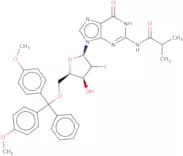
CAS:2'-Deoxy-5'-O-DMT-2'-fluoro-N2-isobutyrylguanosine is a synthetic nucleoside. It is an activator for DNA synthesis and has anticancer, antiviral and antifungal properties. This product can be used as a reagent in the synthesis of DNA or RNA. This compound also has high purity and high quality.Formula:C35H36FN5O7Purezza:Min. 95%Colore e forma:Off-White PowderPeso molecolare:657.7 g/molZidovudine
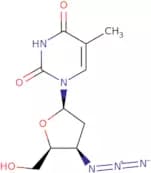
CAS:Inhibitor of reverse transcriptaseFormula:C10H13N5O4Purezza:Min. 95%Colore e forma:Off-White PowderPeso molecolare:267.24 g/mol8-Aminoadenosine
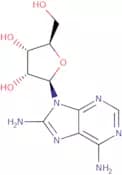
CAS:8-Aminoadenosine can be used to study the mitochondrial membrane potential, a critical cellular function in which ATP levels are maintained by oxidative phosphorylation. 8-Aminoadenosine is one of the few drugs that have been shown to increase ATP levels in cells. It does this by increasing the permeability of mitochondria membranes and the rate of electron transport from complex I to complex II. The reaction mechanism is thought to involve an intramolecular hydrogen transfer from NADH to 8-aminoadenosine, forming an unstable intermediate that undergoes a conformational change that enables it to react with oxygen. 8-Aminoadenosine has been shown as an effective treatment for certain autoimmune diseases and resistant breast cancer. It also has anti-inflammatory effects, as well as receptor activity against HIV infection and Toll-like receptors.Formula:C10H14N6O4Purezza:Min. 95%Colore e forma:PowderPeso molecolare:282.26 g/mol