Nucleotidi
I nucleotidi sono composti organici che fungono da mattoni per la costruzione degli acidi nucleici, essenziali per la formazione del DNA e dell'RNA. Ogni nucleotide è composto da una base azotata, una molecola di zucchero e uno o più gruppi fosfato. Questi nucleotidi si uniscono per formare lunghe catene, creando il materiale genetico che porta e trasmette informazioni genetiche in tutti gli organismi viventi. In questa sezione, troverai una vasta gamma di nucleotidi cruciali per la ricerca in genetica, biologia molecolare e biochimica. Sono fondamentali per studiare i processi genetici, sintetizzare acidi nucleici e sviluppare strumenti diagnostici e terapeutici. Da CymitQuimica, offriamo nucleotidi di alta qualità per supportare la tua ricerca scientifica e applicazioni, garantendo precisione e affidabilità nei tuoi esperimenti.
Sottocategorie di "Nucleotidi"
Trovati 2634 prodotti di "Nucleotidi"
Ordinare per
Purezza (%)
0
100
|
0
|
50
|
90
|
95
|
100
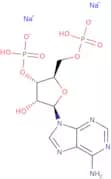
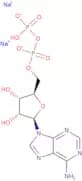
Adenosine 3',5'-diphosphate disodium salt
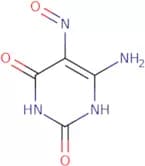
CAS:<p>Adenosine 3',5'-diphosphate disodium salt is a nucleotide that is found in all cells and is involved in the regulation of many physiological processes, including energy metabolism and blood flow. It has inhibitory effects on platelets and calcium ion channels. Adenosine 3',5'-diphosphate disodium salt also inhibits the synthesis of prostaglandins by blocking the conversion of arachidonic acid to prostaglandin H2, which leads to an anti-inflammatory effect. Adenosine 3',5'-diphosphate disodium salt has been shown to be effective in treating primary pulmonary hypertension and bowel disease. The reaction solution can be used for polymerase chain reactions, multivariate logistic regression, or other applications.</p>Formula:C10H15N5O10P2·2NaPurezza:Min. 96 Area-%Colore e forma:White Beige PowderPeso molecolare:473.18 g/mol4-Amino-2,6-dihydroxy-5-nitrosopyrimidine
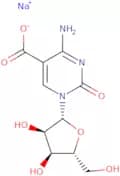
CAS:<p>4-Amino-2,6-dihydroxy-5-nitrosopyrimidine is a molecule that has been shown to be an effective inhibitor of the enzyme tyrosinase in the oxidation of tyrosine to DOPA, which is a precursor of melanin. It is believed that vibrational and structural changes during these reactions are responsible for the inhibitory effects. 4-Amino-2,6-dihydroxy-5-nitrosopyrimidine has also been shown to have anti cancer effects on glioma cells. This molecule binds to copper ions, forming a chelate ring that can stabilize reactive intermediates and terminate free radicals. The chlorine atom on this molecule may be responsible for its cytotoxic effects by reacting with nucleophilic sites on proteins. The functional groups on this molecule react with acid catalysts, such as protonation or dehydration reactions.</p>Formula:C4H4N4O3Purezza:Min. 98 Area-%Colore e forma:PowderPeso molecolare:156.1 g/molCytidine-5-carboxylic acid sodium
CAS:<p>Cytidine-5-carboxylic acid sodium salt is a nucleoside that is used as an activator for the synthesis of phosphoramidites. It is also used in anticancer and antiviral research as a component of DNA. Cytidine-5-carboxylic acid sodium salt is available in high purity, with a monophosphate form and diphosphate forms available.</p>Formula:C10H12N3O7·NaPurezza:Min. 95%Colore e forma:PowderPeso molecolare:309.21 g/mol2'-O-Methylinosine
CAS:<p>2'-O-Methylinosine is a nucleoside that is structurally related to inosine. It has been shown to induce apoptotic cell death in HIV-infected cells by inhibiting the synthesis of rRNA and by inhibiting the activity of the transcriptase enzyme. 2'-O-Methylinosine has also been shown to inhibit the replication of RNA viruses, such as herpes simplex virus and cytomegalovirus, and it can be used as an experimental model for studying apoptosis. 2'-O-Methylinosine can be synthesized from inosine using a chromatographic method that utilizes hydroxylamine. The chemical structure of this nucleoside is amphipathic, which allows it to bind both DNA and RNA strands.</p>Formula:C11H14N4O5Purezza:Min. 99 Area-%Colore e forma:White PowderPeso molecolare:282.25 g/mol9-(2'-Deoxy-2'-fluoro-β-D-arabinofuranosyl)guanine
CAS:<p>9-(2'-Deoxy-2'-fluoro-b-D-arabinofuranosyl)guanine is a nucleoside phosphorylase inhibitor that is used to treat inflammatory bowel disease. It has been shown to be effective in treating women with inflammatory bowel disease, and has no significant side effects. 9-(2'-Deoxy-2'-fluoro-b-D-arabinofuranosyl)guanine inhibits the bacterial enzyme nucleoside phosphorylase, which is responsible for the conversion of guanosine triphosphate (GTP) to guanosine diphosphate (GDP). This inhibition prevents the synthesis of DNA and RNA by blocking the conversion of GTP and GDP into AMP and GMP. The drug binds to the active site of nucleoside phosphorylase, which is located in the bacterial cytoplasmic membrane. 9-(2'-Deoxy-2'-fluoro</p>Formula:C10H12FN5O4Purezza:Min. 97 Area-%Colore e forma:PowderPeso molecolare:285.24 g/mol2'-Amino-2'-deoxyadenosine-5'-triphosphate sodium salt - aqueous solution
CAS:<p>2'-Amino-2'-deoxyadenosine-5'-triphosphate sodium salt - aqueous solution is a modified ATP analog, where the ribose has a 2'-amino substitution. This compound has potential research applications</p>Formula:C10H17N6O12P3·xNaPurezza:Min. 95 Area-%Colore e forma:PowderPeso molecolare:506.2 g/molAdenosine 5'-diphosphate disodium salt
CAS:<p>Adenosine 5'-diphosphate disodium salt is a sodium salt of adenosine 5'-diphosphate. It is found in the extract of plants such as salvianolic acid and rhizoma gastrodiae, as well as in dinucleotide phosphate. This product has been shown to have cardioprotective effects against ischemia reperfusion injury in animal models. It also has congestive heart failure activity, which may be due to its ability to relax vascular smooth muscle and increase the diameter of lymphatic vessels. Adenosine 5'-diphosphate disodium salt has been shown to inhibit the binding of serotonin (5-hydroxytryptamine) to 5-HT2 receptors, which are present in heart tissue.</p>Formula:C10H13N5Na2O10P2Purezza:Min. 95 Area-%Colore e forma:White PowderPeso molecolare:471.16 g/mol8-Chloro-2'-deoxyadenosine
CAS:<p>8-Chloro-2'-deoxyadenosine is a nucleoside analogue and a disinfectant that inhibits the synthesis of DNA. It has been used to control active viruses and to induce apoptotic cell death in cancer cells. 8-Chloro-2'-deoxyadenosine binds to viral RNA and DNA, preventing viral replication by inhibiting the activity of reverse transcriptase, which is an enzyme that copies the virus's genetic information from RNA into DNA. This drug has also been shown to be effective for the treatment of HIV infection. 8-Chloro-2'-deoxyadenosine disrupts DNA synthesis and cellular metabolism by blocking transcription and protein synthesis.</p>Formula:C10H12ClN5O3Purezza:Min. 95%Colore e forma:PowderPeso molecolare:285.69 g/mol2'-Deoxycytidine-5'-diphosphate trisodium salt hydrate
CAS:2'-Deoxycytidine-5'-diphosphate trisodium salt hydrate is a nucleoside that is used as an antiviral agent in the treatment of herpes zoster and varicella zoster. This drug also has anticancer properties, which may be due to its ability to inhibit DNA synthesis. 2'-Deoxycytidine-5'-diphosphate trisodium salt hydrate is a novel nucleotide analogue that has been modified to improve its stability, solubility and bioavailability. It can be used as a starting material for the synthesis of phosphoramidites by reacting with phosphorous pentoxide at elevated temperatures and pH. CAS No. 151151-32-5Formula:C9H12N3O10P2·Na3Purezza:Min. 95%Colore e forma:White Off-White PowderPeso molecolare:453.12 g/molQueuosine
CAS:<p>Queuosine is a modified nucleoside found in the tRNA of both eukaryotic and prokaryotic organisms. It is primarily sourced from the gut microbiota and obtained through dietary intake, as humans lack the biosynthetic machinery to produce it endogenously. Queuosine plays a crucial role in cellular processes by contributing to the accuracy of protein synthesis, impacting cellular growth and maintenance. Its importance extends to understanding the molecular mechanisms underpinning various physiological processes and the potential for dysregulation in diseases. Ongoing research is exploring queuosine's implications in cellular metabolism, including its role in cancer biology and neurobiology. Understanding the pathways and effects of queuosine incorporation into tRNA may provide insights into novel therapeutic avenues for targeting metabolic disorders and diseases associated with translational fidelity.</p>Formula:C17H23N5O7Purezza:Min. 95 Area-%Colore e forma:PowderPeso molecolare:409.39 g/mol1-(β-D-Arabinofuranosyl)thymine
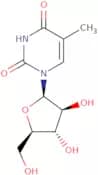
CAS:<p>1-(β-D-Arabinofuranosyl)thymine is a nucleoside analog. It has a similar structure to thymidine. It has possible applications in research into the specificity and kinetics of thymidine kinases and has demonstrated antiviral activity against some viruses.</p>Formula:C10H14N2O6Purezza:Min. 95%Colore e forma:White PowderPeso molecolare:258.23 g/molUridine
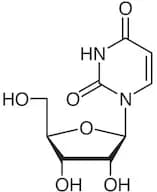
CAS:Formula:C9H12N2O6Purezza:>98.0%(T)(HPLC)Colore e forma:White powder to crystalPeso molecolare:244.205-Aza-7-deazaguanosine
CAS:<p>5-Aza-7-deazaguanosine is a nucleoside analogue that has antiviral activity against herpes simplex virus, influenza, and other DNA viruses. 5-Aza-7-deazaguanosine is an analog of guanosine with the addition of a 7-deaza group on the nitrogen atom. This drug inhibits viral replication by inhibiting the polymerase function of the viral NS5B protein, which is essential for DNA synthesis. The structure activity relationship studies have shown that this compound has anti-hepatitis B virus activity, but not against hepatitis C virus. 5-Aza-7-deazaguanosine has been shown to be effective in animal models as well as in humans without any significant toxicity issues.</p>Formula:C10H13N5O5Purezza:Min. 95%Colore e forma:PowderPeso molecolare:283.24 g/mol6-Methyl-5-nitrouracil
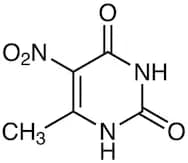
CAS:Formula:C5H5N3O4Purezza:>95.0%(T)(HPLC)Colore e forma:Light orange to Yellow to Green powder to crystalPeso molecolare:171.11β-Nicotinamide Adenine Dinucleotide oxidized form [for Biochemical Research]
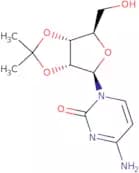
CAS:Formula:C21H27N7O14P2Purezza:>95.0%(T)(HPLC)Colore e forma:White to Almost white powder to crystalPeso molecolare:663.432',3'-O-Isopropylidenecytidine
CAS:<p>2',3'-O-Isopropylidenecytidine is a nucleoside for use in research applications</p>Formula:C12H17N3O5Purezza:Min. 95%Colore e forma:PowderPeso molecolare:283.28 g/mol5-Methyl-2-thiouracil
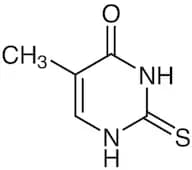
CAS:Formula:C5H6N2OSPurezza:>98.0%(T)(HPLC)Colore e forma:White to Almost white powder to crystalPeso molecolare:142.182'-Deoxy-L-uridine
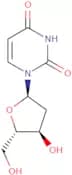
CAS:<p>2'-Deoxy-L-uridine is a nucleoside that is found in the human body. It phosphorylates l-thymidine, which is a natural substrate, and this reaction prevents the formation of diphosphate from d-ribose 5'-monophosphate. 2'-Deoxy-L-uridine is an exogenous substance that inhibits cell growth by affecting protein synthesis and DNA replication. 2'-Deoxy-L-uridine has been shown to be more efficient than wild type uridine in inhibiting cell growth in vitro at concentrations of 1 mM or greater. The enantiomers of 2'-deoxy-L-uridine affect cell growth differently, with the (R)-enantiomer being more potent than the (S)-enantiomer.</p>Formula:C9H12N2O5Purezza:Min. 95%Colore e forma:White PowderPeso molecolare:228.2 g/mol2'-Deoxy-N2-phenoxyacetylguanosine
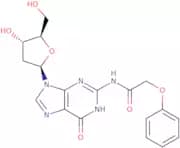
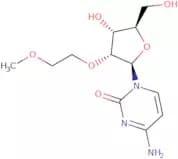
CAS:<p>2'-deoxy-N2-phenoxyacetylguanosine is a synthetic nucleoside that is used as a substrate in experiments to study the properties of guanine. The compound can be synthesized by the reaction of 2'-deoxy-N2-phenoxyacetaldehyde with guanine. The synthesis starts with the condensation of 2'-deoxyribose and N2-phenoxyacetaldehyde, followed by the oxidation of the resulting anhydride to give aldehyde, which reacts with guanine to form a Schiff base. This then undergoes hydrolysis to yield 2'-deoxy-N2-phenoxyacetylguanosine.</p>Formula:C18H19N5O6Purezza:Min. 95%Peso molecolare:401.38 g/mol2'-O-(2-Methoxyethyl)cytidine
CAS:<p>2'-O-(2-Methoxyethyl)cytidine is a nutrient that is used to maintain the dry weight of Lactobacillus acidophilus cultures. It is also used as a texturizing agent in food products. 2'-O-(2-Methoxyethyl)cytidine has been shown to increase the rate of lactose hydrolysis and reduce the viscosity of yogurt by activating L. acidophilus. 2'-O-(2-Methoxyethyl)cytidine is also used as a dietary supplement for people with intestinal disorders, such as irritable bowel syndrome. It can be found in sodium salts and n-methyl-d-glucamine.</p>Formula:C12H19N3O6Purezza:Min. 95%Colore e forma:PowderPeso molecolare:301.3 g/mol







![β-Nicotinamide Adenine Dinucleotide oxidized form [for Biochemical Research]](/_next/image/?url=https%3A%2Fstatic.cymitquimica.com%2Fproducts%2F3B%2Fthumb-webp%2FD0919.webp&w=3840&q=75)