Nucleotidi
Sottocategorie di "Nucleotidi"
Trovati 2634 prodotti di "Nucleotidi"
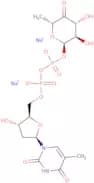
Thymidine-5'-diphosphate-4-keto-6-deoxy-D-glucose disodium salt
CAS:Thymidine-5'-diphosphate-4-keto-6-deoxy-D-glucose disodium salt is a precursor in the synthesis of nucleoside sugars in pathways such as rhamnose biosynthesis.Formula:C16H22N2O15P2Na2Purezza:Min. 85 Area-%Colore e forma:White PowderPeso molecolare:590.28 g/molN6-Benzoyl-3'-O-tert-butyldimethylsilyl-2'-O-(2-methoxyethyl)adenosine
N6-Benzoyl-3'-O-tert-butyldimethylsilyl-2'-O-(2-methoxyethyl)adenosine is a modified nucleoside with antiviral activity. This compound is synthesized by a modified method that avoids the use of phosphoramidites, which are usually used to synthesize nucleosides. N6-Benzoyl-3'-O-tert-butyldimethylsilyl-2'-O-(2-methoxyethyl)adenosine is an activator of viral RNA polymerase and has been shown to be active against HIV and herpes simplex virus type 1.
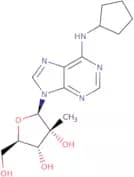
Purezza:Min. 95%N6-Cyclopentyl-2'-C-methyl-adenosine
CAS:N6-Cyclopentyl-2'-C-methyl-adenosine is an antiviral agent that inhibits the synthesis of DNA by preventing the formation of RNA from DNA. It has been shown to be effective against HIV and other retroviruses. N6-Cyclopentyl-2'-C-methyl-adenosine is a synthetic nucleoside that is activated by phosphorylation in cells, which leads to the synthesis of monophosphate (5'-AMP). This compound is used for the treatment of cancer and HIV infection.Formula:C16H23N5O4Purezza:Min. 95%Colore e forma:PowderPeso molecolare:349.39 g/mol2,6-Diamino-9-[3',5'-O-(1,1,3,3-tetraisopropyl-1,3-disiloxanediyl)-β-D-ribofuranosyl]purine
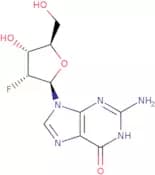
CAS:2,6-Diamino-9-[3',5'-O-(1,1,3,3-tetraisopropyl-1,3-disiloxanediyl)-β-D-ribofuranosyl]purine is a protected nucleoside derivative that can potentially be used as an intermediate in the chemical synthesis of nucleoside analogs, especially for RNA or DNA oligonucleotides. This compounds has a 2,6-Diaminopurine – a purine analog structurally similar to adenine but with an additional amino group at the 2-position and a β-D-ribofuranosyl. The 3′ and 5′ hydroxyl groups of the ribose are protected with a bulky 1,1,3,3-tetraisopropyl-1,3-disiloxanediyl (TIPDS) group. This is a silyl protecting group often used to block reactivity during nucleoside synthesis.Formula:C22H40N6O5Si2Purezza:Min. 95%Colore e forma:White To Off-White SolidPeso molecolare:524.77 g/mol2'-Deoxy-2'-fluoroguanosine
CAS:2'-Deoxy-2'-fluoroguanosine is a modified nucleoside analog where the base is guanine, the sugar is deoxyribose, and a fluoro group is attached to the 2' position of the sugar ring. This modification potnetially enhances the stability and nuclease resistance of the nucleoside, making it a useful tool in molecular biology and drug development.
Formula:C10H12FN5O4Purezza:Min. 98 Area-%Colore e forma:White PowderPeso molecolare:285.23 g/molDeoxyribonucleic acid low molecular weight from salmon sperm
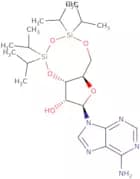
CAS:This low molecular DNA (deoxyribonucleic acid) from salmon sperm is a fragment that is an effective indicator of the presence of guanine in urine samples, and can be used to detect lipoperoxidation in animal hemocytes. It has also been shown to be a sublethal oxidative stress agent for human urine, which induces irreversible oxidation in the enzyme activities of signal detection. According to some recent research studies, this product is being investigated as an environmental pollutant indicator and could be used as an effective wastewater treatment method.Colore e forma:Powder3',5'-O-(1,1,3,3-Tetraisopropyl-1,3-disiloxanediyl)adenosine
CAS:Used as a protected adenosine nucleoside in RNA synthesis. The 1,1,3,3-tetraisopropyl-1,3-disiloxanediyl (TIPDS or TBDPSi2) group is a bulky, acid-labile protecting group specifically designed to protect the 3' and 5' hydroxyl groups of ribonucleosides during RNA oligonucleotide synthesis.Formula:C22H39N5O5Si2Purezza:Min. 95%Colore e forma:PowderPeso molecolare:509.76 g/mol2'-C-Methylcytidine 5'-triphosphate triethylammonium salt - aqueous solution
CAS:2'-C-Methylcytidine 5'-triphosphate triethylammonium salt - aqueous solution, is a synthetic nucleotide analog. It has potential application in antiviral research, particularly for studying RNA-dependent RNA polymerase (RdRP) activity in RNA viruses. It mimics the natural cytidine triphosphate (CTP) but includes a 2'-C-methyl modification on the ribose sugar.Formula:C10H18N3O14P3·4C6H15NPurezza:Min. 95 Area-%Colore e forma:PowderPeso molecolare:901.94 g/mol2'-Deoxy-5'-O-DMT-N6-isobutyryladenosine
CAS:2'-Deoxy-5'-O-DMT-N6-isobutyryladenosine is a modified ribonucleoside that has antiviral and anticancer activity. It is synthesized by modifying the 5' hydroxyl group of the natural nucleoside, 2'-deoxyadenosine, with a 6-aminohexanoic acid to give 2'-deoxy-5'-O-(2,4,6-trimethoxybenzoyl)adenosine. This modification increases the affinity for viral DNA polymerases, leading to higher antiviral activity. The drug also has antitumor effects against human leukemia cells in culture.Formula:C35H37N5O6Purezza:Min. 95%Colore e forma:Off-White To Light (Or Pale) Yellow SolidPeso molecolare:623.72 g/mol5'-O-DMT-2'-O-(2-methoxyethyl)-5-methyluridine
CAS:5'-O-DMT-2'-O-(2-methoxyethyl)-5-methyluridine is a novel, synthetic nucleoside with antiviral and antitumor activity. It is an analogue of 5'-O-DMT-2'-O-(2-methoxyethyl)uridine, which has been shown to be active against herpes simplex virus type 1 (HSV1) in vitro. The phosphoramidites of 5'-O-DMT-2'-O-(2-methoxyethyl)-5-methyluridine are modified at the 2' position with a methyl group and at the 5' position with a methoxyethyl group. These modifications make it more resistant to degradation by intracellular enzymes. The anticancer activity of 5'-O-DMT-2'-O-(2-methoxyethyl)-5-methyluridine was demonstrated in preclinical studies using human tumor cell lines.Formula:C34H38N2O9Purezza:Min. 95%Colore e forma:Off-White PowderPeso molecolare:618.67 g/mol9-(2',3',5'-Tri-O-benzyl-β-D-arabinofuranosyl)adenine
CAS:9-(2',3',5'-Tri-O-benzyl-b-D-arabinofuranosyl)adenine is a nucleoside that has shown anticancer and antiviral properties. It inhibits replication of DNA and RNA in cells, which may be due to its ability to inhibit the synthesis of deoxyribonucleotides and ribonucleotides. This compound is synthetically produced from 2',3',5'-tri-O-benzyl b-D-arabinofuranosyl chloride and adenine monophosphate (AMP). 9-(2',3',5'-Tri-O-benzyl-b-D-arabinofuranosyl)adenine is also known as arabinoside A.Formula:C31H31N5O4Purezza:Min. 95%Peso molecolare:537.61 g/mol5'-Deoxythymidine
CAS:5'-Deoxythymidine is a nucleoside analog with low-energy electrons. This drug inhibits the synthesis of DNA by binding to the ribonucleotide reductase enzyme and preventing the conversion of ribonucleotides to deoxyribonucleotides. 5'-Deoxythymidine has been shown to inhibit cell growth in tumor cell lines, which may be due to its ability to interfere with mirna-mediated gene expression. This drug also has a kinetic effect on regulatory proteins, such as cyclin-dependent kinases, that are involved in the regulation of cell cycle progression.
Formula:C10H14N2O4Purezza:Min. 95%Colore e forma:PowderPeso molecolare:226.23 g/molβ-Nicotinamide adenine dinucleotide
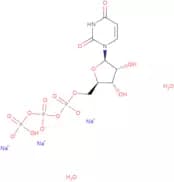
CAS:Nicotinamide adenine dinucleotide (NAD), is a very important and essential coenzyme formed by the union of two nucleotides covalently bond to each other by their phosphates group. NAD is present in cells either in its oxidative form or in its reduced form, NAD+ and NADH respectively. They take part in many redox reactions, carrying electrons from one molecule to another.Formula:C21H27N7O14P2Purezza:Min. 95 Area-%Colore e forma:White PowderPeso molecolare:663.43 g/molUridine 5'-triphosphate dihydrate trisodium salt
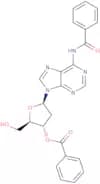
CAS:Uridine 5'-triphosphate dihydrate trisodium salt is a nucleotide that is involved in the synthesis of RNA. This product has been used as a supplement to promote healthy eyes and skin, as well as to treat Alzheimer's disease. It has been shown to be an efficient method for the detection of active substances by hydrophilic interaction chromatography (HILIC). The HILIC method involves separating molecules based on their hydrophobic or hydrophilic properties, which are determined by the ionic strength of the solution. Uridine 5'-triphosphate dihydrate trisodium salt binds with chloride ions, which prevents it from binding with other organic compounds. The chloride ions then serve as an end point that can be detected using ultraviolet light.Formula:C9H12N2O15P3·3Na·2H2OPurezza:Min. 95 Area-%Colore e forma:White PowderPeso molecolare:586.12 g/molN6,3'-O-Dibenzoyl-2'-deoxyadenosine
CAS:N6,3'-O-Dibenzoyl-2'-deoxyadenosine is a nucleoside that is used as a biochemical reagent in molecular biology. N6,3'-O-Dibenzoyl-2'-deoxyadenosine has been shown to be an inhibitor of the enzyme phosphodiesterase and also binds to DNA. This compound has been shown to have antibacterial activity against Gram-positive bacteria, such as Staphylococcus aureus and Clostridium perfringens. The lipophilicity of this compound allows it to cross the cell membrane and cleave DNA at the site of replication. N6,3'-O-Dibenzoyl-2'-deoxyadenosine is an analog of 6,4’-dihydroxybenzophenone (DBP) and can be synthesized from DBP by reacting with dibenzoyl chloride in chloroform
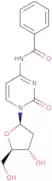
Formula:C24H21N5O5Purezza:Min. 98 Area-%Colore e forma:PowderPeso molecolare:459.47 g/molN4-Benzoyl-2'-deoxycytidine
CAS:N4-Benzoyl-2'-deoxycytidine is a fluorescent nucleoside that has been used to study the molecular interactions between sugar residues and the phosphate groups of nucleic acids. It is used as a reagent for glycosidation, which involves the formation of a glycosidic linkage between an alcohol group in a saccharide or oligosaccharide and the hydroxyl group in an aromatic acid. N4-Benzoyl-2'-deoxycytidine has also been synthesized by solid-phase techniques. This synthetic method is based on phosphoramidite chemistry and uses an automated DNA synthesizer to produce oligonucleotides with specific sequences. The synthesis of this nucleoside relies on the use of fluorescent dyes such as fluorescein, rhodamine, and coumarin to monitor progress during synthesis.Formula:C16H17N3O5Purezza:Min. 95%Colore e forma:White PowderPeso molecolare:331.33 g/mol2-Aminoperimidine hydrochloride
CAS:2-Aminoperimidine hydrochloride is the hydrochloride salt of 2-aminoperimidine, a polycyclic aromatic heterocycle featuring a fused naphthalene–pyrimidine ring system with an amino group at the 2-position. The protonated amino group forms a stable crystalline salt with hydrochloric acid, enhancing aqueous solubility and facilitating handling in laboratory applications.Formula:C11H9N3•(HCl)xPurezza:Min. 95%Colore e forma:PowderPeso molecolare:219.67 g/mol1-(2'-Deoxy-3',5'-di-O-toluoyl-a-D-ribofuranosyl)-4-amino-1,2-dihydro-2-oxo-1,3,5-triazine
CAS:1-(2'-Deoxy-3',5'-di-O-toluoyl-a-D-ribofuranosyl)-4-amino-1,2-dihydro-2-oxo-1,3,5-triazine is a nucleoside derivative that features a modified pyrimidinone (triazine) base attached to a protected deoxyribose sugar. This molecule can be used in research.Formula:C24H24N4O6Purezza:Min. 95%Colore e forma:White To Off-White SolidPeso molecolare:464.48 g/molN4-Benzoyl-5'-O-DMT-2'-O-(2-methoxyethyl)-5-methylcytidine
CAS:N4-Benzoyl-5'-O-DMT-2'-O-(2-methoxyethyl)-5-methylcytidine is a new nucleoside analogue that is a phosphoramidite. It has been synthesized as an anticancer agent and antiviral drug. N4-Benzoyl-5'-O-DMT-2'-O-(2-methoxyethyl)-5-methylcytidine has been shown to inhibit the growth of human tumor cells in vitro, suggesting that it may have anticancer activity. This compound also inhibits viral replication by inhibiting DNA synthesis and RNA transcription in infected cells.Formula:C41H43N3O9Purezza:Min. 97 Area-%Colore e forma:PowderPeso molecolare:721.79 g/molN4-Benzoyl-2'-deoxy-2'-fluorocytidine
CAS:N4-Benzoyl-2'-deoxy-2'-fluorocytidine is a novel, synthetic nucleoside that has been shown to inhibit the growth of cancer cells and is being investigated as a potential anticancer drug. N4-Benzoyl-2'-deoxy-2'-fluorocytidine has also been found to be active against HIV, Herpes simplex virus type 1 (HSV-1) and 2 (HSV-2), and influenza A virus. It prevents the replication of viruses by inhibiting DNA synthesis in the host cell.Formula:C16H16FN3O5Purezza:Min. 95%Colore e forma:PowderPeso molecolare:349.31 g/mol


![2,6-Diamino-9-[3',5'-O-(1,1,3,3-tetraisopropyl-1,3-disiloxanediyl)-β-D-ribofuranosyl]purine](/_next/image/?url=https%3A%2Fstatic.cymitquimica.com%2Fproducts%2F3D%2Fthumb-webp%2FND08565.webp&w=3840&q=75)