Vitamine
Le vitamine sono composti organici richiesti in piccole quantità per funzioni fisiologiche essenziali e per la salute generale. Svolgono ruoli cruciali nel metabolismo, nella funzione immunitaria e nel mantenimento cellulare. In questa categoria troverete una vasta gamma di vitamine, includendo tipi solubili in acqua e in grassi, necessari per la ricerca in nutrizione, biochimica e scienze della salute. Da CymitQuimica, offriamo vitamine di alta qualità per supportare i vostri sforzi di ricerca e sviluppo, garantendo la precisione e l'efficacia dei vostri studi sulle funzioni e le carenze vitaminiche.
Trovati 1123 prodotti di "Vitamine"
Ordinare per
Purezza (%)
0
100
|
0
|
50
|
90
|
95
|
100
3-Butyl-1,10-ethylidenealloxazinium chloride
CAS:3-Butyl-1,10-ethylidenealloxazinium chloride is a synthetic organic compound, which is a cationic dye derived from the alloxazinium class of compounds. Its molecular structure is characterized by the presence of an alloxazine core, which serves as the electron-releasing moiety, coupled with ethylidene and butyl groups that contribute to its solubility and electron-density properties.Formula:C16H17N4O2·ClPurezza:Min. 95%Peso molecolare:332.78 g/molMaxacalcitol
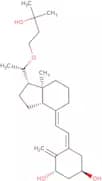
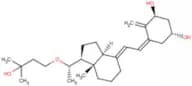
CAS:Maxacalcitol (22-Oxacalcitriol) is a ligand of VDR-like receptors and a non-serum calcium vitamin D3 analogue.Formula:C26H42O4Purezza:≥98%Colore e forma:SolidPeso molecolare:418.61Riboflavin-2,4,4α,10α-13C4-1,3-15N2
CAS:<p>Riboflavin-2,4,4α,10α-13C4-1,3-15N2 is a stable isotope-labeled form of riboflavin, which is a type of vitamin B2 molecule. This compound is synthesized with carbon-13 and nitrogen-15 isotopes, providing a distinct mass that enables precise tracking in metabolic studies. The source of this compound is derived from isotopically enriched materials, employing advanced chemical synthesis processes to incorporate stable isotopes into the riboflavin structure without altering its fundamental biochemical properties.</p>Formula:C13C4H20N2N2O6Purezza:Min. 95%Peso molecolare:382.32 g/molD-Biotin - 2%
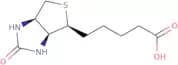
CAS:<p>Biotin is a water-soluble vitamin, also known as vitamin B7. Biotin is an essential coenzyme for five carboxylases in mammalian cells, which play key roles in the metabolism of glucose, amino acids and fatty acids (Zempleni, 2014). Biotin is also used in biochemistry in affinity purification of proteins in the biotin-avidin and biotin-streptavidin systems. Herein, free biotin is used in the elution step to release the recombinant protein from the resin (Diamandis and Christopoulos, 1991).Remainder of the material is maltodextrin.</p>Formula:C10H16N2O3SPurezza:Min. 95%Colore e forma:PowderPeso molecolare:244.31 g/molalpha-Tocotrienol
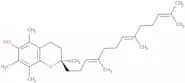
CAS:<p>alpha-Tocotrienol is a chemical compound known as a vitamin E isoform, which is derived primarily from certain plant oils, such as palm oil, rice bran oil, and annatto. This compound exhibits a unique unsaturated side chain, distinguishing it from tocopherols and enabling it to integrate into cellular membranes with greater efficiency.</p>Formula:C29H44O2Purezza:Min. 95%Peso molecolare:424.66 g/molVitamin D3 - 0.5m IU/g=500000 IU/g
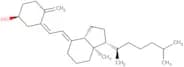
CAS:<p>Vitamin D3 is a fat-soluble vitamin that can be obtained from some fish, mushrooms, and dairy products. The most common form of the vitamin is cholecalciferol (vitamin D3) which can be converted in the liver to calcidiol (25-hydroxycholecalciferol) and in the kidneys to calcitriol (1,25-dihydroxycholecalciferol). Vitamin D3 has been shown to have a positive effect on calcium absorption and bone mineralization. It also has important physiological functions such as regulation of cell growth and differentiation. The solubility of vitamin D3 is dependent on the presence of a hydroxy group at position 3' or 25'. This liquid chromatography method uses an experimental solubility data set for the determination of solubility data for compounds with a hydroxy group at position 3'.</p>Formula:C27H44OPurezza:Min. 95%Colore e forma:PowderPeso molecolare:384.64 g/molβ-Tocopherol
CAS:β-Tocopherol is a type of product known as a naturally occurring form of vitamin E, which is a crucial lipid-soluble antioxidant. This compound is sourced primarily from plant-based oils, such as those derived from nuts, seeds, and vegetables. As an antioxidant, β-Tocopherol plays a pivotal role in the biological systems by scavenging free radicals. It interrupts the propagation of free radical chain reactions, thereby protecting cell membranes from oxidative damage. This is achieved through the donation of hydrogen atoms, which neutralize harmful free radicals.Formula:C28H48O2Purezza:Min. 95%Peso molecolare:416.68 g/molbeta-Tocotrienol
CAS:<p>Beta-Tocotrienol is a biochemical compound that belongs to the vitamin E family. It is derived from sources such as palm oil, rice bran, and certain cereal grains. This compound exhibits its mode of action through the modulation of oxidative stress pathways and inhibition of certain enzymes involved in cell proliferation and cholesterol synthesis, which differentiates it from other tocopherols.</p>Formula:C28H42O2Purezza:Min. 97 Area-%Colore e forma:Clear LiquidPeso molecolare:410.63 g/mol5-Ethyl-3-methyllumiflavinium perchlorate
CAS:<p>5-Ethyl-3-methyllumiflavinium perchlorate is an organic compound that serves as a specialized biochemical reagent. It is synthetically derived, typically from the modification of flavin structures, which are known for their versatile roles in biological systems. The compound's unique configuration allows it to interact with various enzymes and proteins, often acting as an electron mediator due to its lumiflavinium core.</p>Formula:C16H19N4O2ClO4Purezza:Min. 95%Peso molecolare:398.8 g/mol(R)-Acenocoumarol
CAS:(R)-Acenocoumarol ((R)-Acenocoumarin; (R)-Nicoumalone) is a short-acting, orally administered anticoagulant that works by inhibiting vitamin K epoxide reductase (vitamin K1 recycling), similar to Warfarin. It demonstrates greater anticoagulant potency in vivo compared to Warfarin. This compound has a single chiral center, resulting in two enantiomeric forms. The (R)-enantiomer has a longer plasma elimination half-life of 6.6 hours, slower plasma clearance of 1.9 L/h, and stronger anticoagulation effects than the (S)-enantiomer.Formula:C19H15NO6Peso molecolare:353.33Pyridoxamine Dihydrochloride Monohydrate
CAS:Formula:C8H12N2O2·2HCl·H2OPurezza:>98.0%(HPLC)(N)Colore e forma:White to Almost white powder to crystalPeso molecolare:259.13Folic Acid Related Compound A (Calcium Formyltetrahydrofolate) (DISCONTINUED)
CAS:Other vitamins and their derivatives, nesoiFormula:C20H23N7O7·CaColore e forma:PowderPeso molecolare:513.12849Cobamamide (5,6-Dimethylbenzimidazolyl-Co-5'-deoxyadenosylcobamide)
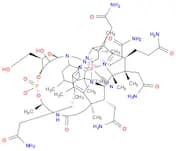
CAS:Vitamin b12 (cyanocobalamin and related compounds with vitamin b12 activity) and its derivativesFormula:C72H100CoN18O17PColore e forma:PowderPeso molecolare:1578.65834Pyridoxine-d3 Hydrochloride (contains ~1% d0)
CAS:Formula:C8H9ClD3NO3Purezza:≥98 atom % D, ≥96% (CP) ;Colore e forma:SolidPeso molecolare:208.6573Cobinamide, Co-(acetato-kO)-, dihydrogen phosphate (ester), innersalt, 3'-ester with(5,6-dimethyl-1-a-D-ribofuranosyl-1H-benzimidazole-kN3)
CAS:Formula:C64H91CoN13O16PPurezza:98%Colore e forma:SolidPeso molecolare:1388.3918Ref: IN-DA00I4FP
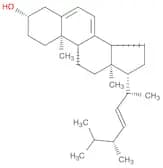
Prodotto fuori produzioneErgosta-5,7,22-trien-3-ol, (3b,22E)-
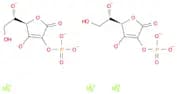
CAS:Formula:C28H44OPurezza:95%Colore e forma:SolidPeso molecolare:396.6484L-Ascorbic acid, 2-(dihydrogen phosphate), magnesium salt (2:3)
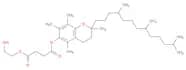
CAS:Formula:C12H12Mg3O18P2Purezza:98%Colore e forma:SolidPeso molecolare:579.0754Poly(oxy-1,2-ethanediyl),a-[4-[[(2R)-3,4-dihydro-2,5,7,8-tetramethyl-2-[(4R,8R)-4,8,12-trimethyltridecyl]-2H-1-benzopyran-6-yl]oxy]-1,4-dioxobutyl]-w-hydroxy-
CAS:Formula:C39H66O8Colore e forma:SolidPeso molecolare:662.9365