Nucleosidi
I nucleosidi sono building blocks fondamentali degli acidi nucleici, composti da una base azotata legata a una molecola di zucchero. In questa sezione, puoi trovare una vasta gamma di nucleosidi essenziali per la ricerca in biologia molecolare, biochimica e farmacologia. Questi composti svolgono ruoli cruciali nella sintesi del DNA e dell'RNA e sono vitali in vari processi metabolici. I nucleosidi vengono utilizzati per studiare il materiale genetico, sviluppare terapie antivirali e antitumorali e comprendere i meccanismi cellulari. Da CymitQuimica, forniamo nucleosidi di alta qualità per supportare le tue esigenze di ricerca e sviluppo, garantendo purezza e affidabilità per le tue applicazioni sperimentali.
Trovati 3569 prodotti di "Nucleosidi"
Ordinare per
Purezza (%)
0
100
|
0
|
50
|
90
|
95
|
100
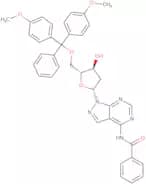
8-Aza-N6-benzoyl-7-deaza-2'-deoxy-5'-O-DMT-adenosine
CAS:<p>8-Aza-N6-benzoyl-7-deaza-2'-deoxy-5'-O-DMT-adenosine is a nucleoside analog that has been modified by replacing the ribose moiety with deoxyribose. This modification increases its stability in vivo and in vitro. 8-Aza-N6-benzoyl-7-deaza-2'-deoxy-5'-O-DMT adenosine is an activator of DNA polymerase, which can be used to synthesize DNA. It is also an antiviral agent, active against herpes simplex virus type 1 and 2, vaccinia virus, and cytomegalovirus. This compound has shown promising anticancer activity against human breast cancer cells grown in culture.</p>Formula:C38H35N5O6Purezza:Min. 95%Peso molecolare:657.71 g/molN4-Acetyl-2'-O-acetyl-5'-O-DMT-arabinosyl cytosine 3'-CE phosphoramidite
<p>N4-Acetyl-2'-O-acetyl-5'-O-DMT-arabinosyl cytosine 3'-CE phosphoramidite is a prodrug that is activated by intracellular enzymes. It has been shown to be an immunostimulatory agent, which modulates the immune system for the treatment of cancer and autoimmune disorders. N4-Acetyl-2'-O-acetyl-5'-O-DMT-arabinosyl cytosine 3'-CE phosphoramidite can also act as a ligand for various cell surface receptors and transporters, including CD28, interleukin 2 receptor alpha chain, CD40, CD84, and MHC class II. The compound has been shown to inhibit tumor cells in culture and induces apoptosis in these cells.</p>Purezza:Min. 95%L-Cytidine
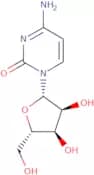
CAS:<p>L-Cytidine is a nucleoside that is found in the body, and is also used as a drug. It is a precursor to other nucleosides, such as cytidine triphosphate, which is involved in DNA synthesis and repair. L-Cytidine has been shown to be effective against HIV infection by inhibiting the activity of the enzyme ns3 protease. This inhibition prevents viral proteins from being released from cells and infecting other cells. L-Cytidine has also been shown to be an inhibitor of creatine kinase and glycosidation, two enzymes that are necessary for cell metabolism. L-Cytidine has also been shown to be reactive with halides, which may lead to unwanted side effects.</p>Formula:C9H13N3O5Purezza:Min. 95%Colore e forma:PowderPeso molecolare:243.22 g/molDiquafosol Impurity 2
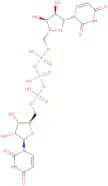
CAS:<p>Diquafosol Impurity 2 is a high-purity phosphoramidite that can be used for the synthesis of DNA, RNA, and deoxyribonucleosides. This product is also a novel activator for phosphoramidites. Diquafosol Impurity 2 has CAS No. 63785-59-1 and a molecular weight of 228.24 g/mol. It is insoluble in water, but soluble in most organic solvents.</p>Formula:C18H25N4O20P3Purezza:Min. 95%Peso molecolare:710.33 g/molN6-Benzoyl-2'-deoxy-5'-O-trityladenosine 3'-CE phosphoramidite
CAS:<p>N6-Benzoyl-2'-deoxy-5'-O-trityladenosine 3'-CE phosphoramidite is a novel nucleoside analog that inhibits the proliferation of cancer cells. It has been shown to inhibit the proliferation of tumor cells in vitro and in vivo, as well as to induce apoptosis. The monophosphate form of this compound has been shown to be an effective antiviral agent against influenza virus. This compound also has high quality and purity.</p>Formula:C45H48N7O5PPurezza:Min. 95%Peso molecolare:797.9 g/mol2'-Deoxy-2'-fluoro-5-iodouridine
CAS:<p>2'-Deoxy-2'-fluoro-5-iodouridine is a nucleoside analog that is a modified version of uridine, where the 2'-fluoro modification is added to the sugar (deoxyribose), and an iodine atom is attached at the 5' position of the uracil base. This combination of modifications provides unique properties that may be useful for research and therapeutic applications.</p>Formula:C9H10FIN2O5Purezza:Min. 95%Colore e forma:White PowderPeso molecolare:372.09 g/molCytidine 5'-triphosphate disodium salt
CAS:<p>Please enquire for more information about Cytidine 5'-triphosphate disodium salt including the price, delivery time and more detailed product information at the technical inquiry form on this page</p>Formula:C9H14N3Na2O14P3Purezza:Min. 97 Area-%Peso molecolare:527.12 g/molPolyinosinic acid tripotassium salt
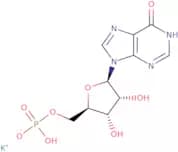
CAS:<p>Polyinosinic acid is a single stranded RNA analog which is combined with polycytidylic acid (poly C) to form a stable duplex structure known as Polyinosinic acid-polycytidylic acid (Poly I:C). PolyI:C stimulates the secretion of pro-inflammatory cytokines and type I interferon through its interaction with endosomal Toll-like receptor 3 (TLR-3) and the cytoplasmic receptors melanoma differentiation-associated gene 5 (MDA-5) and retinoic acid-inducible gene I (RIG-I). This immunostimulant activity makes Poly I:C a useful vaccine adjuvant and is used in vaccine formulations. Poly I:C and its stabilized analogs (e.g., poly-ICLC) are also being actively researched for their dual role in oncology: directly targeting tumors and acting as immune potentiators. For example Poly I:C can induce apoptosis in tumor cells and stimulate immunogenic cell death and is therefore being explored alongside chemotherapy, radiotherapy, and checkpoint inhibitors, helping to overcome resistance mechanisms and strengthen treatment outcomes. We can supply PolyI:C to all stages of your project - from R&D and preclinical phases right up to GMP commercial manufacture. Contact our team for custom Poly I:C products.<br>For more on poly I:C read out blog 'Poly I:C: A Vaccine Adjuvant With Oncological Potential.'</p>Purezza:Min. 95%2-Hydrazinoadenosine
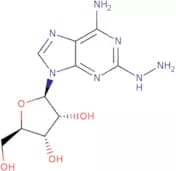
CAS:<p>2-Hydrazinoadenosine is an active analogue of adenosine. It is a potent agonist for the adenosine receptor subtypes A1 and A2A with high affinity. 2-Hydrazinoadenosine has been shown to inhibit cardiac contractility in animal models, as well as to produce hypotension, bradycardia, and bronchodilation in humans. This drug also has a functional effect on the heart by binding to adenosine receptors, which leads to the inhibition of catecholamine release. This drug is used clinically as an antiarrhythmic agent and a vasodilator in coronary artery disease.</p>Formula:C10H15N7O4Purezza:Min. 95%Colore e forma:PowderPeso molecolare:297.27 g/mol5-(Aminomethyl)-2-thiouridine
CAS:<p>5-(Aminomethyl)-2-thiouridine is a bifunctional molecule that can be used in chromatography and as a precursor for the epigenetic modifications of DNA. 5-(Aminomethyl)-2-thiouridine has been shown to have an effect on the methyltransferase pathway, which is involved in the epigenome. This molecule has also been shown to affect the growth rate of bacteria in vitro.</p>Formula:C10H15N3O5SPurezza:Min. 95%Peso molecolare:289.31 g/molCytidine 5'-monophosphate sodium salt
CAS:<p>Cytidine 5'-monophosphate sodium salt is a nucleotide that is found in RNA and DNA. Cytidine 5'-monophosphate sodium salt is an intermediate in the biosynthesis of uridine, choline, and saccharose. It also plays an important role in the immune system as it can be a precursor for immunoglobulins. The reaction rate of cytidine 5'-monophosphate sodium salt with lipase has been shown to be constant at pH 7.5-8.0 and 37°C. This product has been shown to have emulsifying properties by forming micelles with water-immiscible solvents such as hexane or heptane, which may be due to its ability to form hydrogen bonds with other molecules such as saccharose or guanosine. Cytidine 5'-monophosphate sodium salt can also be used as a chromatographic material for separating saccharose from other sugars</p>Formula:C9H14N3O8P·xNaPurezza:Min. 95 Area-%Colore e forma:White Off-White PowderPeso molecolare:323.2 g/mol2-(Butylthio)pyrimidine-5-carbaldehyde
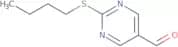
CAS:<p>2-(Butylthio)pyrimidine-5-carbaldehyde (BTPCA) is a neutralizing agent that inhibits the proliferation of cancer cells by binding to their cell membranes. It binds to the membrane and blocks the cyclic AMP receptor, thereby inhibiting the growth of cells. BTPCA has been shown to be effective in killing CD4+ T cells and may have therapeutic potential for autoimmune diseases. BTPCA also has diagnostic potential, as it can be used to detect epidermal growth factor receptors on cell membranes.</p>Formula:C9H12N2OSPurezza:Min. 95%Peso molecolare:196.27 g/molRef: 3D-NB57433
Prodotto fuori produzioneLDA
CAS:<p>LDA is a technique for extracting spectral features from a set of spectra. It uses the probabilistic model of discriminant analysis to discriminate between groups of spectra. LDA has been shown to outperform other techniques, such as PCA and MDA, in analyzing datasets with a small number of variables. The algorithm is incrementally updated with new data points and parameters, which makes it an attractive choice for real-time applications.</p>Purezza:Min. 95%2'-Deoxy-2'-fluoro-2-methoxy-b-D-arabinoadenosine
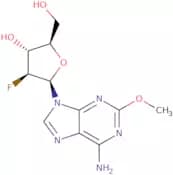
CAS:<p>2'-Deoxy-2'-fluoro-2-methoxy-b-D-arabinoadenosine (FMA) is an antiviral nucleoside that has been shown to inhibit the growth of human T lymphocytes, human hepatoma cells and mouse lymphoma L5178Y cells. It also inhibits the replication of HIV in vitro and has been shown to be effective against other viruses such as herpes simplex virus type 1 and 2, cytomegalovirus, Epstein Barr virus, varicella zoster virus and vaccinia. FMA is a phosphoramidite compound that can be used in DNA synthesis. It is also a monophosphate analog of arabinoadenosine that can be used as an activator of deoxyribonucleosides. This novel compound can be modified to synthesize diphosphates or phosphoramidites.</p>Formula:C11H14FN5O4Purezza:Min. 95%Peso molecolare:299.26 g/molRef: 3D-NM144473
Prodotto fuori produzione1-(2'-Deoxy-3',5'-di-O-toluoyl-D-ribofuranosyl)-4-amino-1,3-dihydro-2-oxo-1,3,5-triazine
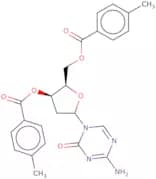
<p>1-(2'-Deoxy-3',5'-di-O-toluoyl-D-ribofuranosyl)-4-amino-1,3-dihydro-2-oxo-1,3,5-triazine is a nucleoside that is used as an anticancer drug. It is a modified nucleotide with a 2'-deoxyribofuranosyl group attached to the 3' carbon of the sugar moiety. It has been shown to be active against viruses and cancer cells. 1-(2'-Deoxy-3',5'-di-O-toluoyl-D-ribofuranosyl)-4-amino -1,3 -dihydro -2 -oxo -1,3,5 -triazine inhibits the replication of DNA by inhibiting DNA polymerase. This in turn prevents RNA synthesis and protein synthesis.</p>Formula:C24H24N4O6Purezza:Min. 95%Peso molecolare:464.48 g/molGuanosine hydrate
CAS:<p>Please enquire for more information about Guanosine hydrate including the price, delivery time and more detailed product information at the technical inquiry form on this page</p>Formula:C10H13N5O5·xH2OPurezza:Min. 98 Area-%Peso molecolare:283.24 g/molRef: 3D-W-108553
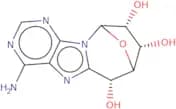
Prodotto fuori produzione8,5’(R)-Cycloadenosine
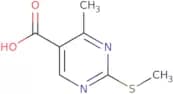
CAS:<p>Please enquire for more information about 8,5’(R)-Cycloadenosine including the price, delivery time and more detailed product information at the technical inquiry form on this page</p>Formula:C10H11N5O4Purezza:Min. 95%Peso molecolare:265.23 g/mol4-Methyl-2-(methylsulfanyl)-5-pyrimidinecarboxylic acid
CAS:<p>Ribonucleosides, deoxyribonucleosides, and their activated forms (e.g., 4-methyl-2-(methylsulfanyl)-5-pyrimidinecarboxylic acid) are all important intermediates for the synthesis of DNA and RNA. Ribonucleosides are the key building blocks for the synthesis of DNA. They can be converted to nucleosides by removal of the ribose moiety. Deoxyribonucleosides are synthesized from ribonucleosides by removal of the hydroxyl group from carbon 2' position of ribose. The activated forms (e.g., 4-methyl-2-(methylsulfanyl)-5-pyrimidinecarboxylic acid) are useful in phosphoramidite chemistry as they have a free amine group on one side and a free sulfonyl group on the other side that can be used to react with a growing oligo or polyphosph</p>Formula:C7H8N2O2SPurezza:Min. 95%Peso molecolare:184.22 g/molRef: 3D-NM57401
Prodotto fuori produzione3'-Azido-2',3'-dideoxyuridine
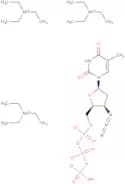
CAS:<p>3'-Azido-2',3'-dideoxyuridine is an analog of the nucleoside dideoxyuridine that inhibits HIV replication. It has a high inhibitory dose and low toxicity. 3'-Azido-2',3'-dideoxyuridine is converted to its active form, 3'-azido-2',3'-dideoxythymidine (AZT), by dephosphorylation in human serum. AZT inhibits HIV replication by competing with the natural substrate for viral DNA polymerase, thereby inhibiting synthesis of viral DNA. 3'-Azido-2',3'-dideoxyuridine has been shown to be effective against hepatitis B virus and hepatitis C virus in cell cultures.</p>Formula:C9H11N5O4Purezza:Min. 95%Colore e forma:Off-White PowderPeso molecolare:253.21 g/mol3'-Azido-3'-deoxythymidine 5'-triphosphate triethylammonium salt
CAS:<p>3'-Azido-3'-deoxythymidine 5'-triphosphate triethylammonium salt is a nucleoside analogue of 3'-azido-3'-deoxythymidine. It is an antiviral agent that inhibits the synthesis of viral DNA and RNA by inhibiting the activity of DNA polymerase, which has been shown to be effective against HIV and herpes simplex virus type 1. The phosphoramidites are synthesized from the corresponding phosphonate, 3'-azido-3'-deoxythymidine 5'-triphosphate, by treatment with a base (e.g., sodium methoxide). This novel nucleoside analogue has been shown to have anticancer properties in animal models.</p>Formula:C10H16N5O13P3·3C6H15NPurezza:Min. 95%Peso molecolare:810.75 g/molRef: 3D-NA15338
Prodotto fuori produzione