Nucleosidi
I nucleosidi sono building blocks fondamentali degli acidi nucleici, composti da una base azotata legata a una molecola di zucchero. In questa sezione, puoi trovare una vasta gamma di nucleosidi essenziali per la ricerca in biologia molecolare, biochimica e farmacologia. Questi composti svolgono ruoli cruciali nella sintesi del DNA e dell'RNA e sono vitali in vari processi metabolici. I nucleosidi vengono utilizzati per studiare il materiale genetico, sviluppare terapie antivirali e antitumorali e comprendere i meccanismi cellulari. Da CymitQuimica, forniamo nucleosidi di alta qualità per supportare le tue esigenze di ricerca e sviluppo, garantendo purezza e affidabilità per le tue applicazioni sperimentali.
Trovati 3569 prodotti di "Nucleosidi"
Ordinare per
Purezza (%)
0
100
|
0
|
50
|
90
|
95
|
100
2-Chloroinosine
CAS:2-Chloroinosine is a synthetic nucleoside analog derived from inosine, in which a chlorine atom is substituted at the 2-position of the purine base (hypoxanthine). This modifcation causes altered reactivity and can be used in research applicationsFormula:C10H11ClN4O5Purezza:Min. 95%Colore e forma:PowderPeso molecolare:302.67 g/mol5'-O-DMT-2'-O-(2-methoxyethyl)-5-methylcytidine
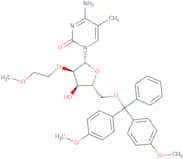
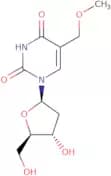
CAS:5'-O-DMT-2'-O-(2-methoxyethyl)-5-methylcytidine is a phosphoramidite that is used in the synthesis of DNA and RNA. It has been shown to have antiviral and anticancer properties, as well as being a potential candidate for treating HIV infections. 5'-O-DMT-2'-O-(2-methoxyethyl)-5-methylcytidine has high quality and purity and is not hazardous to the environment.Formula:C34H39N3O8Purezza:Min. 95%Colore e forma:PowderPeso molecolare:617.69 g/mol5-Methoxymethyl-2'-deoxyuridine
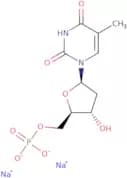
CAS:<p>5-Methoxymethyl-2'-deoxyuridine is an antiviral agent that inhibits viral replication by reacting with the glycosidic bond in the viral enzyme, which prevents the enzyme from functioning and so prevents virus replication. 5-Methoxymethyl-2'-deoxyuridine has been shown to be active against herpes simplex virus, although it is not active against wild-type viruses. This drug has toxic effects on animals, which may be due to its ability to inhibit amino transferase activity, which leads to systemic diseases. It has also been shown that 5-Methoxymethyl-2'-deoxyuridine can be used as a marker for autoimmune diseases.</p>Formula:C11H16N2O6Purezza:Min. 95%Colore e forma:PowderPeso molecolare:272.25 g/molThymidine-5'-monophosphate disodium salt
CAS:Thymidine-5'-monophosphate disodium salt is a nucleoside that is synthesized by reductive phosphorylation of thymidine. It is a substrate for nucleotide synthesis and can be used as a reagent in the synthesis of oligonucleotides. Thymidine-5'-monophosphate disodium salt can be reduced to form thymidine, which can then be converted to 5-thio-2'-deoxyuridylate or 5-thio-2'-deoxycytidylate. This conversion takes place through the cleavage reaction of the thymidine residue from the disodium salt.Formula:C10H13N2Na2O8PPurezza:Min. 98 Area-%Colore e forma:White PowderPeso molecolare:366.17 g/mol2-Thiothymidine
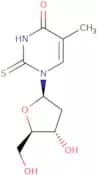
CAS:<p>2-Thiothymidine is a hydrogen bond donor and acceptor that can be used as a substitute for thymine in the synthesis of DNA. 2-Thiothymidine has been shown to have successful in vivo treatment against bladder cancer and skin cells, as well as photochemical properties. It has been shown to inhibit the growth of prostate cancer cells by inhibiting DNA synthesis. 2-Thiothymidine binds to dna duplexes and polymerase chain reactions, which are important for replication of DNA. This drug also inhibits replication by preventing intramolecular hydrogen bonds from forming.<br>2-Thiothymidine is a nucleoside analog that is substituted for thymine during DNA synthesis. It inhibits the growth of prostate cancer cells by inhibiting DNA synthesis. It binds to dna duplexes and polymerase chain reactions, which are important for replication of DNA. This drug also inhibits replication by preventing intramolecular hydrogen bonds from forming.</p>Formula:C10H14N2O4SPurezza:Min. 95%Colore e forma:White PowderPeso molecolare:258.3 g/mol7-Deaza-2’-C-methylinosine
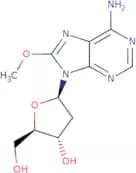
<p>7-Deaza-2’-C-methylinosine is an antiviral agent that inhibits the replication of DNA or RNA. It is a nucleoside analog that can be phosphorylated to form a diphosphate or monophosphate. 7-Deaza-2’-C-methylinosine has been shown to have anticancer effects in vitro and in vivo, as well as inhibit the proliferation of cancer cells. This agent also has novel properties due to the presence of the methyl group at position 2’ on the deoxyribose ring.</p>Formula:C11H11N3O6Purezza:Min. 95%Colore e forma:PowderPeso molecolare:281.22 g/mol2’-Deoxy-8-methoxyadenosine
CAS:<p>2’-Deoxy-8-methoxyadenosine is a synthetic nucleoside that is structurally similar to the natural nucleosides adenosine and cytidine. It can be used for antiviral and anticancer purposes, as well as in the treatment of HIV/AIDS by inhibiting viral replication. This compound has been shown to activate the immune system, stimulate the production of cytokines, and inhibit tumor cell growth. 2’-Deoxy-8-methoxyadenosine is also capable of inducing apoptosis in cancer cells, which may be due to its ability to inhibit DNA synthesis and protein synthesis.</p>Purezza:Min. 95%2-Methyladenosine-5'-triphosphate
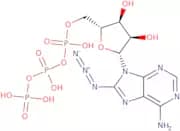
CAS:<p>2-Methyladenosine-5'-triphosphate (2-MeATP) is an inhibitor of the purinergic receptor P2X. It is a competitive antagonist of ATP at the P2X receptor, blocking ATP binding and inhibiting ATP-mediated signal transduction. 2-MeATP has been shown to inhibit angiotensin-mediated hyperpolarization in wild type and mutant strains of M. smegmatis, as well as m. tuberculosis perfusion in mesenteric lymph nodes and vasoconstriction in wildtype and mutant strains of AT1 receptors.</p>Formula:C11H18N5O13P3Purezza:Min. 95%Peso molecolare:521.21 g/mol8-azido-ATP sodium salt - 10mM aqueous solution
CAS:<p>8-Azidoadenosine 3',5'-cyclic monophosphosphate is used for nucleotide labelling via a click reaction involving the azide moiety and a terminal alkyne conjugated to a label. The reaction generates a stable nucleotide labelled adduct containing a triazole link.</p>Formula:C10H12N8O13P3·Na3Purezza:Min. 95 Area-%Colore e forma:PowderPeso molecolare:614.14 g/mol7-Deaza-2'-C-methyladenosine
CAS:<p>Anti-HCV agent; inhibitor of viral RNA polymerases</p>Formula:C12H16N4O4Purezza:Min. 95 Area-%Colore e forma:Off-White PowderPeso molecolare:280.29 g/molp-Topolin riboside
CAS:<p>p-Topolin riboside is a potent antibacterial agent that binds to the receptor binding site of wild-type mice. This hydrogen bond inhibits the activity of cellular p-topolin riboside, which is required for the synthesis of carotenoids and nitro compounds in mitochondria. p-Topolin riboside has been shown to have anti-aging properties and can inhibit locomotor activity in vivo. It has also been shown to have potent antibacterial effects against bacteria such as MRSA, Pseudomonas aeruginosa, and Enterococcus faecalis.</p>Formula:C17H19N5O5Purezza:Min. 95%Colore e forma:White PowderPeso molecolare:373.36 g/mol2',3'-Dideoxy-5-iodocytidine
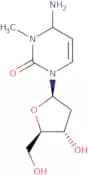
CAS:<p>2',3'-Dideoxy-5-iodocytidine is a modified nucleoside analog based on cytidine, one of the four standard nucleosides found in DNA and RNA. It has been chemically altered to interfere with DNA or RNA synthesis, making it potentially useful as an antiviral or anticancer agent.</p>Formula:C9H12N3IO3Purezza:Min. 95%Peso molecolare:337.11 g/mol2’-Deoxy-N3-methylcytidine
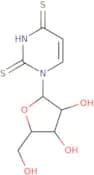
CAS:<p>2’-Deoxy-N3-methylcytidine is a novel nucleoside with antiviral and anticancer properties. It has been shown to inhibit the replication of HIV, Hepatitis C, and HSV. This drug can be used in the treatment of cancer, such as leukemia and lymphoma. 2’-Deoxy-N3-methylcytidine is also an effective inhibitor of DNA synthesis in cells that are resistant to other drugs. In addition, this drug also has a high purity level and a CAS number 5040-21-1.</p>Formula:C10H15N3O4Purezza:Min. 95%Peso molecolare:241.24 g/mol2,4-Dithiouridine
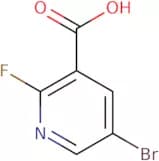
CAS:<p>2,4-Dithiouridine is a nucleoside for use in a variety of applications</p>Formula:C9H12N2O4S2Purezza:Min. 95%Colore e forma:PowderPeso molecolare:276.33 g/mol5-Bromo-2-fluoronicotinic acid
CAS:<p>5-Bromo-2-fluoronicotinic acid is a crystalline compound with an orthorhombic crystal system. The crystal structure of 5-bromo-2-fluoronicotinic acid monohydrate was determined by X-ray diffraction and refined to 2.5 Å resolution. The space group was found to be P212121 and the unit cell dimensions are a = 9.716 Å, b = 10.867 Å, c = 12.242 Å and β = 106.9°. The molecular weight of 5-bromo-2-fluoronicotinic acid monohydrate was found to be 277.3 g/mol with an elemental analysis of C: 67% H: 7% F: 16%.</p>Formula:C6H3BrFNO2Purezza:Min. 95%Colore e forma:PowderPeso molecolare:220 g/molN6-Benzoyl-5'-O-DMT-2'-O-(2-ethoxy-2-oxoethyl)adenosine 3'-CE phosphoramidite
<p>N6-Benzoyl-5'-O-DMT-2'-O-(2-ethoxy-2-oxoethyl)adenosine 3'-CE phosphoramidite is a novel nucleoside analog which is a potent activator of the immune system. It is synthesized by reacting adenosine with N,N'-diisopropylcarbodiimide and 2,4,6-trichlorobenzoyl chloride in dichloromethane at room temperature. This product has antiviral and anticancer properties.</p>Formula:C52H60N7O10PPurezza:Min. 95%Peso molecolare:974.06 g/molp-Coumaryl-coenzyme A
CAS:<p>Please enquire for more information about p-Coumaryl-coenzyme A including the price, delivery time and more detailed product information at the technical inquiry form on this page</p>Formula:C30H42N7O18P3SPurezza:Min. 95%Colore e forma:PowderPeso molecolare:913.68 g/mol2'-O-Methyl-5-methyluridine
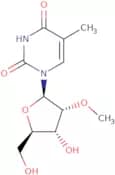
CAS:<p>2'-O-Methyl-5-methyluridine is a nucleoside that is involved in the synthesis of RNA. It is a component of the 5-methyluridine (5MU) and 2'-O-methyl-5-hydroxymethyluridine (2'OMMU) families of nucleotides. This compound has been shown to be effective against organisms such as E. coli, S. typhimurium, and C. parapsilosis, which are amide sensitive. The amide group of 2'-O-methyl-5-methyluridine can be cleaved by reagents such as hydrazine or tris(2,4,6,-trimethlyphenyl)phosphonium bromide to form 5MU and 2'OMMU respectively. The modifications to the ribose ring are important for its activity and function in cells. The modification of the ribose ring is catalyzed by enzymes called</p>Formula:C11H16N2O6Purezza:Min. 95%Colore e forma:PowderPeso molecolare:272.25 g/mol1'-13CCytidine
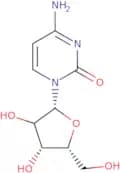
CAS:<p>Cytidine is a nucleotide molecule formed through the attachment of cytosine to a ribose ring</p>Formula:CC8H13N3O5Purezza:Min. 95%Peso molecolare:244.21 g/mol1-deaza-2’-deoxyadenosine
CAS:1-Deaza-2'-deoxyadenosine is a modified nucleoside that is used as an anticancer agent. It inhibits DNA and RNA synthesis, which are required for cell division. 1-Deaza-2'-deoxyadenosine is also a novel activator of the enzyme ribonucleotide reductase, which converts ribonucleotides to deoxyribonucleotides. Ribonucleotides are needed for the production of DNA and RNA. 1-Deaza-2'-deoxyadenosine has been shown to kill cells by inhibiting the synthesis of DNA and RNA, which are needed for cell division.Formula:C11H14N4O3Purezza:Min. 95%Peso molecolare:250.25 g/mol4-Amino-1-(2-deoxy-α-D-erythro-pentofuranosyl)-5-methyl-2(1H)-pyrimidinone
CAS:<p>4-Amino-1-(2-deoxy-α-D-erythro-pentofuranosyl)-5-methyl-2(1H)-pyrimidinone is a novel phosphate derivative of ribonucleosides, including 2'-deoxyadenosine and 2'-deoxycytidine. 4ADP has antiviral and anticancer activities, and can be used as a substrate for the synthesis of phosphoramidites. These derivatives are modified by the introduction of substituents at the 5' position of the pentose sugar. The monophosphate form is synthesized by reacting with sodium hydroxide followed by hydrolysis with dilute acid. The diphosphate form is synthesized by reacting with phosphorus oxychloride in presence of pyridine.</p>Formula:C10H15N3O4Purezza:Min. 95%Peso molecolare:241.24 g/mol6-(2-Pyridylmethylthio)-9-(b-D-ribofuranosyl)purine
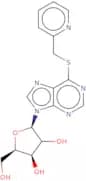
<p>6-(2-Pyridylmethylthio)-9-(b-D-ribofuranosyl)purine is a nucleoside that has antiviral activity and is a potent activator of the immune system. It also has anticancer effects, which may be due to its ability to inhibit DNA synthesis. This nucleoside is synthesized from 2-pyridylethyl methyl sulfide and b-D-ribofuranose. 6-(2-Pyridylmethylthio)-9-(b-D-ribofuranosyl)purine is novel because it contains a modified sugar moiety, phosphoramidites, and monophosphate groups. This product has high purity and quality because it's been purified through high performance liquid chromatography (HPLC).</p>Formula:C16H17N5O4SPurezza:Min. 95%Peso molecolare:375.4 g/molToyocamycin monohydrate
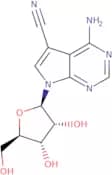
CAS:<p>Toyocamycin is a macrolide antibiotic that inhibits protein synthesis by binding to the 50S ribosomal subunit. Toyocamycin monohydrate (TM) has been shown to have significant cytotoxicity against HL-60 cells, which may be due to its ability to inhibit mitochondrial membrane potential and induce apoptosis. The drug also has inhibitory properties against wild-type strains of bacteria, such as diastatochromogenes, and is active against high-resistant strains of bacteria, such as E. coli. Toyocamycin monohydrate has been shown to inhibit transcriptional regulation in hl-60 cells and k562 cells by binding to RNA polymerase II and blocking RNA synthesis.</p>Formula:C12H13N5O4•H2OPurezza:Min. 95%Colore e forma:White PowderPeso molecolare:309.28 g/molAdenosine 5'-diphosphate
CAS:<p>Adenosine 5'-diphosphate (ADP) is a nucleoside that is an important component of the cell's energy pathways. ADP plays a role in platelet activation and nitrate reductase, which are enzymes that maintain the integrity of bacterial DNA. Adenosine 5'-diphosphate also has been shown to inhibit neural cell injury and protein oxidation.</p>Formula:C10H15N5O10P2Purezza:Min. 95 Area-%Colore e forma:White Off-White PowderPeso molecolare:427.2 g/molN1-Methyladenosine-5’-monophosphate triethylammonium salt
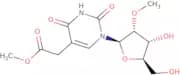
CAS:<p>N1-Methyladenosine-5’-monophosphate is a RNA modified nucleotide.</p>Formula:C11H16N5O7P·xC6H15NPurezza:Min. 95 Area-%Colore e forma:PowderPeso molecolare:361.25 g/mol5-(Methoxycarbonyl)methyl-2’-O-methyluridine
CAS:5-(Methoxycarbonyl)methyl-2’-O-methyluridine is a nucleoside that is a precursor of cytidine. It is synthesized by the enzyme UMP synthase, which converts 5-methoxycarbonylmethyl-2-thiouridine to uridine and 2′-O-methyluridine. The synthesis of 5-(Methoxycarbonyl)methyl-2’-O-methyluridine occurs in both mammalian cells and Xenopus oocytes. This compound has been shown to be a potential biomarker for cancer and may be useful as an indicator of detoxification enzymes activity.Formula:C13H18N2O8Purezza:Min. 95%Colore e forma:White Off-White PowderPeso molecolare:330.29 g/mol1-(2'-Chloro-2'-deoxy-β-L-arabinofuranosyl)thymine
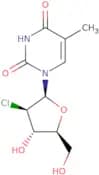
CAS:1-(2`-Chloro-2`-deoxy-beta-L-arabinofuranosyl)thymine is a thymine molecule attached to a modified arabinose sugar. Scientists create and study these nucleoside analogs because they can have antiviral or anticancer properties. The changes in the sugar can affect how the molecule interacts with enzymes and other biological components.Formula:C10H13ClN2O5Purezza:Min. 95%Peso molecolare:276.67 g/molN2-Isobutyryl-O6-cyanoethyl-7’-OH-N-trityl-morpholino guanine
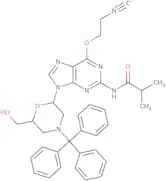
CAS:N2-Isobutyryl-O6-cyanoethyl-7’-OH-N-trityl-morpholino guanine is a nucleoside, ribonucleoside, and anti-cancer drug. It is modified with two acyl groups at the 2′ position of the sugar moiety and contains a phosphoramidite group in the 5′ position. N2-Isobutyryl-O6-cyanoethyl-7’-OH-N-trityl -morpholino guanine is an activator of DNA synthesis in vitro. In vivo studies have shown that N2-Isobutyryl O6 cyanoethyl 7' OH N trityl morpholino guanine can be used as an anticancer agent against human breast cancer cells.Formula:C36H37N7O4Purezza:Min. 95%Peso molecolare:631.7 g/mol2'-Deoxyguanosine-5'-triphosphate trisodium
CAS:2'-Deoxyguanosine-5'-triphosphate or dGTP, is a nucleotide used by the cell to synthesize DNA molecules. 2'-Deoxyguanosine-5'-triphosphate is used in molecular biology techniques and assays as a substrate of the enzyme DNA polymerase, e.g. polymerase chain reaction (PCR), DNA sequencing, pyrosequencing reactions.Formula:C10H13N5Na3O13P3Purezza:Min. 97 Area-%Colore e forma:White PowderPeso molecolare:573.13 g/molUridine 5'-triphosphate disodium
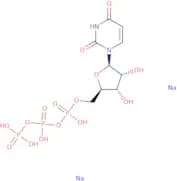
CAS:Uridine 5'-triphosphate disodium salt is a supramolecular complex that binds to gold nanoparticles. The binding of uridine 5'-triphosphate disodium salt to gold nanoparticles can be used for the detection of metal ions through the photometric method. Uridine 5'-triphosphate disodium salt has been shown to inhibit the glutathione-dependent reduction of vitamin B12, which is a key step in methionine synthesis and folate metabolism. This inhibition may lead to a decrease in protein synthesis, ATP production, and cell division.Formula:C9H15N2O15P3•Na2Purezza:Min. 95%Colore e forma:PowderPeso molecolare:530.12 g/molPoly(2'-O-Methyladenosine 5'-monophosphate) sodium
CAS:<p>Please enquire for more information about Poly(2'-O-Methyladenosine 5'-monophosphate) sodium including the price, delivery time and more detailed product information at the technical inquiry form on this page</p>Formula:(C11H16N5O7P)x•NaxPurezza:Min. 95%N1-Methyladenosine-5’-monophosphate
CAS:The N1-methyladenosine is a reversible modification in tRNA, mRNA and long non-coding RNAFormula:C11H16N5O7PPurezza:Min. 95%Colore e forma:PowderPeso molecolare:361.25 g/molN6-Propargyladenosine-5'-triphosphate sodium salt
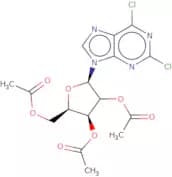
<p>N6-Propargyladenosine-5'-triphosphate sodium salt is a phosphoramidite that is useful in the synthesis of oligodeoxyribonucleotides and DNA. This novel nucleotide has been shown to be an activator for mammalian cells and to inhibit tumor growth in mice. N6-Propargyladenosine-5'-triphosphate sodium salt is synthesized by reacting propargylamine with ATP, which produces a novel nucleotide with anti-cancer properties.</p>Formula:C13H18N5O13P3Purezza:Min. 95%Peso molecolare:545.23 g/mol2,6-Dichloro-9-(2',3',5'-tri-O-acetyl-b-D-ribofuranosyl)purine
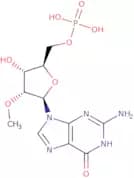
CAS:2,6-Dichloro-9-(2',3',5'-tri-O-acetyl-b-D-ribofuranosyl)purine is a protected nucleoside analog which can possibly be used as a synthetic intermediate in the preparation of purine-based nucleosides, especially in medicinal chemistry and nucleic acid synthesis. This compound is composed of 2,6-Dichloropurine – a modified purine base where chlorine atoms replace the hydrogen atoms at positions 2 and 6 and a β-D-ribofuranose. The 2', 3', and 5' hydroxyl groups on the ribose are protected with acetyl groups (–OAc). These tri-O-acetyl protections prevent unwanted reactions during synthetic steps.Formula:C16H16Cl2N4O7Purezza:Min. 95%Colore e forma:White PowderPeso molecolare:447.23 g/mol2'-O-Methylguanosine 5'-monophosphate triethylammonium
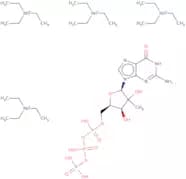
CAS:2'-O-Methylguanosine 5'-monophosphate triethylammonium salt is a phosphate group containing nucleotide that is found in human urine. It can be used as a biomarker for the detection of non-Hodgkin's lymphoma. 2'-O-Methylguanosine 5'-monophosphate triethylammonium salt has been shown to coelute with guanosine in urine samples from patients with cancer, and also shows sensitivity to elements such as arsenic, mercury, and lead. This nucleotide is methylated in many types of cancer cells, which makes it useful for radioimmunoassays and antibody production.Formula:C11H16N5O8PPurezza:Min. 95%Colore e forma:PowderPeso molecolare:377.25 g/mol1-(8-Phosphonooctyl)-7-deazaxanthine
CAS:1-(8-Phosphonooctyl)-7-deazaxanthine is an organic compound that inhibits endothelial cell growth. It has been shown to inhibit the phosphorylation of intracellular proteins, leading to a reduction in the activity of tyrosine kinases and protein kinase C. 1-(8-Phosphonooctyl)-7-deazaxanthine is also a noncompetitive inhibitor of phosphonate metabolism, with an inhibitory potency of 0.1 μM. This compound has been shown to be an anticancer agent in vitro and in vivo, but not as potent as other known drugs such as doxorubicin or cisplatin.Formula:C14H22N3O5PPurezza:Min. 95%Peso molecolare:343.32 g/mol2′-O-(2-Methoxy-2-oxoethyl)-5-methyl-uridine
CAS:2′-O-(2-Methoxy-2-oxoethyl)-5-methyl-uridine is a nucleoside that can be used as an anticancer drug and antiviral agent. It has shown potent in vitro cytotoxic activity against human leukemia cells and other cancer cell lines, including breast, prostate, ovarian, and colon cancers. 2′-O-(2-Methoxy-2-oxoethyl)-5-methyl-uridine also has good antiherpetic potential. This compound is a novel and synthetic nucleoside with high purity, high quality, and excellent stability. It is soluble in water, methanol, ethanol, acetone, acetonitrile; slightly soluble in chloroform; insoluble in ether or hexane. CAS No. 149301-23-5Formula:C13H18N2O8Purezza:Min. 95%Peso molecolare:330.29 g/mol2′-O-[2-(Methylamino)-2-oxoethyl]adenosine
CAS:2′-O-[2-(Methylamino)-2-oxoethyl]adenosine is a nucleoside that can be used as an anticancer, antiviral, and anticoagulant. It is synthesized from the natural nucleosides adenosine and cytidine. 2′-O-[2-(Methylamino)-2-oxoethyl]adenosine has been shown to inhibit the growth of tumor cells in vitro. This compound also inhibits viral replication by inhibiting DNA synthesis through inhibition of ribonucleotide reductase and deoxyribonucleotide reductase. 2′-O-[2-(Methylamino)-2-oxoethyl]adenosine is phosphorylated by ATP to produce 2′-O-[2-(methylamino)-2-oxoethyl]adenosinophosphate (AMP). AMP then binds to the purinergic receptor P1, which leads toFormula:C13H18N6O5Purezza:Min. 95%Peso molecolare:338.32 g/mol9-(b-D-Arabinofuranosyl)guanine - Bio-X ™
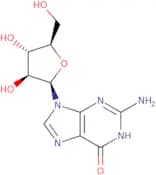
CAS:9-(b-D-Arabinofuranosyl) guanine is a purine nucleoside in which guanine is attached to arabinofuranose via a beta-N(9)-glycosidic bond. 9-(b-D-Arabinofuranosyl) guanine binds to the phosphate groups in DNA and inhibits the synthesis of DNA causing cell death. It also has antineoplastic properties.Formula:C10H13N5O5Purezza:Min. 95%Colore e forma:PowderPeso molecolare:283.24 g/mol4',5'-Didehydro-5'-deoxy-2'-O-methyluridine
CAS:<p>4',5'-Didehydro-5'-deoxy-2'-O-methyluridine is a novel nucleoside phosphoramidite. It is a monophosphate, high purity and high quality. 4',5'-Didehydro-5'-deoxy-2'-O-methyluridine is an activator of DNA polymerase and can be used in the synthesis of DNA. 4',5'-Didehydro-5'-deoxy-2'-O-methyluridine also has antiviral properties and can be used to synthesize deoxyribonucleosides. It has been modified to have a diphosphate group at the 5' end, which allows it to be incorporated into DNA during synthesis.</p>Formula:C11H13NO5Purezza:Min. 95%Peso molecolare:239.22 g/molInosine 5'-diphosphate trisodium
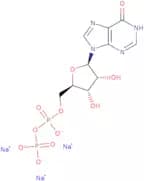
CAS:Inosine 5'-diphosphate trisodium salt is an antiviral compound that is used to inhibit the replication of many viruses, including herpes, influenza, and HIV. It has been shown to be effective against cancer cells in vitro. Inosine 5'-diphosphate trisodium salt is a modified nucleotide that is used as a phosphoramidite for DNA synthesis. This compound can also be used as an activator for deoxyribonucleoside triphosphates. It has been shown to have anticancer activity in vivo and in vitro and also inhibits viral DNA synthesis by preventing the formation of ribonucleotide triphosphates from ribonucleotides. The molecular weight of this compound is 390.4 g/mol and its CAS number is 81012-88-6.Formula:C10H11N4O11P2•Na3Purezza:Min. 95%Colore e forma:PowderPeso molecolare:494.13 g/mol2'-O-Methyladenosine 5'-triphosphate lithium - 100 mM aqueous solution
CAS:<p>2'-O-Methyladenosine 5'-triphosphate lithium is a novel nucleotide that has been synthesized to act as an antiviral and anticancer agent. It can be used in the production of ribonucleosides, deoxyribonucleosides, and modified DNA. It is also a high quality phosphoramidite that can be used in the synthesis of DNA and RNA. 2'-O-Methyladenosine 5'-triphosphate lithium has been shown to inhibit the replication of HIV-1 and other viruses by inhibiting viral transcription. It is also active against cancer cells, with an IC50 value of 0.2 μM for HL-60 cells.</p>Formula:C11H18N5O13P3•Li3Purezza:Min. 95%Peso molecolare:542 g/molAcetyl coenzyme A trilithium
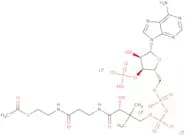
CAS:Acetyl coenzyme A trilithium salt (ACAT) is a prodrug that is metabolized in vivo to the active form, acetyl coenzyme A. Acetyl coenzyme A has been shown to inhibit the growth of human carcinoma cells and some typhimurium strains. It binds to cytochrome P450, which is involved in the oxidation of acetate and other organic substrates. ACAT has also been shown to be effective against squamous cell carcinoma by inhibiting the production of reactive oxygen species (ROS) in these cells. The anticancer activity of ACAT may be due to its ability to inhibit the conversion of amines into heterocyclic amines, which are known carcinogens.Formula:C23H35Li3N7O17P3SPurezza:Min. 95%Colore e forma:White PowderPeso molecolare:827.37 g/molAdenosine 5'-phosphosulfate triethylammonium
CAS:Please enquire for more information about Adenosine 5'-phosphosulfate triethylammonium including the price, delivery time and more detailed product information at the technical inquiry form on this pageFormula:C16H29N6O10PSPurezza:Min. 95%Peso molecolare:528.47 g/mol2′-O-2-Methoxy-2-oxoethyl-5-methyl-cytidine
<p>2′-O-2-Methoxy-2-oxoethyl-5-methylcytidine (2′OMeC) is a synthetic ribonucleoside that is used in DNA synthesis. 2′OMeC is a nucleotide analog that inhibits DNA and RNA synthesis by competitively inhibiting the enzyme activity of DNA polymerase, RNA polymerase, and other enzymes involved in the process. This drug has been shown to inhibit the replication of human immunodeficiency virus type 1 (HIV-1) and hepatitis C virus (HCV). It also has anticancer properties through its ability to inhibit protein synthesis. The novel structure of this drug gives it high quality and purity.</p>Formula:C13H19N3O7Purezza:Min. 95%Peso molecolare:329.31 g/molXanthosine dihydrate
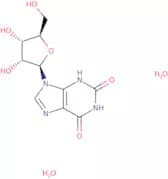
CAS:Prodotto controllato<p>Xanthosine dihydrate is a crystalline polymorph of xanthosine. It has been shown to have anti-inflammatory effects in animal models and also inhibits the production of pro-inflammatory cytokines and nitric oxide. Xanthosine dihydrate binds to benzimidazole compounds and caffeine, which are involved in the inflammatory process. This drug also inhibits the production of nitric oxide and prostaglandins by inhibiting cyclooxygenase enzymes. Xanthosine dihydrate is a solute that can be used in cell culture experiments to study how cells respond to different concentrations of it.</p>Formula:C10H12N4O6·2H2OPurezza:Min. 99 Area-%Colore e forma:PowderPeso molecolare:320.26 g/mol2'-C-Methylguanosine 5'-triphosphate triethyl ammonium salt - Aqueous solution
CAS:2'-C-Methylguanosine 5'-triphosphate triethyl ammonium salt - Aqueous solution is a synthetic nucleotide analog for use in researchFormula:C11H18N5O14P3·4C6H15NPurezza:Min. 95%Colore e forma:PowderPeso molecolare:941.97 g/molN4-Benzoyl-2'-deoxy-5'-O-DMT-a-cytidine
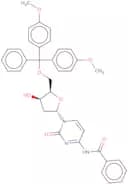
CAS:N4-Benzoyl-2'-deoxy-5'-O-DMT-a-cytidine is a modified nucleoside that is synthesized by the reaction of the 2'-deoxyribonucleoside with 4-benzoylchloroformate and dimethoxytrityl. It has antiviral activity against a variety of DNA viruses, including herpes simplex virus type 1 (HSV), herpes simplex virus type 2 (HSV), varicella zoster virus, human cytomegalovirus, Epstein Barr virus, and human immunodeficiency virus. N4-Benzoyl-2'-deoxy-5'-O-DMT-a-cytidine also has anticancer properties and may be used for the treatment of melanoma. This compound shows good results in animal models and clinical trials.Formula:C37H35N3O7Purezza:Min. 95%Colore e forma:PowderPeso molecolare:633.71 g/molMethyl 6-((((2-cyanoethoxy)(diisopropylamino)phosphanyl)-oxy)methyl) nicotinate
CAS:Methyl 6-((((2-cyanoethoxy)(diisopropylamino)phosphanyl)-oxy)methyl) nicotinate is a novel, modified nucleoside that is phosphorylated by T4 kinase. It is an activator of the antiviral ribonucleotide reductase and has been shown to have anticancer activity. Methyl 6-((((2-cyanoethoxy)(diisopropylamino)phosphanyl)-oxy)methyl) nicotinate is a monophosphate or diphosphate prodrug that can be used for the treatment of viral infections and cancer. This drug also inhibits the synthesis of RNA and DNA, blocks protein synthesis, and causes cell death by apoptosis.Purezza:Min. 95%N6-Benzoyl-2'-deoxy-5'-O-DMT-2'-fluoroadenosine
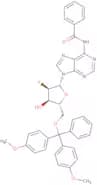
CAS:N6-Benzoyl-2'-deoxy-5'-O-DMT-2'-fluoroadenosine is a sulfur containing compound that is an antibiotic. It has been shown to inhibit the growth of bacteria by binding to their ribosomes, which prevents protein synthesis and cell division. N6-Benzoyl-2'-deoxy-5'-O-DMT-2'-fluoroadenosine also inhibits chemotaxis in roseobacters, which is the movement of cells or organisms in response to certain factors. This antibiotic may be useful for preventing symbiosis between marine bacteria and other organisms, as it inhibits the motility of these bacteria and their cycling. N6-Benzoyl-2'-deoxy-5'-O-DMT-2'-fluoroadenosine also has a genetic determinant that regulates enteric bacteria and clades of ocean bacteria.Formula:C38H34FN5O6Purezza:Min. 95%Colore e forma:White PowderPeso molecolare:675.72 g/mol


















![2′-O-[2-(Methylamino)-2-oxoethyl]adenosine](/_next/image/?url=https%3A%2Fstatic.cymitquimica.com%2Fproducts%2F3D%2Fthumb-webp%2FNM182883.webp&w=3840&q=75)