Nucleosidi
I nucleosidi sono building blocks fondamentali degli acidi nucleici, composti da una base azotata legata a una molecola di zucchero. In questa sezione, puoi trovare una vasta gamma di nucleosidi essenziali per la ricerca in biologia molecolare, biochimica e farmacologia. Questi composti svolgono ruoli cruciali nella sintesi del DNA e dell'RNA e sono vitali in vari processi metabolici. I nucleosidi vengono utilizzati per studiare il materiale genetico, sviluppare terapie antivirali e antitumorali e comprendere i meccanismi cellulari. Da CymitQuimica, forniamo nucleosidi di alta qualità per supportare le tue esigenze di ricerca e sviluppo, garantendo purezza e affidabilità per le tue applicazioni sperimentali.
Trovati 3569 prodotti di "Nucleosidi"
Ordinare per
Purezza (%)
0
100
|
0
|
50
|
90
|
95
|
100
3'-Azido-3'-deoxy-b-L-cytidine
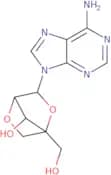
CAS:<p>3'-Azido-3'-deoxy-b-L-cytidine is a novel nucleoside that has been shown to be an activator of the ribonuclease activity of purified RNase A in vitro. This product is suitable for use in synthesis of oligodeoxynucleotides and phosphoramidites. 3'-Azido-3'-deoxy-b-L-cytidine can be used as a potential anticancer drug or antiviral agent.</p>Purezza:Min. 95%1-(2'-O-4-C-Methylene-b-D-ribofuranosyl)adenine
CAS:<p>1-(2'-O-4-C-Methylene-b-D-ribofuranosyl)adenine is an important compound in the field of nucleoside chemistry and has potential applications in research</p>Formula:C11H13N5O4Purezza:Min. 95%Colore e forma:White PowderPeso molecolare:279.25 g/mol2'-Deoxy-2'-fluoro-5-methyluridine
CAS:<p>2'-Deoxy-2'-fluoro-5-methyluridine is a nucleoside analog that is a modified version of uridine, where the sugar (deoxyribose) has a fluoro modification at the 2' position and a methyl group is attached at the 5' position of the uracil base.</p>Formula:C10H13FN2O5Purezza:Min. 95%Colore e forma:White PowderPeso molecolare:260.22 g/molN4-Acetyl-2'-deoxycytidine
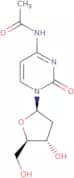
CAS:<p>N4-Acetyl-2'-deoxycytidine is a nucleoside analogue that acts as an inhibitor of DNA synthesis. It binds to the active site of the enzyme ribonucleotide reductase, blocking the conversion of ribonucleotides to deoxyribonucleotides. This prevents DNA synthesis and replication, which leads to cell death. N4-Acetyl-2'-deoxycytidine has been shown to be more efficient than other analogues in terms of energy efficiency, control levels, and constant linear model. This compound is reactive and can cause low yields when isolated from solutions with high concentrations. A diode can be used for analytical purposes, while calcium binding may be used as a mathematical model in order to analyze this drug.</p>Formula:C11H15N3O5Purezza:Min. 98 Area-%Colore e forma:PowderPeso molecolare:269.25 g/mol5'-Deoxy-5-fluorocytidine
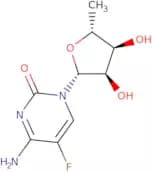
CAS:<p>5'-Deoxy-5-fluorocytidine is a cytosolic nucleoside analogue that is phosphorylated by cellular enzymes to the active form 5'-deoxy-5-fluorouridine monophosphate. It is a prodrug, which is activated in the body to release 5-FU and inhibits the growth of cancer cells. 5'-Deoxy-5-fluorocytidine has been shown to be effective against metastatic colorectal cancer in humans and resistant breast cancer in mice. The drug can also be used as an oral prodrug for 5-FU, which has a wide therapeutic index and low toxicity. Studies have shown that it selectively inhibits proliferation of solid tumours through inhibition of protein synthesis and cell division. The drug also has antiangiogenic effects, which are thought to contribute to its antitumor activity.</p>Formula:C9H12FN3O4Purezza:Min. 98 Area-%Colore e forma:White PowderPeso molecolare:245.21 g/mol9-(b-D-Arabinofuranosyl)adenine
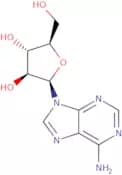
CAS:<p>9-(b-D-Arabinofuranosyl)adenine is a nucleoside that is used as an antiviral agent. It binds to viral RNA and inhibits viral replication. 9-(b-D-Arabinofuranosyl)adenine has been shown to have potent side-effect profiles, including myocardial infarct, neuronal death, and immunological reactions. These effects are due to its ability to inhibit the synthesis of guanine nucleotides in the heart and brain cells, which are essential for energy production and neurotransmitter release respectively. 9-(b-D-Arabinofuranosyl)adenine also binds to toll-like receptors (TLRs), which are proteins found on the surface of cells that recognize invading microbes or foreign substances. This binding leads to activation of immune response pathways.</p>Formula:C10H13N5O4Purezza:Min. 95%Colore e forma:White PowderPeso molecolare:267.24 g/molN4-Acetyl-5'-O-DMT-2'-O-methyl-5-methylcytidine 3'-CE phosphoramidite
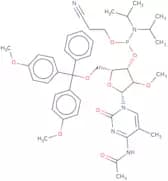
<p>N4-Acetyl-5'-O-DMT-2'-O-methyl-5-methylcytidine 3'-CE phosphoramidite is an antiviral, anticancer and nucleoside phosphoramidite. It is a novel DNA building block with antiviral activity against HIV and Hepatitis C. The synthesis of N4-acetyl-5'-O-DMT-2'-O-methyl-5-methylcytidine 3'-CE phosphoramidite is based on the reaction of cytosine monophosphate with 2,4,6,-trimethoxybenzoyl chloride. This compound has also been shown to inhibit the proliferation of leukemia cells in vitro and has potential as a chemotherapeutic agent for cancer treatment.</p>Formula:C43H54N5O9PPurezza:Min. 95%Peso molecolare:815.89 g/mol3-beta-D-Ribofuranosyl-1H-pyrimido[5,4-b][1,4]benzoxazin-2(3H)-one
CAS:<p>3-beta-D-Ribofuranosyl-1H-pyrimido[5,4-b][1,4]benzoxazin-2(3H)-one is a phosphoramidite that can be used for the synthesis of DNA. It has antiviral activity and has been shown to inhibit the growth of cancer cells. 3-beta-D-Ribofuranosyl-1H-pyrimido[5,4-b][1,4]benzoxazin-2(3H)-one is a novel nucleoside that is modified with a fluoroquinolone moiety. This modification inhibits viral replication by interfering with viral DNA polymerase. The novel nucleoside has also been shown to have anticancer activity in vitro and in vivo.</p>Formula:C15H15N3O6Purezza:Min. 95%Colore e forma:PowderPeso molecolare:333 g/molCytidine 5'-monophosphate disodium salt
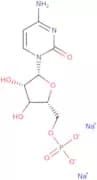
CAS:Cytidine 5'-monophosphate disodium salt (CMPDS) is a prodrug that is converted to cytidine 5'-monophosphate, an active form, in the acidic environment of cancer cells. CMPDS has been shown to inhibit the growth of squamous carcinoma and other solid tumours by binding to survivin, which regulates cell growth and apoptosis. CMPDS also inhibits the activity of matrix metalloproteinases-9 (MMP-9), an enzyme that promotes tumor growth by breaking down connective tissue. This drug can be used as a therapeutic agent for treatment of congestive heart failure due to its ability to increase mitochondrial membrane potential and decrease myocardial infarct size.Formula:C9H12N3Na2O8PPurezza:Min. 95 Area-%Colore e forma:White PowderPeso molecolare:367.16 g/mol3'-Amino-5'-O-tert-butyldimethylsilyl-3'-deoxythymidine
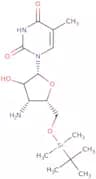
CAS:3'-Amino-5'-O-tert-butyldimethylsilyl-3'-deoxythymidine is a novel synthetic nucleoside that has been shown to have anticancer and antiviral activities. The compound is an activator of the immune system, which may be due to its ability to stimulate the production of interferon and other cytokines. 3'-Amino-5'-O-tert-butyldimethylsilyl-3'-deoxythymidine can also inhibit viral DNA polymerases. This nucleoside has been shown to inhibit the growth of leukemia cells in culture by inhibiting ribonucleotide reductase activity.Formula:C16H29N3O5SiPurezza:Min. 95%Peso molecolare:371.51 g/mol5'-O-DMT-2'-O-methyl-N6-phenoxyacetyladenosine
CAS:5'-O-DMT-2'-O-methyl-N6-phenoxyacetyladenosine is a novel synthetic nucleoside with antiviral and anticancer activities. It is a phosphoramidite that can be used to synthesize oligonucleotides of any sequence. It is a nucleoside analogue that has been shown to inhibit the activity of DNA gyrase and topoisomerase IV, which are enzymes that maintain the integrity of bacterial DNA. 5'-O-DMT-2'-O-methyl-N6-phenoxyacetyladenosine is also an activator of viral transcription and replication. 5'-O-DMT-2'-O-methyl-N6-phenoxyacetyladenosine has been shown to be active against methicillin resistant Staphylococcus aureus (MRSA) and Clostridium perfringens, although it is not active against acid fast bacteria suchFormula:C40H39N5O8Purezza:Min. 95 Area-%Colore e forma:PowderPeso molecolare:717.77 g/molGuanosine 5'-O-(2-thiodiphosphate) trilithium salt
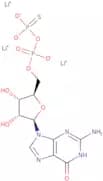
CAS:Guanosine 5'-O-(2-thiodiphosphate) trilithium salt (GTPTS) is a membrane-permeable molecule that hyperpolarizes cells by inhibiting the movement of ions through the cell membrane. GTPTS is activated by extracellular calcium and potassium ions, which are involved in signal transduction pathways. It has been shown to inhibit the release of neurotransmitters, such as acetylcholine, dopamine, serotonin, and norepinephrine. GTPTS also blocks voltage-gated sodium channels, which leads to a reduction in neuronal excitability. The drug has been shown to have analgesic effects in animal models of pain and can be used to treat chronic pain due to nerve damage.Formula:C10H12Li3N5O10P2SPurezza:Min. 85 Area-%Colore e forma:PowderPeso molecolare:477.06 g/mol3'-Azido-3'-deoxy-5-fluoro-b-L-cytidine
CAS:3'-Azido-3'-deoxy-5-fluoro-b-L-cytidine is an antiviral drug. It is a modified nucleoside with phosphoramidite and azido groups. This product can be used as an activator for DNA synthesis, in anticancer drug development, as well as in the treatment of HIV. 3'-Azido-3'-deoxy-5-fluoro-b-L-cytidine has been shown to inhibit the growth of human tumor cells by inhibiting protein synthesis and enhancing the production of reactive oxygen species (ROS). It also inhibits the activity of ribonucleotide reductase, which is a critical enzyme for DNA synthesis.Purezza:Min. 95%3'-O-Aminoacetoxy-2'-deoxycytidine
Please enquire for more information about 3'-O-Aminoacetoxy-2'-deoxycytidine including the price, delivery time and more detailed product information at the technical inquiry form on this pageFormula:C12H18N4O4Purezza:Min. 98 Area-%Colore e forma:PowderPeso molecolare:282.30 g/molN4-Benzoyl-5'-O-DMT-5-methylcytidine
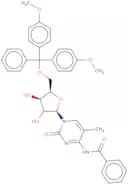
CAS:N4-Benzoyl-5'-O-DMT-5-methylcytidine is a deoxyribonucleoside that has been modified to make it resistant to nucleases. N4-Benzoyl-5'-O-DMT-5-methylcytidine is an antiviral agent, which inhibits the synthesis of viral DNA by inhibiting the activity of viral DNA polymerase. It also acts as an activator for cellular DNA polymerases and phosphoramidites. The drug can be used in the treatment of HIV and other retroviruses, herpes viruses, and certain types of cancer.Formula:C38H37N3O8Purezza:Min. 95%Colore e forma:White SolidPeso molecolare:663.73 g/molCytidine 3'-monophosphate lithium salt
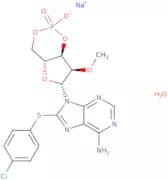
CAS:Cytidine 3'-monophosphate lithium salt is a synthetic nucleoside that is used to inhibit the synthesis of DNA in cells. It is an analog of cytidine, with a phosphate group at the 3' position and a lithium cation at the 5' position. Cytidine 3'-monophosphate lithium salt has been shown to be effective in treating cancer and viral infections, although it does not have antiviral activity against influenza A virus.Formula:C9H14N3O8P·xLiPurezza:Min. 95%Peso molecolare:323.2 g/mol8-(4-Chlorophenylthio)-2'-O-methyladenosine 3',5'-cyclic monophosphate sodium salt
CAS:8-(4-Chlorophenylthio)-2'-O-methyladenosine 3',5'-cyclic monophosphate sodium salt (8-CPT-cAMP) is a cyclic nucleotide that activates adenyl cyclase, which increases intracellular levels of the second messenger cAMP. It also inhibits P2Y receptors and other ion channels. 8-CPT-cAMP has been shown to be effective in activating cells expressing the enzyme camp levels, such as those found in heart muscle cells. This drug is used clinically to lower blood pressure, as it has been shown to activate amp-activated protein kinase and calcium chelator. 8-CPT-cAMP may have clinical applications for the treatment of cancer due to its ability to induce cell cycle arrest and apoptosis.Formula:C17H16ClN5O6PS·NaPurezza:Min. 95%Colore e forma:PowderPeso molecolare:507.82 g/molN3-Methyl-2’-O-(2-methoxyethyl)uridine
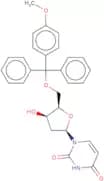
CAS:N3-Methyl-2’-O-(2-methoxyethyl)uridine is a modified nucleoside that is synthesized from deoxyribonucleosides and ribonucleosides. It has antiviral, anticancer, and antifungal properties. N3-Methyl-2’-O-(2-methoxyethyl)uridine has been shown to be an effective inhibitor of HIV replication in vitro and in vivo. This drug also inhibits the growth of human cancer cells in vitro and has been shown to be active against breast cancer cells. N3-Methyl-2’-O-(2-methoxyethyl)uridine is phosphorylated by cellular enzymes to form its active form, which binds to the viral reverse transcriptase enzyme and prevents DNA synthesis.Formula:C13H20N2O7Purezza:Min. 95%Peso molecolare:316.31 g/mol2'-Deoxy-5'-O-MMT-uridine
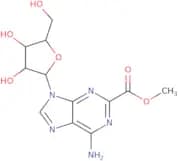
CAS:<p>2'-Deoxy-5'-O-MMT-uridine is a monophosphate nucleoside that is an antiviral and anticancer drug. It is synthesized from the pentaphosphate derivative of cytosine and uracil, and inhibits RNA synthesis by forming a covalent bond with the enzyme ribonucleotide reductase. This product can be used as a starting material for the synthesis of other nucleosides, such as 2'-deoxy-5'-O-methylcytidine. 2'-Deoxy-5'-O-MMT-uridine can also be used to modify DNA by replacing uracil residues in DNA with their corresponding 2'-deoxy counterparts.</p>Formula:C29H28N2O6Purezza:Min. 95%Peso molecolare:500.56 g/mol2-Methoxycarbonyl adenosine
CAS:2-Methoxycarbonyl adenosine is a modified nucleoside and nucleotide. It is an antiviral agent that has been shown to be effective against herpes simplex virus type 1 (HSV-1) and varicella zoster virus (VZV). 2-Methoxycarbonyl adenosine also has anticancer activity, which may be due to its ability to inhibit DNA synthesis. This agent can also be used as a phosphoramidite for the synthesis of oligonucleotides and as a monophosphate for the synthesis of ribonucleosides. 2-Methoxycarbonyl adenosine is also available in high purity and high quality with CAS No. 70255-70-8.Purezza:Min. 95%



![3-beta-D-Ribofuranosyl-1H-pyrimido[5,4-b][1,4]benzoxazin-2(3H)-one](/_next/image/?url=https%3A%2Fstatic.cymitquimica.com%2Fproducts%2F3D%2Fthumb-webp%2FNR180574.webp&w=3840&q=75)