Nucleosidi
Trovati 3604 prodotti per "Nucleosidi". Vengono mostrati i primi 500.
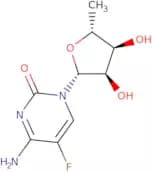
5'-Deoxy-5-fluorocytidine
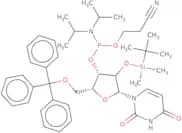
CAS:5'-Deoxy-5-fluorocytidine is a cytosolic nucleoside analogue that is phosphorylated by cellular enzymes to the active form 5'-deoxy-5-fluorouridine monophosphate. It is a prodrug, which is activated in the body to release 5-FU and inhibits the growth of cancer cells. 5'-Deoxy-5-fluorocytidine has been shown to be effective against metastatic colorectal cancer in humans and resistant breast cancer in mice. The drug can also be used as an oral prodrug for 5-FU, which has a wide therapeutic index and low toxicity. Studies have shown that it selectively inhibits proliferation of solid tumours through inhibition of protein synthesis and cell division. The drug also has antiangiogenic effects, which are thought to contribute to its antitumor activity.Formula:C9H12FN3O4Purezza:Min. 98 Area-%Colore e forma:White PowderPeso molecolare:245.21 g/mol2'-O-tert-Butyldimethylsilyl-5'-O-trityluridine 3'-CE phosphoramidite
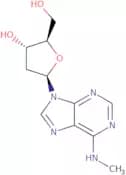
2'-O-tert-Butyldimethylsilyl-5'-O-trityluridine 3'-CE phosphoramidite is a modified nucleoside that is used as an activator in DNA synthesis. It is synthesized from 5'-O-trityluridine and 2'-deoxyribonucleosides. This nucleoside has antiviral and anticancer properties, which are due to the fact that it inhibits viral replication by inhibiting DNA polymerase and prevents cell proliferation. 2'-O-tert-Butyldimethylsilyl-5'-O-trityluridine 3'-CE phosphoramidite is a high purity, high quality product that can be used in DNA synthesis and cancer treatment.Formula:C43H57N4O7PSiPurezza:Min. 95%Peso molecolare:801.02 g/mol2'-Deoxy-N6-methyladenosine
CAS:2'-Deoxy-N6-methyladenosine (2DMA) is a nucleoside that has been found to inhibit the phosphorylation of p2y receptors in rat kidney cells. 2DMA inhibits the production of collagen, which may have a matrix effect on cells. Studies have shown that 2DMA can be used as a sample preparation reagent for nuclear DNA. It has also been shown to be effective at inhibiting transcription and replication of human mitochondrial DNA.
Formula:C11H15N5O3Purezza:Min. 95%Colore e forma:White PowderPeso molecolare:265.27 g/molN4-Acetyl-5'-O-DMT-2'-O-methylcytidine
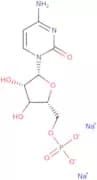
CAS:N4-Acetyl-5'-O-DMT-2'-O-methylcytidine is a cytidine analogue that has been synthesized to be used as an enzyme-linked probe. It is labelled with biotin and can be detected by binding to an antibody which has been labelled with a fluorescent tag. Cytidine analogues are synthesized on a solid phase and then cleaved from the support material. The spacer arm is added to the 5' end of the nucleotide and the 3'-OH group is modified with 2'-O-methyl groups. N4-Acetyl-5'-O-DMT-2'-O-methylcytidine has been shown to be sensitive in techniques such as solid phase synthesis, nucleic acid research, and immunoassays.Formula:C33H35N3O8Purezza:Min. 95%Colore e forma:Off-White PowderPeso molecolare:601.65 g/molCytidine 5'-monophosphate disodium salt
CAS:Cytidine 5'-monophosphate disodium salt (CMPDS) is a prodrug that is converted to cytidine 5'-monophosphate, an active form, in the acidic environment of cancer cells. CMPDS has been shown to inhibit the growth of squamous carcinoma and other solid tumours by binding to survivin, which regulates cell growth and apoptosis. CMPDS also inhibits the activity of matrix metalloproteinases-9 (MMP-9), an enzyme that promotes tumor growth by breaking down connective tissue. This drug can be used as a therapeutic agent for treatment of congestive heart failure due to its ability to increase mitochondrial membrane potential and decrease myocardial infarct size.Formula:C9H12N3Na2O8PPurezza:Min. 95 Area-%Colore e forma:White PowderPeso molecolare:367.16 g/mol2'-Azido-2'-deoxyadenosine
CAS:2'-Azido-2'-deoxyadenosine is a synthetic nucleoside analog of adenosine in which the 2'-hydroxyl group of the ribose sugar is replaced by an azido group (–N₃), and the 3'- and 5'-hydroxyl groups remain intact. This modification confers unique chemical properties, including the ability to participate in bioorthogonal "click" chemistry reactions, particularly azide-alkyne cycloadditions, making it useful for labeling and tracking nucleic acids in biochemical studies. Additionally, the azido substitution can influence enzymatic recognition and incorporation by polymerases, allowing its use in studying nucleic acid metabolism, drug design, and therapeutic nucleoside analog development.Formula:C10H12N8O3Purezza:Min. 95%Colore e forma:PowderPeso molecolare:292.25 g/molGuanosine 5'-O-(2-thiodiphosphate) trilithium salt
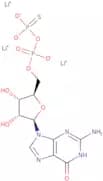
CAS:Guanosine 5'-O-(2-thiodiphosphate) trilithium salt (GTPTS) is a membrane-permeable molecule that hyperpolarizes cells by inhibiting the movement of ions through the cell membrane. GTPTS is activated by extracellular calcium and potassium ions, which are involved in signal transduction pathways. It has been shown to inhibit the release of neurotransmitters, such as acetylcholine, dopamine, serotonin, and norepinephrine. GTPTS also blocks voltage-gated sodium channels, which leads to a reduction in neuronal excitability. The drug has been shown to have analgesic effects in animal models of pain and can be used to treat chronic pain due to nerve damage.Formula:C10H12Li3N5O10P2SPurezza:Min. 85 Area-%Colore e forma:PowderPeso molecolare:477.06 g/mol5-Chloro-2'-deoxycytidine
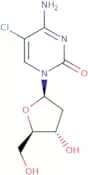
CAS:5-Chloro-2'-deoxycytidine (5-Cl-dC) is a nucleoside analog that inhibits DNA synthesis by blocking the action of thymidylate synthase. It can be used in animal models to study bowel diseases, such as ulcerative colitis and Crohn's disease. 5-Cl-dC has been shown to be effective in treating the effects of radiation and chemical toxicity in HL60 cells, a type of human leukemia cell line. 5-Cl-dC has also been shown to enhance the cytotoxicity of eosinophil peroxidase, which is an enzyme that may be involved in the pathogenesis of asthma. This drug is currently being evaluated for its safety and efficacy in clinical trials involving patients with myelodysplastic syndrome or acute myeloid leukemia who are at risk for developing leukemia.
Formula:C9H12CIN3O4Purezza:Min. 95%Colore e forma:PowderPeso molecolare:261.67 g/mol5'-O-Tosyl-2',3'-O-isopropylideneadenosine
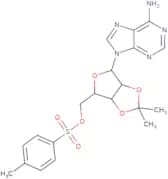
CAS:5'-O-Tosyl-2',3'-O-isopropylideneadenosine is a novel modified nucleoside with antiviral and anticancer activities. It is an activator of the enzyme ribonucleotide reductase, which converts ribonucleotides to deoxyribonucleotides. This drug has been shown to have anticancer activity in a variety of tumor cell lines, including leukemias, lymphomas, and sarcomas. In addition, it has been shown to be active against HIV and herpes simplex virus type 1 (HSV-1). 5'-O-Tosyl-2',3'-O-isopropylideneadenosine is also known by CAS No. 5605-63-0.
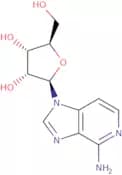
Formula:C20H23N5O6SPurezza:Min. 95%Colore e forma:PowderPeso molecolare:461.49 g/mol3-Deazaadenosine
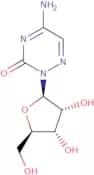
CAS:A potential role in apoptosis and cellular senescence.Formula:C11H14N4O4Purezza:Min. 99 Area-%Colore e forma:PowderPeso molecolare:266.26 g/mol6-Azacytidine
CAS:6-Azacytidine is a molecule that contains a hydroxyl group and a glycosidic bond. It has been shown to inhibit the growth of mollicutes, which are non-cellular bacteria. 6-Azacytidine has also been shown to be toxic in animal tissue culture studies. The drug can be eliminated through the urine or bile after being metabolized by the liver. 6-Azacytidine is not active against human cells in cell culture, but it does show some toxicity against human liver cells.Formula:C8H12N4O5Purezza:Min. 95%Colore e forma:PowderPeso molecolare:244.2 g/mol5-Hydroxymethyl-2’-β-C-methyluridine
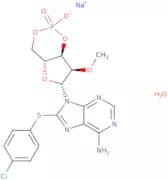
CAS:5-Hydroxymethyl-2’C-methyluridine is a modified nucleoside that is an activator of cellular DNA synthesis. It is a synthetic compound that has been shown to be active against cancer cells in vitro. 5-Hydroxymethyl-2’C-methyluridine has also been used to inhibit the replication of various viruses, including herpes simplex virus type 1 and 2, cytomegalovirus, and human immunodeficiency virus type 1. This drug was shown to be safe and effective in clinical trials for the treatment of HIV/AIDS patients with no adverse side effects.Formula:C11H16N2O7Purezza:Min. 95%Colore e forma:PowderPeso molecolare:288.25 g/mol8-(4-Chlorophenylthio)-2'-O-methyladenosine 3',5'-cyclic monophosphate sodium salt
CAS:8-(4-Chlorophenylthio)-2'-O-methyladenosine 3',5'-cyclic monophosphate sodium salt (8-CPT-cAMP) is a cyclic nucleotide that activates adenyl cyclase, which increases intracellular levels of the second messenger cAMP. It also inhibits P2Y receptors and other ion channels. 8-CPT-cAMP has been shown to be effective in activating cells expressing the enzyme camp levels, such as those found in heart muscle cells. This drug is used clinically to lower blood pressure, as it has been shown to activate amp-activated protein kinase and calcium chelator. 8-CPT-cAMP may have clinical applications for the treatment of cancer due to its ability to induce cell cycle arrest and apoptosis.Formula:C17H16ClN5O6PS·NaPurezza:Min. 95%Colore e forma:PowderPeso molecolare:507.82 g/molN3-Methyl-2’-O-(2-methoxyethyl)uridine
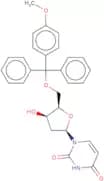
CAS:N3-Methyl-2’-O-(2-methoxyethyl)uridine is a modified nucleoside that is synthesized from deoxyribonucleosides and ribonucleosides. It has antiviral, anticancer, and antifungal properties. N3-Methyl-2’-O-(2-methoxyethyl)uridine has been shown to be an effective inhibitor of HIV replication in vitro and in vivo. This drug also inhibits the growth of human cancer cells in vitro and has been shown to be active against breast cancer cells. N3-Methyl-2’-O-(2-methoxyethyl)uridine is phosphorylated by cellular enzymes to form its active form, which binds to the viral reverse transcriptase enzyme and prevents DNA synthesis.Formula:C13H20N2O7Purezza:Min. 95%Peso molecolare:316.31 g/mol2'-Deoxy-5'-O-MMT-uridine
CAS:2'-Deoxy-5'-O-MMT-uridine is a monophosphate nucleoside that is an antiviral and anticancer drug. It is synthesized from the pentaphosphate derivative of cytosine and uracil, and inhibits RNA synthesis by forming a covalent bond with the enzyme ribonucleotide reductase. This product can be used as a starting material for the synthesis of other nucleosides, such as 2'-deoxy-5'-O-methylcytidine. 2'-Deoxy-5'-O-MMT-uridine can also be used to modify DNA by replacing uracil residues in DNA with their corresponding 2'-deoxy counterparts.Formula:C29H28N2O6Purezza:Min. 95%Peso molecolare:500.56 g/mol2'-Deoxycytidine-5'-triphosphate trisodium salt
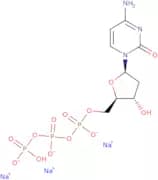
CAS:2'-Deoxycytidine-5'-triphosphate trisodium salt is an activator that has been shown to exhibit anticancer and antiviral activities. It is a novel nucleoside phosphoramidite that is used in the synthesis of DNA, RNA, and other nucleic acids. 2'-Deoxycytidine-5'-triphosphate trisodium salt has been modified by substituting the oxygen atom for a sulfur atom at the 5' position of the sugar moiety. This change makes it resistant to degradation by ribonucleases. 2'-Deoxycytidine-5'-triphosphate trisodium salt has also been shown to act as an inhibitor of human telomerase activity.Formula:C9H13N3O13P3Na3Purezza:(%) Min. 85%Colore e forma:PowderPeso molecolare:533.1 g/mol2'-Deoxy-5'-O-pixylinosine
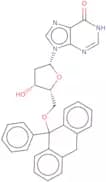
2'-Deoxy-5'-O-pixylinosine is a nucleoside that is structurally similar to the natural nucleosides. It is modified with an o-pixyl group at the 2' position of the sugar moiety and contains a phosphate group at the 5' position of the sugar moiety. 2'-Deoxy-5'-O-pixylinosine has antiviral, anticancer, and high purity properties due to its ability to inhibit viral DNA polymerases. This compound has been shown to be active against a broad spectrum of viruses including HIV and herpes simplex virus types 1 and 2 (HSV1 and HSV2). This compound is also able to inhibit tumor growth in vitro.Formula:C30H26N4O4Purezza:Min. 95%Peso molecolare:506.57 g/mol(R)-N-(2,3-Dihydro-1H-indenyl)adenosine
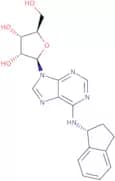
CAS:(R)-N-(2,3-Dihydro-1H-indenyl)adenosine is a purine nucleoside with the attachment of a 2,3-dihydro-1H-indenyl group via a nitrogen atom. This adenosine-based product can be used for research purposesFormula:C19H21N5O4Purezza:Min. 95 Area-%Colore e forma:White PowderPeso molecolare:383.4 g/mol2-Chloro-N,N-dimethyl-2’C-methyladenosine
CAS:2-Chloro-N,N-dimethyl-2’C-methyladenosine is a synthetic nucleoside that inhibits viral DNA synthesis. It is a modified deoxyribonucleoside that contains a chloro group at the 2’ position of the sugar ring and a methyl group at the 3’ position. This drug has antiviral activity against herpes simplex virus type 1 (HSV-1) and herpes simplex virus type 2 (HSV-2), respiratory syncytial virus (RSV), and influenza A virus. It also displays anticancer activity in vitro. This drug inhibits cancer cell growth by interfering with DNA replication and triggering apoptosis through inhibition of protein kinase C and activation of caspases.Purezza:Min. 95%2-Methylthioadenosine
CAS:2-Methylthioadenosine is a purine nucleoside which induces necrotic cell death. It is the first of its kind to be shown to have activity against squamous carcinoma cells, and is activated by nucleoside phosphorylase in order to produce its cytotoxic form. 2-Methylthioadenosine also inhibits the transcription-polymerase chain reaction and increases oxidative injury. This drug has been shown to have receptor activity in brain cells, as well as chemotactic activity for gland cells. 2-Methylthioadenosine has been used as a model organism for polymerase chain reactions, and has been shown to inhibit p2y receptors in the human colon cancer cell line HT29.
Formula:C11H15N5O4SPurezza:Min. 95%Colore e forma:White Off-White PowderPeso molecolare:313.34 g/mol