Chetoni e Derivati
I chetoni sono composti organici che contengono un gruppo carbonilico (C=O) legato a due atomi di carbonio, formando una struttura in cui il gruppo carbonilico è affiancato da gruppi alchilici o arilici. In farmacologia, i chetoni sono utilizzati nella formulazione di API grazie alla loro capacità di migliorare la solubilità e la stabilità dei principi attivi. Alcuni chetoni possiedono proprietà antinfiammatorie, analgesiche e antimicrobiche. I derivati dei chetoni includono composti in cui il gruppo carbonilico è modificato, come gli enoli, che trovano applicazione nella sintesi di farmaci e come intermedi chimici nella produzione di altri composti bioattivi. I derivati dei chetoni sono impiegati nella progettazione di nuovi farmaci, inclusi quelli per il trattamento di malattie neurodegenerative, disturbi metabolici e alcuni tipi di cancro, grazie ai loro effetti specifici sugli enzimi e sui processi cellulari.
Trovati 2393 prodotti di "Chetoni e Derivati"
Ordinare per
Purezza (%)
0
100
|
0
|
50
|
90
|
95
|
100
1-(3,4-Dimethylphenyl)ethanol
CAS:Prodotto controllato<p>Applications 1-(3,4-Dimethylphenyl)ethanol is an intermediate in the production of Medetomidine (M203250), α2-Adrenergic agonist. Sedative; analgesic.<br>References Kagechika, H., et al.: J. Med. Chem., 32, 1098 (1989), ; Scheinin, M., et al.: Br. J. Clin. Pharmacol., 24, 443 (1987),<br></p>Formula:C10H14OColore e forma:NeatPeso molecolare:150.22(±)-Ibuprofen-d3, Sodium Salt (α-methyl-d3)
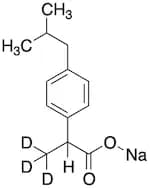
CAS:Prodotto controllato<p>Applications (±)-Ibuprofen-d3, Sodium Salt (alpha-methyl-d3) (CAS# 1219805-09-0) is a useful isotopically labeled research compound.<br></p>Formula:C13H14D3NaO2Colore e forma:NeatPeso molecolare:231.29D 13223-d4 (Flupirtine Metabolite)
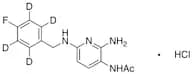
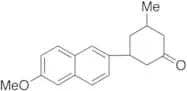
CAS:Prodotto controllato<p>Applications The major active labelled metabolite of Flupirtine in human plasma. A potassium channel opener<br>References Niebch, G., et al.: Arzneim.-Forsch., 42, 1343 (1992), Friedel, H., et al.: Drugs, 45, 548 (1993), Fu, I., et al.: J. Pharm. Biomed. Anal., 18, 347 (1998),<br></p>Formula:C14H12D4ClFN4OColore e forma:NeatPeso molecolare:314.783-(6-Methoxy-2-naphthalenyl)-5-methylcyclohexanone (Impurity)
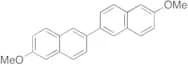
CAS:Formula:C18H20O2Colore e forma:NeatPeso molecolare:268.356,6'-Dimethoxy-2,2'-binaphthalene
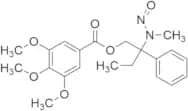
CAS:Prodotto controllato<p>Applications 6,6'-Dimethoxy-2,2'-binaphthalene, can be used for the synthesis of novel classes of non-steroidal substrate mimetics, as inhibitors of human CYP17. It is also an impurity of Nabumetone (N200500), a non-steroidal anti-inflammatory drug, acting as anti-inflammatory agent.<br>References Kumpulainen, H., et al.: J. Med. Chem., 49, 1207 (2006); Pinto-Bazurco, M. A. E., et al.: Bioorg. Med. Chem. Lett., 18, 267 (2008);<br></p>Formula:C22H18O2Colore e forma:NeatPeso molecolare:314.38Trimebutine EP Impurity E-Nitroso
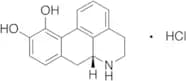
Prodotto controllatoFormula:C21H26N2O6Colore e forma:NeatPeso molecolare:402.441R-(-)-Norapomorphine Hydrochloride
CAS:Prodotto controllato<p>Applications An Apomorphine derivative as inhibitor of amyloid-β (Aβ) fibril formation and their use in amyloidosis based disease.<br>References Howlett, D., et al.: Biochem. J., 340, 283 (1999), Kuner, P., et al.: J. Biol. Chem., 275, 1673 (2000), Ono, K., et al.: J. Neurosci. Res., 75, 742 (2004),<br></p>Formula:C16H15NO2•HClPurezza:>90%Colore e forma:NeatPeso molecolare:253.3036463-Carboxy-a-methyl-benzeneacetic acid
CAS:<p>3-Carboxy-a-methyl-benzeneacetic acid (3CMA) is an impurity in the synthesis of 3,4-methylenedioxyphenylacetone. It is a preservative that has been analysed as a potential source of contamination in pharmaceutical preparations. 3CMA has been shown to be effective at inhibiting the growth of bacteria, yeast and moulds. The analysis time for 3CMA is typically 8 hours or less. The parameters that are used to analyse 3CMA include the use of acetonitrile, optimal porosity and efficiency. The analytical methods used for 3CMA include chromatographic and chromolith methods.</p>Formula:C10H10O4Purezza:Min. 95%Peso molecolare:194.18 g/mol5-Benzoyl-2,3-dihydro-1H-pyrrolizine-1-carboxylic acid - Racemic
CAS:<p>5-Benzoyl-2,3-dihydro-1H-pyrrolizine-1-carboxylic acid - Racemic (5BPC) is a drug that is used for the treatment of pain. It has been shown to be safe and effective in treating postoperative pain when given by intravenous infusion or as an oral tablet. 5BPC has minimal toxicity and is metabolized primarily by the liver with a half life of 2.6 hours. The drug has been found to have pharmacokinetic properties that allow it to be used safely in patients with hepatic impairment and in those recovering from abdominal surgery. 5BPC is a prodrug that undergoes biotransformation by esterases into its active form, pyrrolizidine alkaloid (PA). PA acts as a nonsteroidal anti-inflammatory agent and inhibits prostaglandin synthesis, which leads to analgesia. This drug also has minimal drug interactions because</p>Formula:C15H13O3NPurezza:Min. 95%Peso molecolare:255.27 g/molN-(4-Hydroxyphenyl)propanamide
CAS:<p>The N-(4-hydroxyphenyl)propionamide (HPPA) is a synthetic drug that binds to the human liver. It has been shown to be effective in preventing implantation of fertilized eggs, and can be used as a diagnostic agent for determining the presence of HPPA in human liver tissue. HPPA is also used as a diluent for other drugs. The HPPA binds to chromatographic components and can be detected using electrochemical detection, which allows it to be used as a targetable probe for cancer research. HPPA is also used to study iontophoretic transport of ions across reconstituted membranes in vitro.</p>Formula:C9H11NO2Purezza:(%) Min. 97%Peso molecolare:165.19 g/molN-(4-Hydroxyphenyl)acetamide sulfate-d3 sodium
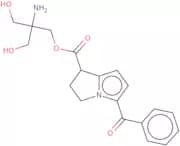
CAS:Prodotto controllato<p>Please enquire for more information about N-(4-Hydroxyphenyl)acetamide sulfate-d3 sodium including the price, delivery time and more detailed product information at the technical inquiry form on this page</p>Formula:C8H6D3NO5S•NaPurezza:Min. 95%Peso molecolare:257.24 g/mol(2-Amino-2-(hydroxymethyl)propane-3-ol-1-yl) (5-benzoyl-2,3-dihydro-1H-pyrrolizine-1-carboxylate), racemic
<p>Racemic 2-amino-2-(hydroxymethyl)propane-3-ol-1-yl (5-benzoyl-2,3-dihydro-1H-pyrrolizine-1-carboxylate) is a synthetic drug product. It is used in research and development as an impurity standard. It is also used to synthesize drug products, which are custom synthesis and not commercially available. The racemate is a metabolite of the natural compound "Lysergic acid" and has been studied for its effects on metabolism.</p>Formula:C19H22N2O5Purezza:Min. 95%Peso molecolare:358.39 g/molPelubiprofen
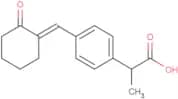
CAS:<p>Pelubiprofen is a non-steroidal anti-inflammatory agent and a COX-2 inhibitor, which effectively reduces PGE(2) production by inhibiting COX activity.</p>Formula:C16H18O3Purezza:99.69%Colore e forma:SolidPeso molecolare:258.31Nabumetone dimer
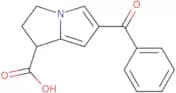
CAS:<p>Nabumetone is a nonsteroidal anti-inflammatory drug that is metabolized by the liver to form a dimer. The major metabolite of nabumetone is the dimer, which has been used as an impurity standard for this drug. Nabumetone has been shown to inhibit prostaglandin synthesis, and its metabolites have been studied for their effects on various enzymes.</p>Formula:C27H26O3Purezza:Min. 95%Peso molecolare:398.49 g/mol6-Benzoyl-2,3-dihydro-1H-pyrrolizine-1-carboxylic acid, racemic
CAS:<p>6-Benzoyl-2,3-dihydro-1H-pyrrolizine-1-carboxylic acid, racemic is a drug product that is used as an analytical standard in the development of new drugs. It is also used to study the metabolism of drugs. 6BPDC has been shown to inhibit bacterial growth by binding to DNA and RNA, thereby preventing transcription and replication. This metabolite can be synthesized in the laboratory.</p>Formula:C15H13NO3Purezza:Min. 95%Peso molecolare:255.27 g/molMavatrep
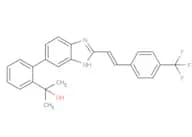
CAS:<p>Mavatrep (JNJ-39439335) is a selective antagonist of TRPV1 with Ki of 6.5 nM and can be used for studies about inflammatory pain.</p>Formula:C25H21F3N2OPurezza:98.51% - 99.31%Colore e forma:SolidPeso molecolare:422.443-Chloro-4-hydroxyacetanilide
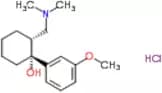
CAS:<p>3-Chloro-4-hydroxyacetanilide is a chemical compound that belongs to the class of acetanilides. It has long-term toxicity and is used as a drug substance in the production of aniline derivatives. 3-Chloro-4-hydroxyacetanilide has been shown to be carcinogenic in hamsters. The long term exposure to this chemical was shown to cause liver damage and increased incidence of tumours in rats. This drug also contains impurities and traces of chloride, chlorine, and thionyl chloride, which are toxic substances that can cause irritation or burns on contact with skin or eyes.</p>Formula:C8H8ClNO2Purezza:Min. 95%Peso molecolare:185.61 g/molTramadol Related Compound A CIV ((RS,SR)-1-(3-Methoxyphenyl)-2-(dimethylaminomethyl)cyclohexanol hydrochloride)
CAS:Prodotto controllatoAromatic amino-alcohol-phenols, aromatic amino-acid-phenols and other aromatic amino compounds with oxygen functionFormula:C16H25NO2·HClColore e forma:White PowderPeso molecolare:263.18853Tramadol Hydrochloride CIV
CAS:Prodotto controllatoAromatic amino-alcohol-phenols, aromatic amino-acid-phenols and other aromatic amino compounds with oxygen functionFormula:C16H25NO2·HCIColore e forma:White Crystalline PowderPeso molecolare:403.10083Meperidine Hydrochloride CII
CAS:Prodotto controllatoAlfentanil (inn), anileridine (inn), bezitramide (inn), bromazepam (inn), difenoxin (inn), diphenoxylate (inn), dipipanone (inn), fentanyl (inn), etc.Formula:C15H21NO2·HClColore e forma:White Crystalline PowderPeso molecolare:247.15723