Fonte botanica
La categoria delle Fonti Botaniche comprende una vasta gamma di composti ed estratti di origine vegetale utilizzati nella ricerca e nello sviluppo di prodotti. Queste fonti botaniche includono varie erbe, alberi e arbusti che forniscono composti bioattivi per l'uso in prodotti farmaceutici, cosmetici e integratori nutrizionali. Presso CymitQuimica, offriamo una selezione completa di fonti botaniche per supportare la ricerca in chimica dei prodotti naturali, farmacologia e medicina tradizionale.
Trovati 1459 prodotti di "Fonte botanica"
Ordinare per
Purezza (%)
0
100
|
0
|
50
|
90
|
95
|
100
Pinocembrin
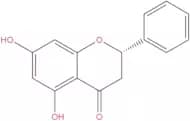
CAS:Pinocembrin is a major flavonoid molecule incorporated as multifunctional in the pharmaceutical industry. Its vast range of pharmacological activities has been well researched including antimicrobial, neuroprotective, anti-inflammatory, antioxidant, and anticancer activities. Pinocembrin inhibited LPS-induced inflammatory mediators production by suppressing PI3K/Akt/NF-κB signaling pathway, it also inhibited TGF-β1-induced epithelial-mesenchymal transition (EMT) and metastasis of Y-79 cells by inactivating the αvβ3 integrin/FAK/p38α signaling pathway.Formula:C15H12O4Purezza:95%~99%Peso molecolare:256.257Lindenenol
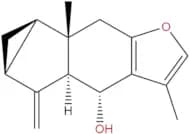
CAS:Linderene, linderalactone and isolinderalactone inhibit the enzymes from both origins to the same extent.Formula:C15H18O2Purezza:95%~99%Colore e forma:PowderPeso molecolare:230.307Methylophiopogonone A
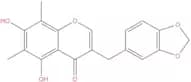
CAS:Formula:C19H16O6Purezza:95%~99%Colore e forma:PowderPeso molecolare:340.331Astragaloside I
CAS:AstragalosideΙ(As-Ι), one of the main active ingredients in Astragalus membranaceus, As-I stimulates osteoblast differentiation through the Wnt/β-catenin signaling pathway, which also activates the BMP pathway and RANK pathway, thus highlighting the As-Ιfor pharmaceutical and medicinal applications such as treating bone disease.Formula:C45H72O16Purezza:95%~99%Colore e forma:PowderPeso molecolare:869.055Astragaloside II
CAS:Astragaloside II can downregulate the expression of the P-gp and mdr1 gene, suppress phosphorylation of extracellular signal regulated kinase 1/2, p38 and c-Jun N-terminal kinase, suggests that Astragaloside II is a potent multidrug resistance (MDR) reversal agent and may be a potential adjunctive agent for hepatic cancer chemotherapy.Formula:C43H70O15Purezza:95%~99%Colore e forma:PowderPeso molecolare:827.018Homoplantaginin
CAS:Homoplantaginin shows anti-inflammatory and antioxidant properties, it also has a protective and therapeutic effect on hepatocyte injury and shows potent inhibitory activities against influenza. Homoplantaginin may be used for the prevention and treatment of endothelial dysfunction associated with insulin resistance, it ameliorates endothelial insulin resistance by inhibiting inflammation and modulating cell signalling via the IKKβ/IRS-1/pAkt/peNOS pathway.Formula:C22H22O11Purezza:95%~99%Peso molecolare:462.407Forsythiaside
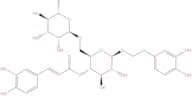
CAS:Forsythoside A possesses strong antibacterial, antiinflammatory, antioxidant and antiviral effects. it has the potential to prevent IBV infection in vitro, it can promote the expression of IFN-α and Mx1 significantly.Forsythoside A has inductive effects on the activities of CYP1A2 and CYP2C11, without affecting CYP2D1 and CYP3A1/2 activities.Formula:C29H36O15Purezza:95%~99%Peso molecolare:624.592Tracheloside
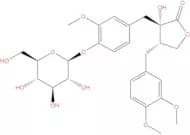
CAS:Tracheloside significantly decreases the activity of alkaline phosphatase (AP), an estrogen-inducible marker enzyme, with an IC(50) value of 0.31 microg/ml, a level of inhibition comparable to that of tamoxifen (IC(50) = 0.43 microg/ml).Formula:C27H34O12Purezza:95%~99%Peso molecolare:550.557Chonglou Saponin VII
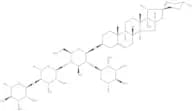
CAS:<p>Chonglou Saponin VII is a bioactive glycoside, which is derived from the rhizomes of traditional Chinese medicinal plants, often sourced from the species Paris polyphylla. As a steroidal saponin, its mechanism of action involves altering cellular activities by interacting with cell membranes and signaling pathways, leading to a range of pharmacological effects.</p>Formula:C51H82O21Purezza:Min. 95%Colore e forma:PowderPeso molecolare:1,031.18 g/molDiammonium glycyrrhizinate
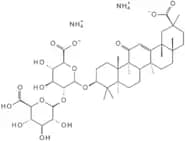
CAS:<p>Diammonium glycyrrhizinate is a bioactive compound, which is derived from the licorice root, Glycyrrhiza glabra. This product functions primarily as an anti-inflammatory agent by modulating the body's immune response and inhibiting enzymes that promote inflammation, such as cyclooxygenase and lipoxygenase. Its mode of action involves the suppression of pro-inflammatory cytokines, which can lead to reduced inflammation and relief from related symptoms.</p>Formula:C42H68N2O16Purezza:Min. 95%Colore e forma:PowderPeso molecolare:856.99 g/mol(-)-Syringaresnol-4-O-b-D-apiofuranosyl-(1,2)-b-D-glucopyranoside
CAS:<p>(-)-Syringaresnol-4-O-β-D-apiofuranosyl-(1,2)-β-D-glucopyranoside is a lignan glycoside, which is a type of secondary metabolite. This compound is primarily derived from plant sources, often isolated from the heartwood of various trees or other lignan-rich plant materials. The extraction typically involves advanced chromatographic techniques that separate and purify it from complex plant matrices.</p>Formula:C33H44O17Purezza:Min. 95%Colore e forma:PowderPeso molecolare:712.69 g/molRutin
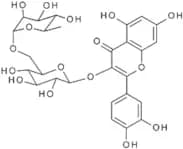
CAS:<p>Capillary protectant; free radical scavenger; antioxidant</p>Formula:C27H30O16Purezza:Min. 95%Colore e forma:Yellow PowderPeso molecolare:610.52 g/molMogroside IVa
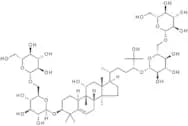
CAS:<p>Mogroside IVa is a triterpene glycoside, which is a type of natural sweetening compound, derived primarily from the fruit of Siraitia grosvenorii, commonly known as monk fruit. The compound is extracted from the fruit through a meticulous process that ensures the preservation of its natural properties. The mode of action of Mogroside IVa involves its interaction with taste receptors on the tongue, where it delivers intense sweetness, often several hundred times sweeter than sucrose, without providing caloric value. Additionally, studies suggest that this mogroside exhibits antioxidant activities, potentially neutralizing free radicals and protecting against cellular damage.</p>Formula:C54H92O24Purezza:Min. 95%Colore e forma:White PowderPeso molecolare:1,125.29 g/molCamelliaside A
CAS:<p>Camelliaside A is a saponin compound, which is a type of secondary metabolite predominantly occurring in certain plant species. It is derived from the seeds of Camellia sinensis, commonly known as the tea plant. The molecular structure of Camelliaside A features a glycosidic linkage, contributing to its bioactive properties.</p>Formula:C33H40O20Purezza:Min. 95%Colore e forma:SolidPeso molecolare:756.66 g/molGinsenoside Rg5
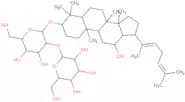
CAS:<p>Ginsenoside Rg5 is a bioactive compound, which is a saponin extracted from Panax ginseng. This herbal source, particularly its root, has been used in traditional medicine for centuries. Ginsenoside Rg5 exhibits its mode of action primarily through modulating intracellular signaling pathways, enhancing antioxidant activity, and exerting anti-inflammatory effects. It has shown the ability to interact with cellular receptors and enzymes, impacting biological processes at the molecular level.</p>Formula:C42H70O12Purezza:Min. 95%Colore e forma:White PowderPeso molecolare:767 g/mol5,6-O-Isopropylidene-phlorigidoside B
<p>5,6-O-Isopropylidene-phlorigidoside B is a specialized phytochemical compound, which is a derivative of natural glycosides. This compound is typically sourced from certain plant species known for producing bioactive secondary metabolites. The synthesis of this compound involves the acetalization of hydroxyl groups, creating an isopropylidene protective group, which can influence its stability and solubility properties.</p>Purezza:Min. 95%