Fonte botanica
Trovati 1461 prodotti di "Fonte botanica"
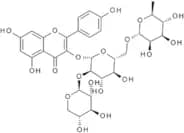
Camelliaside B
CAS:Camelliaside B is a bioactive compound, which is a glycosylated flavonoid derived from the leaves of *Camellia sinensis*, the tea plant. It functions through its antioxidant properties, scavenging free radicals and reducing oxidative stress in biological systems. The molecular structure of Camelliaside B allows it to interact with cellular components, providing protective effects against reactive oxygen species.Formula:C32H38O19Purezza:Min. 95%Peso molecolare:726.63 g/molTenacigenoside A
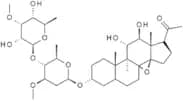
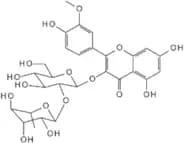
CAS:Tenacigenoside A is a glycoside compound, which is derived from the plant genus Marsdenia, often found in traditional Chinese medicine. It is primarily sourced from the roots and leaves of Marsdenia tenacissima, a plant known for its diverse range of bioactive compounds. The mode of action of Tenacigenoside A involves the modulation of cellular pathways, including apoptosis and cell cycle arrest, suggesting its potential role in influencing various biological processes.Purezza:Min. 95%Luteolin-7-O-neohesperidoside
CAS:Luteolin-7-O-neohesperidoside is a flavonoid glycoside, which is predominantly derived from various plant sources, particularly those belonging to the families Rosaceae and Lamiaceae. It is structurally characterized by the attachment of luteolin to a neohesperidose sugar moiety, which alters its solubility and bioavailability properties. The mode of action of Luteolin-7-O-neohesperidoside involves its capacity to act as a potent antioxidant, scavenging free radicals and protecting cells from oxidative stress. It also demonstrates anti-inflammatory properties by inhibiting key enzymes and signaling pathways involved in inflammatory responses.
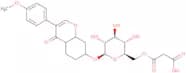
Formula:C27H30O15Purezza:Min. 95%Peso molecolare:594.5 g/molFormononetin 7-O-glucoside-6''-O-malonate
CAS:Formononetin 7-O-glucoside-6''-O-malonate is a naturally occurring flavonoid compound, which is often derived from various plant sources, particularly those in the legume family. It is a malonylated glucoside derivative of formononetin, a well-known isoflavone. This compound plays a significant role in the plants' defense mechanisms and contributes to their physiological processes.Formula:C25H24O12Purezza:Min. 95%Colore e forma:PowderPeso molecolare:516.45 g/molRebaudioside J
CAS:Rebaudioside J is a non-caloric sweetener, which is a purified glycoside derived from the Stevia rebaudiana plant. The Stevia plant, native to South America, is well known for its sweet-tasting compounds, mainly the steviol glycosides. Rebaudioside J is one of these glycosides, specifically noted for its high sweetness intensity and favorable taste profile compared to other steviol glycosides.
Formula:C50H80O27Purezza:Min. 95%Peso molecolare:1,113.16 g/molRebaudioside B
CAS:Rebaudioside B is a type of steviol glycoside, which is a naturally occurring compound extracted from the leaves of the Stevia rebaudiana plant. This plant, native to Paraguay, is known for its intensely sweet leaves, which have been utilized for centuries by indigenous peoples for sweetening purposes.
Formula:C38H60O18Purezza:Min. 95%Peso molecolare:804.87 g/molCalendoflavoside
CAS:Calendoflavoside is a flavonoid-based compound, which is an extract derived from the calendula plant, known for its rich flavonoid content. It functions primarily through the modulation of inflammatory pathways, acting on specific signaling molecules to reduce inflammation and oxidative stress. This mode of action is particularly valuable in therapeutic contexts, as it allows Calendoflavoside to target and mitigate inflammation at the cellular level.
Formula:C28H32O16Purezza:Min. 95%Colore e forma:SolidPeso molecolare:624.54 g/molIsobetanin
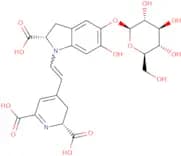
CAS:Isobetanin is a betalain pigment, which is a natural compound derived from the red beetroot (Beta vulgaris). As a member of the betalain family, it specifically belongs to the betacyanin subgroup, which imparts red-violet coloration. Its mode of action centers on its ability to act as an antioxidant, effectively scavenging free radicals and protecting cells from oxidative damage.Formula:C24H26N2O13Purezza:Min. 95%Peso molecolare:550.47 g/molZiziphin
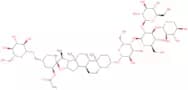
CAS:Ziziphin is a triterpene glycoside which exhibits taste-modifying properties and derives from the leaves of Ziziphus jujuba (Rhamnaceae). In a study, Ziziphin was up to 4 times more active in suppressing the sweet taste of sucrose than other anti-sweet constituents (Suttisri, 1995). Ziziphin suppressed the sweetness induced by D-glucose, D-fructose, stevioside, glycine, sodium saccharin, aspartame and naringin dihydrochalcone. Ziziphin however showed no uppressive effect on the sour taste of hydrochloric acid and the bitter taste of quinine, indicating that ziziphin is highly specific to the sweet taste (Kurihara, 1992). Ziziphin was found to inhibit the sweet taste receptors in humans (Smith, 1983) by a mechanism known as taste modification. In comparison with known gymnemic acids, effects suggest that net dissociation of ziziphins from taste receptor membranes and/or inactivation in the membrane may be much faster than with gymnemic acids (Mahajan, 2009).Formula:C51H80O18Purezza:Min. 95%Peso molecolare:981.17 g/molNeobetanin
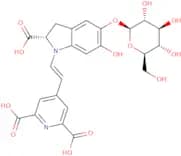
CAS:Neobetanin is a naturally occurring pigment, which is a type of betalain compound derived primarily from beetroot (Beta vulgaris). As a phytochemical, its molecular structure possesses characteristic conjugated double bonds that confer both distinct coloration and free radical scavenging abilities.Formula:C24H24N2O13Purezza:Min. 95%Colore e forma:PowderPeso molecolare:548.45 g/molEsculeoside A
CAS:Spirosolane-type steroidal alkaloid glycoside found in ripe cherry tomatoFormula:C58H95NO29Purezza:Min. 95%Colore e forma:PowderPeso molecolare:1,270.37 g/mol