Monosaccaridi
Sottocategorie di "Monosaccaridi"
- Alloses(11 prodotti)
- Arabinosi(21 prodotti)
- Eritrosio(11 prodotti)
- Fruttosio(9 prodotti)
- Fucosio(36 prodotti)
- Galactosamina(41 prodotti)
- Galattosio(261 prodotti)
- Glucosio(365 prodotti)
- Acidi glucuronici(52 prodotti)
- Glicosubstrati per enzima(78 prodotti)
- Gulosio(6 prodotti)
- Idosio(4 prodotti)
- Inositoli(15 prodotti)
- Lixosio(4 prodotti)
- Mannosio(65 prodotti)
- O-Glicani(48 prodotti)
- Psicosi(3 prodotti)
- Rhamnosio(10 prodotti)
- Ribosi(60 prodotti)
- Acidi Sialici(100 prodotti)
- Sorbosio(4 prodotti)
- Zuccheri(173 prodotti)
- Tagatosio(4 prodotti)
- Talosio(8 prodotti)
- Xyloses(20 prodotti)
Trovati 6083 prodotti di "Monosaccaridi"
Methyl 2-acetamido-2-deoxy-a-D-galactopyranoside
CAS:Methyl 2-acetamido-2-deoxy-a-D-galactopyranoside is a metabolite of the drug 6-fluoro-3-indoxyl-beta-D-galactopyranoside. It has been shown to induce apoptosis in cells, which is mediated by the activation of caspase 3 and cleavage of poly(ADP)ribose polymerase (PARP). Methyl 2-acetamido-2-deoxy-a-D-galactopyranoside also induces transcriptional regulation and decreases the expression of proteins that are involved in cell proliferation. These effects have been seen in clinical pathology, including cancer and infectious diseases. This metabolite binds to mouse monoclonal antibodies, which are used as a diagnostic tool for several types of cancer. The electrochemical impedance spectroscopy technique has demonstrated that methyl 2 acetamido 2 deoxy a D galactopyranoside inhibitsFormula:C9H17NO6Purezza:Min. 98 Area-%Colore e forma:White PowderPeso molecolare:235.23 g/molRaloxifene 6-D-glucuronide
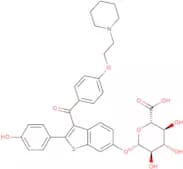
CAS:Raloxifene 6-D-glucuronide is a synthetic compound that consists of the sugar raloxifene and the sugar glucuronic acid. It is a complex carbohydrate with a molecular weight of 569. Raloxifene 6-D-glucuronide is soluble in water and insoluble in most organic solvents. The compound has been modified by fluorination, which increases its stability in water, and by click modification. This compound has been shown to inhibit the activity of bacterial enzymes that are responsible for the synthesis of saccharides, such as oligosaccharides and polysaccharides.Formula:C34H35NO10SPurezza:Min. 95%Colore e forma:SolidPeso molecolare:649.71 g/molMethyl b-D-thioglucopyranoside
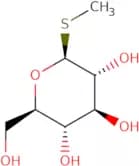
CAS:Methyl b-D-thioglucopyranoside is a mucolytic that is used to treat respiratory disorders such as chronic bronchitis, asthma, and emphysema. It can be used topically or orally, and is typically taken twice a day. Methyl b-D-thioglucopyranoside works by breaking down the mucus coating in the lungs, making it easier to cough up. This drug also has viscosity-lowering properties due to its ability to break down mucus.Formula:C7H14O5SPurezza:Min. 95%Peso molecolare:210.25 g/mol3-Azido-3-deoxy-1,2:5,6-di-O-isopropylidene-a-D-glucofuranose
CAS:3-Azido-3-deoxy-1,2:5,6-di-O-isopropylidene-a-D-glucofuranose is a synthetic sugar that has been modified by Fluorination, Monosaccharide, Synthetic, Oligosaccharide, complex carbohydrate, CAS No. 13964-23-3 and Glycosylation. It is also a Polysaccharide with modifications of Click modification and Methylation. 3A3DG can be used to modify the sugar content of glycoproteins and glycolipids in order to study their role in cellular processes such as transcriptional regulation and apoptosis. This product is available for custom synthesis in quantities from milligrams to kilograms.Formula:C12H19N3O5Purezza:Min. 95%Colore e forma:Yellow PowderPeso molecolare:285.3 g/mol2,3,5-Tri-O-benzoyl-2- C- methyl- D- arabinonic acid γ-lactone
2,3,5-Tri-O-benzoyl-2- C- methyl- D- arabinonic acid gamma-lactone is a modification of an oligosaccharide. It is synthesized by the benzoylation of 2,3,5-trihydroxybenzoic acid with methyl iodide and sodium carbonate in acetic acid. The product is purified by recrystallization from methanol and water to yield a white crystalline solid. The chemical formula for 2,3,5-tri-O-benzoyl-2- C- methyl--D--arabinonic acid gamma lactone is C14H16O8. The molecular weight of the compound is 478.26 g/molPurezza:Min. 95%3,4-O-Isopropylidene-D-mannitol
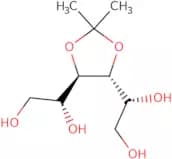
CAS:3,4-O-Isopropylidene-D-mannitol (IPM) is a d-mannitol that has been synthesized by an acid-catalyzed condensation reaction. It is a highly reactive compound with acidic properties and, as such, can be used as a buffer in acid environments. The product of this synthesis was also found to have anticancer activity in vitro, which may be due to its ability to induce apoptosis and inhibit cell proliferation. IPM possesses a hydroxyl group at the 3 position of the molecule and a hydrophilic nature. This makes it suitable for surface-enhanced Raman spectroscopy (SERS) studies and other detection methods.Formula:C9H18O6Purezza:Min. 95%Colore e forma:White Off-White PowderPeso molecolare:222.24 g/molThymidine-5'-diphosphate-D-glucose disodium salt
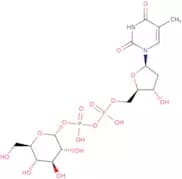
CAS:Starting point for the biosynthesis of more rare sugars such as deoxysugarsFormula:C16H24N2O16P2Na2Purezza:Min. 95%Colore e forma:White Off-White PowderPeso molecolare:608.29 g/molGlucotropaeolin potassium
CAS:Glucotropaeolin potassium is a dietary compound that is found in plants. It contains the flavonoids progoitrin, glucosinolates, and isothiocyanates. Glucotropaeolin potassium can be extracted from plant tissue using a stable isotope to increase the quantity of extract. This extract can then be analyzed by high-performance liquid chromatography (HPLC) and colorimetric methods for its content of glucoraphanin and gluconapin. The profile of this extract can also be determined using silver ions.Formula:C14H18NO9S2·KPurezza:Min. 98 Area-%Colore e forma:PowderPeso molecolare:447.52 g/mol2,3,4,6-Tetra-O-acetyl-D-glucopyranose
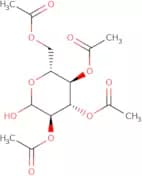
CAS:2,3,4,6-Tetra-O-acetyl-D-glucopyranose is a carbohydrate that is used in the synthesis of besifloxacin. This compound has been studied as an analog for many other natural compounds and its derivatives have shown to be effective against bacteria such as Staphylococcus aureus and Clostridium perfringens. The acetyl groups on this molecule allow it to be easily converted into other compounds with desired properties. This compound has been found to be acidic and can be used as a medicinal preparation or analytical chemistry reagent. The hydroxyl group on the 2 carbon atom allows the molecule to form glycoside derivatives. The halides on this molecule are also important for making new molecules by replacing one of the hydrogen atoms with another halogen atom. The phenylpropanoid glycosides are found in plants and may contain an enantiomeric form of 2,3,4
Formula:C14H20O10Purezza:Min. 95%Colore e forma:White PowderPeso molecolare:348.3 g/molAtractyloside dipotassium salt
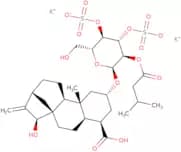
CAS:Atractyloside dipotassium salt is a chemical compound that acts as a potent mitochondrial toxin. It is primarily derived from plant sources, notably from the Atractylis gummifera species. This compound functions by specifically inhibiting the adenine nucleotide translocase (ANT) located in the inner mitochondrial membrane, thereby obstructing the exchange of ADP and ATP across this membrane. This blockade disrupts ATP synthesis, leading to alterations in cellular bioenergetics and apoptotic pathways.Formula:C30H44K2O16S2Purezza:Min. 95 Area-%Peso molecolare:802.99 g/molN-Acetyl-2,3-dehydro-2-deoxyneuraminic acid
CAS:Inhibitor of viral, bacterial and animal sialidaseFormula:C11H17NO8Purezza:Min. 94 Area-%Colore e forma:White PowderPeso molecolare:291.25 g/mol2-Acetamido-3,4,6-tri-O-acetyl-2-deoxy-a-D-glucopyranosyl chloride - Stabilised with 2.5% CaCO3
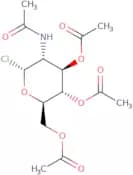
CAS:2-Acetamido-3,4,6-tri-O-acetyl-2-deoxy-a-D-glucopyranosyl chloride - Stabilised with 2.5% CaCO3 is a crystalline compound that is synthesized from acetobromosugars and has the ability to inhibit virus activity. The compound binds to the reactive sulfhydryl groups on the surface of the virus, inhibiting its infectivity. This compound can be used in biomedical research for the treatment of hepatitis.Formula:C14H20ClNO8Purezza:Min. 95%Colore e forma:White PowderPeso molecolare:365.76 g/molD-Glucono-1,4-lactone
CAS:D-Glucono-1,4-lactone is a sugar that is produced by the action of glucoamylase on starch or cellulose. It can be used as a source of food for yeast, in the production of polyesters and plastics, and as a precursor to vitamin C. The pH optimum for D-glucono-1,4-lactone production is between 3.5 and 4.5. X-ray crystal structures have shown that the enzyme binds to crystalline cellulose via hydrogen bonding interactions, which are formed by hydroxyl groups on the enzyme and carboxyl groups on crystalline cellulose. These interactions are important for the cleavage of glucose from crystalline cellulose by D-glucono-1,4-lactone. D-glucono-1,4-lactone has been shown to reduce blood glucose levels in rats with metabolic disorders when administered orally at doses
Formula:C6H10O6Purezza:Min. 95%Colore e forma:White PowderPeso molecolare:178.14 g/molMethyl 2,3,4-tri-O-methyl-α-D-glucopyranoside
CAS:Methyl 2,3,4-tri-O-methyl-α-D-glucopyranoside is a synthetic monosaccharide that has been fluorinated with bromine. The synthetic process for this compound is click chemistry, which involves the use of copper and a chiral ligand. Methyl 2,3,4-tri-O-methyl-α-D-glucopyranoside is an example of a carbohydrate modification. It is also an oligosaccharide that contains three monosaccharides.
Methyl 2,3,4-tri-O-methyl-α-D-glucopyranoside can be used in glycosylation or methylation reactions due to its high purity and custom synthesis. This compound can also be used as an Oligosaccharide due to its saccharide composition.Formula:C10H20O6Purezza:Min. 95%Colore e forma:PowderPeso molecolare:236.26 g/molD-Mannitol
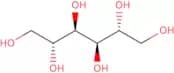
CAS:Mannitol is a sugar alcohol occurring widely in plants and they are exudates, for example, in olive and plane trees (Collins, 2006). It is produced commercially by the catalytic hydrogenation of fructose (Zelin, 2019). Mannitol is used extensively in food and pharmaceutical industries because of its unique functional properties. It is about 50% as sweet as sucrose and has a desirable cooling effect often used to mask bitter tastes. Mannitol is non-cariogenic and has a low caloric content. Mannitol is an osmotic diuretic that is metabolically inert in humans and is used for: the promotion of diuresis before irreversible renal failure becomes established, the promotion of urinary excretion of toxic substances, as an Antiglaucoma agent, and as a renal function diagnostic aid (OâNeil, 2013). Additonally, in 2020, mannitol was approved by the FDA as add-on maintenance therapy for the control of pulmonary symptoms associated with cystic fibrosis in adult patients (McKenna, 2020).Formula:C6H14O6Purezza:Min. 95%Colore e forma:White PowderPeso molecolare:182.17 g/molIsofagomine D-tartrate
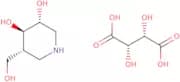
CAS:Inhibitor of lysosomal acid β-glucosidase (GlcCerase/glucocerebrosidase) with IC50 in nanomolar range for wildtype and mutant enzyme. It behaves as pharmacological chaperon by binding to instable GlcCerase active site at neutral pH values and facilitating the protein folding. In acidic lysosomes, isofagomine gets release from the enzyme active site. This results in increased levels of functional glucocerebrosidase and brings therapeutic benefits to patients with Gaucher disease.
Formula:C10H19NO9Purezza:Min. 95%Colore e forma:White PowderPeso molecolare:297.26 g/molAtractyloside dipotassium salt
CAS:Atractyloside is a natural compound that can be extracted from plants. It has been shown to have pluripotent activity, which means it can differentiate into different types of cells. Atractyloside also exhibits antioxidant and anti-apoptotic properties, which are believed to be due to its ability to increase mitochondrial membrane potential and reduce reactive oxygen species production. Atractyloside has also been shown to protect against neuronal death in vitro and in vivo by inhibiting the activation of caspase-dependent cell death pathways. Atractyloside has been shown to have a cardioprotective effect in animal models of myocardial infarcts, although it is unclear if this effect is due to the drug or due to the atractyloside contained in traditional Chinese medicine.Formula:C30H44K2O16S2Purezza:Min. 90 Area-%Colore e forma:White/Off-White SolidPeso molecolare:802.99 g/molPhenyl 2,3,4,6-tetra-O-acetyl-β-D-thioglucopyranoside
CAS:Phenyl 2,3,4,6-tetra-O-acetyl-β-D-thioglucopyranoside (PTATG) is a synthetic sugar that is used as a building block in the synthesis of complex carbohydrates. It can be fluorinated to form phenyl 2,3,4,6-tetrafluoro-β-D-thioglucopyranoside (PTFFTG). PTATG and PTFFTG are potential anticancer drugs.
Formula:C20H24O9SPurezza:Min. 95%Colore e forma:PowderPeso molecolare:440.47 g/mol6-O-Methyl-D-glucose
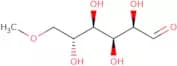
CAS:6-O-Methyl-D-glucose is a non-carbohydrate that can be found in Mycobacterium tuberculosis. It is an electron microscopic study of proton and fatty acid molecules, which has shown that the cell membrane of mycobacterial cells are susceptible to inhibition by fatty acids. 6-O-Methyl-D-glucose is a nucleophilic attack on cellular fatty acids, which may inhibit their synthesis and lead to cell death. 6-O-Methyl-D-glucose has been shown to be synthesized from glucose and glycosylated with hydroxyl groups during biosynthesis. This chemical is also used in the synthesis of oligosaccharides because it has a molecular weight of 180, making it more easily scalable than other carbohydrates.
Formula:C7H14O6Purezza:Min. 95%Colore e forma:White Off-White PowderPeso molecolare:194.18 g/mol4-Methylphenyl b-D-galactopyranoside
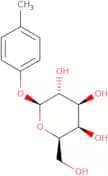
CAS:4-Methylphenyl b-D-galactopyranoside is a custom synthesis, modification, fluorination, methylation and monosaccharide. It is also an oligosaccharide and polysaccharide. The CAS number for this compound is 3150-22-9. 4-Methylphenyl b-D-galactopyranoside has a molecular weight of 534.37 g/mol and a chemical formula of C14H14O6. This compound is used in the production of complex carbohydrates with saccharides.Formula:C13H18O6Purezza:Min. 95%Colore e forma:PowderPeso molecolare:270.28 g/mol