


Monosaccaridi
Sottocategorie di "Monosaccaridi"
- Alloses(11 prodotti)
- Arabinosi(21 prodotti)
- Eritrosio(11 prodotti)
- Fruttosio(9 prodotti)
- Fucosio(36 prodotti)
- Galactosamina(41 prodotti)
- Galattosio(261 prodotti)
- Glucosio(365 prodotti)
- Acidi glucuronici(51 prodotti)
- Glicosubstrati per enzima(77 prodotti)
- Gulosio(6 prodotti)
- Idosio(4 prodotti)
- Inositoli(15 prodotti)
- Lixosio(4 prodotti)
- Mannosio(65 prodotti)
- O-Glicani(48 prodotti)
- Psicosi(3 prodotti)
- Rhamnosio(10 prodotti)
- Ribosi(60 prodotti)
- Acidi Sialici(100 prodotti)
- Sorbosio(4 prodotti)
- Zuccheri(173 prodotti)
- Tagatosio(4 prodotti)
- Talosio(8 prodotti)
- Xyloses(20 prodotti)
Trovati 6082 prodotti di "Monosaccaridi"
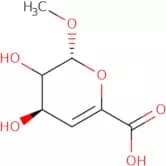
Methyl-4-deoxy-a-L-threo-hex-4-enopyranosiduronic acid
CAS:Methyl-4-deoxy-a-L-threo-hex-4-enopyranosiduronic acid is a sugar that belongs to the group of complex carbohydrates. This compound is made up of a saccharide and a monosaccharide, which are glycosylated with other saccharides. Methylation and glycosylation of this molecule create an oligosaccharide. The structure of this molecule has been modified by fluorination, methylation, and glycosylation. This product is synthesized from raw materials, such as sugar. Methyl - 4 - deoxy - a - L - threo - hex - 4 - enopyranosiduronic acid is used in Click modification reactions to modify the carbohydrate chain. This product is also used in the synthesis of various compounds with different functions, such as fluoroquinolones or antibiotics.Formula:C7H10O6Purezza:Min. 95%Peso molecolare:190.15 g/molL-Idaric acid 1,4-lactone
CAS:L-Idaric acid 1,4-lactone is a synthetic glycosylidic sugar that can be modified with fluorine compounds to create a variety of derivatives. It is used as a monomer in the synthesis of oligosaccharides, polysaccharides, and complex carbohydrates. L-Idaric acid 1,4-lactone can also be synthesized from methyl erythritol tetraacetate and glycerol in the presence of acetic anhydride.
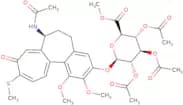
Formula:C6H8O7Purezza:Min. 98%Colore e forma:White PowderPeso molecolare:192.12 g/mol3-Demethyl thiocolchicine 2-O-(2,3,4-tri-O-acetyl-b-D-glucuronide methyl ester)
CAS:3-Demethyl thiocolchicine 2-O-(2,3,4-tri-O-acetyl-b-D-glucuronide methyl ester) is a custom synthesis of 3-demethyl thiocolchicine. It is a fluorinated glycoside that can be used to synthesize oligosaccharides and monosaccharides. The modification of this substance with acetyl groups gives it a degree of solubility in organic solvents that is not found in the parent compound.Formula:C34H39NO14SPurezza:Min. 95%Peso molecolare:717.74 g/molGlycerone phosphate
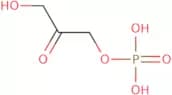
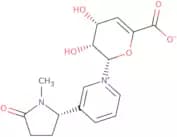
CAS:Glycerone phosphate is a cytosolic calcium (Ca2+) substrate molecule that is used to measure the activity of phospholipase A2, an enzyme that catalyzes the hydrolysis of membrane lipids. Glycerone phosphate has been shown to inhibit neuronal death and may be useful in treating neurodegenerative diseases such as Alzheimer's disease. Glycerone phosphate has also been shown to bind to monoclonal antibodies, which are proteins that bind specifically to antigens on the surface of cancer cells, thereby preventing them from binding to their corresponding receptors on healthy cells. This may limit the spread of tumor growth and increase their sensitivity to platinum-based chemotherapy.Formula:C3H7O6PPurezza:Min. 95%Peso molecolare:170.06 g/molCotinine N-(4-deoxy-4,5-didehydro)-b-D-glucuronide
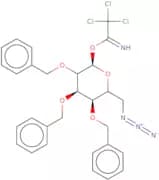
CAS:Cotinine N-(4-deoxy-4,5-didehydro)-b-D-glucuronide is a custom synthesis and modification of cotinine. Cotinine is an alkaloid found in tobacco plants and the primary metabolite of nicotine. It has been shown to inhibit glycosylation, methylation, and carbohydrate modification reactions. This product is offered in high purity and with a CAS number of 146275-15-2.Formula:C16H18N2O6Purezza:Min. 95%Peso molecolare:334.32 g/mol6-Azido-2,3,4-tri-O-benzyl-6-deoxy-a-D-mannopyranosyl trichloroacetimidate
6-Azido-2,3,4-tri-O-benzyl-6-deoxy-a-D-mannopyranosyl trichloroacetimidate (6A2TB) is a synthetic glycosylation reagent that is used in the synthesis of complex carbohydrates. It can be used in Click chemistry to introduce an azide group onto an alpha carbon. This reaction requires the presence of a copper catalyst and is very selective. 6A2TB is also useful for modification of saccharides with fluorination or methylation reactions. This product has been demonstrated to have high purity and can be custom synthesized to meet customer specifications.Formula:C29H29Cl3N4O5Purezza:Min. 95%Peso molecolare:619.92 g/molDL-Arabitol
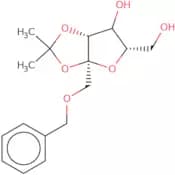
CAS:DL-Arabitol is the D-isomer of xylitol. It is a sugar alcohol that can be found in the form of a white crystalline powder. DL-Arabitol is an important ingredient in many foods and in some pharmaceuticals. This product has been shown to react with ribitol dehydrogenase, which is an enzyme that catalyzes the conversion of ribose-5-phosphate to ribulose 5-phosphate, and c. glabrata, which is a fungus that causes infection in humans. The analytical method for DL-Arabitol consists of measuring the amount of arabinitol in human serum or urine by gas chromatography with mass spectrometry detection (GCMS).Formula:C5H12O5Purezza:Min. 95%Colore e forma:White PowderPeso molecolare:152.15 g/mol1-O-Benzyl-2,3-O-isopropylidene-6-O-tosyl-a-L-sorbofuranoside
CAS:1-O-Benzyl-2,3-O-isopropylidene-6-O-tosyl-a-L-sorbofuranoside is a modification of the carbohydrate sialic acid. It is synthesized by the methylation and glycosylation of 1,2,3,4,6-pentaacetoxycyclohexane with 2,3,4,6-tetraacetoxybenzaldehyde in the presence of a base. The product is then converted to the corresponding 1-(1'-benzyl)-2-(2',3' or 4'-isopropylidene)-6-(1'-tosyl) derivative with sodium methoxide in methanol. This compound has been used as an intermediate for polysaccharides and sugars.
Formula:C23H28O8SPurezza:Min. 95%Peso molecolare:464.53 g/mol6-Deoxy-L-altrose
CAS:6-Deoxy-L-altrose is a type of sugar that is found in human pathogens. It can be used as a biomarker for the identification of these types of bacteria. 6-Deoxy-L-altrose has been shown to have physiological activities against some bacterial strains, such as pseudotuberculosis and enterocolitica. 6-Deoxy-L-altrose is used as an extracellular metabolite by some bacteria, and has been shown to inhibit the growth of Mycobacterium tuberculosis through its ability to inhibit protein synthesis at the ribosomal level.
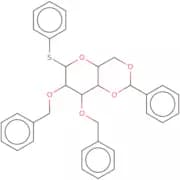
Formula:C6H12O5Purezza:Min. 95%Peso molecolare:164.16 g/molPhenyl 2,3-di-O-benzyl-4,6-O-benzylidene-a-D-thiomannopyranoside
CAS:Phenyl 2,3-di-O-benzyl-4,6-O-benzylidene-a-D-thiomannopyranoside is a complex carbohydrate that is synthesized by methylation and glycosylation of thiomannose. This product has been modified to contain a fluorinated substituent on the phenyl ring. Phenyl 2,3-di-O-benzyl-4,6-O-benzylidenea D thiomannopyranoside is soluble in water and has an HPLC purity of >99%.Formula:C33H32O5SPurezza:Min. 95%Peso molecolare:540.67 g/molL-Arabinose hydrazone
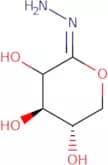
CAS:L-Arabinose hydrazone is a hydrazone of L-arabinose. It has been shown to be an efficient catalyst for the dehydration of ketones and secondary alcohols, and is also capable of catalyzing the dehydration of primary alcohols. The use of L-Arabinose hydrazone as a catalyst is sustainable because it does not produce any byproducts in the reaction.Formula:C5H10N2O4Purezza:Min. 95%Peso molecolare:162.14 g/molIkshusterol 3-O-glucoside
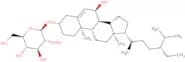
CAS:Ikshusterol 3-O-glucoside is a glycosylation of the monosaccharide ikeshinolin. It is a synthetic, fluorinated, methylated, and modified oligosaccharide with a high purity. Ikshusterol 3-O-glucoside is used in various fields including as an additive to food products, pharmaceuticals, cosmetics and other chemical manufacturing. It has been used as a sugar substitute in low calorie foods and beverages. The modification of ikeshinolin to ikeshusterol 3-O-glucoside can be achieved by click chemistry.Purezza:Min. 95%3,4,6-Tri-O-acetyl-b-L-idopyranose 1,2-(methyl orthoacetate)
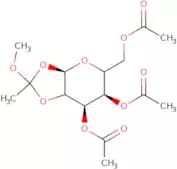
CAS:3,4,6-Tri-O-acetyl-b-L-idopyranose 1,2-(methyl orthoacetate) is a methylated saccharide that is used as a building block for the synthesis of complex carbohydrates. It is synthesized by the reaction of 3,4,6-tri-O-acetyl-b-L-idopyranose with methyl orthoacetate in presence of acid catalyst. 3,4,6-Tri-O-acetyl - b - L - idopyranose 1,2-(methyl orthoacetate) has been shown to have antihyperglycemic effects when administered orally to mice and rats. The compound also has an inhibitory effect on the glycosaminoglycan production in human chondrocytes.Formula:C15H22O10Purezza:Min. 95%Peso molecolare:362.33 g/molButyl 2-acetamido-3,4,6-tri-O-acetyl-2-deoxy-b-D-glucopyranoside
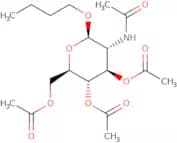
CAS:Butyl 2-acetamido-3,4,6-tri-O-acetyl-2-deoxy-b-D-glucopyranoside is a custom synthesis that can be used for glycosylation. It has CAS No. 155197-37-8 and it is a fluorination of a monosaccharide with an acetamide group. This product is an oligosaccharide that contains a complex carbohydrate consisting of many sugar residues linked together by glycosidic bonds. The modification of this product includes methylation and sugar substitution.Formula:C18H29NO9Purezza:Min. 95%Peso molecolare:403.42 g/mol1,6-Di-O-acetyl-2,3,4-tri-O-benzyl-D-glucopyranose
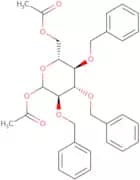
CAS:1,6-Di-O-acetyl-2,3,4-tri-O-benzyl-D-glucopyranose is a synthetic compound that is used in the synthesis of vitamin D. It is used to treat vitamin D deficiency in women and children. The benzyl groups on the sugar molecule are crosslinked with benzyl alcohol and paraformaldehyde to form a polymerization reaction system for vitamin D. This product can be used as a strategy for treating vitamin D deficiency by providing an alternative source of this nutrient.Formula:C31H34O8Purezza:Min. 95%Peso molecolare:534.6 g/molMethyl b-D-glucuronide
CAS:Methyl b-D-glucuronide is a glucuronide compound, which is a derivative of D-glucuronic acid. It is typically sourced from the oxidation of glucose, which naturally occurs in plants and the human body. As a derivative, Methyl b-D-glucuronide is involved in the conjugation processes that aid in the detoxification and elimination of various compounds.The mode of action for Methyl b-D-glucuronide centers around its conversion by UDP-glucuronosyltransferases in the conjugation pathway, rendering xenobiotics and endogenous substances more water-soluble for excretion. This ability to facilitate glucuronidation makes it a valuable model compound in biochemical research and pharmacology, particularly in studying metabolism and pharmacokinetics of drugs.In terms of applications, Methyl b-D-glucuronide finds significant use in analytical chemistry and molecular biology. It serves as a reference or control compound in enzyme assays and studies investigating drug metabolism and transport. Additionally, its role in detoxification pathways offers insights into liver function and disease mechanisms, providing a foundation for developing therapeutic interventions. Such versatile uses make it an integral component in physiological and pharmacological research.
Purezza:Min. 95%Colore e forma:Powder4-Fluorophenyl 2-acetamido-2-deoxy-b-D-glucopyranoside
CAS:4-Fluorophenyl 2-acetamido-2-deoxy-b-D-glucopyranoside is a synthetic carbohydrate that has been modified with fluorine. It is a complex carbohydrate, which is a sugar composed of several monosaccharides linked together by glycosidic bonds. 4-Fluorophenyl 2-acetamido-2-deoxy-b-D-glucopyranoside can be methylated and glycosylated to produce desired structures. This product can be custom synthesized to meet your specifications. It is available in high purity and can be used for research purposes.Formula:C14H18FNO6Purezza:Min. 95%Peso molecolare:315.29 g/molDibromodulcitol
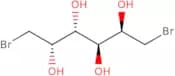
CAS:Dibromodulcitol (DBD) is a water soluble compound that is used in analytical chemistry to measure the concentration of bromine. It has been used as a radioprotectant and is also an analog of the natural hormone, epidermal growth factor. DBD can be measured by colorimetric methods or by enzyme-linked immunosorbent assay (ELISA). This chemical is found in wastewater and has been shown to inhibit the growth of cancer cells through its effects on fatty acid metabolism. DBD has also been shown to have pharmacokinetic properties, as it can be detected in biological samples for up to 2 hours after injection.Formula:C6H12Br2O4Purezza:Min. 95%Peso molecolare:307.97 g/molO-[2-Acetamido-2-deoxy-a-D-galactopyranosyl]-N-Fmoc-L-threonine 2-propen-1-yl ester
CAS:O-[2-Acetamido-2-deoxy-a-D-galactopyranosyl]-N-Fmoc-L-threonine 2-propen-1-yl ester is a synthetic, high purity, custom synthesis that has been modified with fluorination, glycosylation, and methylation. This product can be used in the Click reaction to make an oligosaccharide or monosaccharide. The CAS number for this compound is 301843-65-2.Formula:C30H36N2O10Purezza:Min. 95%Peso molecolare:584.61 g/molBenzyl 2,3,4-tri-O-acetyl-4-nitromethyl-b-D-arabinopyranose
CAS:Benzyl 2,3,4-tri-O-acetyl-4-nitromethyl-b-D-arabinopyranose is a water soluble, white solid that is a glycosylation product of Benzyl 2,3,4-tri-O-acetyl b D arabinopyranose and 4 nitrobenzaldehyde. It can be used for the modification of polysaccharides and as an intermediate in the synthesis of oligosaccharides. This compound has been shown to be effective in inhibiting the growth of Mycobacterium tuberculosis and Mycobacterium avium complex.Formula:C19H23NO10Purezza:Min. 95%Peso molecolare:425.39 g/mol





![O-[2-Acetamido-2-deoxy-a-D-galactopyranosyl]-N-Fmoc-L-threonine 2-propen-1-yl ester](/_next/image/?url=https%3A%2Fstatic.cymitquimica.com%2Fproducts%2F3D%2Fthumb-webp%2FMA30714.webp&w=3840&q=75)
