Monosaccaridi
I monosaccaridi sono la forma più semplice dei carboidrati e fungono da blocchi fondamentali per zuccheri più complessi e polisaccaridi. Queste singole molecole di zucchero svolgono ruoli critici nel metabolismo energetico, nella comunicazione cellulare e nei componenti strutturali delle cellule. In questa sezione troverai una vasta gamma di monosaccaridi essenziali per la ricerca in biochimica, biologia molecolare e glicoscienza. Questi composti sono cruciali per studiare le vie metaboliche, i processi di glicosilazione e lo sviluppo di agenti terapeutici. Da CymitQuimica, offriamo monosaccaridi di alta qualità per supportare le tue esigenze di ricerca, garantendo precisione e affidabilità nelle tue indagini scientifiche.
Sottocategorie di "Monosaccaridi"
- Alloses(11 prodotti)
- Arabinosi(21 prodotti)
- Eritrosio(11 prodotti)
- Fruttosio(9 prodotti)
- Fucosio(36 prodotti)
- Galactosamina(41 prodotti)
- Galattosio(261 prodotti)
- Glucosio(365 prodotti)
- Acidi glucuronici(51 prodotti)
- Glicosubstrati per enzima(77 prodotti)
- Gulosio(6 prodotti)
- Idosio(4 prodotti)
- Inositoli(15 prodotti)
- Lixosio(4 prodotti)
- Mannosio(65 prodotti)
- O-Glicani(48 prodotti)
- Psicosi(3 prodotti)
- Rhamnosio(10 prodotti)
- Ribosi(61 prodotti)
- Acidi Sialici(100 prodotti)
- Sorbosio(4 prodotti)
- Zuccheri(173 prodotti)
- Tagatosio(4 prodotti)
- Talosio(8 prodotti)
- Xyloses(20 prodotti)
Mostrare 17 più sottocategorie
Trovati 6090 prodotti di "Monosaccaridi"
Ordinare per
Purezza (%)
0
100
|
0
|
50
|
90
|
95
|
100
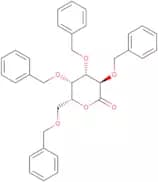
2,3,4,6-Tetra-O-benzyl-D-galactono-1,5-lactone
CAS:2,3,4,6-Tetra-O-benzyl-D-galactono-1,5-lactone is an aldehyde that has been synthesized from tert-butyl bromoacetate and ethynyl acetate in the presence of cesium carbonate. It is an exocyclic aldehyde that forms a cyclic ester with glycine. The synthetic pathway was stereoselective because the exocyclic double bond was only formed on one face of the molecule. This product can be used as an intermediate for the synthesis of glycine analogues and glycines.Formula:C34H34O6Purezza:Min. 95%Peso molecolare:538.63 g/molMethyl 2-deoxy-5-O-toluoyl-L-ribofuranoside
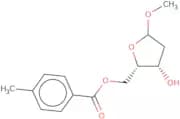
CAS:<p>Methyl 2-deoxy-5-O-toluoyl-L-ribofuranoside is a high purity, custom synthesis, methylated, Glycosylation and Oligosaccharide. It has CAS No. 676598-19-9 and is Glycosylated and Methylated. This complex carbohydrate is a synthetic, monosaccharide or saccharide that can be modified with fluorination, Click modification or glycosylation.</p>Formula:C14H18O5Purezza:Min. 95%Colore e forma:Brown oil.Peso molecolare:266.3 g/molN-Benzoyl-D-glucosamine
CAS:<p>Lectins are carbohydrate-binding proteins that can be classified into different types based on their specificities for glycan structures. One of the most common types is the N-acetyl-D-glucosamine (NAG) lectin, which binds to oligomers of NAG and related sugars. Lectins are used to activate cells and induce cell death. The dodecyl NAG lectin has been shown to bind to glucocerebrosides in a reductively irreversible manner and has been used as a model for such interactions. This lectin is also inexpensively produced from a synthetic benzylidene acetal, which can be made from commercially available materials. It has been shown that this lectin binds to polyacrylamide gels in an SDS-polyacrylamide gel electrophoresis, with a pH optimum at 7.0 and an amino acid composition that includes glutamic acid, glutamine, asparagine, ser</p>Formula:C13H17NO6Purezza:Min. 95%Colore e forma:White PowderPeso molecolare:283.28 g/mol2,5-Dideoxy-2,5-imino-D-glucitol
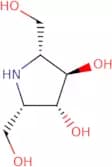
CAS:2,5-Dideoxy-2,5-imino-D-glucitol is a potent inhibitor of glycosidases. It has been shown to have significant antifungal activity against Candida albicans in the caco-2 cell model system. 2,5-Dideoxy-2,5-imino-D-glucitol inhibits β-(1→3)-glycosidase activity by binding to the active site of the enzyme and preventing substrate hydrolysis. The compound is also an enantiopure and asymmetric synthesis. This drug has been shown to be a model system for studying glycosidase inhibition.Formula:C6H13NO4Purezza:Min. 95%Peso molecolare:163.17 g/molL-Lyxosamine HCl
L-Lyxosamine HCl is a synthetic monosaccharide that has been modified to contain a fluorine atom. L-Lyxosamine HCl is a methyl donor in the Methylation reaction and can be used as an intermediate for the synthesis of oligosaccharides and polysaccharides. This product is available in high purity, with an average yield of 97%. The CAS No. for this product is 590-81-6.Formula:C5H11NO4HClPurezza:Min. 95%Peso molecolare:185.61 g/mol2,5-Anhydro-D-glucitol-1,6-diphosphate
CAS:<p>2,5-Anhydro-D-glucitol-1,6-diphosphate is a cell signaling molecule that is involved in the regulation of glycolysis and the phosphofructokinase enzyme. It binds to platelets and regulates platelet aggregation. This enzyme has been shown to be a potential drug target for cancer. Cancer cells have been found to contain higher concentrations of 2,5-Anhydro-D-glucitol-1,6-diphosphate than their normal counterparts. The increased concentration of this enzyme in cancer cells is due to an allosteric change in the enzyme’s activity. The increased activity leads to a more rapid metabolism of glucose, which provides energy for tumor growth and metastasis. This enzyme can be used as a marker for malignancy in human diseases such as breast cancer or prostate cancer.</p>Formula:C6H14O11P2Purezza:Min. 98%Colore e forma:Clear LiquidPeso molecolare:324.12 g/molD-Sedoheptulose
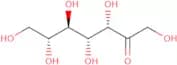
CAS:<p>D-Sedoheptulose is a sugar that is a member of the pentoses. It has been shown to have a ph optimum of 4.5 and oxidizing potential of -0.18 V. It is also an important intermediate in carbohydrate metabolism and can be used as an energy source by cells. D-Sedoheptulose plays a role in transcriptional regulation and cellular physiology, as well as being involved in the production of acyl chains and disulfide bonds for proteins. D-Sedoheptulose has also been found to have synergic effects with other sugars such as glucose, sucrose, or fructose, which may be due to its ability to act as an inducer of reductive enzymes such as glucose-6-phosphate dehydrogenase (G6PD).</p>Formula:C7H14O7Purezza:Min. 95%Colore e forma:PowderPeso molecolare:210.18 g/mol1,3,4,6-Tetra-O-galloyl glucose
CAS:<p>Tetra-O-galloyl glucose is a pentagalloyl glucose that is found in the Chinese herb Paeonia lactiflora. It has been shown to inhibit the replication of hepatitis B virus, and can be used for the treatment of hepatitis B infection. Tetra-O-galloyl glucose also has anti-inflammatory activities, which may be due to its ability to inhibit prostaglandin synthesis.</p>Formula:C34H28O22Purezza:Min. 95%Peso molecolare:788.57 g/molCorchoionoside C
CAS:<p>Corchoionoside C is a natural compound classified as an iridoid glycoside. This compound is isolated from various plant species, particularly those within the Boraginaceae family. The mode of action of Corchoionoside C involves modulation of biological pathways, likely through its interaction with cellular enzymes and receptors, contributing to its potential therapeutic effects.</p>Purezza:Min. 98%UDP-b-L-arabinofuranose
CAS:UDP-b-L-arabinofuranose is a custom synthesis product that is used to modify polysaccharides. It is a high purity sugar nucleotide. UDP-b-L-arabinofuranose has CAS number 331001-44-6.Formula:C14H22N2O16P2Purezza:Min. 95%Colore e forma:PowderPeso molecolare:536.28 g/mol4-Methoxyphenyl β-D-galactopyranoside
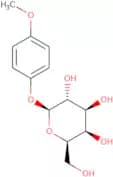
CAS:<p>4-Methoxyphenyl b-D-galactopyranoside is a custom synthesis of a sugar with an active methyl group. It is synthesized by the Click modification of 4-hydroxyphenyl b-D-galactopyranoside and has been fluorinated. The glycosylation process has been carried out using glycone as a precursor to modify the monosaccharide and oligosaccharide. This product has a CAS number of 3150-20-7 and is considered a synthetic compound.</p>Formula:C13H18O7Purezza:Min. 95%Colore e forma:PowderPeso molecolare:286.28 g/mol2-Aminophenyl β-D-glucuronide hydrochloride
CAS:<p>2-Aminophenyl b-D-glucuronide HCl is a custom synthesis chemical. It is a white to pale yellow crystalline powder. This compound has a molecular weight of 363.2 and it's chemical formula is C8H10N2O7Glucuronic acid. 2-Aminophenyl b-D-glucuronide HCl is used in the modification of oligosaccharides, polysaccharides, saccharides, carbohydrates, fluorination and complex carbohydrate. The purity of this chemical is high and it can be modified with monosaccharide or sugar.</p>Formula:C12H15NO7•HClPurezza:Min. 95%Peso molecolare:321.71 g/mol3,6’-Disinapoyl sucrose
CAS:3,6’-Disinapoyl sucrose is a saponin that has been shown to be neuroprotective and antidepressant. It is also able to increase the absorption of drugs in the gastrointestinal tract. 3,6’-Disinapoyl sucrose was found to have neurotrophic effects on neurons and inhibit glutamate-induced excitotoxicity. 3,6’-Disinapoyl sucrose has been shown to inhibit the mineralocorticoid receptor in vitro and may be useful as an antihypertensive agent. 3,6’-Disinapoyl sucrose can be used for clinical use in the treatment of depression and other neurological disorders such as Alzheimer's disease.Formula:C34H42O19Purezza:Min. 95%Colore e forma:PowderPeso molecolare:754.69 g/mola-D-Glucose
CAS:<p>Glucose is a monosaccharide that is an important source of energy for the human body. It is a simple sugar found in many carbohydrates and is the main form of fuel used by the brain. Glucose is also used as a chemical building block for polysaccharides such as glycogen, cellulose, and chitin. The hypoglycemic effect of glucose can be observed when blood glucose levels are below 70 mg/dL. This effect can be due to its ability to increase the production of insulin or decrease the rate of gluconeogenesis in liver cells. It also has been shown to have an inhibitory effect on some viruses and bacteria, which may be due to its ability to inhibit transcription activators or polymerase chain reactions.</p>Formula:C6H12O6Purezza:Min. 96 Area-%Colore e forma:White PowderPeso molecolare:180.16 g/molD-Fructose-1,6-diphosphate dibarium
CAS:<p>D-Fructose-1,6-diphosphate dibarium salt is a synthetic sugar that is used in the synthesis of oligosaccharides and polysaccharides. This compound can be custom synthesized to meet your specifications. D-Fructose-1,6-diphosphate dibarium salt has been shown to be soluble in water, ethanol, acetone, and chloroform. D-Fructose-1,6-diphosphate dibarium salt is a fluorinated carbohydrate with a purity of 99%. It can be modified with methylation or click modification for further applications.</p>Formula:C6H14O12P2•(Ba)2Purezza:Min. 95%Colore e forma:PowderPeso molecolare:614.75 g/molDipyridamole di-O-b-D-glucuronide
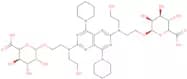
CAS:<p>Dipyridamole di-O-b-D-glucuronide is a fluorinated oligosaccharide that has been synthesized using the click chemistry reaction. It is a monosaccharide that has been glycosylated and modified with methyl groups to produce a high purity product. The carbohydrate consists of one or more sugar units linked by glycosidic bonds. Carbohydrates are classified by their number of sugar units and by the presence of other chemical groups such as phosphate, sulfate, or hydroxyl. This product is also used in the synthesis of complex carbohydrates and polysaccharides.</p>Formula:C36H56N8O16Purezza:Min. 95%Peso molecolare:856.87 g/mola-Galactosylceramide
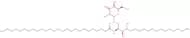
CAS:Ligand for human and mouse NKT cellsFormula:C50H99NO9Purezza:Min. 95 Area-%Colore e forma:White Slightly Yellow PowderPeso molecolare:858.32 g/mol5-Deoxy-D-ribose
CAS:<p>5-Deoxy-D-ribose is a molecule that is an intermediate in the shikimate pathway, which produces the aromatic amino acids. 5-Deoxy-D-ribose can be synthesized from D-ribose and shikimic acid. The biosynthesis of 5-deoxy-D-ribose is catalyzed by the enzyme ribose 5'-phosphate kinase, which converts ribose 5'-phosphate to 5-deoxy--D--ribose phosphate. This reaction requires ATP as a source of energy, and it is inhibited by phosphoribosyl pyrophosphate (PRPP). The asymmetric synthesis of 5-deoxy--D--ribose has been achieved with a chiral Lewis acid catalyst. The molecular structure of 5-deoxy--D--ribose has been determined by NMR spectroscopy. Shikimate pathways are present in mammalian cells, but not in plants or bacteria.</p>Formula:C5H10O4Purezza:Min. 95 Area-%Colore e forma:Orange Clear LiquidPeso molecolare:134.13 g/molβ-Rutinose
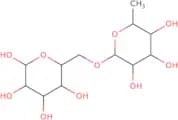
CAS:<p>Beta-rutinose is a potent kinase inhibitor that has shown anti-tumor activity in Chinese hamster ovary (CHO) cells. It inhibits the activity of cyclin-dependent kinases, which are essential for cell division and proliferation. Beta-rutinose has been shown to induce apoptosis in human cancer cells, making it a promising candidate for anticancer therapy. This compound is an analog of rutin, a flavonoid found in many plants, and has been shown to have potent anticancer effects in vitro and in vivo. Beta-rutinose inhibits the growth of cancer cells by blocking the activity of specific kinases involved in tumor progression, making it an attractive target for developing new cancer therapies. Additionally, this compound has been found to be effective at reducing protein levels associated with cancer cell growth and proliferation.</p>Formula:C12H22O10Purezza:Min. 95%Peso molecolare:326.3 g/molNystatin A3
CAS:<p>8,9-Dideoxy-28,29-dihydro-7,10-dihydroxy-35-O-(2,6-dideoxy-L-ribo-hexopyranosyl)amphotericin B is an antifungal drug that belongs to the class of polyene macrolides. It is a potent inhibitor of Candida albicans and Candida glabrata. This compound has been shown to have synergistic effects when used in combination with nystatin against C. albicans. 8,9-Dideoxy-28,29-dihydro-7,10-dihydroxy-35O-(2,6 - dideoxy - L - ribo - hexopyranosyl)amphotericin B also inhibits toll like receptor 4 (TLR4), which is responsible for the induction of inflammatory cytokines such as IL1B and IL8</p>Formula:C53H85NO20Purezza:Min. 95%Peso molecolare:1,056.24 g/mol