Monosaccaridi
I monosaccaridi sono la forma più semplice dei carboidrati e fungono da blocchi fondamentali per zuccheri più complessi e polisaccaridi. Queste singole molecole di zucchero svolgono ruoli critici nel metabolismo energetico, nella comunicazione cellulare e nei componenti strutturali delle cellule. In questa sezione troverai una vasta gamma di monosaccaridi essenziali per la ricerca in biochimica, biologia molecolare e glicoscienza. Questi composti sono cruciali per studiare le vie metaboliche, i processi di glicosilazione e lo sviluppo di agenti terapeutici. Da CymitQuimica, offriamo monosaccaridi di alta qualità per supportare le tue esigenze di ricerca, garantendo precisione e affidabilità nelle tue indagini scientifiche.
Sottocategorie di "Monosaccaridi"
- Alloses(11 prodotti)
- Arabinosi(21 prodotti)
- Eritrosio(11 prodotti)
- Fruttosio(9 prodotti)
- Fucosio(36 prodotti)
- Galactosamina(41 prodotti)
- Galattosio(261 prodotti)
- Glucosio(365 prodotti)
- Acidi glucuronici(51 prodotti)
- Glicosubstrati per enzima(77 prodotti)
- Gulosio(6 prodotti)
- Idosio(4 prodotti)
- Inositoli(15 prodotti)
- Lixosio(4 prodotti)
- Mannosio(65 prodotti)
- O-Glicani(48 prodotti)
- Psicosi(3 prodotti)
- Rhamnosio(10 prodotti)
- Ribosi(61 prodotti)
- Acidi Sialici(100 prodotti)
- Sorbosio(4 prodotti)
- Zuccheri(173 prodotti)
- Tagatosio(4 prodotti)
- Talosio(8 prodotti)
- Xyloses(20 prodotti)
Mostrare 17 più sottocategorie
Trovati 6090 prodotti di "Monosaccaridi"
Ordinare per
Purezza (%)
0
100
|
0
|
50
|
90
|
95
|
100
D-Fructose 1-phosphate barium salt trihydrate
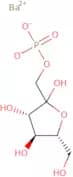
CAS:<p>D-Fructose 1-phosphate barium salt trihydrate is a custom synthesis, high purity sugar. It has been modified with fluorination, glycosylation, and methylation. D-Fructose 1-phosphate barium salt trihydrate is made from the modification of various sugars such as oligosaccharides and monosaccharides to form complex carbohydrates. It can be used for Click modification or in the synthesis of glycoconjugates. D-Fructose 1-phosphate barium salt trihydrate is also known as saccharide.</p>Formula:C6H11BaO9P·3H2OPurezza:Min. 95%Colore e forma:Yellow PowderPeso molecolare:449.49 g/molD-Glucose-6-phosphate dipotassium salt hydrate
CAS:<p>Glucose 6-phosphatase substrate</p>Formula:C6H11O9PK2·H2OPurezza:Min. 95%Peso molecolare:354.33 g/molD-Fructose-1,6-diphosphate trisodium
CAS:<p>D-Fructose-1,6-diphosphate trisodium salt (D-FDP) is an ATP precursor that is used to study the effects of D-FDP on energy metabolism in rat cardiomyocytes. The results from this study showed that D-FDP increased ATP levels and inhibited the accumulation of intracellular lactate. This compound also inhibits ventricular myocardial hypertrophy induced by pressure overload in animal experiments. In addition, D-FDP has been shown to inhibit the polymerase chain reaction (PCR) process and to be active at a concentration of 25 mM.</p>Formula:C6H14O12P2•Na3Purezza:Min. 99 Area-%Colore e forma:PowderPeso molecolare:409.09 g/mol6-Chloro-6-deoxy-D-mannose
CAS:<p>6-Chloro-6-deoxy-D-mannose is a naturally occurring sugar that is found in the spermatozoa of many animals. It is a mannose derivative that has been shown to be an inhibitor of the enzyme glyceraldehyde 3-phosphate dehydrogenase, which plays an important role in energy metabolism and isomerization of 6-phosphate to glucose-1 phosphate. This property may be responsible for its contraceptive effects. The drug also inhibits phosphoglucomutase and enhances the transfer of glucose from the liver to other tissues, increasing blood glucose concentrations. 6-Chloro-6 deoxy mannose also has antifertility effects in rats by inhibiting transfer of spermatozoa through the female reproductive tract.</p>Formula:C6H11ClO5Purezza:Min. 95%Colore e forma:White Off-White PowderPeso molecolare:198.6 g/molForodesine
CAS:<p>Forodesine is a purine nucleoside that inhibits the nucleoside phosphorylase enzyme and prevents the synthesis of purines. It has minimal toxicity and is effective against intracellular targets such as mitochondria, which are important for apoptosis induction. Forodesine also inhibits the mcl-1 protein, which is an inhibitor of t-cell lymphomas. This drug has been shown to be effective in animal models of human lymphoma and leukemia.</p>Formula:C11H14N4O4Purezza:Min. 95%Colore e forma:PowderPeso molecolare:266.25 g/molα-D-Mannopyranosyl amine
CAS:<p>a-D-Mannopyranosyl amine is a synthetic product that is used as a sugar donor in glycosylation reactions. It can be custom synthesized to suit the needs of the customer. The chemical structure contains a methyl group and an oxygen atom, which are both in their highest oxidation state. This product is not intended for use as a food additive or dietary supplement.</p>Formula:C6H13NO5Purezza:Min. 95%Peso molecolare:179.17 g/molMycophenolic acid acyl-b-D-glucoside
CAS:<p>Metabolite of Mycophenolic acid</p>Formula:C23H30O11Purezza:Min. 95%Peso molecolare:482.48 g/mol6-Deoxy-6-iodo-D-glucose
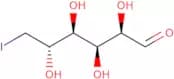
CAS:6-Deoxy-6-iodo-D-glucose is a glucose analog that can be used as a bypassed substrate for the study of d-glucose metabolism in diabetic patients. 6-Deoxy-6-iodo-D-glucose has been shown to be an acceptable substrate for animal cells and can be used for the study of glucose uptake in the pancreas. This analog does not require insulin for uptake, which may help to elucidate the role of insulin resistance in diabetes. The use of 6-deoxy-6-[18F]fluoroethyl D-[1,2]-glucose ([18F]FDG) as an optical imaging agent has also been studied.Formula:C6H11IO5Purezza:Min. 95 Area-%Colore e forma:PowderPeso molecolare:290.05 g/molValidamine
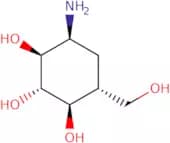
CAS:<p>Inhibitor of alpha-glucosidase</p>Formula:C7H15NO4Purezza:Min. 95%Colore e forma:PowderPeso molecolare:177.2 g/mol1,6-Di-O-galloyl-b-D-glucopyranose
CAS:1,6-Di-O-galloyl-β-D-glucopyranose is a plant active compound that has been shown to have insecticidal and antifungal properties. It is also an inhibitor of serine proteases. 1,6-Di-O-galloyl-β-D-glucopyranose may be used to control the spread of human immunodeficiency virus (HIV) in humans. In an in vitro study, 1,6-di galloyl β-D glucopyranose was found to inhibit HIV by binding to the viral envelope gp120 protein and preventing it from attaching to CD4 receptor sites on T cells. This inhibition prevents the virus from entering the cell and infecting it. 1,6 - di - O - galloyl - β - D - glucopyranose also inhibits HIV by blocking its entry into the host cell through interaction with gp41 protein on theFormula:C20H20O5Purezza:Min. 95%Peso molecolare:340.37 g/molD-Gluconic acid sodium salt
CAS:<p>D-Gluconic acid sodium salt is a glycol ether that is used as an injection solution. It has been shown to have antibacterial efficacy against wild-type strains of bacteria such as Escherichia coli, Pseudomonas aeruginosa, and Staphylococcus aureus. The in vitro antimicrobial action of D-gluconic acid sodium salt was found to be due to its ability to inhibit bacterial growth by interfering with the synthesis of DNA. D-Gluconic acid sodium salt also has been shown to have antihypertensive effects in rats through the inhibition of angiotensin II type 1 receptor (AT1) signaling pathway and erythrocyte proliferation. This drug also has been shown to bind benzalkonium chloride and x-ray diffraction data show that it is crystalline in nature. The analytical method for determining the concentration of D-gluconic acid sodium salt is by electrochemical impedance</p>Formula:C6H11NaO7Purezza:Min. 95%Colore e forma:White PowderPeso molecolare:218.14 g/molD-Gluconic acid potassium salt
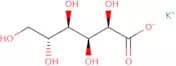
CAS:<p>D-Gluconic acid potassium salt is a glycol ether with biochemical properties that can be used to synthesize covalent linkages. It has been shown to have antimicrobial properties in wild-type strains of Escherichia coli and Salmonella typhimurium. D-Gluconic acid potassium salt has been shown to exhibit inhibitory effects on the synthesis of DNA, RNA, and protein, as well as enzyme activities. The matrix effect is an analytical method that measures the inhibition of bacterial growth in agar plates. Electrochemical impedance spectroscopy (EIS) is a technique that measures changes in electrical resistance when bacteria are placed on an electrode surface. This technique has been used to show that D-gluconic acid potassium salt exhibits inhibitory effects against group P2 enzymes, such as polymerase chain reaction (PCR), which is used for DNA replication and amplification.</p>Formula:C6H11KO7Purezza:Min. 95%Peso molecolare:234.25 g/molb-D-Glucopyranosyl nitromethane
CAS:<p>b-D-Glucopyranosyl nitromethane is a precursor for the synthesis of glyco-peptides</p>Formula:C7H13NO7Purezza:Min. 95%Colore e forma:PowderPeso molecolare:223.18 g/mol2,3,4,6-Tetra-O-acetyl-a-D-mannopyranosyl azide
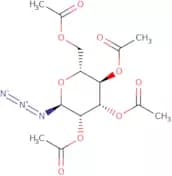
CAS:<p>2,3,4,6-Tetra-O-acetyl-a-D-mannopyranosyl azide is a crystalline solid that can be obtained by heating 2,3,4,6-tetra-O-acetyl-a-D-mannopyranose with sodium azide. This compound has been used in the x-ray crystallographic technique for obtaining electron density maps. The x ray data collected from this compound showed the distinct difference between the electron density of the atoms and their surroundings.</p>Formula:C14H19N3O9Colore e forma:PowderPeso molecolare:373.32 g/molβ-Estradiol 3-(β-D-glucuronide) 17-sulfate dipotassium
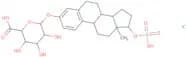
CAS:<p>β-Estradiol 3-(β-D-glucuronide) 17-sulfate dipotassium is a synthetic, nonsteroidal estrogen with a high affinity for the human estrogen receptor. It is used in the treatment of various types of breast cancer and as hormone replacement therapy. β-Estradiol 3-(β-D-glucuronide) 17-sulfate dipotassium is a part of the drug class selective estrogen receptor modulators (SERMs). The compound has been shown to have antiestrogenic activity through its ability to compete with estradiol for binding to the estrogen receptor. This compound also has some antiandrogenic effects and can inhibit sex hormone binding globulin (SHBG), leading to increased levels of free testosterone in blood plasma.</p>Formula:C24H32O11S•K2Purezza:Min. 95%Peso molecolare:606.77 g/molOctanoyl b-D-glucosylamine
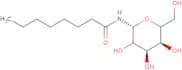
CAS:<p>Octanoyl b-D-glucosylamine is a synthetic compound that has been designed for use in the synthesis of complex carbohydrates. It is an octanoyl derivative of D-glucosamine, which is a sugar. This compound can be used for the modification of saccharides and polysaccharides, as well as sugars. It has been shown to be resistant to glycosylation and fluorination reactions.</p>Formula:C14H27NO6Purezza:Min. 95%Peso molecolare:305.37 g/molN-Oleoyl-N-methyltaurine sodium salt
CAS:<p>N-Oleoyl-N-Methyltaurine sodium salt is a glycol ether that has been shown to be an effective transport inhibitor for fatty acids. It inhibits the growth of bacteria and fungi by interfering with the cell membrane lipid synthesis. N-Oleoyl-N-Methyltaurine sodium salt also has anti-inflammatory properties, which may be due to its ability to inhibit prostaglandin synthesis.</p>Formula:C21H40NO4S·NaPurezza:Min. 30.00%Peso molecolare:425.6 g/mol2,3,4,6-Tetra-O-acetyl-a-D-mannopyranosyl chloride
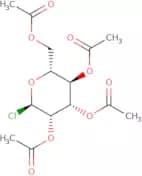
CAS:<p>2,3,4,6-Tetra-O-acetyl-a-D-mannopyranosyl chloride is a carbohydrate that has been modified by fluorination. It is used as an ingredient in the synthesis of saccharides and oligosaccharides. This product is synthesized by the reaction of 2,3,4,6-tetra-O-acetylmannose with chlorodifluoromethane in the presence of a base.</p>Formula:C14H19ClO9Purezza:Min. 95%Colore e forma:PowderPeso molecolare:366.75 g/molN-(Formylamidino)-N-b-D-ribofuranosylurea
CAS:<p>Please enquire for more information about N-(Formylamidino)-N-b-D-ribofuranosylurea including the price, delivery time and more detailed product information at the technical inquiry form on this page</p>Formula:C8H14N4O6Purezza:Min. 95%Peso molecolare:262.22 g/molb-D-Galactopyranosyl nitromethane
CAS:<p>b-D-Galactopyranosyl nitromethane is a high purity sugar with various modifications. It is custom synthesized to order and is available in various purity grades. This sugar can be modified by fluorination, glycosylation, methylation, or modification with oligosaccharides or monosaccharides. The CAS number for this sugar is 81846-64-2. b-D-Galactopyranosyl nitromethane High purity, Custom synthesis, sugar, Click modification, Fluorination, Glycosylation, Synthetic, Methylation, Modification, Oligosaccharide, Monosaccharide CAS No. 81846-64-2</p>Formula:C7H13NO7Purezza:Min. 95%Peso molecolare:223.2 g/mol