Monosaccaridi
I monosaccaridi sono la forma più semplice dei carboidrati e fungono da blocchi fondamentali per zuccheri più complessi e polisaccaridi. Queste singole molecole di zucchero svolgono ruoli critici nel metabolismo energetico, nella comunicazione cellulare e nei componenti strutturali delle cellule. In questa sezione troverai una vasta gamma di monosaccaridi essenziali per la ricerca in biochimica, biologia molecolare e glicoscienza. Questi composti sono cruciali per studiare le vie metaboliche, i processi di glicosilazione e lo sviluppo di agenti terapeutici. Da CymitQuimica, offriamo monosaccaridi di alta qualità per supportare le tue esigenze di ricerca, garantendo precisione e affidabilità nelle tue indagini scientifiche.
Sottocategorie di "Monosaccaridi"
- Alloses(11 prodotti)
- Arabinosi(21 prodotti)
- Eritrosio(11 prodotti)
- Fruttosio(9 prodotti)
- Fucosio(36 prodotti)
- Galactosamina(41 prodotti)
- Galattosio(261 prodotti)
- Glucosio(365 prodotti)
- Acidi glucuronici(51 prodotti)
- Glicosubstrati per enzima(77 prodotti)
- Gulosio(6 prodotti)
- Idosio(4 prodotti)
- Inositoli(15 prodotti)
- Lixosio(4 prodotti)
- Mannosio(65 prodotti)
- O-Glicani(48 prodotti)
- Psicosi(3 prodotti)
- Rhamnosio(10 prodotti)
- Ribosi(61 prodotti)
- Acidi Sialici(100 prodotti)
- Sorbosio(4 prodotti)
- Zuccheri(173 prodotti)
- Tagatosio(4 prodotti)
- Talosio(8 prodotti)
- Xyloses(20 prodotti)
Mostrare 17 più sottocategorie
Trovati 6090 prodotti di "Monosaccaridi"
Ordinare per
Purezza (%)
0
100
|
0
|
50
|
90
|
95
|
100
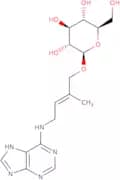
trans-Zeatin-O-glucoside
CAS:<p>trans-Zeatin-O-glucoside is a cytokinin metabolite, which is a compound derived from the naturally occurring plant hormone zeatin. This product is synthesized or can be naturally found in plants, where it plays a crucial role in the regulation of growth and development. As a glucoside, it involves a glucose molecule attached to the cytokinin, which affects the compound's solubility, stability, and transport within the plant system.</p>Formula:C16H23N5O6Purezza:Min. 95%Peso molecolare:381.38 g/mol(±)-Muscarine chloride
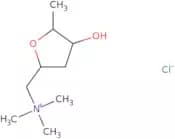
CAS:Prodotto controllato<p>Muscarine chloride is a potent acetylcholine receptor agonist that causes activation of the postsynaptic membrane by increasing the K+ concentration and hyperpolarizing the membrane. Muscarine chloride increases spontaneous activity in muscle and ganglion cells, which may be due to its ability to activate cholinergic receptors. Muscarine chloride has been shown to cause paralysis of skeletal muscle when injected into frog sciatic nerve, which is caused by its ability to block nerve impulses. Muscarine chloride is effective at doses as low as 0.1 ug/kg and can be used for research purposes when activating acetylcholine receptors.br> br></p>Formula:C9H20NO2•ClPurezza:Min. 95%Colore e forma:PowderPeso molecolare:209.71 g/molGalactostatin
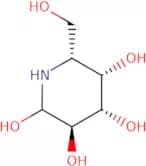
CAS:Galactostatin is a protein synthesis inhibitor that binds to the l-tartaric acid site of the bacterial 30S ribosomal subunit. It inhibits the binding of aminoacyl-tRNA to the ribosome, preventing translation and inhibiting cell growth. Galactostatin has been shown to be effective against HIV infection in mammalian cells. This drug also has a chaperone effect that protects cells from heat or cold stress.Formula:C6H13NO5Purezza:Min. 95%Peso molecolare:179.17 g/mol1,4-Dideoxy-1,4-epithio-D-ribitol
CAS:<p>1,4-Dideoxy-1,4-epithio-D-ribitol is a complex carbohydrate that belongs to the group of oligosaccharides. It is an Oligosaccharide with a molecular weight of 538.77. It has been modified by methylation and glycosylation and fluorination. The compound is synthesized in high purity and is available for custom synthesis.</p>Formula:C5H10O3SPurezza:Min. 95%Peso molecolare:150.2 g/mol3-Deoxy-2-keto-D-xylonate lithium
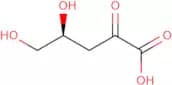
CAS:<p>3-Deoxy-2-keto-D-xylonate lithium salt is a synthetic compound that is used in the synthesis of protamine. It is produced by the reduction of an aldehyde with borohydride. 3-Deoxy-2-keto-D-xylonate lithium salt has been shown to be active against E. cloacae, which can cause diarrhea and other gastrointestinal disorders. 3-Deoxy-2-keto-D-xylonate lithium salt inhibits the growth of E. cloacae by inhibiting glycolaldehyde reductase and aldolases, which are enzymes that are essential for glycolysis and citrate metabolism, respectively. The cleavage products formed by this reaction inhibit bacterial growth by interfering with cell wall biosynthesis, preventing protein synthesis, or blocking ATP production (oxidative phosphorylation).</p>Formula:C5H8O5•LixPurezza:Min. 95%Colore e forma:PowderPeso molecolare:148.11 g/mol6-Amino-6-deoxy-D-mannopyranose hydrochloride
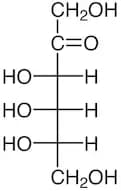
CAS:<p>The 6-Amino-6-deoxy-D-mannopyranose hydrochloride is a custom synthesis and modification of mannose. It is a complex carbohydrate that is an oligosaccharide or polysaccharide, and it can be modified by methylation, glycosylation, or carbamylation. The 6-Amino-6-deoxy-D-mannopyranose hydrochloride has high purity and fluorescence properties. This compound has the CAS number 2074444-9 and is synthetically produced.</p>Formula:C6H13NO5•HClPurezza:Min. 95%Peso molecolare:215.63 g/molL-Psicose
CAS:Formula:C6H12O6Purezza:>98.0%(HPLC)Colore e forma:White to Almost white powder to crystalPeso molecolare:180.16D-Fructose-1,6-diphosphate dicalcium salt, 95%
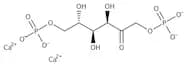
CAS:<p>D-Fructose-1,6-diphosphate dicalcium salt is essential for glycolysis to occur efficiently. It links to adenine nucleotides which regulate 6-phosphofructokinases (Pfks) that catalyze one of the rate limiting steps of glycolysis. This Thermo Scientific Chemicals brand product was originally part of the Alfa Aesar product portfolio. Some documentation and label information may refer to the legacy brand. The original Alfa Aesar product / item code or SKU reference has not changed as a part of the brand transition to Thermo Scientific Chemicals.</p>Formula:C6H12Ca2O12PPurezza:95%Peso molecolare:418.24Heptyl β-D-glucopyranoside, 99%
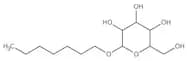
CAS:<p>This Thermo Scientific Chemicals brand product was originally part of the Alfa Aesar product portfolio. Some documentation and label information may refer to the legacy brand. The original Alfa Aesar product / item code or SKU reference has not changed as a part of the brand transition to Thermo Scientific Chemicals.</p>Formula:C13H26O6Purezza:99%Peso molecolare:278.342,3,5-Tri-O-benzyl-L-arabinofuranose, 98%
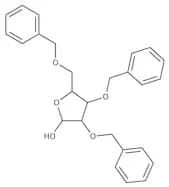
CAS:<p>This Thermo Scientific Chemicals brand product was originally part of the Alfa Aesar product portfolio. Some documentation and label information may refer to the legacy brand. The original Alfa Aesar product / item code or SKU reference has not changed as a part of the brand transition to Thermo Scientific Chemicals.</p>Formula:C26H28O5Purezza:98%Peso molecolare:420.5b-D-Glucopyranoside,(1aR,2S,3aR,5R,5aR,5bS)-5b-[(benzoyloxy)methyl]tetrahydro-5-hydroxy-2-methyl-2,5-methano-1H-3,4-dioxacyclobuta[cd]pentalen-1a(2H)-yl
CAS:Formula:C23H28O11Purezza:95%Colore e forma:SolidPeso molecolare:480.4618Methyl (Phenyl 5-Acetamido-7,8,9-tri-O-acetyl-5-N,4-O-carbonyl-3,5-dideoxy-2-thio-β-D-glycero-D-galacto-2-nonulopyranosid)onate
CAS:Formula:C25H29NO12SPurezza:96%Colore e forma:SolidPeso molecolare:567.5623Ref: IN-DA00GWLG
Prodotto fuori produzioneRef: IN-DA00I9IF
Prodotto fuori produzioneDi-O-isopropylidene psicose
<p>Di-O-isopropylidene psicose is a synthetic sugar that is a modification of the natural compound, psicose. It can be used for the synthesis of oligosaccharides, polysaccharides and other complex carbohydrates. Di-O-isopropylidene psicose can be methylated and glycosylated to form other sugar derivatives or fluorinated to form fluoroquinolones. This sugar has been shown to have high purity and stability under a wide range of conditions.</p>Purezza:Min. 95%2,3:4,5:6,7-Tri-O-isopropylidene-D-glycero-D-ido-heptonic acid methyl ester
<p>2,3:4,5:6,7-Tri-O-isopropylidene-D-glycero-D-ido-heptonic acid methyl ester is an oligosaccharide that is a synthetic glycosylation product. It is a complex carbohydrate that has a high purity and CAS No. This compound can be custom synthesized to your specifications and modified in the lab with fluorination or methylation.</p>Purezza:Min. 95%a-Acetobromo-D-xylose
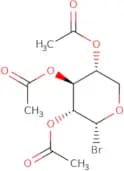
CAS:<p>a-Acetobromo-D-xylose is an oligosaccharide sugar used in glycosylation and polysaccharide modifications. It is synthesized by the fluorination of xylose with acetic acid, bromine, and a base. The product is purified by vacuum distillation and recrystallization. In addition to its use as a carbohydrate, this product can be modified using methylation or click chemistry to create derivatives.</p>Formula:C11H15BrO7Purezza:Min. 95%Peso molecolare:339.14 g/mol3-Deoxy-D-gluconic acid
CAS:<p>3-Deoxy-D-gluconic acid is a chemical compound that has the chemical structure of C6H12O6. It is a white crystalline solid that can be found in nature as a reaction product of glucose and oxygen. 3-Deoxy-D-gluconic acid can also be synthesized by reacting D-glucose with nitrous acid or sulfur dioxide. 3-Deoxy-D-gluconic acid is an organic acid and has been shown to inhibit the growth of filamentous fungi by acting on their glycosidic bonds. This chemical compound has not been shown to have any adverse health effects in humans, although it may cause irritation if it comes into contact with skin or eyes.</p>Formula:C6H12O6Purezza:Min. 95%Peso molecolare:180.16 g/mol(1S,3S,4R,8S)-8-Benzyloxy-1-hydroxymethyl-3-methoxy-2,6-dioxabicyclo[3,2,1]octane
CAS:<p>1-Hydroxymethyl-8-benzyloxy-3-methoxy-2,6-dioxabicyclo[3,2,1]octane is a sugar that can be modified with various functional groups. This compound is synthesized by modification of the 1S,3S,4R,8S configuration of 8-Benzyloxy-1-(hydroxymethyl)-3-methoxy-2,6 dioxabicyclo[3,2,1]octane. The synthesis can be performed in two steps: first the hydroxymethyl group is replaced by benzyloxymethyl using 1-(benzyloxy)propanol and then the methoxy group is replaced by a methoxy group with sodium methoxide.</p>Formula:C15H20O5Purezza:Min. 95%Peso molecolare:280.32 g/mol2-Deoxy- 4-C-methyl-2- methylene- 3, 4- O- isopropylidene -L- erythro- pentonic acid d- lactone
<p>2-Deoxy-4-C-methyl-2-methylene-3,4-O-isopropylidene -L-erythro pentonic acid d-lactone is a methylated sugar with a degree of substitution of 1.0, which can be used for the synthesis of various saccharides and polysaccharides. This product has been modified with click chemistry. It is available in custom synthesis and high purity. The CAS number for this compound is 121592-71-8, and it can be used to synthesize glycans or oligosaccharides. This product can be fluorinated or complexed with other sugars.</p>Purezza:Min. 95%





![b-D-Glucopyranoside,(1aR,2S,3aR,5R,5aR,5bS)-5b-[(benzoyloxy)methyl]tetrahydro-5-hydroxy-2-methyl-2…](/_next/image/?url=https%3A%2Fstatic.cymitquimica.com%2Fproducts%2FIN%2Fthumb-webp%2FDA00I4J3.webp&w=3840&q=75)



![(1S,3S,4R,8S)-8-Benzyloxy-1-hydroxymethyl-3-methoxy-2,6-dioxabicyclo[3,2,1]octane](/_next/image/?url=https%3A%2Fstatic.cymitquimica.com%2Fproducts%2F3D%2Fthumb-webp%2FMB10613.webp&w=3840&q=75)