Sali metallici
Trovati 2872 prodotti di "Sali metallici"
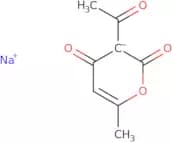
Dehydroacetic acid sodium salt
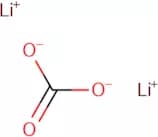
CAS:Dehydroacetic acid sodium salt is a chemical compound with the formula CH3COOCH2NaO2. It is an ionic liquid that can be used as a preservative or stabilizer in foods and other products. Dehydroacetic acid sodium salt has been shown to inhibit the growth of bacteria and fungi in biological studies. The analytical method for dehydroacetic acid sodium salt is based on x-ray diffraction data, which is used to identify its purity and concentration. The reaction solution includes dehydroacetic acid, water vapor, sodium salts, phosphorus pentoxide, and control analysis.Formula:C8H7O4NaPurezza:Min. 95%Colore e forma:PowderPeso molecolare:190.13 g/molLithium carbonate
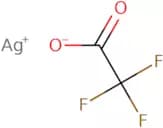
CAS:Prodotto controllatoLithium carbonate is a salt that contains lithium and carbonate ions. It is used as a mood stabilizer, primarily to treat bipolar disorder. Lithium carbonate is available in three different concentrations: lithium carbonate 5% (Li2CO3), lithium carbonate 10% (Li2CO3), and lithium carbonate 15% (Li2CO3). The optimum concentration of lithium carbonate for the treatment of bipolar disorder is 10%. Lithium has been shown to increase the activity index in combination therapy groups with either mianserin hydrochloride or carbamazepine. Electrochemical impedance spectroscopy has also been used to measure the effect of lithium on human body mass index (BMI).Formula:CLi2O3Purezza:Min. 95%Peso molecolare:73.89 g/molSilver(I) 2,2,2-trifluoroacetate
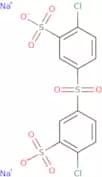
CAS:Silver trifluoroacetate is a chemical compound that is a silver salt of trifluoroacetic acid. Silver trifluoroacetate is a white crystalline solid, soluble in water and alcohols, but insoluble in ethers. It has the chemical formula AgCF3CO2H. The crystal structure of silver trifluoroacetate has been determined by x-ray diffraction techniques and found to be orthorhombic with space group Pbam. The molecule consists of two 5-membered heteroaromatic rings, one containing carbon atoms and the other containing nitrogen atoms. The nitrogen atom is bonded to six hydrogen atoms and three fluorine atoms, while the carbon atom is bonded to four oxygen atoms and one fluorine atom. Synthesis methods for this compound include reacting silver nitrate with sodium carbonate in water vapor at 120°C.Formula:C2AgF3O2Purezza:Min. 95%Peso molecolare:220.88 g/mol4,4'-Dichlorodiphenylsulfone-3,3'-disulfonic acid disodium salt
CAS:Please enquire for more information about 4,4'-Dichlorodiphenylsulfone-3,3'-disulfonic acid disodium salt including the price, delivery time and more detailed product information at the technical inquiry form on this pageFormula:C12H6Cl2Na2O8S3Purezza:Min. 95 Area-%Colore e forma:White Off-White PowderPeso molecolare:491.25 g/molCobalt sulfate heptahydrate
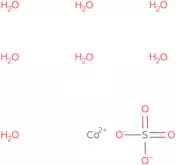
CAS:Cobalt sulfate heptahydrate is an inorganic compound that is used as a pigment and a catalyst. It has been shown to be carcinogenic in vivo and in vitro. Cobalt sulfate heptahydrate appears to have carcinogenic activity, producing high values in the electrochemical impedance spectroscopy (EIS) spectrum of human serum. The carcinogenicity of cobalt sulfate heptahydrate was demonstrated by the induction of liver tumors in rats and mice, with no evidence of a threshold dose.Formula:CoSO4•(H2O)7Purezza:Min. 95%Colore e forma:PowderPeso molecolare:281.1 g/molZinc oxalate dihydrate
CAS:Zinc oxalate hydrate is a skin condition treatment that is made of zinc oxide and oxalic acid. It is used to treat acne, eczema, and psoriasis by inhibiting bacterial growth. The reaction solution is prepared by adding sodium citrate to a solution of vitamin B3 in dextrose. The mixture is heated until the crystals dissolve and then cooled down. The final product has a liquid phase synthesis and contains ZnO, Na2C6H5O7, C6H12O6, and H2O. Other uses for this compound include its use as an antibacterial agent for biomineralization or as a dextrose substitute in the manufacture of cyclic hydrocarbons. This product also has the ability to form nanowires when it is dehydrated under high temperatures.Formula:ZnC2O4•2H2OPurezza:Min. 95%Colore e forma:Powder(1S,2S)-N,N'-Bis(2-acetyl-3-oxo-2-butenylidene)-1,2-dimesitylethylenediaminato Cobalt(II)
CAS:(1S,2S)-N,N'-Bis(2-acetyl-3-oxo-2-butenylidene)-1,2-dimesitylethylenediaminato Cobalt(II) is a catalyst in cycloaddition reactions. It is soluble in organic solvents and has been used as a catalyst for the synthesis of imines and aryl ketones. This compound also catalyzes the reduction of borohydride to form borane.Formula:C32H38CoN2O4Purezza:Min. 95%Peso molecolare:573.59 g/mol2-Hydroxy-3-mercapto-1-propanesulfonic acid sodium salt
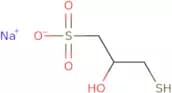
CAS:2-Hydroxy-3-mercapto-1-propanesulfonic acid sodium salt (2HMP) is a diagnostic agent that can be used for the detection of bacterial infections. The conformational properties of 2HMP are similar to those of ATP, which allows it to bind to the polymerase chain reaction enzyme and initiate an enzymatic reaction. This leads to the production of a signal that can be detected by spectrophotometry or fluorometry. 2HMP has also been shown to have chemokine activity in vitro, but this has not been tested in vivo. 2HMP is a competitive inhibitor of human protein serine proteases, such as trypsin and chymotrypsin, with an IC50 value of approximately 1 μM.Formula:C3H7NaO4S2Purezza:Min. 95%Peso molecolare:194.2 g/molCalcium carbonate
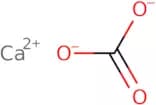
CAS:Calcium carbonate is a chemical compound that can be found in natural limestone, marble and seashells. It is used as an industrial mineral for the production of lime and cement, as well as a chemical agent in wastewater treatment. Calcium carbonate has been shown to have synergistic effects with sodium carbonate when used to treat sewage effluent. It also has a high solubility in water, which makes it suitable for use in the production of concrete. The reaction mechanism is dependent on the particle size and temperature. The thermal expansion coefficient of calcium carbonate is 2.6x10^-5/°C, meaning that it expands by 0.26% per degree Celsius increase in temperature.Formula:CaCO3Purezza:Min. 95%Colore e forma:PowderPeso molecolare:100.09 g/molSodium 2-thiobarbiturate
CAS:Prodotto controllatoSodium 2-thiobarbiturate is a nitrosating agent that has been shown to protect the lungs from ischemia–reperfusion injury in vitro. It exerts its protective effects by inhibiting the release of nitric oxide (NO) and protects against neuronal death by preventing mitochondrial dysfunction. Sodium 2-thiobarbiturate also has genotoxic effects, which are reduced in the presence of antioxidants, and can cause DNA damage. This drug is reactive with oxygen, so it should not be stored in airtight containers or exposed to light.Formula:C4H4N2O2S·NaPurezza:Min. 95%Colore e forma:White/Off-White SolidPeso molecolare:167.14 g/mol(Trifluoromethylthio) Silver(I)
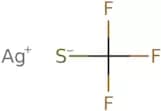
CAS:(Trifluoromethylthio) silver(I) is an efficient method for the synthesis of chiral, functionalized organosulfur compounds. It is prepared by the trifluoromethylthiolation of aryl acetonitriles in the presence of persulfate and a radical coupling agent. The reaction time can be adjusted to suit the desired product, with shorter times producing more complex molecules. This compound can be used as a nucleophile in organic reactions, including sulfide activation reactions.Formula:CHAgF3SPurezza:Min. 95%Peso molecolare:209.95 g/molSodium dimethyldithiocarbamate hydrate
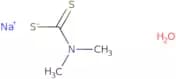
CAS:Sodium dimethyldithiocarbamate hydrate is a salt of dimethyldithiocarbamic acid. It is used as an additive in paints and coatings to prevent corrosion of metal. Sodium dimethyldithiocarbamate hydrate is also used in the production of polyurethane and polyester resins, where it acts as a curing agent. Dimethyldithiocarbamic acid has been shown to be a ligand for the influenza virus, inhibiting viral activity by binding to the hemagglutinin protein. The crystal system of this substance is hexagonal; its salts exist in both acidic and basic forms. The functional theory explains the stabilization of this compound through coordination with nitrogen atoms on one side and phenyl substituents on the other side. Hexamethylenetetramine reacts with sodium chloride to form sodium dimethyldithiocarbamate hydrate, which can then react with methanol or eth
Formula:C3H6NNaS2·xH2OPurezza:Min. 95%Colore e forma:White PowderPeso molecolare:143.2 g/molCesium bicarbonate
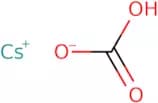
CAS:An inorganic cesium saltFormula:CsHCO3Purezza:Min. 95%Colore e forma:PowderPeso molecolare:193.92 g/molBiotin 3-sulfo-N-hydroxysuccinimide ester sodium salt
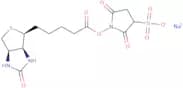
CAS:Biotin 3-sulfo-N-hydroxysuccinimide ester sodium salt (BSHES) is a reactive molecule that can be used as a pharmacological agent. It has been shown to have biological properties in vivo models and in vitro cell lysis experiments. BSHES has also been shown to bind to the receptor molecule epidermal growth factor, which may account for its toxicity. In addition, this drug has been shown to bind dna binding domains, such as streptavidin or monoclonal antibodies. This drug is often used experimentally with an apical electrochemical impedance spectroscopy model.
Formula:C14H19N3S2O8NaPurezza:Min. 95%Colore e forma:White PowderPeso molecolare:444.44 g/mol2-Hydroxyethanesulfonic acid sodium salt
CAS:2-Hydroxyethanesulfonic acid sodium salt is a drug that is used to treat metabolic disorders such as cystinuria and hyperchloremic metabolic acidosis. It is also used for the treatment of water-vapor related respiratory problems and cataracts, as well as for the prevention of renal stone formation. This drug is made through electrochemical impedance spectroscopy of taurine in reaction solution with phosphorus pentoxide. 2-Hydroxyethanesulfonic acid sodium salt has been shown to increase locomotor activity in rats by improving their biochemical properties. This compound binds to the chloride ion receptor site on the Na+/K+ ATPase, causing an inhibition of the enzyme's function.Formula:C2H5O4S·NaPurezza:Min. 95%Colore e forma:White PowderPeso molecolare:148.11 g/mol1,1'-Dibenzoylferrocene
CAS:1,1'-Dibenzoylferrocene is a ferrocene derivative that has been shown to be an excellent ligand for the separation of heavy metal ions. The physicochemical properties of 1,1'-dibenzoylferrocene make it a good candidate for ionization and separation techniques. It can accommodate different substituents on the ferrocene molecule, which allows it to interact with different types of metal ions. 1,1'-Dibenzoylferrocene has been used in metallocene catalysis as a solvent, although its use as a ligand has not yet been explored.
Formula:C24H18FeO2Purezza:Min. 95%Peso molecolare:394.24 g/molBis(cyclopentadienyl)titanium (IV) dichloride
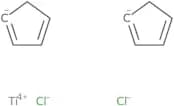
CAS:Bis(cyclopentadienyl)titanium (IV) dichloride is a cationic polymerization catalyst that has been used to produce polyolefins with high molecular weights. It is also an important component of solid catalysts for the production of butadiene and styrene. Bis(cyclopentadienyl)titanium (IV) dichloride is a potent carcinogen in animals and is mutagenic in bacteria. It has been shown to cause cancer in animal models, and has been shown to be mutagenic in bacterial mutation assay tests. Bis(cyclopentadienyl)titanium (IV) dichloride reacts with dimethylformamide and aromatic hydrocarbons to produce photochemical properties that can lead to skin irritation or sensitization. This compound also has hydroxyl groups, which can react with oxidants such as chlorine gas to form chlorohydrins, which are toxic compounds that may be carcinogenic.
Formula:C10H10TiCl2Purezza:Min. 95%Colore e forma:Red Clear LiquidPeso molecolare:248.96 g/molSodium selenite
CAS:Sodium selenite is an inorganic chemical compound that is a byproduct of the refining process of crude oil. It is used as a dietary supplement and in clinical studies for inflammatory bowel disease. Sodium selenite is a strong reducing agent because it has a redox potential of -1.5 V, which can cause genotoxic effects in cells with low antioxidant defenses. The pro-oxidant effect may be due to its ability to generate reactive oxygen species, such as hydrogen peroxide and hydroxyl radicals. It also exhibits antimicrobial activity against bacteria, fungi, and yeast.
Formula:Na2SeO3Purezza:Min. 95%Colore e forma:PowderPeso molecolare:174.95 g/molBis(tri-tert-butylphosphine)platinum(0)
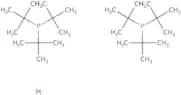
CAS:Bis(tri-tert-butylphosphine)platinum(0) is a coordination complex with a chemical formula of Pt[P(C)(CH)]. It has been shown that this compound is obtained in high yields when the platinum metal is heated to temperatures between 500 and 600 degrees Celsius. This compound has been shown to be soluble in acetone at low temperatures, and it crystallizes to form a purple solid. Bis(tri-tert-butylphosphine)platinum(0) has been shown to have magnetic properties, as well as being active in x-ray crystallographic studies. The crystal diffraction pattern of this compound was found to be similar to that observed for the ligand phosphine, which is consistent with the proposed structure of bis(tri-tert-butylphosphine)platinum(0).Formula:C24H54P2PtPurezza:Min. 95%Peso molecolare:599.72 g/molSodium 2-mercaptobenzothiazole - 50% aqueous solution
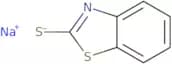
CAS:2-Mercaptobenzothiazole is a white crystalline powder that is soluble in water and insoluble in organic solvents. It has an odor threshold of 1.5 ppm and a melting point of 158°C. 2-Mercaptobenzothiazole is used as an absorption enhancer for ultraviolet light, infrared radiation, or X-rays. It is also used to improve the efficiency of chemical reactions, such as the synthesis of polyurethane resins and other polymers. The most common application for 2-mercaptobenzothiazole is as a cationic surfactant, which is often used in textile processing and oil refining. This compound can be prepared by reacting sodium carbonate with hydrochloric acid and glycol ether, followed by the addition of water vapor to produce hydrogen chloride gas. 2-Mercaptobenzothiazole can be synthesized using a liquid chromatography method with electrochemical impedance spectroscopy (Formula:C7H4NNaS2Purezza:Min. 95%Colore e forma:Yellow To Brown LiquidPeso molecolare:189.24 g/mol