Peptidi
Sottocategorie di "Peptidi"
Trovati 29608 prodotti di "Peptidi"
Liver-Cell Growth Factor
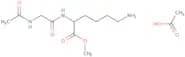
CAS:Prodotto controllatoLiver-Cell Growth Factor (LCGF) is a growth factor that stimulates the proliferation of liver cells. LCGF is found in coagulation factors, fatty acids, and peptides. LCGF has been shown to have long-term efficacy in the treatment of liver disease and has been demonstrated to be neuroprotective in animal models of Parkinson's disease. This growth factor also inhibits nucleotidase, which is an enzyme that breaks down nucleotides into mononucleotides and diphosphates. LCGF has been associated with statistically significant improvements in diameter and lysine levels in fetal bovine serum.
Formula:C14H24N6O4•CH3COOH•H2OPurezza:Min. 95%Peso molecolare:418.45 g/molCalcicludine
CAS:A synthetic green mamba snake toxin sourced from the green mamba, Dendroaspis angusticeps, which can be used as a neuronal L-type Ca2+ channel blocker. This product has disulfide bonds between Cys7-Cys57, Cys16-Cys40, and Cys32-Cys53 and is available as a 0.1mg vial.
Formula:C321H476N86O78S6Purezza:Min. 95%Peso molecolare:6,980.1 g/molMAL-dPEG®8-NHS Ester
CAS:MAL-dPEG®8-NHS Ester is a PEG compound with two different functional groups (also known as heterobifunctional). Unlike homobifunctional PEG compounds (same functional group on both ends), this type of compounds are more versatile as have two different anchor points. MAL-dPEG®8-NHS Ester is used as a linker and spacer to add a PEG moiety, via pegylation (a bioconjugation technique) to proteins, peptides, oligonucleotides, small molecules and nanoparticles.
Formula:C21H40O11SPurezza:Min. 95%Peso molecolare:500.6 g/molBiotin-OSu
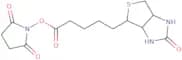
CAS:Biotin-OSu is a biotin derivative that is used as a fluorescence probe for the detection of DNA binding activity. It has been shown to bind to DNA with high affinity in an experimental model. Biotin-OSu binds to the major groove of DNA and can be used to detect dna binding activities, such as protein-DNA interactions, by forming a ternary complex with the target protein and a fluorophore. This compound has also been shown to react with mouse monoclonal antibodies and human serum proteins, which are transfer reactions. Biotin-OSu has also been used as a coupling agent in peptide hormones and streptavidin polymerase chain reactions (PCR). The presence of disulfide bonds in this compound give it stability but limits its solubility.
Formula:C14H19N3O5SPurezza:Min. 95%Peso molecolare:341.39 g/molEledoisin Related Peptide
CAS:Eledoisin is a novel ion channel activator that belongs to the group of peptides. It has been shown to activate voltage-gated sodium channels and calcium channels in cell culture, which may be due to its ability to inhibit the phosphorylation of L-type channels. Eledoisin also binds to human and rat receptors with high affinity, exhibiting a ligand binding affinity of IC50 = 0.5 nM. The amino acid sequence of eledoisin is related to that of other peptides such as beta-amyloid, calcitonin, bombesin, and thyrotropin releasing hormone (TRH).
Formula:C34H58N8O6SPurezza:Min. 95%Peso molecolare:706.94 g/molDynorphin A (Human, 1-13)
CAS:As a dynorphin peptide, Dynorphin A has affinity for opioid receptors in particular it favors kappa-opioid receptors and residues 1-13 of the Dynorphin A peptide are crucial for its potency. Kappa-opioid receptors are expressed in the brain, peripheral tissues and the spinal cord and are located in areas involved in pain. For example when Dynorphin A binds to kappa-opioid receptors, dopamine is inhibited in areas of the brain prevalent in drug addiction, thus demonstrated Dynorphin A to have antagonistic effects on the brain reward circuit. Dynorphin A could be a useful research tool for studying analgesia, reward and addiction.
This product is available as a 0.5mg vial.Formula:C75H126N24O15Purezza:Min. 95%Peso molecolare:1,604 g/molCbz-N-Amido-dPEG®4-Acid
CAS:Cbz-N-Amido-dPEG®4-Acid is a PEG compound with two different functional groups (also known as heterobifunctional). Unlike homobifunctional PEG compounds (same functional group on both ends), this type of compounds are more versatile as have two different anchor points. Cbz-N-Amido-dPEG®4-Acid is used as a linker and spacer to add a PEG moiety, via pegylation (a bioconjugation technique) to proteins, peptides, oligonucleotides, small molecules and nanoparticles.
Purezza:Min. 95%Peso molecolare:399.44 g/molFMRF-Amide
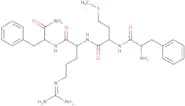
CAS:A molluscan cardioexcitatory neuropeptide which has the potential to be used in cell biology, pharmacological, and protein-protein interaction studies. This product is available as an FMRF-Amide.
Formula:C29H42N8O4SPurezza:Min. 95%Peso molecolare:598.76 g/molAc-Val-Asp-Val-Ala-Asp-AMC
CAS:Prodotto controllatoAc-Val-Asp-Val-Ala-Asp-AMC is a research tool used to study the function of ion channels. It is an activator that binds to the receptor site on ATP sensitive potassium channels. Ac-Val-Asp-Val-Ala-Asp-AMC has been shown to inhibit calcium and sodium ion flux through ion channels, as well as high purity and good solubility. This peptide is useful for studying protein interactions, pharmacology, and life science research.
Formula:C33H44N6O12Purezza:Min. 95%Peso molecolare:716.74 g/molCoV-2 Spike (1000-1200)
CoV-2 Spike (1000-1200) is a ProSpec that is used for the detection of Angiotensin Converting Enzyme 2 (ACE-2). The spike protein binds to ACE-2, which can be found in the human blood plasma. The CoV-2 Spike (1000-1200) can be used for the detection of coronavirus such as MERS-CoV and SARS-CoV. It can also be used to detect Proteins in samples such as COVID-19.
Purezza:Min. 95%Ref: 3D-SARS-17
Prodotto fuori produzioneCyclo(Arg-Gly-Asp-D-Phe-Val)
CAS:Cyclo(Arg-Gly-Asp-D-Phe-Val) is a cyclic peptide that inhibits the activity of surface glycoprotein enzymes. It has shown to be effective against malignant brain tumor cells and has anti-angiogenic effects. Cyclo(Arg-Gly-Asp-D-Phe-Val) also inhibits integrin receptor function by binding to the αVβ3 or αVβ5 integrin, which may be useful for biomarker identification. This compound is potent as an antagonist to epidermal growth factor (EGF), which may have potential use in treating benign prostatic hyperplasia.
Formula:C26H38N8O7Purezza:Min. 95%Peso molecolare:574.63 g/molSuc-Ala-Ala-Ala-AMC
CAS:Suc-Ala-Ala-Ala-AMC is a peptide that is used as a research tool to study protein interactions. It can be used to activate an antibody or receptor and to inhibit the activity of ion channels. This compound has been shown to bind to the Ligand Binding Domain of the Beta2 adrenergic receptor, which is expressed in the heart and lungs. Suc-Ala-Ala-Ala-AMC is also known as 73617-90-0, and has CAS No. 73617-90-0.
Formula:C23H28N4O8Purezza:Min. 95%Peso molecolare:488.49 g/molm-dPEG®4-Amine
CAS:m-dPEG®4-Amine is a PEG compound with two different functional groups (also known as heterobifunctional). Unlike homobifunctional PEG compounds (same functional group on both ends), this type of compounds are more versatile as have two different anchor points. m-dPEG®4-Amine is used as a linker and spacer to add a PEG moiety, via pegylation (a bioconjugation technique) to proteins, peptides, oligonucleotides, small molecules and nanoparticles.
Purezza:Min. 95%Peso molecolare:207.27 g/molGalanin (Rat)
CAS:Galanin is a peptide that belongs to the family of neuropeptides and is found in the endocrine system, the central and peripheral nervous systems. It has been shown to inhibit the release of acetylcholine in the central nervous system and interestingly in Alzheimer’s disease patients, hyperinervation of galanin fibres has been found. Galanin is also known to have a variety of physiological effects including inhibition of insulin release, stimulation of prolactin and growth hormone secretion and it also plays a role in feeding, mood, cognition, neuroendocrine regulation and affects gastrointestinal motility. Galanin asserts its effects through associated with G-protein coupled receptors. This product is available as a 0.5mg vial.
Formula:C141H211N43O41Purezza:Min. 95%Peso molecolare:3,164.5 g/molZ-Ala-Ala-Leu-pNA
CAS:Z-Ala-Ala-Leu-pNA is a synthetic substrate that is used as a chemical test for serine proteases. It is synthesized by the addition of a single amino acid to the C-terminal end of Z-Ala-Ala-Leu. This substrate has been used in kinetic studies and biochemical analysis, such as biophysical and proteolytic properties. The enzyme preparation that hydrolyzes this substrate is often immobilized on a solid support, such as agarose beads or polystyrene or glass beads, so that it can be applied to an assay plate. Z-Ala-Ala-Leu-pNA is also used in functional group analyses of proteins.
Formula:C26H33N5O7Purezza:Min. 95%Peso molecolare:527.57 g/molBz-Arg-NH2 • HCl • H20
CAS:Bz-Arg-NH2 is a proteolytic variant of the enzyme arginase. It is inactivated by ammonium sulfate and competitively by constant. The active site of Bz-Arg-NH2 contains an aldehyde group, which is responsible for its proteolytic activity. Peptides & Biochemicals offers this product as a solute to be used in affinity chromatography and filtration experiments. This product has been shown to be most active at pH 6.0 with an optimum temperature of 37°C. The chloromethyl ketone can be used as a marker for this product during fractionation due to its fluorescing properties.
Formula:C13H19N5O2•HCI•H2OPurezza:Min. 95%Peso molecolare:331.8 g/mol30 mL Manual Reaction Vessel
The manual reaction vessel is a laboratory tool for chemical reactions. It is a sealed, sterile glass vessel that can be opened and closed to allow the introduction of chemicals. The manual reaction vessel has an opening at one end for adding reagents, and a stopcock at the other end for controlling the flow of reactants. The manual reaction vessel is used in research to study protein interactions and receptor ligand interactions. It is also used in pharmacology to study drug binding and as a cell biology research tool. This product is made from high purity borosilicate glass, which ensures it will not break down due to chemical exposure or thermal shock. It has no seams or welds that could release contaminants into the environment.
Purezza:Min. 95%m-dPEG®8-Propionaldehyde
CAS:m-dPEG®8-Propionaldehyde is a PEG compound with two different functional groups (also known as heterobifunctional). Unlike homobifunctional PEG compounds (same functional group on both ends), this type of compounds are more versatile as have two different anchor points. m-dPEG®8-Propionaldehyde is used as a linker and spacer to add a PEG moiety, via pegylation (a bioconjugation technique) to proteins, peptides, oligonucleotides, small molecules and nanoparticles.
Formula:C29H65N3O17S2Purezza:Min. 95%Peso molecolare:912.08 g/molParathyroid Hormone (Human, 1-44)
CAS:Amino acids 1-44 of the Parathyroid Hormone (PTH) which is a peptide hormone that is secreted from the parathyroid gland in the event of abnormal serum calcium levels and it ultimately regulates calcium and phosphate levels in the body. The PTH exerts its activity through binding to the G-protein coupled receptor type 1 PTH receptor, which activates adenylate cyclase or phospholipase C thus activating pathways involved in the mediation of bone resorption and bone formation. This product is suitable for life science applications and is available as a 0.5mg vial.
Formula:C225H366N68O61S2Purezza:Min. 95%Peso molecolare:5,063.9 g/molPHM-27 (Human)
CAS:PHM-27 is a peptide that is used as a research tool in the fields of cell biology, pharmacology and immunology. It is also used to study protein interactions and receptor/ligand interactions.
Formula:C135H214N34O40SPurezza:Min. 95%Peso molecolare:2,985.4 g/mol