Peptidi
Sottocategorie di "Peptidi"
Trovati 29707 prodotti di "Peptidi"
LISA-101
CAS:LISA-101 is a peptide that can be used as a research tool for the study of receptor activation and ligand binding. LISA-101 is an inhibitor of ion channels, which are proteins that allow electrically charged particles to move in and out of cells. LISA-101 binds to receptors on the surface of cells and blocks ion channels from opening. This prevents the flow of ions across the membrane, which blocks nerve impulses, leading to a decrease in pain sensation. LISA-101 has been shown to inhibit voltage-gated sodium channels and calcium channels, both which are involved in pain perception.
Formula:C24H26N4O9Purezza:Min. 95%Peso molecolare:514.48 g/molH-WLGFIAGLIAIVMVT-OH
Peptide H-WLGFIAGLIAIVMVT-OH is a Research Peptide with significant interest within the field academic and medical research. This peptide is available for purchase at Cymit Quimica in multiple sizes and with a specification of your choice.Formula:C79H124N16O16SPeso molecolare:1,604.01 g/mol[Pyr3]-Amyloid Beta-Protein (Human, 3-42)
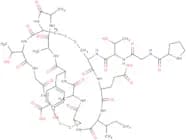
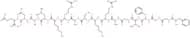
CAS:[Pyr3]-Amyloid Beta-Protein (Human, 3-42) is a fragment of the human amyloid beta protein that inhibits ion channels and ligand-activated receptors. It has been shown to be an inhibitor of ion channel activity in vitro. [Pyr3]-Amyloid Beta-Protein (Human, 3-42) is a synthetic peptide that can be used as a research tool for investigating the effects of amyloid beta protein on cell biology.Formula:C196H299N53O55SPurezza:Min. 95%Peso molecolare:4,309.9 g/molGuanylin (Human)
CAS:Guanylin is a human gastrointestinal hormone which can be used to activate the transmembrane receptor Guanylate Cyclase C on the intestinal epithelial cells surface. This product contains disulfide bonds between Cys4-Cys12 and Cys7-Cys15 and is available as a 0.1mg vial.Formula:C58H87N15O21S4Purezza:Min. 95%Peso molecolare:1,458.7 g/molNRGN Human
NRGN is a protein that is encoded by the neurogranin gene. It is expressed in the human brain and has been shown to be involved in synaptic transmission and memory formation. NRGN binds to calmodulin and phosphorylates protein kinase C, which activates MAPK pathways. The molecular mass of NRGN is about 60 kDa for recombinant human proteins.Purezza:Min. 95%Anti Total Glucagon (Human, Rat) Serum
Anti Total Glucagon (Human, Rat) Serum is a research tool that can be used in the study of ion channels and receptor-ligand interactions. It is a purified serum that contains glucagon. This product has been tested for purity and is used in the life science industry as a research tool to study protein interactions.Purezza:Min. 95%Z-Leu-Leu-Nva-H (aldehyde)
CAS:Z-Leu-Leu-Nva-H (aldehyde) is a peptide that has been used as an activator and an inhibitor of ion channels. It binds to the receptor site on the ion channel, which changes the flow of ions through the channel. This peptide has been shown to inhibit ligand binding and protein interactions. Z-Leu-Leu-Nva-H (aldehyde) is a high purity product that is available in bulk amounts.
Formula:C25H39N3O5Purezza:Min. 95%Peso molecolare:461.60 g/molAc-Ile-Glu-Thr-Asp-AMC
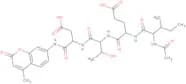
CAS:Ac-Ile-Glu-Thr-Asp-AMC is a high purity, water soluble peptide consisting of the amino acid sequence Ile-Glu-Thr-Asp. Ac-Ile-Glu-Thr-Asp-AMC has been shown to activate the nicotinic acetylcholine receptor and inhibit ligand binding to the NMDA glutamate receptor in rat cortical neurons. Ac-Ile-Glu-Thr-Asp AMC is also an inhibitor of voltage gated potassium channels and has been used as a research tool for studying ion channel function.Formula:C31H41N5O12Purezza:Min. 95%Peso molecolare:675.68 g/molNociceptin (Human)
CAS:Nociceptin is a peptide that binds to the NOP receptor and activates it, which inhibits neuronal activity. It has been shown to inhibit protein interactions by acting as an inhibitor of the enzyme proteasome. Nociceptin activates the Ligand-gated ion channels, which are involved in pain perception. Nociceptin also has been used as a research tool for investigating protein interactions and antibody production.
Formula:C79H129N27O22Purezza:Min. 95%Peso molecolare:1,809 g/molβ-Endorphin (Human)
CAS:Human beta-endorphin is an opioid receptor agonist that belongs to the group of endogenous opioids. It is released by the pituitary gland and binds to receptors in the brain, where it stimulates the release of dopamine, which acts on many regions of the brain. Beta-endorphin has been used as a research tool for its ability to activate opioid receptors and study ligand-receptor interactions. This protein has also been used as a tool for studying ion channels, cell biology, pharmacology, and protein interactions. This product is available as an 0.5mg vial.Formula:C158H251N39O46SPurezza:Min. 95%Peso molecolare:3,465 g/molThiol-dPEG®4-Acid
CAS:Thiol-dPEG®4-Acid is a PEG compound with two different functional groups (also known as heterobifunctional). Unlike homobifunctional PEG compounds (same functional group on both ends), this type of compounds are more versatile as have two different anchor points. Thiol-dPEG®4-Acid is used as a linker and spacer to add a PEG moiety, via pegylation (a bioconjugation technique) to proteins, peptides, oligonucleotides, small molecules and nanoparticles.Purezza:Min. 95%Peso molecolare:282.35 g/molH-YLQLVFGIEV-OH
MAGE-A2 protein: MAGE-A2 (157-166) is an epitope of Melanoma Antigen Gene A2 and is one of the most Cancer-Testis Antigens (CTA) overexpressed in tumors of different histological types, such as prostate cancer. Type of MAGE-A expressed in tumors cells varies according to the type of tumor. The expression of MAGE-A2 causes the proliferation of prostate cancer cells and decreases the chemosensitivity. Applications of MAGE-A2 (157-166): MAGE-A2 (157-166) is used to stimulate specific immune response, cytotoxic T cell response and to analyze the cytokine production in PBMCs by ELISPOT assay. In transgenic mouse, it has been demonstrated that MAGE-A2 (157-166) was capable of eliciting a CTL response presented by HLA-A*02:01 molecules. MAGE-A2 (157-166) has been reported to elicit CTL that could lyse tumor cell expressing both HLA-A*02:01 and MAGE-A2 by stimulation of peripheral blood mononuclear cells (PBMCs) with MAGE-A2 (157-166).Bis-dPEG®13-Acid
CAS:Bis-dPEG®13-Acid is a PEG polymer categorised as homobifunctional PEG (X-PEG X). Used as a linker, bis-dPEG®13-Acid is used to attached PEG to proteins, peptides, oligonucleotides, nanoparticles and small molecules via pegylation, a bioconjugation technique.
Formula:C30H58O17Purezza:Min. 95%Peso molecolare:690.77 g/molm-dPEG®4-Tosylate
CAS:m-dPEG®4-Tosylate is a PEG compound with two different functional groups (also known as heterobifunctional). Unlike homobifunctional PEG compounds (same functional group on both ends), this type of compounds are more versatile as have two different anchor points. m-dPEG®4-Tosylate is used as a linker and spacer to add a PEG moiety, via pegylation (a bioconjugation technique) to proteins, peptides, oligonucleotides, small molecules and nanoparticles.Formula:C26H44N2O13Purezza:Min. 95%Peso molecolare:592.63 g/molEpoxomicin
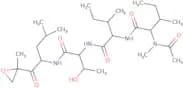
CAS:Epoxomicin is an activator that binds to the ligand-binding site of a receptor. It has been used as a research tool in cell biology, pharmacology, and immunology. Epoxomicin has been shown to inhibit ion channels by binding to them and blocking their activity. This property makes epoxomicin a good candidate for the treatment of epilepsy. Epoxomicin also inhibits protein synthesis through inhibition of ribosomal S6 kinase, which is involved in signal transduction pathways.
Formula:C28H50N4O7Purezza:Min. 95%Peso molecolare:554.72 g/molLP-PLA2 Heavy Tryptic Peptide Standard (4nmol)
Lipoprotein-associated phospholipase A2 (LP-PLA2) heavy tryptic peptide standard for protein identification and quantitation studies. LP-PLA2 is a phospholipase A2 enzyme known as platelet-activating factor acetylhydrolase and it is largely associated with low density lipoprotein in the blood.Purezza:Min. 95%Des-Arg10-Kallidin
CAS:Prodotto controllatoKallidin is a peptide that is found in the venom of the Brazilian pit viper (Bothrops jararaca). It has been shown to activate ion channels and receptors. Des-Arg10-Kallidin is a research tool that can be used in cell biology, pharmacology, and life science research. This peptide binds to antibodies and creates an ion channel when it binds to a receptor. Kallidin also inhibits protein interactions by binding to the active site of proteases such as thrombin, trypsin, and cathepsin B. The high purity of this peptide makes it ideal for use in pharmaceuticals.Formula:C50H73N13O11Purezza:Min. 95%Peso molecolare:1,032.2 g/molm-dPEG®48-MAL
CAS:m-dPEG®48-MAL is a PEG compound with two different functional groups (also known as heterobifunctional). Unlike homobifunctional PEG compounds (same functional group on both ends), this type of compounds are more versatile as have two different anchor points. m-dPEG®48-MAL is used as a linker and spacer to add a PEG moiety, via pegylation (a bioconjugation technique) to proteins, peptides, oligonucleotides, small molecules and nanoparticles.
Formula:C104H202N2O51Purezza:Min. 95%Peso molecolare:2,296.7 g/molSARS Spike (14-1195)
SARS Coronavirus is an enveloped virus containing 3 outer structural proteins, namely the membrane (M), envelope (E), and spike (S) proteins. Spike (S)-glycoprotein of the virus interacts with a cellular receptor and mediates membrane fusion to allow viral entry into susceptible target cells. Accordingly, S-protein takes part in virus infection cycle and is the primary target of neutralizing antibodies. SARS Spike is produced in Sf9 Baculovirus cells and is a single, glycosylated polypeptide chain containing 1188 amino acids (14-1195 aa) and having a molecular mass of 131.9kDa.SARS Spike is fused to a 6 amino acid His tag at C-terminus and purified by proprietary chromatographic techniques. The formulation of the SARS Spike (14-1195) solution (0.25mg/ml) contains Phosphate-Buffered Saline (pH 7.4) and 10% Glycerol. Its biological activity has been measured by its binding ability in a functional ELISA with Human ACE-2. For long term storage it is recommended to add a carrier protein (0.1% HSA or BSA). One-Letter Formula: SDLDRCTTFD DVQAPNYTQH TSSMRGVYYP DEIFRSDTLY LTQDLFLPFY SNVTGFHTIN HTFGNPVIPF KDGIYFAATE KSNVVRGWVF GSTMNNKSQS VIIINNSTNV VIRACNFELC DNPFFAVSKP MGTQTHTMIF DNAFNCTFEY ISDAFSLDVS EKSGNFKHLR EFVFKNKDGF LYVYKGYQPI DVVRDLPSGF NTLKPIFKLP LGINITNFRA ILTAFSPAQD IWGTSAAAYF VGYLKPTTFM LKYDENGTIT DAVDCSQNPL AELKCSVKSF EIDKGIYQTS NFRVVPSGDV VRFPNITNLC PFGEVFNATK FPSVYAWERK KISNCVADYS VLYNSTFFST FKCYGVSATK LNDLCFSNVY ADSFVVKGDD VRQIAPGQTG VIADYNYKLP DDFMGCVLAW NTRNIDATST GNYNYKYRYL RHGKLRPFER DISNVPFSPD GKPCTPPALN CYWPLNDYGF YTTTGIGYQP YRVVVLSFEL LNAPATVCGP KLSTDLIKNQ CVNFNFNGLT GTGVLTPSSK RFQPFQQFGR DVSDFTDSVR DPKTSEILDI SPCAFGGVSV ITPGTNASSE VAVLYQDVNC TDVSTAIHAD QLTPAWRIYS TGNNVFQTQA GCLIGAEHVD TSYECDIPIG AGICASYHTV SLLRSTSQKS IVAYTMSLGA DSSIAYSNNT IAIPTNFSIS ITTEVMPVSM AKTSVDCNMY ICGDSTECAN LLLQYGSFCT QLNRALSGIA AEQDRNTREV FAQVKQMYKT PTLKYFGGFN FSQILPDPLK PTKRSFIEDL LFNKVTLADA GFMKQYGECL GDINARDLIC AQKFNGLTVL PPLLTDDMIA AYTAALVSGT ATAGWTFGAG AALQIPFAMQ MAYRFNGIGV TQNVLYENQK QIANQFNKAI SQIQESLTTT STALGKLQDV VNQNAQALNT LVKQLSSNFG AISSVLNDIL SRLDKVEAEV QIDRLITGRL QSLQTYVTQQ LIRAAEIRAS ANLAATKMSE CVLGQSKRVD FCGKGYHLMS FPQAAPHGVV FLHVTYVPSQ ERNFTTAPAI CHEGKAYFPR EGVFVFNGTS WFITQRNFFS PQIITTDNTF VSGNCDVVIG IINNTVYDPL QPELDSFKEE LDKYFKNHTS PDVDLGDISG INASVVNIQK EIDRLNEVAK NLNESLIDLQ ELGKYEQYIK WPHHHHHHPurezza:Min. 95%t-boc-N-Amido-dPEG®12-OH
CAS:t-boc-N-Amido-dPEG®12-OH is a PEG polymer categorised as monofunctional (OH-PEG-X). Used as a linker, t-boc-N-amido-dPEG®12-OH is used to attached PEG to proteins, peptides, oligonucleotides, nanoparticles and small molecules via pegylation, a bioconjugation technique.
Formula:C29H59NO14Purezza:Min. 95%Peso molecolare:645.78 g/molBoc-Gly-Lys-Arg-AMC
CAS:Boc-Gly-Lys-Arg-AMC is a peptide that is used as a research tool to study the interactions between proteins. It binds to ion channels, receptors, and ligands, and can be used to study protein interactions. It has been reported that Boc-Gly-Lys-Arg-AMC is an activator of acetylcholine receptor and nicotinic acetylcholine receptor. The specificity of this ligand for different ion channels is not known.Formula:C29H44N8O7Purezza:Min. 95%Peso molecolare:616.71 g/molCBZ-N-Amido-dPEG®3-Amine
CAS:CBZ-N-Amido-dPEG®3-Amine is a PEG compound with two different functional groups (also known as heterobifunctional). Unlike homobifunctional PEG compounds (same functional group on both ends), this type of compounds are more versatile as have two different anchor points. CBZ-N-Amido-dPEG®3-Amine is used as a linker and spacer to add a PEG moiety, via pegylation (a bioconjugation technique) to proteins, peptides, oligonucleotides, small molecules and nanoparticles.Formula:C25H53NO12Purezza:Min. 95%Peso molecolare:559.69 g/molMAL-dPEG®8-Acid
CAS:MAL-dPEG®8-Acid is a PEG compound with two different functional groups (also known as heterobifunctional). Unlike homobifunctional PEG compounds (same functional group on both ends), this type of compounds are more versatile as have two different anchor points. MAL-dPEG®8-Acid is used as a linker and spacer to add a PEG moiety, via pegylation (a bioconjugation technique) to proteins, peptides, oligonucleotides, small molecules and nanoparticles.
Formula:C19H38O10SPurezza:Min. 95%Peso molecolare:458.57 g/molm-dPEG®11-OH
CAS:m-dPEG®11-OH is a PEG polymer categorised as monofunctional (OH-PEG-X). Used as a linker, m-dPEG®11-OH is used to attached PEG to proteins, peptides, oligonucleotides, nanoparticles and small molecules via pegylation, a bioconjugation technique.Purezza:Min. 95%Peso molecolare:516.62 g/molCoV-2 N (196 a.a)
A human infecting coronavirus (viral pneumonia) called 2019 novel coronavirus, 2019-nCoV was found in the fish market at the city of Wuhan, Hubei province of China on December 2019. The 2019-nCoV shares an 87% identity to the 2 bat-derived severe acute respiratory syndrome 2018 SARS-CoV-2 located in Zhoushan of eastern China. 2019-nCoV has an analogous receptor-BD-structure to that of 2018 SARS-CoV, even though there is a.a. diversity so thus the 2019-nCoV might bind to ACE2 receptor protein (angiotensin-converting enzyme 2) in humans. While bats are possibly the host of 2019-nCoV, researchers suspect that animal from the ocean sold at the seafood market was an intermediate host. RSCU analysis proposes that the 2019-nCoV is a recombinant within the viral spike glycoprotein between the bat coronavirus and an unknown coronavirus. The E. coli derived recombinant protein contains the Coronavirus 2019 middle region 196 a.a. from the nucleocapsid protein and fused to GST-6xHis tag at N-terminal and having a M.W. Of 48.4 kDa. It has been purified using PNTA Sepharose-Affinity Purification. The CoV-2 Nucleocapsid protein solution is supplied in 50mM Tris-HCl pH 8, 1M Urea, and 50% Glycerol.Purezza:Min. 95%[Pyr1]-Apelin-13 (Human, Bovine)
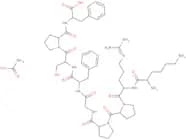
CAS:Apelin-13 is a peptide that belongs to the class of activators. It has been shown to activate the ATP-sensitive potassium ion channels and inhibit the calcium ion channels in cells. Apelin-13 also binds to receptors on cells, which leads to activation of signaling pathways. The affinity for these receptors has been determined using an antibody. In addition, it has been shown that Apelin-13 interacts with other proteins and ligands in a variety of ways through protein interactions and receptor binding.Formula:C69H108N22O16SPurezza:Min. 95%Peso molecolare:1,533.8 g/molNeurokinin A (Human, Porcine, Rat, Mouse)
CAS:Neurokinin A is a peptide that belongs to the tachykinin family and has been shown to activate receptors, such as NK-1. It is a potent inhibitor of ion channels and has also been shown to inhibit ligand binding to the receptor. Neurokinin A is used in research for studying protein interactions, receptor effects, peptides, and ion channels. It can be used in cell biology for studying life science and research tools for high purity and antibody production. This product is not intended for therapeutic use.
Formula:C50H80N14O14SPurezza:Min. 95%Peso molecolare:1,133.3 g/molNeuroendocrine Regulatory Peptide-1 (Human)
CAS:This Neuroendocrine Regulatory Peptide-1 (human) product can be used as an endogenous suppressor of vasopressin release and is available as a 0.1mg vial. The neuroendocrine regulatory peptide-1 (NERP1) is derived from VGF and it colocalizes with vasopressin in the hypothalamus and it has been found that NERPs prevent vasopressin release from the hypothalamus. Thus NERP1 is involved in body fluid homeostasis through modulating the release of vasopressin.Formula:C113H192N36O39Purezza:Min. 95%Peso molecolare:2,679 g/molAc-Asp-Gln-Thr-Asp-H aldehyde
Ac-Asp-Gln-Thr-Asp-H aldehyde is a peptide that can act as an activator, inhibitor, or ligand for ion channels and receptors. It has been shown to be a high purity reagent in the field of cell biology and pharmacology.
Formula:C19H29N5O11Purezza:Min. 95%Peso molecolare:503.46 g/molHuman GH (1-43) ELISA (1ea)
Human GH (1-43) ELISA Kit (1ea) is a sandwich enzyme-linked immunosorbent assay for the quantitative measurement of human GH in serum. It has demonstrated cross-reactivity with monkey, rat, and mouse GH, but not bovine or porcine GH.
Purezza:Min. 95%Val-His-[D7]Leu-Thr-Pro-Glu
Please enquire for more information about Val-His-[D7]Leu-Thr-Pro-Glu including the price, delivery time and more detailed product information at the technical inquiry form on this pageFormula:C31H43D7N8O10Purezza:Min. 95%Peso molecolare:701.82 g/molNucleolin, human, recombinant
Nucleolin is a protein that belongs to the nucleolar family of ribonucleoprotein. It has been shown to be involved in the transcription, maturation, and fibrillar assembly of ribosomal RNA. Nucleolin also plays an important role in the synthesis of other proteins by serving as a scaffold for the assembly of pre-ribosomal particles. The c-terminal domain contains a phosphoprotein called PNPase that catalyzes the hydrolysis of inositol polyphosphates. In addition, nucleolin is glycosylated during its maturation process.Purezza:Min. 95%Amyloid Beta-Protein (Human, 37-42) Antiserum
This antibody is a rabbit polyclonal antibody against human amyloid beta protein. It has been shown to bind to the major type of amyloid beta peptide and is recommended for use in Western blotting, immunoprecipitation and immuno-fluorescence as well as other applications. This antibody will not cross-react with other proteins in human tissue samples.Purezza:Min. 95%Anti Pancreastatin (33-51) (Rat) Serum
Anti Pancreastatin (33-51) (Rat) Serum is a high purity, potent inhibitor of pancreatic secretions. This product is a peptide that inhibits the secretion of pancreatic enzymes by competitive inhibition of the pancreatic proenzyme, trypsinogen. It has been used in pharmacological research as a tool for studying protein interactions and receptor binding. Anti Pancreastatin (33-51) (Rat) Serum has also been shown to have anti-inflammatory properties.Purezza:Min. 95%Adrenomedullin (Human)
CAS:Adrenomedullin (human) is a research tool that has been shown to activate the ligand receptor. It is a member of the vasoactive peptide family, which includes adrenalin and noradrenaline. Adrenomedullin binds to the cell surface receptors on smooth muscle cells and endothelial cells and activates ion channels. This research tool is also known as AM.Formula:C264H406N80O77S3Purezza:Min. 95%Peso molecolare:6,028.7 g/molPACAP27 (Human, 1-27 Amide)
CAS:PACAP27 is a peptide that is used as a research tool. PACAP27 binds to the receptor for pituitary adenylate cyclase-activating polypeptide (PACAP). The binding of PACAP27 to the receptor leads to activation of adenylyl cyclase, which increases intracellular levels of cAMP. This increase in cAMP may lead to cellular responses such as increased ion channel activity and increased protein synthesis.Formula:C142H224N40O39SPurezza:Min. 95%Peso molecolare:3,147.6 g/molCecropin A
Cecropin A is an antimicrobial peptide active against Gram-positive and Gram-negative bacteria. Some studies have suggested that cecropin A binds to negatively charged membrane lipids and form a packed layer which permeabilize the membranes and help to kill bacteria. It was shown that cecropin A presents a LC50 of 0.9 µM and a LC90 of 1.7 µM against certain E.Coli strains. Besides its well-known antimicrobial properties, studies have demonstrated tumoricidal activity of cecropin A against leukemia, lymphoma, colon carcinoma cell lines and other tumour cell lines. Furthermore, Cecropin A has a fungicidal activity. A study has shown that cecropin A reaches a complete lethality at approximately 25 mM for germinating conidia of Aspergillus spp. and a complete lethality for nongerminated and germinated conidia of Fusarium spp. at 1.5 mM.Formula:C184H313N53O46Peso molecolare:4,003.87 g/molTNF a Mouse
TNF-α is a cytokine that is produced by many cells, including macrophages, T cells, mast cells, and synovial cells. It is a pleiotropic proinflammatory cytokine that has been implicated in cancer and other inflammatory diseases. TNF-α is a potent inducer of cell death through activation of the Fas-FasL death pathway or induction of apoptosis. In addition to its role as an anti-tumor agent, TNF-α has been shown to be important in the regulation of immune responses and inflammation. It also plays an important role in bacterial sepsis by suppressing the production of proinflammatory cytokines such as IL-1β and IL-12 by macrophages.Purezza:Min. 95%Neurokinin B (Human, Porcine, Bovine, Rat, Mouse)
CAS:As a member of the tachykinin neuropeptide family, Neurokinin B is involved in the dilation of blood vessels, the contraction of smooth muscles and the excitation of neurons. This product can be applied as a NK3 receptors selective agonist and is available as a 0.5mg vial.
Formula:C55H79N13O14S2Purezza:Min. 95%Peso molecolare:1,210.4 g/molCoV-2 S1 (1-681)
A human infecting coronavirus (viral pneumonia) called 2019 novel coronavirus, 2019-nCoV was found in the fish market at the city of Wuhan, Hubei province of China on December 2019.The 2019-nCoV shares an 87% identity to the 2 bat-derived severe acute respiratory syndrome 2018 SARS-CoV-2 located in Zhoushan of eastern China. 2019-nCoV has an analogous receptor-BD-structure to that of 2018 SARS-CoV, even though there is a.a. diversity so thus the 2019-nCoV might bind to ACE2 receptor protein (angiotensin-converting enzyme 2) in humans.While bats are probably the host of 2019-nCoV, researchers suspect that animal from the ocean sold at the seafood market was an intermediate host. RSCU analysis proposes that the 2019-nCoV is a recombinant within the viral spike glycoprotein between the bat coronavirus and an unknown coronavirus. The HEK293-derived recombinant protein contains the Coronavirus 2019-nCoV Spike Glycoprotein S1, Wuhan-Hu-1 strain, amino acids 1-681 fused to Fc tag at C-terminal having a M.W. of 76 kDa. PNTA Sepharose-Affinity Purification was used to purify the product which is avaiable as the formulation: CoV-2 S1 protein solution is supplied PBS pH 7.4.Purezza:Min. 95%IL 11 Human
IL-11 is a cytokine that is synthesized by cells of the immune system and functions as an autocrine growth factor for cells of the myeloid lineage. IL-11's receptor is a protein that binds to the IL-11 peptide and this binding activates intracellular signaling pathways.Purezza:Min. 95%m-dPEG®8-MAL
CAS:m-dPEG®8-MAL is a PEG compound with two different functional groups (also known as heterobifunctional). Unlike homobifunctional PEG compounds (same functional group on both ends), this type of compounds are more versatile as have two different anchor points. m-dPEG®8-MAL is used as a linker and spacer to add a PEG moiety, via pegylation (a bioconjugation technique) to proteins, peptides, oligonucleotides, small molecules and nanoparticles.Formula:C56H111NO28Purezza:Min. 95%Peso molecolare:1,246.47 g/molSPAI-1 (Porcine) Antiserum
SPAI-1 is a protein that is found in the cytosol and nucleus of cells. It belongs to the family of inhibitor proteins, which regulate the activity of other proteins. SPAI-1 inhibits the activity of many different types of protein kinases. Inhibitors such as SPAI-1 are often used as research tools for studying protein interactions, activators, ligands, and receptors. This antibody can be used as a reagent to detect and locate SPAI-1 in cells or tissues by immunohistochemistry.Purezza:Min. 95%RNA Binding Motif Protein 3, human, recombinant
RNA Binding Motif Protein 3 (RBMY3) is a high-quality research peptide that is commonly used in scientific studies. It is a recombinant protein derived from Escherichia Coli. RBMY3 plays a crucial role in RNA metabolism and regulation, specifically in the binding and processing of RNA molecules. This protein is highly purified and has been extensively tested for its quality and functionality. Researchers rely on RBMY3 to study various cellular processes, including gene expression, mRNA splicing, and post-transcriptional modifications. With its exceptional purity and reliability, RBMY3 is an essential tool for any laboratory conducting cutting-edge research in the field of RNA biology.
Purezza:Min. 95%TNF a Human, HEK
TNF-α is a cytokine that is synthesized and secreted by cells such as activated macrophages, T cells, endothelial cells, fibroblasts, and keratinocytes. It has been shown to be a potent mediator of inflammation and plays an important role in the pathogenesis of many diseases. TNF-α is produced in response to immunological stimulation (e.g., LPS) or microbial invasion (e.g., bacteria). It binds to two receptors: TNF receptor 1 (TNFR1) and TNF receptor 2 (TNFR2), which are expressed on many cell types including monocytes, macrophages, neutrophils, dendritic cells, B lymphocytes, eosinophils, mast cells and keratinocytes. The binding of TNF-α to TNFR1 leads to activation of NF-κB and JNK pathways. The binding of TNF-α to TNFR2 leads to activationPurezza:Min. 95%Methionine-Enkephalin (Human, Porcine, Bovine, Rat, Mouse)
CAS:Methionine-Enkephalin is a peptide that is derived from the amino acid methionine. It has been shown to act on ion channels and the receptor, as well as having a number of other biological effects. Methionine-Enkephalin can be used in research for pharmacology and protein interactions. This product is an antibody against methionine-enkephalin. It can be used for cell biology and immunology research, as it recognizes the peptide sequence of methionine-enkephalin. This antibody can also be used to inhibit the activity of this peptide.Formula:C27H35N5O7SPurezza:Min. 95%Peso molecolare:573.66 g/molVIC (Mouse)
CAS:VIC (Mouse) is a peptide that is used as an inhibitor, activator, or ligand in research. It has the CAS number 120928-04-3 and the molecular weight of 4.5 kDa. VIC (Mouse) is a high purity product and can be used in life science research for characterization of receptor and ion channels. VIC (Mouse) can also be used as an antibody to study protein interactions as well as for cell biology research.Formula:C116H161N27O32S4Purezza:Min. 95%Peso molecolare:2,573.9 g/molMOCAc-Tyr-Val-Ala-Asp-Ala-Pro-Lys(Dnp)-NH₂
MOCAc-Tyr-Val-Ala-Asp-Ala-Pro-Lys(Dnp)-NH₂ is a protein inhibitor with a molecular weight of 1405.8 g/mol. It has a CAS number of 129857-88-6 and is available at high purity. MOCAc-Tyr-Val-Ala-Asp-Ala-Pro-Lys(Dnp)-NH₂ is used in research as an inhibitor, activator, or ligand for proteins. This product has been used in the study of ion channels, receptor binding, and cell biology.Formula:C53H65N11O18Purezza:Min. 95%Peso molecolare:1,144.1 g/molPro BMP 2 Human
Pro BMP 2 Human is a recombinant protein that belongs to the group of proteins that regulate cell growth and differentiation. It has been shown to be an activator of bone morphogenetic protein receptor type IIA. Pro BMP 2 Human has also been shown to inhibit the activity of certain ion channels, such as calcium channels, potassium channels, and sodium channels. This product is supplied at high purity, with a CAS number (CAS No.).Purezza:Min. 95%Sirtuin-1, human, recombinant
Sirtuin-1 is a member of the sirtuin family of proteins, which regulate cell survival and proliferation. Sirtuin-1 regulates gene expression in response to nutrient availability by binding to DNA and modifying histones. It also functions as a homodimer that binds to various regulatory proteins and acts as a repressor or activator of transcription. This protein has been expressed recombinantly in E. Coli, where it may be used as an inhibitor of cancer cell growth. The molecular mass of this recombinant protein is approximately 94 kDa.br>br> Sirtuin-1 is a member of the sirtuin family of proteins, which regulate cell survival and proliferation. Sirtuin-1 regulates gene expression in response to nutrient availability by binding to DNA and modifying histones. It also functions as a homodimer that binds to various regulatory proteins and acts as a repressor or activator of transcription. This protein has been expressed recombinantly in EPurezza:Min. 95%


![[Pyr3]-Amyloid Beta-Protein (Human, 3-42)](/_next/image/?url=https%3A%2Fstatic.cymitquimica.com%2Fproducts%2F3D%2Fthumb-webp%2FPAB-4367-V.webp&w=3840&q=75)











![[Pyr1]-Apelin-13 (Human, Bovine)](/_next/image/?url=https%3A%2Fstatic.cymitquimica.com%2Fproducts%2F3D%2Fthumb-webp%2FPAP-4361-V.webp&w=3840&q=75)



![Val-His-[D7]Leu-Thr-Pro-Glu](/_next/image/?url=https%3A%2Fstatic.cymitquimica.com%2Fproducts%2F3D%2Fthumb-webp%2FTSI-3414-V.webp&w=3840&q=75)