Peptidi
Sottocategorie di "Peptidi"
Trovati 29613 prodotti di "Peptidi"
S-Acetyl-dPEG®8-OH
CAS:S-Acetyl-dPEG®8-OH is a PEG polymer categorised as monofunctional (OH-PEG-X). Used as a linker, S-Acetyl-dPEG®8-OH is used to attached PEG to proteins, peptides, oligonucleotides, nanoparticles and small molecules via pegylation, a bioconjugation technique.
Formula:C18H36O9SPurezza:Min. 95%Peso molecolare:428.54 g/molAla-pNA
CAS:Ala-pNA is a peptide hormone that is related to vasopressin and has been shown to be a potential drug target for renal cell cancer. In vitro studies have shown that Ala-pNA inhibits the growth of human leukemia cells and other carcinoma cell lines. The reduction in cell proliferation was due to the decrease in proteolytic activity, which was due to the inhibition of collagenase synthesis. This peptide hormone also inhibits protein synthesis, leading to decreased production of enzymes such as p-nitrophenyl phosphate synthase and sodium citrate synthase. A study on the use of this compound on rats with induced renal carcinoma showed that it had no toxicological effects.
Formula:C9H11N3O3Purezza:Min. 95%Peso molecolare:209.2 g/molSPDP-dPEG®12-NHS Ester
CAS:SPDP-dPEG®12-NHS Ester is a PEG compound with two different functional groups (also known as heterobifunctional). Unlike homobifunctional PEG compounds (same functional group on both ends), this type of compounds are more versatile as have two different anchor points. SPDP-dPEG®12-NHS Ester is used as a linker and spacer to add a PEG moiety, via pegylation (a bioconjugation technique) to proteins, peptides, oligonucleotides, small molecules and nanoparticles.
Formula:C33H57N3O18Purezza:Min. 95%Peso molecolare:783.82 g/molBis-MAL-dPEG®11
CAS:Bis-MAL-dPEG®11 is a PEG polymer categorised as homobifunctional PEG (X-PEG X). Used as a linker, bis-MAL-dPEG®11 is used to attached PEG to proteins, peptides, oligonucleotides, nanoparticles and small molecules via pegylation, a bioconjugation technique.
Formula:C65H105F4N9O21S2Purezza:Min. 95%Peso molecolare:1,488.7 g/molCGRP (Human)
CAS:CGRP (calcitonin gene-related peptide) is a 37-amino acid neuropeptide that is found in humans and is widely distributed in the nervous system, particularly in sensory neurons, and is involved in the regulation of vascular tone, blood flow, pain perception, and inflammation. It is a potent vasodilator and has been implicated in the pathophysiology of several vascular disorders, including migraine headaches, cluster headaches, and hypertension.
In addition to its vascular effects, human CGRP also has neuroprotective properties and has been investigated as a potential therapeutic agent for various neurological disorders, such as Alzheimer's disease and Parkinson's disease.
Human CGRP has been extensively studied as a research tool to investigate its physiological and pathological roles in various tissues and diseases. It has also been targeted by pharmacological agents, such as CGRP antagonists and antibodies, for the treatment of migraine headaches and other conditions associated with CGRP dysfunction.
This product is available as a 0.5mg vial.Formula:C163H267N51O49S2Purezza:Min. 95%Peso molecolare:3,789.3 g/molLeu-Gly-Gly
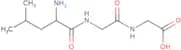
CAS:Leu-Gly-Gly is a cyclic peptide that binds to fibrinogen and forms stable complexes with the enzyme form of human serum albumin. It is used as a model system for studying the structure of proteins, and has been shown to bind calcium ions. Leu-Gly-Gly is also an amide and can form stable complexes with basic proteins such as fibrinogen. This peptide also has significant cytotoxicity against polymorphonuclear leucocytes, which may be due to its ability to inhibit polymerase chain activity.
Formula:C10H19N3O4Purezza:Min. 95%Peso molecolare:245.28 g/molAzido-dPEG®12-Acid
CAS:Azido-dPEG®12-Acid is a PEG compound with two different functional groups (also known as heterobifunctional). Unlike homobifunctional PEG compounds (same functional group on both ends), this type of compounds are more versatile as have two different anchor points. Azido-dPEG®12-Acid is used as a linker and spacer to add a PEG moiety, via pegylation (a bioconjugation technique) to proteins, peptides, oligonucleotides, small molecules and nanoparticles.
Purezza:Min. 95%Peso molecolare:643.72 g/molACTH (Human 1-24)
CAS:ACTH (1-24) is a peptide hormone and neurotransmitter that belongs to the corticotropin-releasing factor family. It is also known as corticotropin-releasing hormone, adrenocorticotropic hormone, or CRH. ACTH binds to the ACTH receptor, which activates protein kinase A and cyclic AMP response element binding protein (CREB). Activation of these proteins leads to an increase in the production of cortisol. ACTH can be used as a research tool for studying ion channels and ligands. It can also be used as an antibody in cell biology research.
Formula:C136H210N40O31SPurezza:Min. 95%Peso molecolare:2,933.4 g/molLipoamido-dPEG®12-Acid
CAS:Lipoamido-dPEG®12-Acid is a PEG molecule conjugated with a lipid moiety. Lipoamido-dPEG®12-Acid, conjugated to this lipid constituent, is very important especially in drug delivery and vaccine development as it helps improve the stability and circulation time of lipid nanoparticles (LNPs) and liposomes.
Formula:C25H41N3O7S2Purezza:Min. 95%Peso molecolare:559.74 g/molLipoamido-dPEG®24-Acid
CAS:Lipoamido-dPEG®24-Acid is a PEG molecule conjugated with a lipid moiety. Lipoamido-dPEG®24-Acid, conjugated to this lipid constituent, is very important especially in drug delivery and vaccine development as it helps improve the stability and circulation time of lipid nanoparticles (LNPs) and liposomes.
Formula:C39H69N3O15S2Purezza:Min. 95%Peso molecolare:884.11 g/molParathyroid Hormone (Human, 1-44)
CAS:Amino acids 1-44 of the Parathyroid Hormone (PTH) which is a peptide hormone that is secreted from the parathyroid gland in the event of abnormal serum calcium levels and it ultimately regulates calcium and phosphate levels in the body. The PTH exerts its activity through binding to the G-protein coupled receptor type 1 PTH receptor, which activates adenylate cyclase or phospholipase C thus activating pathways involved in the mediation of bone resorption and bone formation. This product is suitable for life science applications and is available as a 0.5mg vial.
Formula:C225H366N68O61S2Purezza:Min. 95%Peso molecolare:5,063.9 g/molPHM-27 (Human)
CAS:PHM-27 is a peptide that is used as a research tool in the fields of cell biology, pharmacology and immunology. It is also used to study protein interactions and receptor/ligand interactions.
Formula:C135H214N34O40SPurezza:Min. 95%Peso molecolare:2,985.4 g/molZ-Gly-Pro-Arg-AMC
CAS:Z-Gly-Pro-Arg-AMC is a synthetic peptide that can inhibit the activity of various enzymes. It has been shown to be an inhibitor of protein interactions, activator of ligand, and receptor. This peptide is used as a research tool in cell biology and pharmacology studies. Z-Gly-Pro-Arg-AMC is also used in high purity applications (e.g., ion channels) and antibody production.
Formula:C31H37N7O7Purezza:Min. 95%Peso molecolare:619.67 g/molTFP-dPEG®4-( m-dPEG®24)3-Ester
CAS:TFP-dPEG®4-( m-dPEG®24)3-Ester is a research tool that can be used as an activator or ligand for cell biology, antibody characterization, ion channels, and protein interactions. This product may also be used in pharmacology and peptide synthesis. TFP-dPEG®4-( m-dPEG®24)3-Ester is also an inhibitor of CAS No. 1108750-59-9.
Formula:C31H56N4O16Purezza:Min. 95%Peso molecolare:740.79 g/molMorphine Tolerance Peptide
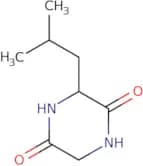
CAS:Morphine tolerance peptide is a cyclic peptide analog of morphine. It has been shown to have an affinity for the kappa-opioid receptor that is similar to that of morphine, but it has a higher potency and a longer duration of action. The molecular modeling study indicates that the analog interacts with the receptor in a similar manner as morphine and exhibits high selectivity for this receptor. The analog also shares many of the same features as morphine in terms of depressant effect and locomotor activity, but does not produce any kind of withdrawal syndrome.
Formula:C8H14N2O2Purezza:Min. 95%Peso molecolare:170.21 g/molAzido-dPEG®7-Amine
CAS:Azido-dPEG®7-Amine is a PEG compound with two different functional groups (also known as heterobifunctional). Unlike homobifunctional PEG compounds (same functional group on both ends), this type of compounds are more versatile as have two different anchor points. Azido-dPEG®7-Amine is used as a linker and spacer to add a PEG moiety, via pegylation (a bioconjugation technique) to proteins, peptides, oligonucleotides, small molecules and nanoparticles.
Purezza:Min. 95%Peso molecolare:394.46 g/molBig Endothelin-1 (Human, 1-38)
CAS:This product has disulfide bonds between Cys1-Cys15 and Cys3-Cys11 and is available as a 0.1mg vial. Big Endothelin-1 (Human, 1-38) is part of the full lengthed 29 amino acid peptide Big Endothlin-1 which is a precursor peptide of the vasoconstrictorEndothelin-1 (ET-1). ET-1 exhibits vasoconstrictive properties and is an activator of endothelin G-protein coupled receptors. Furthermore ET-1 is produced when inflammation, vascular stress or hypoxia occurs. In vivo Big Endothelin-1 has a greater half life compared to ET-1 and therefore makes it useful to study secretory activity in the endothelial system.
Overall Big Endothelin-1 (Human, 1-38) can be used as a research tool for studying protein interactions, receptor activation and function, and ligand binding. This peptide is also used in pharmacology to study the effects of therapeutic agents on receptor activity and expression.Formula:C189H282N48O56S5Purezza:Min. 95%Peso molecolare:4,282.9 g/moldPEG®12 Biotin Acid
CAS:dPEG®12 Biotin Acid is a PEG compound with two different functional groups (also known as heterobifunctional). Unlike homobifunctional PEG compounds (same functional group on both ends), this type of compounds are more versatile as have two different anchor points. dPEG®12 Biotin Acid is used as a linker and spacer to add a PEG moiety, via pegylation (a bioconjugation technique) to proteins, peptides, oligonucleotides, small molecules and nanoparticles.
Purezza:Min. 95%Peso molecolare:844.02 g/molm-dPEG®12-TFP Ester
CAS:m-dPEG®12-TFP Ester is a PEG compound with two different functional groups (also known as heterobifunctional). Unlike homobifunctional PEG compounds (same functional group on both ends), this type of compounds are more versatile as have two different anchor points. m-dPEG®12-TFP Ester is used as a linker and spacer to add a PEG moiety, via pegylation (a bioconjugation technique) to proteins, peptides, oligonucleotides, small molecules and nanoparticles.
Formula:C60H118O32Purezza:Min. 95%Peso molecolare:1,395.61 g/molEndothelin-3 (Human)
CAS:Endothelin-3 (ET-3) is a protein that belongs to the large family of endothelin peptides which activate the G-protein coupled receptors ETA and ETB. However ET-3 has lower affinity for the ETA receptors compared to Endothelin-1 (ET-1) and Endothelin-2 (ET-2), whereas all three endothelins have similar affinity for ETB receptors. As ETB receptors make up around 90% of the endothelin receptors found in the cerebral cortex in humans, ET-3 can be nicknamed the ‘brain endothelin’. Also through ET-3’s activation of ETB receptors, ET-3 is involved in the development of the enteric nervous system which controls within the gut, blood flow, secretion and intestinal motility. This product has disulfide bonds between Cys1-Cys and Cys3-Cys11, is sourced from Porcine, Rat and Rabbit and is available as a 0.5mg vial
Formula:C121H168N26O33S4Purezza:Min. 95%Peso molecolare:2,643 g/mol