Substrati enzimatici
Sottocategorie di "Substrati enzimatici"
Trovati 1528 prodotti di "Substrati enzimatici"
4-Methylumbelliferyl-b-D-Glucuronide Trihydrate (MUG) extrapure, 99%
CAS:Formula:C16H22O12Purezza:min.99%Colore e forma:White, Crystalline powderPeso molecolare:406.34p-Nitrophenylphosphate Ditris Salt crystalline (pNPP-d) extrapure, 99%
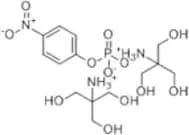
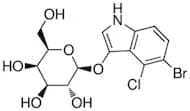
CAS:Formula:C14H28N3O12PPurezza:min. 99%Colore e forma:White to pale yellow, Crystalline powder, Clear, Pale yellowPeso molecolare:461.405-Bromo-4-Chloro-3-Indolyl-a-D-Glucopyranoside (X-a-Glc) for molecular biology, 98%
CAS:Formula:C14H15BrClNO6Purezza:min. 98%Colore e forma:White to off-white, Crystalline powder, Clear, ColourlessPeso molecolare:408.64Casein acc. to Hammarsten, 95% Protein
CAS:Purezza:min. 95% protein (dry basis)Colore e forma:White, Fine powderp-Nitrophenyl Acetate extrapure, 99%
CAS:Formula:C8H7O4NPurezza:min. 99%Colore e forma:Off-white, Crystalline powder, ClearPeso molecolare:181.15Phenolphthalein Diphosphate Tetrasodium Salt extrapure AR, 95%
CAS:Formula:C20H12O10P2Na4Purezza:min. 95%Colore e forma:White to off white, Crystalline powder, ClearPeso molecolare:566.20S-Butyrylthiocholine Iodide extrapure, 98%
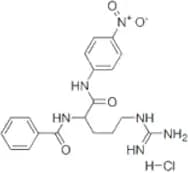
CAS:Formula:C9H20NOSIPurezza:min.98%Colore e forma:White, Crystalline powder, Clear, ColourlessPeso molecolare:317.20N-a-Benzoyl-DL-Arginine-4-Nitroanilide Hydrochloride (BANI, L-BAPNA) extrapure, 98%
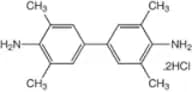
CAS:Formula:C19H22N6O4·HClPurezza:min. 98%Colore e forma:Yellow, PowderPeso molecolare:434.893,3,5,5-Tetramethylbenzidine Dihydrochloride anhydrous (TMB.diHCl anhy) extrapure AR, 99%
CAS:Formula:C16H20N2·2HClPurezza:min. 99%Colore e forma:White to pale greenish yellow, PowderPeso molecolare:313.275-Bromo-4-Chloro-3-Indolyl-ß-D-Glucopyranoside (X-Glu, X-Glc) for molecular biology, 98%
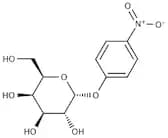
CAS:Formula:C14H15BrClNO6Purezza:min. 99%Colore e forma:White to Pale yellow, Crystalline powder, ClearPeso molecolare:408.61p-Nitrophenyl a-D-Galactopyranoside extrapure, 98%
CAS:Formula:C12H15NO8Purezza:min. 98%Colore e forma:White to off-white, Crystalline powderPeso molecolare:301.25a-Ketoglutaric Acid Disodium Dihydrate extrapure, 98%
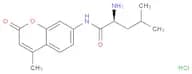
CAS:Formula:C5H4O5Na2·2H2OPurezza:min.98%Colore e forma:White to off-white, Crystalline Powder, ClearPeso molecolare:226.09L-Leucine 7-Amido-4-Methylcoumarin Hydrochloride Salt extrapure, 98%
CAS:Formula:C16H21ClN2O3Purezza:min. 98%Colore e forma:White to off-white, PowderPeso molecolare:324.8D-Luciferin Potassium Salt ex. Firefly, 99%
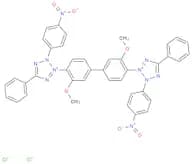
CAS:Formula:C11H7KN2O3S2Purezza:min. 99.0%Colore e forma:White to light yellow, PowderPeso molecolare:318.42Nitro Blue Tetrazolium Chloride (Nitro BT) (NBT) extrapure AR, 99%
CAS:Formula:C40H30N10O6Cl2Purezza:min. 99%Colore e forma:Lemon yellow, Crystalline powder, Clear, YellowPeso molecolare:817.65D-Alanine-7-Amido-4-Methylcoumarin Trifluoroacetate Salt extrapure, 99%
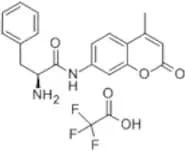
CAS:Formula:C15H15F3N2O5Peso molecolare:360.3L-Phenylalanine-7-Amido-4-Methylcoumarin Trifluoroacetate Salt extrapure, 98%
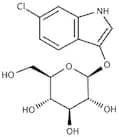
CAS:Formula:C21H19F3N2O5Peso molecolare:436.46-Chloro-3-Indolyl ß-D-Galactopyranoside (Salmon Gal) extrapure, 98%
CAS:Formula:C14H16ClNO6Purezza:min. 98.0%Colore e forma:White to off-white, Crystalline powderPeso molecolare:329.745-Bromo-4-Chloro-3-Indolyl Acetate (X-3-Acetate, X-Acetate) extrapure, 98%
CAS:Purezza:min. 98%Colore e forma:White to off-white, Crystalline powder6-Chloro-3-Indolyl-ß-D-Glucuronide Cyclohexylammonium Salt extrapure, 97%
CAS:Formula:C14H14ClNO7·C6H13NPurezza:min. 97%Colore e forma:Off - white to pale yellow, Powder, Clear, Pale yellowPeso molecolare:442.892-Chloro-4-Nitrophenyl 4-O-b-D-Galactopyranosylmaltoside (Gal-G2-a-CNP, Gal CNPG2) extrapure, 90%
CAS:Formula:C24H34O18NClPurezza:min. 90%Colore e forma:White to pale yellow, Amorphous powder, Clear, Colourless to pale yellowPeso molecolare:659.98Indoxyl-ß-D-Galactopyranoside extrapure, 98%
CAS:Formula:C14H17NO6Purezza:min. 98%Colore e forma:Off-white, Powder, Clear, ColourlessPeso molecolare:295.29Sodium Pyruvate (Pyruvic Acid Sodium Salt) extrapure AR, 99%
CAS:Formula:C3H3O3NaPurezza:min. 99%Colore e forma:Off - white, Crystalline powder, ClearPeso molecolare:110.04p-Nitrophenyl ß-D-Cellobioside extrapure, 98%
CAS:Formula:C18H25NO13Purezza:min. 98%Colore e forma:White to off white, Powder, Clear, ColourlessPeso molecolare:463.391,2,3,4-Di-O-Isopropylidene a-D-Galactopyranoside extrapure, 98%
CAS:Formula:C12H20O6Peso molecolare:260.305-Fluoroorotic Acid Monohydrate (5-FOA Monohydrate) for molecular biology, 98%
CAS:Formula:C5H3FN2O4·H2OPurezza:min. 98%Colore e forma:Off white to pale yellow, PowderPeso molecolare:192.10Z-Phenylalanylarginine 7-Amido-4-Methylcoumarin Hydrochloride Salt extrapure, 99%
CAS:Formula:C33H36N6O6·HClPeso molecolare:649.15L-γ-Glutamyl-3-Carboxy-4-Nitroanilide (Glupa) extrapure, 99%
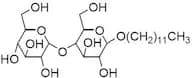
CAS:Formula:C12H12N3O7NH4Purezza:min. 99.0%Colore e forma:White to Light yellow, Crystalline powder, ClearPeso molecolare:328.28n-Dodecyl-b-D-Maltoside (DDM) extrapure, 98%
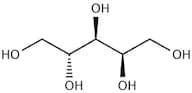
CAS:Formula:C24H46O11Purezza:min. 98.0 %Colore e forma:White, PowderPeso molecolare:510.62D(+)Arabitol (D-Arabinitol) extrapure 99%
CAS:Formula:C5H12O5Purezza:min. 99%Colore e forma:Off-white to faint beige, Powder, ClearPeso molecolare:152.15o-Dianisidine Dihydrochloride extrapure, 98%
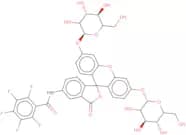
CAS:Formula:C14H16N2O2·2HClPurezza:min. 98.0%Colore e forma:White to pale grey, Crystalline powderPeso molecolare:317.215-(Pentafluorobenzoylamino)fluoroscein di-b-D-galactopyranoside
CAS:5-(Pentafluorobenzoylamino)fluoroscein di-b-D-galactopyranoside, commonly referred as PFB-FDG or PFB-FDGal, is a cell-permeable enzyme substrate for β-galactosidase used in live cell imaging assays. After cleavage, 5-(pentafluorobenzoylamino)fluorescein (PFB-F) is released, generating a green fluorescence (Em ~520 nm)) of a higher intensity than fluorescein. Its main use is for bacterial detection (e.g. E. coli LacZ assays), but also for flow cytometry analytical assays.
Formula:C39H32F2NO16Purezza:Min. 95%Colore e forma:PowderPeso molecolare:865.67 g/mol5-Bromo-6-Chloro-3-Indolylphosphate-p-Toluidine Salt (BCIP Red) extrapure, 95%
CAS:Formula:C8H5BrClNO4P·C7H10NPurezza:min.95%Colore e forma:Off white to light gray, Powder, ClearPeso molecolare:433.62Phenyl-ß-D-Galactopyranoside extrapure, 97%
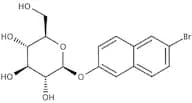
CAS:Formula:C12H16O6Purezza:min. 97%Colore e forma:White to Off-white, Crystalline powder, ClearPeso molecolare:256.36-Bromo-2-Naphthyl-ß-D-Glucopyranoside extrapure, 98%
CAS:Formula:C16H17BrO6Purezza:min. 98%Colore e forma:White to off - white, Crystalline powderPeso molecolare:385.221-O-Methyl-β-D-Glucuronic Acid Sodium Salt extrapure, 99%
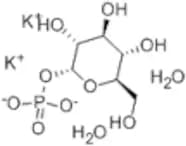
CAS:Formula:C7H11NaO7Purezza:min.99.0%Colore e forma:White to light yellow or light brown, Crysatlline powder, Colorless to light yellow or light brown, max.2.0 NTUPeso molecolare:230.15D-Glucose-1-Phosphate Dipotassium Salt Hydrate (G1P.K2 Hydrate) extrapure, 98%
CAS:Formula:C6H11K2O9P·xH2OPurezza:min. 98%Colore e forma:White, Crystalline powder, Clear, ColourlessPeso molecolare:336.32 (Anhy)5-Bromo-4-Chloro-3-Indoxyl-a-D-N-Acetylneuraminic Acid Sodium Salt extrapure (X-NANA.Na), 98%
CAS:Formula:C19H21BrClN2O9NaPeso molecolare:559.72L-Lysine 7-Amido-4-Methylcoumarin Acetate Salt extrapure, 98%
CAS:Formula:C18H25N3O5Peso molecolare:363.4o-Nitrophenyl-ß-D-Galacto Pyranoside (ONPG) extrapure, 99%
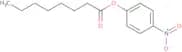
CAS:Formula:C12H15NO8Purezza:min. 99%Colore e forma:White to pale yellow, Crystalline powder, Clear, Colourless to pale yellowPeso molecolare:301.254-Nitrophenyl caprylate
CAS:Chromogenic substrate targeting lipase, C8 esteraseFormula:C14H19NO4Purezza:Min. 95 Area-%Colore e forma:Slightly Brown Yellow Clear LiquidPeso molecolare:265.31 g/molCrimson-Gal
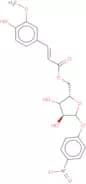
Crimson-Gal (Crimson-beta-D-galactopyranoside) is a chromogenic indicator for beta-galactosidase activity. The colorless product is cleaved by lactose-utilizing bacteria in liquid media or on agar plates and yields a crimson colored precipitate. Crimson-Gal can also be used as detecting agent for beta-galactosidase activity in reporter gene assays or for identification of positive transformants on agar plates when using the α-complementation approach. Read more in the Application Notes.Peso molecolare:360.96 g/mol4-Nitrophenyl 5-O-trans-feruloyl-a-L-arabinofuranoside
CAS:4-Nitrophenyl 5-O-trans-feruloyl-alpha-L-arabinofuranoside is a chromogenic substrate for alpha-L-arabinofuranosidase. Upon hydrolysis, para-nitrophenol is released yielding a yellowish colour. 4-Nitrophenyl 5-O-trans-feruloyl-alpha-L-arabinofuranoside is used in different applications such as the Plant cell wall degradation assays, bacterial enzyme profiling
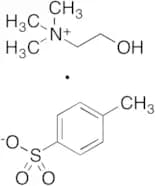
Formula:C21H21NO10Purezza:Min. 95%Colore e forma:PowderPeso molecolare:447.4 g/molCholine p-Toluenesulfonate Salt
CAS:Applications Choline p-Toluenesulfonate Salt is a useful intermediate as well as a choline acetyltransferase (CHAT) substrate.
References Brockerhoff, H., et al.: N.K.N., Lipids, 14, 88 (1979);Formula:C7H7O3S·C5H14NOColore e forma:NeatPeso molecolare:275.36Pseudopelletierine
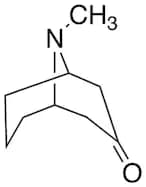
CAS:Prodotto controllatoApplications It was found in the root bark of Punica granatum L., Punicaceae. Used as a enzyme substrate.
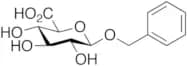
References Hunt, R., et al.: J. Pharm. Pharmacol., 22, 29S (1970), Hashimoto, T., et al.: Plant Physiol., 100, 836 (1992), Boswell, H., et al.: Phytochemistry, 52, 855 (1999),Formula:C9H15NOColore e forma:NeatPeso molecolare:153.22Benzyl β-D-Glucopyranosiduronic Acid
CAS:Prodotto controllatoStability Hygroscopic
Applications Protected Glucopyranosiduronic Acid.Formula:C13H16O7Colore e forma:NeatPeso molecolare:284.265-Bromo-4-chloro-3-indolyl 2-Acetamido-2-deoxy-α-D-galactopyranoside
CAS:Prodotto controllatoApplications A histochemical substrate for a-N-acetyl-galactosaminidase.
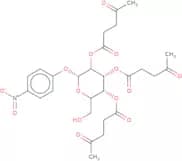
References Zhu, et al.: Gene, 137, 309 (1994)Formula:C16H18BrClN2O6Colore e forma:NeatPeso molecolare:449.684-Nitrophenyl 2,3,4-tri-O-levulinoyl-a-D-mannopyranoside
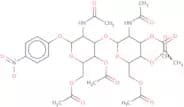
4-Nitrophenyl 2,3,4-tri-O-levulinoyl-a-D-mannopyranoside is a fluorogenic substrate that contains a reactive group of 2,3,4-tri-O-levulinoyl. This compound can be used to measure the activity of enzymes such as beta-glucosidase and alpha-galactosidase. 4NP2OMP is an excellent ligand for metal ions and has been shown to bind to copper in the presence of ATP. 4NP2OMP can also be used as a diagnostic agent for measuring the activity of bacterial beta-glucosidase and alpha galactosidase.Purezza:Min. 95%Peso molecolare:595.55 g/mol4-Nitrophenyl 2-acetamido-3-O-(2-acetamido-3,4,6-tri-O-acetyl-b-D-glucopyranosyl)-4,6-di-O-acetyl-2-deoxy-a-D-galactopyranoside
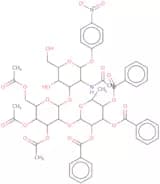
4-Nitrophenyl 2-acetamido-3-O-(2-acetamido-3,4,6-tri-O-acetyl-b-D-glucopyranosyl)-4,6-di-O-acetyl-2deoxy--aDgalactopyranoside is a substrate for enzymes such as beta galactosidase and alpha amylase. It can be used for the detection of these enzymes in biological samples, including culture media and body fluids. 4NPAG has also been used as a chromogenic substrate to measure the activity of NADH oxidase in neutrophils. 4NPAG is fluorescent in aqueous solution and can be used to detect bioluminescence reactions.Purezza:Min. 95%Peso molecolare:755.68 g/mol4-Nitrophenyl 2-acetamido-3-O-[2-O-(2,3,4-tri-O-benzoyl-a-L-fucopyranosyl)-3,4,6-tri-O-acetyl-2-deoxy-D-galactopyranosyl]-b-D-glucop yranoside
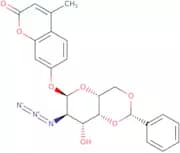
4-Nitrophenyl 2-acetamido-3-O-[2-O-(2,3,4-tri-O-benzoyl-a-L-fucopyranosyl)-3,4,6-tri-O-acetyl-2 deoxy -D-galactopyranosyl]-b D glucopyranoside is a fluorescent substrate for the enzyme β galactosidase. It can be used to test for β galactosidase activity in food products, environmental samples and diagnostics. 4NPFAPG is a conjugate of 4 nitrophenol and 2 acetamido 3 O-[2 O-(2,3,4 tri O benzoyl a L fucopyranosyl) 3,4 6 tri O acetyl 2 deoxy D galactopyranosyl] b D glucopyranose. 4NPFAPG is water soluble and hasPurezza:Min. 95%Peso molecolare:1,089.01 g/mol4-Methylumbelliferyl 2-azido-2-deoxy-4,6-O-phenylmethylene-a-D-galactopyranoside
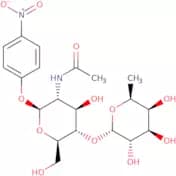
CAS:4-Methylumbelliferyl 2-azido-2-deoxy-4,6-O-phenylmethylene-a-D-galactopyranoside is a fluorogenic substrate that reacts with beta D galactosidase to produce light. This product is useful for diagnostics, conjugate production, and other applications. 4MUF 2 -Gal provides a convenient means of detecting beta D galactosidase activity in cell culture media and can be used as a chromogenic substrate for the detection of enzymes involved in glycosylation reactions. It is also used to detect staining by bioluminescence. The compound can be used in food testing and environmental testing to measure the presence of beta D galactosidase.Formula:C23H21N3O7Purezza:Min. 95%Peso molecolare:451.43 g/mol4-Nitrophenyl 2-acetamido-2-deoxy-4-O-(a-L-fucopyranosyl)-b-D-glucopyranoside
CAS:4-Nitrophenyl 2-acetamido-2-deoxy-4-O-(a-L-fucopyranosyl)-b-D-glucopyranoside is a fluorescent substrate for beta-galactosidase that is used in diagnostics and research. The product has been shown to be an excellent substrate for beta-galactosidase and beta-glucuronidase, as well as other glycosidases. It can be used to detect the presence of these enzymes in any sample containing glycosides. This product is also used in food testing, environmental testing, and bioluminescence experiments. 4NPAFG is available in high purity with a conjugate group at the C4 position.Purezza:Min. 95%Peso molecolare:488.44 g/mol4-Nitrophenyl 2,3,4-tri-O-acetyl-a-D-glucopyranoside
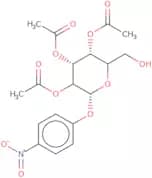
4-Nitrophenyl 2,3,4-tri-O-acetyl-a-D-glucopyranoside is a high quality chemical used in the development of various diagnostic and research applications. It is also used in the production of enzymatic substrates for enzyme activity assays. 4NPTAG is a chromogenic substrate that produces chemiluminescence when it reacts with an oxidizing agent and has been shown to be very effective as a fluorogenic substrate for protein kinases. This compound has been shown to bind to ligands and can be used as a bioluminescent reporter for molecular biology applications. The CAS number for this product is 54973-14-0.Purezza:Min. 95%Peso molecolare:427.36 g/molBCIP disodium salt sesquihydrate
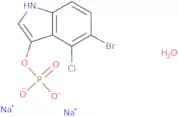
CAS:BCIP is a dye that can be used as a substrate in a fluorometric assay to detect the presence of effector proteins. It is also used in analytical chemistry to detect phosphate, and as a reagent in diagnostic tests for mucin gene expression. BCIP has been shown to have transcriptional regulatory effects on genes encoding for proteins involved in antibody production. BCIP has been shown to act as an effector protein, which influences the amount of mRNA produced by the gene encoding for tissue culture cells. BCIP can also be used as a model system to study the regulation of transcription in vitro.
A hybridization technique using BCIP with DNA-dependent RNA polymerase II has been demonstrated and applied to analyze the mechanism of transcriptional control at the level of individual genes. The use of this technique allows for analysis at a single gene level and may allow for better understanding of transcriptional regulation.Purezza:Min. 95%Peso molecolare:388.45 g/mol4-Methylumbelliferyl 3-deoxy-D-glycero-a-D-galacto-2-nonulosonic acid sodium salt
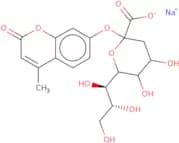
CAS:4-Methylumbelliferyl 3-deoxy-D-glycero-a-D-galacto-2-nonulosonic acid sodium salt is a fluorogenic substrate that can be used to detect enzyme activity. It reacts with the enzyme β-galactosidase, which hydrolyzes lactose in the presence of oxygen and hydrogen peroxide. The product is 4methylumbelliferone, which emits light in the presence of luciferin and an oxidizing agent. This product is used for diagnostics, food testing, and environmental testing. CAS No. 123269-95-4Purezza:Min. 95%Peso molecolare:489.41 g/mol4-Nitrophenyl 2-acetamido-6-O-(2-acetamido-3,4,6-tri-O-acetyl-2-deoxy-b-D-glucopyranosyl)-3-O-(2,3,4,6-tetra-O-acetyl-b-D-galactopyr anosyl)-2-deoxy-a-D-galactopyranoside
4-Nitrophenyl 2-acetamido-6-O-(2-acetamido-3,4,6-tri-O-acetyl-2-deoxy-b-D-glucopyranosyl)-3-O-(2,3,4,6-tetra -O acetyl -b D galactopyranosyl)-2 deoxy a D galactopyranoside is a high purity fluorogenic substrate for the enzyme β galactosidase. It can be used for the detection of β galactosidase in biological samples. 4NPAG can also be used as a ligand for various types of chromogenic substrates. This product is also commonly used in diagnostics and conjugates to detect β galactosidase activity or as a culture media supplement.Purezza:Min. 95%Peso molecolare:1,001.89 g/mol2-Nitrophenyl hexyl ether
CAS:2-Nitrophenyl hexyl ether is a chromogenic substrate commonly used to assay the activity of esterases. Upon cleavage of the ester bond by esterases, the released 2-nitrophenyl group yields a yellow color detectable by spectrophotometry. This substrate has been used in a variety of applications, including environmental monitoring and studies of insecticide resistance. It is particularly useful for screening large numbers of samples because of its rapid reaction rate and high sensitivity. However, it should be noted that some non-specific hydrolysis may occur with this substrate, particularly at high concentrations or in the presence of strong nucleophiles.Purezza:Min. 95%Peso molecolare:223.27 g/molD-Luciferin-6-O N-acetylneuraminic acid
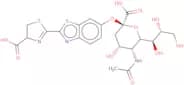
Chemiluminescent substrate for neuraminidasePurezza:Min. 95%Peso molecolare:571.58 g/molBenzyl [13C6] 2-acetamido-3,4,6-tri-O-acetyl-2-deoxy-a-D-galactopyranoside
Benzyl [13C6] 2-acetamido-3,4,6-tri-O-acetyl-2-deoxy-a-D-galactopyranoside is a synthetic monosaccharide with a galactose backbone. The glycosylation of this molecule is the result of enzymatic modification by a glycosylase enzyme that specifically recognizes and removes the terminal glucose residue. This glycosylation process is called click chemistry because it occurs in one step, forming a covalent bond between the sugar and an acetamido group on the benzyl moiety.Purezza:Min. 95%Colore e forma:White To Off-White SolidPeso molecolare:443.4 g/mol4-Nitrophenyl b-D-cellobioside heptaacetate
4-Nitrophenyl b-D-cellobioside heptaacetate is a chromogenic substrate for enzymes that catalyze the hydrolysis of glycosidic bonds. This product is used as a diagnostic tool for identifying and characterizing glycosidases and other enzymes that degrade glycosidic bonds. 4-Nitrophenyl b-D-cellobioside heptaacetate is also used in culture media to measure the activity of cellulase enzymes by measuring the release of reducing sugars. The color change of this substrate can be detected at 405 nm, 490 nm, or 550 nm.Purezza:Min. 95%Peso molecolare:757.65 g/mol4-Methylumbelliferyl 3,4,6-tri-O-acetyl-2-O-(2,3,4-tri-O-benzoyl-a-L-fucopyranosyl)-b-D-galactopyranoside
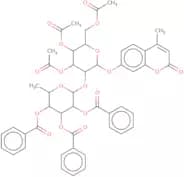
4-Methylumbelliferyl 3,4,6-tri-O-acetyl-2-O-(2,3,4-tri-O-benzoyl-a-L-fucopyranosyl)-b-D-galactopyranoside is a fluorogenic substrate that is used for the detection of β D -galactosidase. β D -Galactosidase is an enzyme that breaks down lactose in milk and is used as a diagnostic tool for identifying lactose intolerance. This substrate can be used as a conjugate in immunoassays to detect antibodies against the enzyme or it can be used to measure the activity of the enzyme in food samples. It also can be used to measure α1,3 galactosyltransferase activity in colorectal cancer cells or bacteria.Purezza:Min. 95%Peso molecolare:922.9 g/mol5-Bromo-6-chloro-3-indolyl b-D-cellobiopyranoside
5-Bromo-6-chloro-3-indolyl b-D-cellobiopyranoside is a fluorogenic substrate for the enzyme β-glucuronidase. It is used in diagnostic applications such as food testing, bacterial culture media and environmental testing. The product has CAS number: 123591-77-0.
Purezza:Min. 95%2'-(4-Methylumbelliferyl)-a-D-N-glycolylneuraminic acid
CAS:2'-(4-Methylumbelliferyl)-a-D-N-glycolylneuraminic acid is a fluorogenic substrate that is used for enzymatic labeling of glycolipids. It can be used as a diagnostic or food testing agent, and also has applications in environmental testing. The CAS number for this product is 1434265-32-3.Purezza:Min. 95%Peso molecolare:483.42 g/mol1-Naphthyl 2-acetamido-3,4,6-tri-O-acetyl-2-deoxy-b-D-glucopyranoside
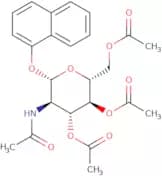
CAS:1-Naphthyl 2-acetamido-3,4,6-tri-O-acetyl-2-deoxy-b-D-glucopyranoside is a fluorogenic substrate for bacterial beta D glucosidase. It is used for measuring the enzyme activity in different types of culture media and in the detection of bacterial contamination in food and environmental samples. This product can be used to detect the presence of beta D glucosidase by measuring luminescence with a luminometer. 1NAAG can also be used as a chromogenic substrate or to conjugate with antibodies for use in immunoassays.br>Purezza:Min. 95%Peso molecolare:473.47 g/mol4-Methylumbelliferyl N,N',N'',N'''-tetraacetyl-b-D-chitotetraoside
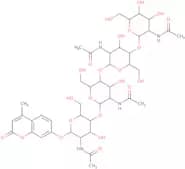
CAS:4-Methylumbelliferyl N,N',N'',N'''-tetraacetyl-beta-D-chitotetraoside is a fluorogenic substrate for chitinase. After enzymatic cleaveage, free 4-methylumbelliferone (also known as hymecromone) is released, exhibiting blue fluorescence upon excitation with UV light. The strongest fluorescence of 4-methylumbelliferone requires deprotonation of the hydroxyl group (thus requires alkaline pH), with a maximal fluorescence intensity obtained with excitation at 350 to 370 nm and emission at 440 to 470 nm. The use of 4-methylumbelliferyl N,N',N'',N'''-tetraacetyl-beta-D-chitotetraosideas a substrate for measuring the chitinase activity is used for fungal infection detection and Gaucher disease screening.Formula:C42H60N4O23Purezza:Min. 95%Colore e forma:PowderPeso molecolare:988.94 g/mol6,8-Difluoro-4-methylumbelliferyl 2-acetamido-3-O-(b-D-galactopyranosyl)-a-D-galactopyranoside
6,8-Difluoro-4-methylumbelliferyl 2-acetamido-3-O-(b-D-galactopyranosyl)-a-D-galactopyranoside is a chemiluminescent substrate that reacts with oxygen in the presence of luciferase to produce light. This product is an excellent replacement for luminol, especially in applications where aqueous solvents are not suitable. 6,8-Difluoro-4-methylumbelliferyl 2-acetamido-3-O-(b-D-galactopyranosyl)-a-D-galactopyranoside has been extensively tested and shown to be nonhazardous in a variety of different culture media. It is also nonhazardous to the environment, as it can be easily degraded by microorganisms.
Purezza:Min. 95%7-((4'-L-Alaninamido)-rac-(3'-octanoyloxy)butyloxy) coumarin trifluoroacetate salt
CAS:This Clips-O substrate 7-(4'-L-Alaninamido)-rac-(3'-octanoyloxy)butyloxy) coumarin allows the detection of three enzymatic activities (L-alanine aminopeptidase, C8-esterase and oxidation of 4-amino-3-hydroxybutyloxy either enzymatically or by exposure to sodium periodate) with one single substrate and give a positive fluorescent signal only in presence of all activities. The main virtues of Clips-O substrates are an increased stability towards non-enzymatic hydrolysis that results in a reduced background and high sensitivity.
Formula:C26H35F3N2O8Purezza:Min. 95.0 Area-%Peso molecolare:560.56 g/molRef: 3D-A-4475
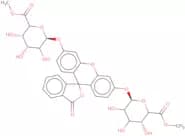
50mgPrezzo su richiesta100mgPrezzo su richiesta250mgPrezzo su richiesta500mgPrezzo su richiestaFluorescein di-b-D-glucuronide dimethyl ester
Fluorogenic substrate for beta-glucuronidasePurezza:Min. 95%Colore e forma:PowderPeso molecolare:712.61 g/mol4-Methylumbelliferyl 2,3,6-tri-O-benzoyl-b-D-galactopyranoside
CAS:4-Methylumbelliferyl 2,3,6-tri-O-benzoyl-b-D-galactopyranoside is a fluorogenic substrate that can be used in food testing. This compound is also a chromogenic substrate that can be used for environmental testing. This product is a ligand and chemiluminescent reagent that can be used in diagnostics. It is also an enzyme substrate that has high purity and high quality.Purezza:Min. 95%Peso molecolare:650.63 g/molp-Nitrophenylphosphorylcholine
CAS:p-Nitrophenylphosphorylcholine is a substrate molecule for enzymes that catalyze phospholipid biosynthesis. It is the most common substrate used to study the enzyme activity of phosphatidylcholine synthase and phospholipase A2 in human serum. The reaction mechanism is not well understood, but it appears to involve autocatalysis and an initial nucleophilic attack by p-nitrophenolate on the carbonyl carbon atom of the choline moiety. p-Nitrophenylphosphorylcholine has been shown to exhibit receptor activity on cells, which may be due to its ability to bind with basic proteins. This compound can also inhibit meiosis in Drosophila melanogaster and increase levels of natriuretic peptides in rats, as well as cause cell lysis and polymerase chain reactions in mammalian cells.Formula:C11H17N2O6PPeso molecolare:304.24 g/molRef: 3D-N-2740
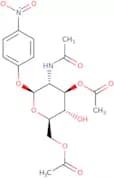
-Unit-ggPrezzo su richiesta1gPrezzo su richiesta5gPrezzo su richiesta10gPrezzo su richiesta25gPrezzo su richiesta2500mgPrezzo su richiesta4-Nitrophenyl 2-acetamido-3,6-di-O-acetyl-2-deoxy-b-D-glucopyranoside
CAS:4-Nitrophenyl 2-acetamido-3,6-di-O-acetyl-2-deoxy-b-D-glucopyranoside is a versatile chromogenic pNP enzyme substrate designed to offer superior results for detecting enzyme activity in research and diagnostic applications. This substrate enables faster, more accurate, and reliable detection of hydrolase enzymes, making it ideal for various research and testing needs, such as studying enzyme kinetics, screening inhibitors, and profiling enzyme specificity.Purezza:Min. 95%Peso molecolare:426.37 g/molAquaSpark® alpha-D-galactoside, 10 mM in DMSO, Ramot at Tel-Aviv University Ltd. Patent family WO 2017/130191
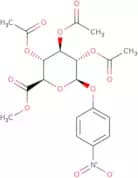
CAS:Substrate for alpha-galactosidaseFormula:C34H39ClO12Purezza:Min. 95%Colore e forma:Clear LiquidPeso molecolare:675.12 g/mol4-Nitrophenyl 2,3,4-tri-O-acetyl-b-D-glucuronide methyl ester
CAS:4-Nitrophenyl 2,3,4-tri-O-acetyl-b-D-glucuronide methyl ester is a fluorescent substrate for the beta-glucuronidase enzyme. It can be used to detect the presence of this enzyme in bacteria and other microorganisms by means of fluorometric or colorimetric assays. It has been shown to have an excellent stability in a variety of culture media and food testing applications. This product is available in high purity and quality, with a CAS number of 18472-49-6.Purezza:Min. 95%Peso molecolare:455.37 g/molAldol® 457 β-D-galactopyranoside, Biosynth Patent: EP 2427431 and US 8940909
CAS:Aldol 457 Beta-D-galactopyranoside is a chromogenic substrate for beta-galactosidase, which is an enzyme that catalyzes the hydrolysis of the terminal galactose residue in D-galactose to form D-galactitol and D-glucose. Aldol 457 Beta-D-galactopyranoside is used as a reagent for the detection of beta-galactosidase activity in biological samples, such as cultured cells or tissues, and has been shown to be a ligand in binding studies with Galectin 1. This product is also used in diagnostic applications such as food testing, culture media, fluorogenic substrates, environmental testing and more.Formula:C24H28N2O8Purezza:Min. 95.0 Area-%Peso molecolare:472.49 g/molRef: 3D-A-4726_P00
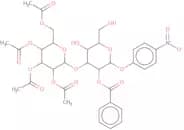
-Unit-ggPrezzo su richiesta1gPrezzo su richiesta5gPrezzo su richiesta10gPrezzo su richiesta2500mgPrezzo su richiesta4-Nitrophenyl 3-O-(2,3,4,6-tetra-O-acetyl-a-D-mannopyranosyl)-2-O-benzoyl-a-D-mannopyranoside
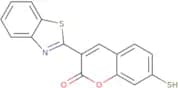
CAS:4-Nitrophenyl 2,3,4,6-tetra-O-acetyl-b-D-glucopyranoside enzyme substrate is a versatile and reliable reagent for measuring glucosidase activity. It is an ideal substrate for use in assays to detect β-glucosidase activity in a variety of applications, including for in vitro and in vivo studies, and it has been widely used in the pharmaceutical and biotechnology industries. This chromogenic pNP enzyme substrate is designed for effective and precise analysis with good sensitivity and low background signals.Purezza:Min. 95%Peso molecolare:735.64 g/mol3-HTC
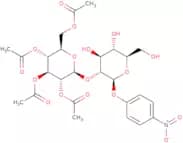
CAS:3-HTC reacts reversibly with thiols and disulfides, and can be used to measure dynamic GSH/GSSH ratios in vitro as well as to monitor the reversible redox status of whole cell lysates.(λmax: 448 nm in its reduced thiolate form, and a λmax 370-410 nm for the oxidized mixed disulfide).Formula:C16H9NO2S2Purezza:Min. 95%Peso molecolare:311.38 g/mol4-Nitrophenyl 2-O-(2,3,4,6-tetra-O-acetyl-b-D-glucopyranosyl)-b-D-glucopyranoside
CAS:4-Nitrophenyl 2-O-(2,3,4,6-tetra-O-acetyl-b-D-glucopyranosyl)-b-D-glucopyranoside is a state-of-the-art chromogenic substrate designed for rapid and sensitive enzyme activity detection. As a versatile pNP substrate, it produces a noticeable color change upon enzyme-catalyzed hydrolysis, facilitating easy monitoring and quantification of enzyme levels in research and diagnostic applications. The substrate's acetylated glucose moiety ensures specificity and stability, allowing for precise and reliable results across a range of experimental conditions.Purezza:Min. 95%Peso molecolare:631.54 g/mol4-Nitrophenyl 2-acetamido-2-deoxy-6-O-trityl-b-D-glucopyranoside
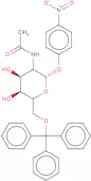
4-Nitrophenyl 2-acetamido-2-deoxy-6-O-trityl-b-D-glucopyranoside offers unmatched versatility as a chromogenic pNP substrate for detecting b-D-glucopyranosidase activity. The substrate is specifically designed to produce a yellow 4-nitrophenol product upon enzyme hydrolysis, which can be measured using absorbance spectroscopy. The unique tritylated glucopyranoside group ensures improved compound stability and selectivity while providing ease of handling. This versatile substrate is ideal for a broad range of biochemical, research, and diagnostic applications.Purezza:Min. 95%Peso molecolare:584.62 g/mol4-Nitrophenyl 4,6-O-benzylidene-a-D-mannopyranoside
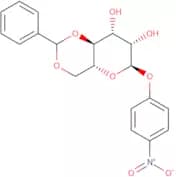
CAS:4-Nitrophenyl 4,6-O-benzylidene-a-D-mannopyranoside is a chromogenic substrate for alpha-mannosidase and beta-glucosidase. It is used as a diagnostic tool for identifying the presence of these enzymes in certain bacteria. This product is also used in food testing, environmental testing, and bioluminescence.Purezza:Min. 95%Peso molecolare:389.36 g/mol1-Naphthyl 2-acetamido-2-deoxy-b-D-galactopyranoside
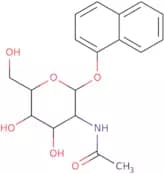
CAS:1-Naphthyl 2-acetamido-2-deoxy-b-D-galactopyranoside (1NADG) is a fluorogenic substrate that reacts with an enzyme to produce light. It is used in diagnostic tests for the detection of bacteria, and can be used as a chromogenic substrate in biochemical assays. 1NADG has also been shown to be useful in staining bacterial cells grown on agar plates. Additionally, this compound is used as a bioluminescent probe for detecting bacteria with luciferase activity. br>br>Purezza:Min. 95%Peso molecolare:347.4 g/mol2-Nitrophenyl 2,2',3,3',4'-penta-O-acetyl-b-D-xylobioside
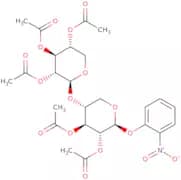
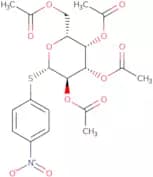
CAS:2-Nitrophenyl 2,2',3,3',4'-penta-O-acetyl-b-D-xylobioside is an oligosaccharide that is used as a substrate for the transport of nucleic acid molecules. It can be used to study the function of membrane transport proteins and their homologues. This compound has been shown to inhibit the growth of corynebacterium glutamicum and trisaccharide emissions.Purezza:Min. 95%Peso molecolare:613.52 g/mol4-Nitrophenyl 2,3,4,6-tetra-O-acetyl-b-D-thiogalactopyranoside
CAS:4-Nitrophenyl 2,3,4,6-tetra-O-acetyl-b-D-thiogalactopyranoside (NPG) is a fluorogenic substrate that can be used in the detection of beta-galactosidase activity. It reacts with 4-nitrophenol to form an orange product at pH 6.0. The fluorescence intensity increases with increasing concentrations of the substrate and enzyme. The reaction is inhibited by borax, which competes for the enzyme active site. This product has been used as a chromogenic substrate for beta-galactosidase and as an enzyme substrate for beta-galactosidase in diagnostic tests for galactosemia and other carbohydrate metabolism disorders. NPG has also been used in chemiluminescent assays to detect beta-galactosidase activity in culture media and as a bioluminescence substrate in the detection of bacterialPurezza:Min. 95%Peso molecolare:485.47 g/mol2-Nitrophenyl caprylate
CAS:2-Nitrophenyl caprylate is a potent inhibitor of gram-negative bacteria. It has been shown to inhibit the enzymatic activity of certain bacterial enzymes, such as the modification of cellular fatty acids. 2-Nitrophenyl caprylate has also been shown to inhibit in vitro growth of various gram-negative bacteria, including E. coli and Salmonella enterica serovar Typhimurium, through detergent compositions and enzymatic reactions (e.g., aminopeptidases). 2-Nitrophenyl caprylate may be useful for the treatment of pancreatitis due to its inhibition of pancreatic secretions and inhibition of pancreatic lipase activity. Transposable sequences have been found in the 2-nitrophenyl caprylate gene cluster, which may be related to its regulatory properties.Purezza:Min. 95%Colore e forma:PowderPeso molecolare:265.31 g/mol6-Chloro-4-trifluoromethylumbelliferyl b-D-galactopyranoside
6-Chloro-4-trifluoromethylumbelliferyl b-D-galactopyranoside is a chromogenic substrate that can be used in enzyme assays to measure the activity of beta-glucuronidase. This compound is sold as a conjugate with an enzyme, which will not interfere with the assay. The compound has been tested to have high purity and quality.Purezza:Min. 95%4-Nitrophenyl 2-O-(2,3,4-tri-O-acetyl-b-L-fucopyranosyl)-6-O-benzoyl-a-D-galactopyranoside
CAS:4-Nitrophenyl 2-O-(2,3,4-tri-O-acetyl-b-L-fucopyranosyl)-6-O-benzoyl-a-D-galactopyranoside is a chemiluminescent substrate with a CAS number of 104341548. It is used as a fluorescent probe for the detection of alpha amylase, beta amylase and glucose oxidase. It can be used to detect bacteria in food. This substrate can be used in the diagnostic industry and is an important component for the production of various enzymes.Purezza:Min. 95%Peso molecolare:677.61 g/mol6-Bromo-2-naphthalenyl-b-D-mannopyranoside
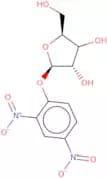
CAS:6-Bromo-2-naphthalenyl-b-D-mannopyranoside is a boronic acid that is used as a universal substrate for the detection of peroxidase activity. This product has been shown to be stable in most culture media and can be used to detect peroxidase activity in food, environmental, and other biological samples. 6-Bromo-2-naphthalenyl-b-D-mannopyranoside also has high purity and is conjugated with various fluorophores for use in chemiluminescence and bioluminescence assays.Formula:C16H17BrO6Purezza:Min. 95%Peso molecolare:385.21 g/mol2,4-Dinitrophenyl b-L-arabinofuranoside
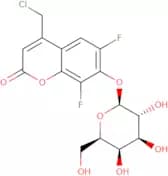
2,4-Dinitrophenyl b-L-arabinofuranoside is a high quality chromogenic substrate for dinitrophenylase. It is a ligand that reacts with an enzyme to form a product that can be detected by various methods, including colorimetry and fluorimetry. 2,4-Dinitrophenyl b-L-arabinofuranoside has shown to be useful for the detection of organic contaminants in water and air. 2,4-Dinitrophenyl b-L-arabinofuranoside is also used as a reagent for the preparation of conjugates for immunoassays.Purezza:Min. 95%Peso molecolare:628.54 g/mol4-Chloromethyl-6,8-difluoroumbelliferyl b-D-galactopyranoside
CAS:4-Chloromethyl-6,8-difluoroumbelliferyl b-D-galactopyranoside is a compound commonly used in biochemical research as a fluorescent substrate for the detection of sugar hydrolase enzymes. This compound can be cleaved by enzymes such as β-galactosidase, releasing a fluorescent molecule that can be easily detected using fluorescence spectroscopy. The compound is a member of the family of umbelliferyl glycosides, which have been widely used in the study of various biochemical pathways for many years. The advantage of using this particular substrate is that the fluorescent product has a high quantum yield, which means it produces a strong signal for detection. This substrate has been used in a wide variety of applications, including the study of microbial physiology and in the development of diagnostic assays for detecting bacterial and fungal infections.
Purezza:Min. 95%Peso molecolare:408.74 g/mol4-Nitrophenyl 2-O-(a-L-fucopyranosyl)-a-D-galactopyranoside
CAS:4-Nitrophenyl 2-O-(a-L-fucopyranosyl)-a-D-galactopyranoside is a chromogenic pNP enzyme substrate consisting of a fucose and galactose moieties. Upon enzymatic hydrolysis by specific fucosidases or galactosidases, it releases the highly chromogenic molecule 4-nitrophenol, which exhibits a distinct yellow color that can be monitored spectrophotometrically. This substrate is frequently used to study enzyme specificity, kinetics, and inhibition, and it plays a critical role in the investigation of carbohydrate active enzymes (CAZymes), the screening of enzyme inhibitors, and the development of novel analytical methods for the detection and quantitation of enzyme activities.Purezza:Min. 95%Peso molecolare:447.39 g/mol5-Bromo-3-indolyl decanoate
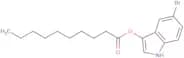
CAS:5-Bromo-3-indolyl decanoate (BID) is a chromogenic enzyme substrate often used for the detection of lipase activity. It is hydrolyzed by lipase to produce a blue-violet product, which can be detected visually or by spectrophotometry. BID is particularly useful for the detection of microbial lipases in food and environmental samples. It is commonly used in a wide range of biochemical, biological, and environmental testing applications that require precise lipase enzyme analysis.Formula:C18H24BrNO2Purezza:Min. 95%Colore e forma:PowderPeso molecolare:366.29 g/mol4-Nitrophenyl b-D-cellopentaoside hexadecaacetate
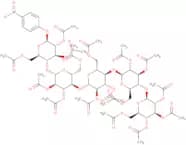
CAS:4-Nitrophenyl b-D-cellopentaoside hexadecaacetate is a fluorogenic substrate that is used to study the activity of various enzymes. It reacts with hydrolytic enzymes in the presence of hydrogen peroxide to produce light, and it can be used for food testing, environmental testing, and diagnostics. 4-Nitrophenyl b-D-cellopentaoside hexadecaacetate is a conjugate of 4-nitrophenol and cellobiose pentaacetate that has a high purity and high quality. The CAS number for this compound is 129411-66-1.Purezza:Min. 95%Peso molecolare:1,622.4 g/molN-Acetyl-L-glutamine p-nitroanilide
CAS:N-Acetyl-L-glutamine p-nitroanilide is a fluorogenic substrate that can be used in the diagnosis of bacterial infections. It is a ligand that can bind to enzymes involved in the production of bioluminescence, such as luciferase, and can be used for the detection of bacteria. It is also used for food testing, environmental testing, and diagnostics. N-Acetyl-L-glutamine p-nitroanilide has high purity and high quality, which makes it suitable for conjugation with other molecules.
Formula:C13H15N3O6Purezza:Min. 95%Colore e forma:PowderPeso molecolare:309.27 g/mol4-Nitrophenyl O-(N-acetyl-a-neuraminosyl)-(2-3)-b-D-galactopyranosyl-(1-4)-2-acetamido-2-deoxy-b-D-glucopyranoside
CAS:4-Nitrophenyl O-(N-acetyl-a-neuraminosyl)-(2-3)-b-D-galactopyranosyl-(1-4)-2-acetamido-2-deoxybDglucopyranoside is a fluorescent compound that has been used as a substrate in enzyme assays. It has been shown to be an effective ligand for the enzyme beta galactosidase, which hydrolyzes the substrate to produce 4nitrophenol and o-(Nacetyl)a-neuraminic acid. This product is CAS No. 501427-92-5 and can be used as a high purity, high quality reagent for conjugation.Purezza:Min. 95%Peso molecolare:795.7 g/molResorufin oleate
Resorufin oleate is a fluorogenic lipase substrate.Purezza:Min. 95%Colore e forma:PowderPeso molecolare:477.64 g/molN-(12-Aminododecyl)-1-deoxynojirimycin dihydrochloride
CAS:N-(12-Aminododecyl)-1-deoxynojirimycin dihydrochloride is a human 12-aminododecanoic acid derivative of the antibiotic najomycin. It has been shown to have an inhibitory effect on the growth of bacteria and fungi, but its exact mechanism of action is unknown. N-(12-Aminododecyl)-1-deoxynojirimycin dihydrochloride can be used as a reagent in the study of polypeptides and other biological molecules. This compound also has potential applications in the diagnosis, prevention, or treatment of human diseases such as cancer, bacterial infections, or fungal infections.Formula:C18H38N2O4·2HClPurezza:Min. 95%Colore e forma:Yellow SolidPeso molecolare:419.43 g/mol4-Nitrophenyl 2-acetamido-2-deoxy-4,6-O-benzylidene-b-D-glucopyranoside
CAS:4-Nitrophenyl 2-acetamido-2-deoxy-4,6-O-benzylidene-b-D-glucopyranoside is a fluorescent substrate for beta amylase and other glycosidases. It has been used as a fluorogenic substrate for food testing and as a chromogenic substrate for environmental testing. 4NPB has also been used in diagnostic applications such as enzyme substrates, ligands, and chemiluminescent substrates. This product is of high purity and quality with a conjugate that can be used in biotechnology applications.
Purezza:Min. 95%Peso molecolare:430.41 g/mol2-Chloro-4-nitrophenyl b-D-lactoside
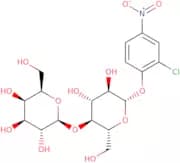
CAS:2-Chloro-4-nitrophenyl b-D-galactopyranoside is a chromogenic enzyme substrate used to study the activity of beta-lactoside. It produces a yellow color when cleaved by the enzyme, making it a useful tool in enzyme assays and screening experiments.Purezza:Min. 95%Colore e forma:PowderPeso molecolare:497.83 g/mol2,4-Dinitrophenyl b-D-cellobioside
CAS:2,4-Dinitrophenyl b-D-cellobioside is a chemiluminescent substrate that is used to detect the activity of enzymes and other proteins. It can be conjugated with an antibody or other ligand for use in diagnostic purposes. 2,4-DNPBC is a pure compound with a high quality that does not contain any other impurities. Its CAS number is 157956-96-2.Purezza:Min. 95%2-Chloro-4-nitrophenyl 2-acetamido-2-deoxy-a-D-glucopyranoside
L-2-Chloro-4-nitrophenyl 2-acetamido-2-deoxy-a-D-glucopyranoside is a chemiluminescent substrate for the detection of aminoglycoside antibiotics. It can be used to determine the concentration of aminoglycosides in blood, urine, and serum. The chemiluminescence reaction is dependent on the presence of oxygen. This product has been shown to have a high quality and purity with environmental testing and staining properties. L-2-Chloro-4-nitrophenyl 2-acetamido-2-deoxy--a--D--glucopyranoside has also been shown to bind ligands such as porphyrins, bilirubin, or hemin with bioluminescence or chromogenic substrates in diagnostics or culture media for food testing. L--2--Chloro--4--Purezza:Min. 95%

















![Benzyl [13C6] 2-acetamido-3,4,6-tri-O-acetyl-2-deoxy-a-D-galactopyranoside](/_next/image/?url=https%3A%2Fstatic.cymitquimica.com%2Fproducts%2F3D%2Fthumb-webp%2FEB64839.webp&w=3840&q=75)