Substrati enzimatici
I substrati enzimatici sono molecole su cui agiscono gli enzimi per catalizzare reazioni chimiche. Il substrato si lega al sito attivo dell'enzima, dove subisce una trasformazione specifica per formare il prodotto della reazione. I substrati enzimatici sono strumenti essenziali nella ricerca per studiare la cinetica enzimatica, la specificità e il meccanismo d'azione. Sono utilizzati anche in saggi diagnostici e studi biochimici. Presso CymitQuimica, offriamo una selezione diversificata di substrati enzimatici di alta qualità per supportare le vostre ricerche in enzimologia e biochimica.
Sottocategorie di "Substrati enzimatici"
Trovati 1529 prodotti di "Substrati enzimatici"
Ordinare per
Purezza (%)
0
100
|
0
|
50
|
90
|
95
|
100
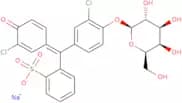
Chlorophenol red-b-D-galactopyranoside sodium salt
CAS:Chlorophenol red-b-D-galactopyranoside sodium salt is the salt from of CPRG (chlorophenol red-b-D-galactopyranoside), that has a higher solubility. It is a chromogenic substrate for beta-galactosidases that, after enzymatic cleavage, releases chlorophenol red, a dark red compound quantified by absorbance at 570 nm.Formula:C25H21Cl2O10SNaPurezza:Min. 96 Area-%Colore e forma:PowderPeso molecolare:607.4 g/mol4-Nitrophenyl-N-acetyl-β-D-glucosaminide
CAS:Chromogenic β-glucosaminidase substrate yielding a yellow solution upon cleavage, used particularly in yeasts and molds.Formula:C14H18N2O8Purezza:Min. 99.0 Area-%Peso molecolare:342.31 g/molD-Luciferin 1-(4,5-dimethoxy-2-nitrophenyl)ethyl ester
CAS:DMNPE-caged Luciferin is a photoactivatable probe that can easily penetrate the cell membrane, and by exposure to UV light it undergoes a photochemical decomposition liberating a Luciferin molecule. Once exposed to Luciferase enzyme expressed by the cells, Luciferin emits visible (and measurable) light. Using_x000D_this technique, imaging of luciferase activity was performed both in living cells and in mouse tumor xenograft, by intraperitoneal injection of the caged DMNPE luciferin (Chem. Commun., 2009, 0, 4028-4030).Formula:C21H19N3O7S2Purezza:Min. 98 Area-%Peso molecolare:489.53 g/mol4-Nitrophenyl-N-acetyl-β-D-galactosaminide
CAS:4-Nitrophenyl-N-acetyl-beta-D-galactosaminide is a synthetic substrate that is used in enzyme kinetics. It is a beta-galactosidase substrate that reacts with the enzyme to form a product. The rate of reaction can be measured by following the change in absorbance over time. This product will react with an acceptor, such as chondroitin sulfate, to produce an observable reaction product. 4NPBGA has been shown to be an effective carbon source for plant physiology studies and has been shown to have optimal activity at pH 6.5.Formula:C14H18N2O8Purezza:Min. 98 Area-%Peso molecolare:342.31 g/mol5-Nitro-3-indoxyl-β-D-galactopyranoside
<p>Please enquire for more information about 5-Nitro-3-indoxyl-β-D-galactopyranoside including the price, delivery time and more detailed product information at the technical inquiry form on this page</p>Formula:C14H16N2O8Purezza:Min. 95%Peso molecolare:340.29 g/molAldol® 515 L-pyroglutamic acid amide, Biosynth Patent: EP 2427431 and US 8940909
<p>A chromogenic and fluorogenic substrate, used for detection of esterase activity.</p>Formula:C28H26N4O3Purezza:Min. 95.0 Area-%Peso molecolare:466.54 g/molAquaSpark® alpha-D-galactoside, lyophilized, Patent WO 2017/130191
<p>Chemiluminescence beta-galactosidase substrate</p>Formula:C34H39ClO12Purezza:Min. 90 Area-%Peso molecolare:675.12 g/mol5-Bromo-4-chloro-3-indoxyl-alpha-L-fucopyranoside
CAS:<p>Chromogenic substrate for α-D-Fucosidase yielding a blue precipitate.</p>Formula:C14H15BrClNO5Purezza:Min. 98.0 Area-%Peso molecolare:392.64 g/mol4-Methylumbelliferyl-α-L-arabinopyranoside
CAS:Fluorogenic substrate for α-L-arabinosidase yielding a blue fluorescent solution upon cleavage.Formula:C15H16O7Purezza:Min. 98.0 Area-%Peso molecolare:308.29 g/mol4-Nitrophenyl-α-D-mannopyranoside
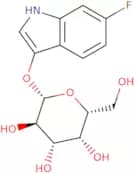
CAS:Chromogenic α-mannosidase substrate yielding a absorbent solution upon cleavage. Also used for studies of the crystal structure of the complexes of concanavalin A and binding studies with concanavalin A.Formula:C12H15NO8Purezza:Min. 99 Area-%Peso molecolare:301.26 g/mol6-Fluoro-3-indoxyl-β-D-galactopyranoside
CAS:6-Fluoro-3-indoxyl-beta-D-galactopyranoside is a fluorescent chromogenic substrate that is commonly used for the detection and quantification of beta-galactosidase activity. When this substrate is hydrolyzed by beta-galactosidase, it produces a fluorescent blue product that can be easily detected and measured using a fluorometer or spectrophotometer. This substrate is often used in microbiology and molecular biology research to study gene expression and enzyme kinetics, and is also used in medical diagnostics as a marker for specific diseases and conditions.Formula:C14H16FNO6Purezza:Min. 98.0 Area-%Peso molecolare:313.29 g/mol3-Indoxyl phosphate, p-toluidine salt
CAS:Prodotto controllato<p>3-Indoxyl phosphate, p-toluidine salt is a fluorogenic substrate that can be used for the detection of β-galactosidase. 3-Indoxyl phosphate, p-toluidine salt is a highly active chromogenic substrate that can be used as a diagnostic tool in the food industry to determine whether or not milk has been adulterated with animal milk. This product is also used in environmental testing to detect bacteria and fungi. 3-Indoxyl phosphate, p-toluidine salt is a high purity, high quality conjugate that can be used for the detection of β-galactosidase.</p>Formula:C8H8NO4P·C7H9NPurezza:Min. 98 Area-%Peso molecolare:320.28 g/molRef: 3D-I-6300
5gPrezzo su richiesta10gPrezzo su richiesta25gPrezzo su richiesta50gPrezzo su richiesta-Unit-ggPrezzo su richiestaAldol® 470 choline phosphate, Biosynth Patent: EP 2427431 and US 8940909
CAS:Aldol® 470 choline phosphate is a chromogenic and fluorogenic enzyme substrate used for detection of phosphatidyl-choline specific phospholipase C (PC-PLC, EC 3.1.4.3) activity. The colorless product is cleaved by PC-PLC positive microorganisms in liquid or solid media, yielding a yellow color and green fluorescence. Aldol® 470 choline phosphate therefore, enables the detection and identification of PC-PLC positive pathogenic bacteria, such as, Clostridium perfringens, Pseudomonas aeruginosa, Helicobacter pylori, Legionella pneumophila, Bacillus cereus, Bacillus anthracis, Listeria monocytogenes, and others. Aldol® 470 choline phosphate can be used under aerobic and anaerobic conditions.Formula:C28H31N2O7PPurezza:Min. 95 Area-%Peso molecolare:538.53 g/molRef: 3D-A-4672_P00
1gPrezzo su richiesta5gPrezzo su richiesta10gPrezzo su richiesta2500mgPrezzo su richiesta-Unit-ggPrezzo su richiesta4-Nitrophenyl-α-L-arabinofuranoside
CAS:Chromogenic substrate for α-L-arabinofuranosidase yielding a yellow solution upon cleavage.Formula:C11H13NO7Purezza:Min. 99.0 Area-%Peso molecolare:271.22 g/mol4-Methylumbelliferyl-α-L-idopyranosiduronic acid, sodium salt
CAS:4MU-alpha-L-idopyranosiduronic acid is a fluorogenic substrate for alpha-L-iduronidase. Active alpha-L-iduronidase cleaves the MU moiety from the synthetic substrate, which results in release of a fluorescent signal (Ex 360 nm / Em 455 nm). The reaction is stopped by the addition of sodium carbonate. 4MU-alpha-L-idopyranosiduronic acid is used in alpha-L-iduronidase assays in the context of biochemical characterisation of samples from patients affected by lysosomal storage disease mucopolysaccharidosis I (MPS I).Formula:C16H15NaO9Purezza:Min. 98.0 Area-%Peso molecolare:374.27 g/molRef: 3D-W-204014
10mgPrezzo su richiesta25mgPrezzo su richiesta50mgPrezzo su richiesta100mgPrezzo su richiesta250mgPrezzo su richiesta-Unit-ggPrezzo su richiestaResorufin-α-D-glucopyranoside
CAS:Please enquire for more information about Resorufin-alpha-D-glucopyranoside including the price, delivery time and more detailed product information at the technical inquiry form on this pageFormula:C18H17NO8Purezza:(Hplc-Ms) Min. 70 Area-%Peso molecolare:375.33 g/molTrimethyl phosphonoacetate
CAS:<p>Please enquire for more information about Trimethyl phosphonoacetate including the price, delivery time and more detailed product information at the technical inquiry form on this page</p>Formula:C5H11O5PPeso molecolare:182.11 g/molL-Leucine-PAB-resorufin
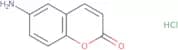
CAS:L-Leucine-PAB-resorufin is a substrate for enzymes such as β-glucuronidase, α-glucosidase, and β-galactosidase. It is used in the diagnosis of bacterial infections and the detection of certain bacteria in urine and stool samples. L-Leucine-PAB-resorufin can be used to detect the presence of bacteria that produce β-galactosidase and/or β-glucuronidase by releasing resorufin from the substrate. This reaction produces a blue color in the presence of a fluorogenic substrate like fluorescein diacetate or fluorescein isothiocyanate. L-Leucine-PAB-resorufin is also used to detect bacteria that produce α-glucosidase by releasing fluorescamine from the substrate. This reaction produces a green color in the presence of a chromFormula:C25H25N3O4Purezza:(Hplc-Ms) Min. 70 Area-%Peso molecolare:431.48 g/mol6-Aminocoumarin HCl
CAS:Use as a positive control when detecting nitroreductase activityFormula:C9H7NO2·HClPurezza:Min. 95%Peso molecolare:197.62 g/molAquaSpark® β-D-glucuronide, lyophilized, Patent WO 2017/130191
CAS:A substrate for beta-glucuronidase.Formula:C34H37ClO13Purezza:Min. 90 Area-%Peso molecolare:688.19 g/mol