Substrati enzimatici
Sottocategorie di "Substrati enzimatici"
Trovati 1528 prodotti di "Substrati enzimatici"
L-Alanine 2-naphthylamide
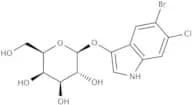
CAS:Formula:C13H14N2OPurezza:(Titration) ≥ 98.0%Colore e forma:White to off-white powderPeso molecolare:214.265-Bromo-6-chloro-3-indolyl b-D-galactopyranoside
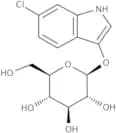
CAS:Formula:C14H15BrClNO6Purezza:≥ 98.0%Colore e forma:White to off-white powderPeso molecolare:408.646-Chloro-3-indolyl b-D-galactopyranoside
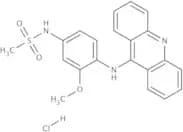
CAS:Formula:C14H16ClNO6Purezza:≥ 99.0%Colore e forma:Off-white to pale pink powderPeso molecolare:329.74Amsacrine hydrochloride
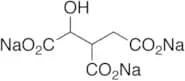
CAS:Formula:C21H19N3O3S·HClPurezza:≥ 98.0% (dried basis)Colore e forma:Red to brown powderPeso molecolare:429.92Trisodium Isocitric Acid
CAS:Stability Hygroscopic
Applications Isocitric acid is the protonated analogue of isocitrate, a substrate of the citric acid cycle.
References Zhang, Q., et al.: J. Am. Chem. Soc., 133, 18931 (2011); Crowe, L.M., et al.: Arch. Biochem. Biophy., 242, 240, (1985);Formula:C6H5O7·3NaColore e forma:Off White PowderPeso molecolare:258.07Phosphoglycolic Acid
CAS:Prodotto controllatoApplications Phosphoglycolic Acid is used in studies pertaining to biological and metabolic processes. It can be used in the study of human apurinic/apyrimidinic endonuclease (Ape) and its role in double strand break repair. It also has been seen to complex with cPEPCK (cytosolic phosphoenolpyruvate carboxykinase) during the study of its inhibition by various substrate analogues.
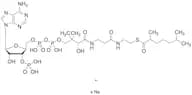
References Suh, D. et al.: Nucl. Acids Res., 25, 2495 (1997); Stiffin, R. et al.: Biochem., 47, 2099 (2008);Formula:C2H5O6PColore e forma:Off-White To Light YellowPeso molecolare:156.032,6-Dimethylheptanoyl-CoA Sodium Salt
CAS:Formula:C30H52N7O17P3S·x(Na)Colore e forma:Off White SolidPeso molecolare:930.74-Methylumbelliferyl 6-Sulfo-2-acetamido-2-deoxy-Alpha-D-glucopyranoside Sodium Salt (>90%)
CAS:Prodotto controllatoApplications 4-Methylumbelliferyl 6-Sulfo-2-acetamido-2-deoxy-α-D-glucopyranoside Sodium Salt is an analogue of 4-Methylumbelliferyl 6-Sulfo-2-acetamido-2-deoxy-α-D-glucopyranoside Potassium Salt (M334950) which is shown to be a substrate for the lysosomal N-acetylglucosamine-6-sulphate sulphatase.
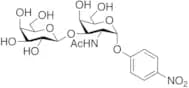
References He, W., et al.: J. inher. Metab. Dis., 16, 935 (1993)Formula:C18H20NO11S·NaPurezza:>90%Colore e forma:NeatPeso molecolare:481.414-Nitrophenyl 2-(Acetamido)-2-deoxy-3-O-β-D-galactopyranosyl-α-D-galactopyranoside
CAS:Prodotto controllatoApplications Acetylgalactosaminidase sequence substrate Clostridium Bifidobacterium. A fluorescent substrate for α2,3-(O)-Sialyltransferase
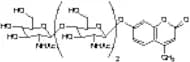
References Medina, M. et al.: Cancer Res. 59,1061-1070, (1999)Formula:C20H28N2O13Colore e forma:NeatPeso molecolare:504.444-Methylumbelliferyl β-D-N,N’,N”-Triacetylchitotrioside
CAS:Stability Hygroscopic
Applications 4-Methylumbelliferyl β-D-N,N’,N”-Triacetylchitotrioside is a fluorogenic substrate of uniform, characterized structure for assays of lysozyme.
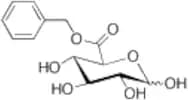
References Yang, Y., et al.: J. Biochem., 87, 1003 (1980)Formula:C34H47N3O18Colore e forma:NeatPeso molecolare:785.75Benzyl D-Glucuronate
CAS:Prodotto controllatoStability Hygroscopic
Applications Used in efficient synthesis of 1β-O-acyl glucuronides via regioselective acylation
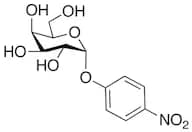
References Meng, X., et al.: J. Med. Chem., 50, 6165 (2007),Formula:C13H16O7Colore e forma:NeatPeso molecolare:284.26p-Nitrophenyl alpha-D-Galactopyranoside
CAS:Prodotto controllatoApplications p-Nitrophenyl α-D-Galactopyranoside (cas# 7493-95-0) is a compound useful in organic synthesis.
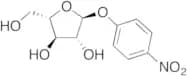
References Anisha, G., et al.: Proc. Biochem., 44, 327 (2009), Bergstroem, M., et al.: Chem. Biol. Drug Des., 73, 132 (2009), Liu, Q., et al.: J. Biol. Chem., 283, 8545 (2008),Formula:C12H15NO8Colore e forma:NeatPeso molecolare:301.254-Nitrophenyl-α-L-arabinofuranoside
CAS:Prodotto controllatoStability Hygroscopic
Applications 4-Nitrophenyl-α-L-arabinofuranoside is a substrate for the enzyme arabinofuranosidase.
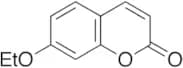
References Tefsen, B., et. al.: Biol. Chem., 393, 767 (2012)Formula:C11H13NO7Colore e forma:NeatPeso molecolare:271.227-Ethoxycoumarin
CAS:Prodotto controllatoApplications A substrate for cytochrome CYP2B6.
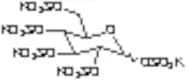
References Kabumoto, H., et al.: Biosci., Biotechnol., Biochem., 73, 1922 (2009), Maresca, A., et al.: J. Med. Chem., 53, 335 (2010), Si-Ahmed, K., et al.: J. Pharm. Biomed. Anal., 51, 225 (2010),Formula:C11H10O3Colore e forma:NeatPeso molecolare:190.2Glucose Pentasulfate, Potassium Salt, Technical Grade
CAS:Prodotto controllatoStability Hygroscopic
Applications Glucose Pentasulfate is used as a reference standard for the drug Sucralfate (S692350(P)), which is an inhibitor of peptic hydrolysis and stomach acidity and used as an anti-ulcerative.
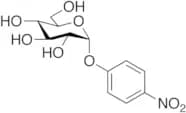
References Mayberr, J.F., et al.: Brit. J. Clin. Pract., 32, 291 (1978); Brogden, R.N., et al.: Drugs, 27, 194 (1984);Formula:C6H7O21S5K5Colore e forma:NeatPeso molecolare:770.94p-Nitrophenyl α-D-Glucopyranoside
CAS:Applications p-Nitrophenyl α-D-Glucopyranoside is a substrate for α-glucosidase inhibitor.
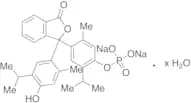
References O'Neill, R., et al.: J. Biol. Chem., 264, 20430 (1989), Carpita, N., et al.: Plant J., 3, 1 (1993), Henrissat, B., et al.: Biochem. J., 293, 781 (1993), Nakai, H., et al.: Biochimie, 89, 49 (2007) ,Formula:C12H15NO8Colore e forma:White To Off-WhitePeso molecolare:301.25Thymolphthalein Monophosphoric Acid Disodium Salt (>85%)
CAS:Prodotto controllatoApplications Thymolphthalein Monophosphoric Acid Disodium Salt is a chromogenic substrate for the determination of acid phosphatase and alkaline phosphatase. It is a disodium salt form of Thymolphthalein Monophosphoric Acid which can be used as reactant/reagent in reaction of homodimer and heterodimer subunits of human prostate acid phosphatase.
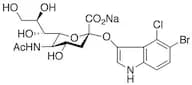
References Lee, H., et al.: Biochem J, 277, 759 (1991)Formula:C28H29Na2O7P•xH2OPurezza:>85%Colore e forma:NeatPeso molecolare:554.4818025-Bromo-4-chloro-3-indolyl-α-D-N-acetylneuraminic Acid, Sodium Salt
CAS:Prodotto controllatoStability Moisture, Temperature sensitive
Applications Used as a substrate for the detection of sialidase-like enzyme in screening of enzymes, studying physiological activities of gangliosides, and recombinant technologies.
References Biorg. Med. Chem., 1, 147 (1993)Formula:C19H21BrClN2O9·NaColore e forma:NeatPeso molecolare:559.724-Methylumbelliferyl nonanoate
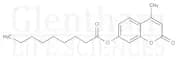
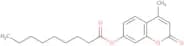
CAS:4-Methylumbelliferyl nonanoate is a fluorogenic substrate for lipase. After enzymatic cleaveage, free 4-methylumbelliferone (also known as hymecromone) is released, exhibiting blue fluorescence upon excitation with UV light. The strongest fluorescence of 4-methylumbelliferone requires deprotonation of the hydroxyl group (thus requires alkaline pH), with a maximal fluorescence intensity obtained with excitation at 350 to 370 nm and emission at 440 to 470 nm. The use of 4-methylumbelliferyl nonanoateas a substrate for measuring the lipase activity is used for the detection of lipase deficiency that could lead to pancreatic insufficiency.Formula:C19H24O4Purezza:Min. 95%Colore e forma:PowderPeso molecolare:316.39 g/mol