Substrati enzimatici
I substrati enzimatici sono molecole su cui agiscono gli enzimi per catalizzare reazioni chimiche. Il substrato si lega al sito attivo dell'enzima, dove subisce una trasformazione specifica per formare il prodotto della reazione. I substrati enzimatici sono strumenti essenziali nella ricerca per studiare la cinetica enzimatica, la specificità e il meccanismo d'azione. Sono utilizzati anche in saggi diagnostici e studi biochimici. Presso CymitQuimica, offriamo una selezione diversificata di substrati enzimatici di alta qualità per supportare le vostre ricerche in enzimologia e biochimica.
Sottocategorie di "Substrati enzimatici"
Trovati 1529 prodotti di "Substrati enzimatici"
Ordinare per
Purezza (%)
0
100
|
0
|
50
|
90
|
95
|
100
Aldol® 470 nonanoate, Biosynth Patent: EP 2427431 and US 8940909
CAS:Prodotto controllatoAldol® 470 nonanoate is a chemiluminescent substrate that can be used as a ligand for the detection of C8/C9-esterases, lipases activity, to result in an orange/green color. Aldol® 470 nonanoate has been shown to be active with horseradish peroxidase in a number of different assay systems. The purity and quality of Aldol® 470 nonanoate has been tested with culture media, environmental testing, bioluminescence, staining, fluorogenic substrate, chromogenic substrate, enzyme substrate, food testing and conjugates.Formula:C32H35NO5Purezza:Min. 95%Colore e forma:PowderPeso molecolare:513.62 g/mol4-Methylumbelliferyl b-D-cellotetraoside
CAS:A fluorogenic MOSCERDAM® substrate targeting cellulasesFormula:C34H48O23Purezza:Min. 95%Colore e forma:PowderPeso molecolare:824.73 g/mol6,8-Difluoro-4-methylumbelliferyl 2-acetamido-3-O-(b-D-galactopyranosyl)-a-D-galactopyranoside
<p>6,8-Difluoro-4-methylumbelliferyl 2-acetamido-3-O-(b-D-galactopyranosyl)-a-D-galactopyranoside is a chemiluminescent substrate that reacts with oxygen in the presence of luciferase to produce light. This product is an excellent replacement for luminol, especially in applications where aqueous solvents are not suitable. 6,8-Difluoro-4-methylumbelliferyl 2-acetamido-3-O-(b-D-galactopyranosyl)-a-D-galactopyranoside has been extensively tested and shown to be nonhazardous in a variety of different culture media. It is also nonhazardous to the environment, as it can be easily degraded by microorganisms.</p>Purezza:Min. 95%Aldol® 470 β-D-galactopyranoside, Biosynth Patent: EP 2427431 and US 8940909
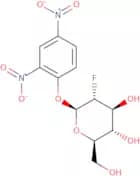
CAS:Aldol® 470 beta-D-galactopyranoside is a chromogenic and fluorogenic enzyme substrate used for detection of beta-galactosidase activity. The colorless enzyme substrate is cleaved by lactose-utilizing bacteria grown in liquid or solid media, yielding yellow coloration and green fluorescence. Aldol® 470 beta-D-galactopyranoside can also be used in beta-galactosidase gene reporter assays or immunoassay applications (ELISA). Aldol® 470 beta-D-galactopyranoside can be used under aerobic and anaerobic conditions.Formula:C29H29NO9Purezza:Min. 95 Area-%Colore e forma:PowderPeso molecolare:535.54 g/mol2,4-Dinitrophenyl 2-deoxy-2-fluoro-b-D-glucopyranoside
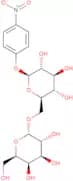
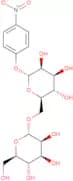
CAS:2,4-Dinitrophenyl 2-deoxy-2-fluoro-β-D-glucopyranoside, sometimes referred as 2F-DNPG, is an enzyme substrate for measuring beta-glucosidase activity. It is a mechanism-based inactivator of glycosidases, including beta-glucocerebrosidase (Gcase), a lysosomal enzyme encoded by the GBA1 gene responsible for breaking down glucosylceramide into ceramide and glucose. The use of 2,4-dinitrophenyl 2-deoxy-2-fluoro-β-D-glucopyranoside as an enzyme substrate permits the study of the catalytic mechanism and reaction intermediate of these enzymes.Formula:C12H13FN2O9Purezza:Min. 98 Area-%Colore e forma:PowderPeso molecolare:348.24 g/mol4-Nitrophenyl 6-O-(a-D-glucopyranosyl)-b-D-glucopyranoside
CAS:4-Nitrophenyl 6-O-(alpha-D-glucopyranosyl)-beta-D-glucopyranoside is a chromogenic substrate for beta-glucosidase. Upon hydrolysis, para-nitrophenol is released yielding a yellowish colour. 4-Nitrophenyl 6-O-(alpha-D-glucopyranosyl)-beta-D-glucopyranoside is used in different applications such as the Cellulose metabolism research, biofuel productionPurezza:Min. 95%Colore e forma:PowderPeso molecolare:463.39 g/mol4-Methylumbelliferyl β-D-lactoside
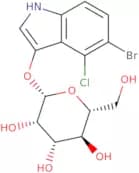
CAS:Fluorogenic substrate for beta-galactosidaseFormula:C22H28O13Purezza:Min. 98 Area-%Colore e forma:White PowderPeso molecolare:500.45 g/mol5-Bromo-4-chloro-3-indolyl b-D-mannopyranoside
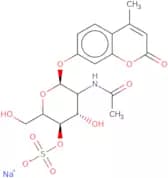
CAS:5-Bromo-4-Chloro-3-Indolyl b-D-Mannopyranoside, also known as X-Man, is an enzyme substrate commonly used for detecting mannosidase enzymes. Upon hydrolysis by the enzyme, it produces a blue-green colored compound that can be detected visually or measured spectrophotometrically. This substrate is useful in characterizing the activity of mannosidases involved in glycoprotein processing and quality control.Formula:C14H15BrClNO6Colore e forma:White Off-White PowderPeso molecolare:408.63 g/mol4-Methylumbelliferyl 2-acetamido-2-deoxy-b-D-galactopyranoside-4-sulfate sodium salt
4-Methylumbelliferyl 2-acetamido-2-deoxy-beta-D-galactopyranoside-4-sulfate sodium salt is a fluorogenic substrate for N-acetylgalactosamine-4-sulfatase. After enzymatic cleaveage, free 4-methylumbelliferone (also known as hymecromone) is released, exhibiting blue fluorescence upon excitation with UV light. The strongest fluorescence of 4-methylumbelliferone requires deprotonation of the hydroxyl group (thus requires alkaline pH), with a maximal fluorescence intensity obtained with excitation at 350 to 370 nm and emission at 440 to 470 nm. The use of 4-methylumbelliferyl 2-acetamido-2-deoxy-beta-D-galactopyranoside-4-sulfate sodium saltas a substrate for measuring the N-acetylgalactosamine-4-sulfatase activity is used for diagnosis of Mucopolysaccharidosis VI (MPS VI) (a rare lysosomal storage disorder) and Maroteaux-Lamy syndrome screening.Purezza:Min. 95%Colore e forma:White PowderPeso molecolare:481.41 g/mol5-Bromo-3-indolyl phosphate disodium salt
CAS:<p>5-Bromo-3-indolyl phosphate disodium salt is a chemiluminescent substrate that is used for the detection of bacterial activity. It reacts with oxygen to produce light, which can be measured using a luminometer. It is also used as a chromogenic substrate for detection of bacterial activity in culture media. The enzyme reaction produces an intense blue fluorescence and is used for diagnostic purposes in food testing and medical diagnostics. 5-Bromo-3-indolyl phosphate disodium salt has been shown to be effective against many bacteria and fungi, including Staphylococcus aureus, Streptococcus pyogenes, Escherichia coli, Pseudomonas aeruginosa, Candida albicans and Aspergillus niger. This product is chemically stable at room temperature but should be stored at 4°C or below.</p>Formula:C8H5BrNO4PNa2Purezza:Min. 95%Colore e forma:PowderPeso molecolare:335.99 g/mol4-Methylumbelliferyl-β-D-GlcNAc-6-phosphocholine
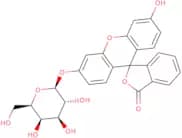
4-Methylumbelliferyl-beta-D-GlcNAc-6-phosphocholine is a fluorogenic substrate for phosphodiesterase. After enzymatic cleaveage, free 4-methylumbelliferone (also known as hymecromone) is released, exhibiting blue fluorescence upon excitation with UV light. The strongest fluorescence of 4-methylumbelliferone requires deprotonation of the hydroxyl group (thus requires alkaline pH), with a maximal fluorescence intensity obtained with excitation at 350 to 370 nm and emission at 440 to 470 nm. The use of 4-methylumbelliferyl-beta-D-GlcNAc-6-phosphocholineas a substrate for measuring the phosphodiesterase activity is used for Niemann-Pick disease diagnostic assays. It is also used for sphingomyelin metabolism disorder screening.Purezza:Min. 95%Peso molecolare:544.49 g/molFluorescein mono-b-D-galactopyranoside
CAS:Fluorescein mono-b-D-galactopyranoside or FMG is a fluorogenic substrate for beta-galactosidase. The fluorophore fluorescein is released after enzymatic cleavage, exhibiting a greenish fluorescent. This substrate is particularly valuable in gene expression studies (e.g., lacZ reporter assays) and as a probe for cell-based assays for real-time monitoring.Purezza:Min. 95%Colore e forma:PowderPeso molecolare:494.45 g/molIsopropyl-β-D-thiogalactopyranoside, approx. 15.0% dioxane
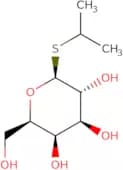
CAS:A non-metabolizable allolactose analogue, widely used in molecular biology for overexpression of recombinant proteins from inducible systems under the control of lac promoter. IPTG binds to the LacI repressor and causes its release from the lac operator, allowing gene expression to take place. Present in vectors of pGEX, pGEM-T, pET, pRSET, pMAL class and others.Formula:C9H18O5SPurezza:Min. 95%Colore e forma:PowderPeso molecolare:238.30 g/mol4-Nitrophenyl 2-O-(β-D-glucopyranosyl)-β-D-glucopyranoside
CAS:4-Nitrophenyl 2-O-(beta-D-glucopyranosyl)-beta-D-glucopyranoside is a chromogenic substrate for beta-glucosidase. Upon hydrolysis, para-nitrophenol is released yielding a yellowish colour. 4-Nitrophenyl 2-O-(beta-D-glucopyranosyl)-beta-D-glucopyranoside is used in different applications such as the Cellulose degradation studies, biofuel researchFormula:C18H25NO13Purezza:Min. 95%Colore e forma:White solid.Peso molecolare:463.39 g/mol4-Methylumbelliferyl a-D-mannopyranoside 6-sulfate sodium salt
<p>4-Methylumbelliferyl alpha-D-mannopyranoside 6-sulfate sodium salt is a fluorogenic substrate for sulfatase. After enzymatic cleaveage, free 4-methylumbelliferone (also known as hymecromone) is released, exhibiting blue fluorescence upon excitation with UV light. The strongest fluorescence of 4-methylumbelliferone requires deprotonation of the hydroxyl group (thus requires alkaline pH), with a maximal fluorescence intensity obtained with excitation at 350 to 370 nm and emission at 440 to 470 nm. The use of 4-methylumbelliferyl alpha-D-mannopyranoside 6-sulfate sodium saltas a substrate for measuring the sulfatase activity is used for Mucopolysaccharidosis (MPS) screening and other lysosomal storage disorder diagnosis.</p>Formula:C16H17O11SNaPurezza:Min. 98 Area-%Colore e forma:White PowderPeso molecolare:440.36 g/molResorufin b-D-glucuronide sodium salt
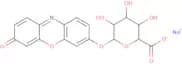
CAS:Resorufin b-D-glucuronide sodium salt is used as a fluorogenic substrate for beta-glucuronidase (GUS) to study drug metabolism.Purezza:Min. 95%Colore e forma:Brown Orange Red PowderPeso molecolare:411.29 g/mol4-Nitrophenyl 4,6-benzylidene-α-D-glucopyranoside
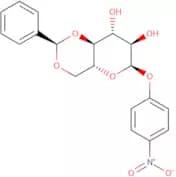
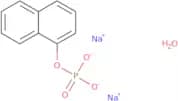
CAS:4-Nitrophenyl 4,6-benzylidene-alpha-D-glucopyranoside is a chromogenic substrate for alpha-glucosidase. Upon hydrolysis, para-nitrophenol is released yielding a yellowish colour. 4-Nitrophenyl 4,6-benzylidene-alpha-D-glucopyranoside is used in different applications such as the Pompe disease diagnosis, glycogen metabolism researchFormula:C19H19NO8Purezza:Min. 95%Colore e forma:PowderPeso molecolare:389.36 g/mola-Naphthyl phosphate disodium salt hydrate
CAS:a-Naphthyl phosphate disodium salt hydrate is a highly water-soluble chromogenic substrate used to determine phosphatase activity in research and analytical applications, particularly for staining and differentiating acid and alkaline phosphatases.Purezza:Min. 95%Colore e forma:White PowderPeso molecolare:268.11 g/mol4-Nitrophenyl 6-O-(a-D-mannopyranosyl)-a-D-mannopyranoside
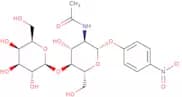
CAS:<p>4-Nitrophenyl 6-O-(alpha-D-mannopyranosyl)-alpha-D-mannopyranoside is a chromogenic substrate for alpha-mannosidase. Upon hydrolysis, para-nitrophenol is released yielding a yellowish colour. 4-Nitrophenyl 6-O-(alpha-D-mannopyranosyl)-alpha-D-mannopyranoside is used in different applications such as the Lysosomal storage disorder diagnosis (e.g., alpha-mannosidosis)</p>Purezza:Min. 95%Colore e forma:PowderPeso molecolare:463.39 g/mol4-Nitrophenyl 2-acetamido-2-deoxy-4-O-(β-D-galactopyranosyl)-β-D-glucopyranoside
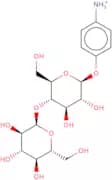
CAS:4-Nitrophenyl 2-acetamido-2-deoxy-4-O-(b-D-galactopyranosyl)-b-D-glucopyranoside is an efficient chromogenic pNP enzyme substrate ideal for monitoring enzyme activity and understanding carbohydrate metabolism. This galacto-glucoside compound is designed specifically for use with glycosidases such as hexosaminidases and delivers unparalleled performance in your enzymatic assays.Formula:C20H28N2O13Purezza:Min. 95%Colore e forma:White PowderPeso molecolare:504.44 g/molγ-L-Glutamic acid 7-amido-4-methylcoumarin trifluoroacetic acid
CAS:<p>Substrate for aminopeptidase A</p>Formula:C15H16N2O5•C2F3O2HPurezza:Min. 98 Area-%Colore e forma:White PowderPeso molecolare:418.4 g/mol4-Nitrophenyl 6-O-(b-D-galactopyranosyl)-b-D-galactopyranoside
CAS:4-Nitrophenyl 6-O-(b-D-galactopyranosyl)-b-D-galactopyranoside is a fluorescent substrate that is used in diagnostics and culture media. It can be used to detect the presence of aminoglycoside antibiotics, such as gentamicin, by using the fluorogenic or chromogenic reaction. 4NP6BG has been shown to bind to the beta subunit of RNA polymerase and inhibit transcription, which can be useful for testing environmental samples for the presence of aminoglycosides.Purezza:Min. 95%4-Nitrophenyl-beta-D-maltopyranoside
CAS:<p>Chromogenic beta-maltosidase substrate</p>Formula:C18H25NO13Purezza:Min. 95%Colore e forma:White PowderPeso molecolare:463.39 g/mol6-Hexadecanoylamino-4-methylumbelliferyl b-D-galactopyranoside - Moscerdam™ biochemical purity
CAS:<p>Hexadecanoylamino-4-methylumbelliferyl b-D-galactopyranoside is a substrate used for the diagnosis of Krabbe disease. Krabbe disease (globoid cell leukodystrophy/ galactosylceramide lipidosis), is a rare and often fatal lysosomal storage disease that results in progressive damage to the nervous system. It is inherited in an autosomal recessive pattern and involves dysfunctional metabolism of sphingolipids (MG44866 b-D-Galactosylsphingosine - Synthetic)</p>Formula:C32H49NO9Purezza:Min. 95 Area-%Colore e forma:White PowderPeso molecolare:591.73 g/mol5-Bromo-6-chloro-3-indolyl 2-acetamido-2-deoxy-b-D-glucopyranoside
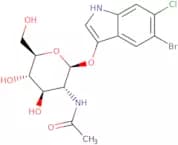
CAS:<p>5-Bromo-6-chloro-3-indolyl 2-acetamido-2-deoxy-b-D-glucopyranoside is a chromogenic substrate that yields a magenta-colored product after cleavage. The chromophore 5-bromo-6-chloro-indoxyl is released, generating the observable color. It is used in mucopolysaccharidosis screening.</p>Formula:C16H18BrClN2O6Purezza:Min. 97 Area-%Colore e forma:PowderPeso molecolare:449.68 g/mol4-Nitrophenyl 4,6-ethylidene-a-D-maltoheptaoside
CAS:4-Nitrophenyl 4,6-ethylidene-?-D-maltoheptaoside is a substrate used in a reference measurement method for ?-amylase activity in the diagnosis of acute pancreatitis, approved by the International Federation of Clinical Chemistry (IFCC). The substrate is hydrolysed by serum ?-amylase into shorter 4-nitrophenylated oligosaccharides and their free counterparts. These reaction products are channeled into an indicator reaction with ?-glucosidase and are degraded into glucose and the chromophore, 4-nitrophenol.Formula:C50H77NO38Purezza:Min. 90%Colore e forma:Off-White Yellow PowderPeso molecolare:1,300.13 g/mol3-Indolyl 2-acetamido-2-deoxy-b-D-galactopyranoside
<p>3-Indolyl 2-acetamido-2-deoxy-b-D-galactopyranoside is a fluorogenic substrate that reacts with the enzyme β-galactosidase to produce a blue product. This product can be used to diagnose the presence of β-galactosidase in culture media, as well as in food and environmental testing. 3IAG is also a chromogenic substrate that can be used for detection of β-galactosidase activity.</p>Purezza:Min. 95%Peso molecolare:336.34 g/mol5-Bromo-4-chloro-3-indolyl myristate
CAS:5-Bromo-4-chloro-3-indolyl myristate is a chromogenic substrate used to detect the specific enzymatic activity of lipase or esterase. After cleavage, 5-bromo-4-chloro-indoxyl is released, resulting in a blue to blue-green color change in bacterial colonies or media. 5-Bromo-4-chloro-3-indolyl myristate is used in screening assays for pancreatic lipase deficiency and lipid metabolism studies.Formula:C22H31BrClNO2Purezza:Min. 95%Colore e forma:PowderPeso molecolare:456.84 g/mol5-Bromo-4-chloro-3-indoxyl-1,3-diacetate
CAS:<p>5-Bromo-4-chloro-3-indoxyl-1,3-diacetate (BCID) is a potent and selective inhibitor of the tyrosine kinase enzyme. BCID has been shown to inhibit the growth of various cell cultures in vitro including murine and human cells. BCID has been shown to be an effective inhibitor of TNF-α production in murine models for asthma and allergic rhinitis. The drug has also been shown to reversibly inhibit the activity of the enzyme without affecting its ability to bind substrate or to regenerate active enzyme form inactive enzyme, indicating that it does not act as a suicide inhibitor.</p>Formula:C12H9BrClNO3Purezza:Min. 98.0 Area-%Peso molecolare:330.56 g/molRef: 3D-B-7120
5gPrezzo su richiesta10gPrezzo su richiesta25gPrezzo su richiesta100gPrezzo su richiesta250gPrezzo su richiesta-Unit-ggPrezzo su richiesta6-Chloro-3-indoxyl phosphate, p-toluidine salt
CAS:<p>A substrate for visualising alkaline phosphatase activity. Produces a red colored insoluble end product that is detected visually, when used together with nitroblue tetrazolium. The substrate system is versatile and functions in a variety of applications, including Northern, Southern, and Western blotting, in situ hybridization, ELISAs and immunohistochemistry. DMF soluble.</p>Formula:C15H16ClN2O4PPurezza:Min. 98.0 Area-%Peso molecolare:354.73 g/molAldol® 495 nonanoate solution, 0.75 M in DMSO, Biosynth Patent: EP 2427431 and US 8940909
CAS:Prodotto controllatoAldol® 495 nonanoate is a chromogenic and fluorogenic enzyme substrate used for detection of lipase activity. The colorless enzyme substrate is cleaved by C9 esterases, yielding development of an orange coloration. In addition, green fluorescence is generated when Aldol® 355 fluorescence enhancer or a suitable matrix is present. Aldol® 495 nonanoate can be used in enzyme assays and live bacterial cultures. Aldol® 495 nonanoate is suitable for use in liquid and solid media, under aerobic as well as anaerobic conditions.Formula:C29H31ClN2O3Purezza:Of Solute (Hplc) 95.0 To 100.0 Area-%Peso molecolare:491.02 g/molRef: 3D-A-4715_P00
1gPrezzo su richiesta5gPrezzo su richiesta10gPrezzo su richiesta2500mgPrezzo su richiesta-Unit-ggPrezzo su richiestaAldol® 470 butyrate, Biosynth Patent: EP 2427431 and US 8940909
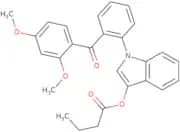
CAS:Prodotto controllatoAldol 470 butyrate is a chromogenic substrate for the enzyme aldolase. It can be used in diagnostics, food testing and culture media. Aldol 470 butyrate has been shown to be useful in detecting the presence of a number of different substances, including alcohols, organic acids, ketones, amines and amino acids. Aldol 470 butyrate is also an excellent ligand for determination of protein-ligand interactions. The conjugation of this product with other molecules provides an excellent tool for chemiluminescence assays. This product is also used as a fluorogenic substrate in environmental testing.Formula:C27H25NO5Purezza:Min. 95.0 Area-%Peso molecolare:443.5 g/molRef: 3D-A-4682_P00
1gPrezzo su richiesta5gPrezzo su richiesta10gPrezzo su richiesta2500mgPrezzo su richiesta-Unit-ggPrezzo su richiesta6-Chloro-3-indoxyl-α-D-glucopyranoside
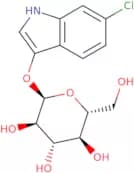
CAS:Chromogenic substrate for α-glucosidase yielding a salmon-colored precipitate.Formula:C14H16ClNO6Purezza:Min. 98 Area-%Peso molecolare:329.74 g/molAldol® 458 nonanoate solution, 0.75 M in DMSO, Biosynth Patent: EP 2427431 and US 8940909
CAS:Prodotto controllatoAldol 458 nonanoate solution is a high quality, enzyme substrate that can be used for a number of applications. It has been shown to be an excellent chromogenic substrate, bioluminescence, ligand and chemiluminescence. Aldol 458 nonanoate solution has also been used for the detection of staining and diagnostics. The compound is a conjugate with an excellent binding affinity to proteins. This product can be used in food testing, culture media, fluorogenic substrate and environmental testing. CAS No. 2484873-15-4Formula:C25H29NO4Purezza:Of Solute (Hplc) 98.0 To 100.0 Area-%Peso molecolare:407.51 g/molRef: 3D-A-4714_P00
1gPrezzo su richiesta5gPrezzo su richiesta10gPrezzo su richiesta2500mgPrezzo su richiesta-Unit-ggPrezzo su richiestaAldol® 470 phosphate, disodium salt, Biosynth Patent: EP 2427431 and US 8940909
CAS:Aldol 470 phosphate is a chromogenic substrate for phosphatases yielding a yellow precipitate. Furthermore it shows some fluorescence (excitationat 320 nm to 490 nm). In contrast to classical indoxyl substrates, Aldolsubstrates work not only under aerobic but also under anaerobic conditions.Formula:C23H18NNa2O7PPurezza:Min. 95.0 Area-%Peso molecolare:497.34 g/molbeta-Mannachrome
<p>Beta-mannachrome is a chemical compound with the formula of CHN(CH)CO. It is a colorless solid that has been used for staining, as a ligand in coordination chemistry and as a biological substrate for chemiluminescence. Beta-mannachrome is used in diagnostics and as an enzyme substrate in various biochemical reactions.<br><br>Beta-Mannachrome is an organic compound that can be synthesized from benzaldehyde and mannitol. It is also found in nature, where it is produced by the fungus Cladosporium cladosporioides. Beta-Mannachrome reacts with hydrogen peroxide to produce light through chemiluminescence. The light produced by this reaction can be measured using a luminometer or other optical instruments to determine the concentration of beta-Mannachrome present.<br><br>The CAS number of beta-Mannachrome is 619-96-8 and its molecular weight is 134.17</p>Purezza:Min. 95%Tyramine
CAS:Tyramine targets peroxidase to form a brown colorFormula:C8H11NOColore e forma:Off-White Slightly Brown PowderPeso molecolare:137.18 g/mol2-(2-Thiazolylazo)-p-cresol
CAS:2-(2-Thiazolylazo)-p-cresol structure enables it to form complexes with certain metal ions, changing color in the process. This color change is highly useful in titrimetric analyses (quantitative chemical analysis method) to determine the concentration of metal ions in a solution. The substrates are colored orange-yellow (absorbance maximum= 375 nm). After the enzymatic conversion, the resulting TAC shows an intense, soluble red-violet color (544 nm) in an alkaline medium (pH = 10.3).Formula:C10H9N3OSPurezza:Min. 96 Area-%Colore e forma:Yellow To Orange Brown SolidPeso molecolare:219.26 g/mol2,2'-Azino-bis(3-ethylbenzothiazoline-6-sulfonic acid) diammonium salt
CAS:ABTS can be used as a peroxidase substrate that gives a metastable cation when in the presence of H2O2. 2,2'-Azino-bis (3-ethylbenzothiazoline-6-sulfonic acid) or ABTS is commonly used in the enzyme-linked immunosorbent assay (ELISA). ABTS is chosen because the enzyme facilitates the reaction to give a green end-product with an absorbance maximum of 420nm and can therefore be detected with a spectrophotometer.Formula:C18H24N6O6S4Purezza:Min. 98.0 Area-%Colore e forma:PowderPeso molecolare:548.68 g/molResorufin N-acetyl-b-D-galactosamine
Resorufin N-acetyl-b-D-galactosamine is a fluorogenic substrate used as a probe to detect and quantify the activity of N-acetyl-beta-D-galactosaminidase (also known as beta-hexosaminidase or HEX(NAG)). Particularly useful in biomedical research, clinical chemistry, and diagnostics, when the substrate is cleaved, the highly fluorescent resorufin dye is produced that can be detected at approximately 598 nm.Purezza:Min. 95%Colore e forma:PowderPeso molecolare:416.38 g/molFast blue B salt
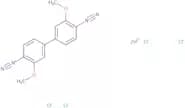
CAS:<p>For visualizing enzymatic activity</p>Formula:C14H12N4O2Cl2·ZnCl2Colore e forma:PowderPeso molecolare:475.46 g/mol3-(2'-Spiroadamantane)-4-methoxy-4-(3''-phosphoryloxy)phenyl-1,2-dioxetane
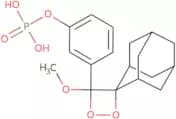
CAS:As an alternative to commonly used colorimetric and fluorescent substrates, 3-(2'-Spiroadamantane)-4-methoxy-4-(3''-phosphoryloxy)phenyl-1,2-dioxetane, abbreviated AMPPD, is a chemiluminescent substrate for alkaline phosphatase (ALP). It allows detection of alkaline phosphatase at a high sensitivity. Literature reports that the co-presence of 0.1% bovine serum albumin (BSA) leads to a signal increase of 10-folds under selected conditions.Formula:C18H23O7PPurezza:Min. 95%Colore e forma:PowderPeso molecolare:382.34 g/mol[2-(2-Thiazolylazo)-4-cresyl]phosphate, p-toluidine sal
2-(2-Thiazolylazo)-4-cresyl]phosphate, p-toluidine salt is a chromogenic substrate for alkaline phosphatase resulting in a dark red color.Purezza:Min. 95%[2-(2-Thiazolylazo)-4-cresyl]-β-D-galactopyranoside
CAS:<p>Please enquire for more information about [2-(2-Thiazolylazo)-4-cresyl]-β-D-galactopyranoside including the price, delivery time and more detailed product information at the technical inquiry form on this page</p>Formula:C16H19N3SO6Purezza:Min. 95%Colore e forma:PowderPeso molecolare:381.41 g/mol4-Methylumbelliferyl a-D-arabinopyranoside
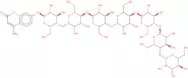
<p>A fluorogenic MOSCERDAM® substrate targeting alpha-arabinofuranosidase</p>Purezza:Min. 95%Peso molecolare:308.28 g/mol4-Methylumbelliferyl b-D-celloheptaoside
CAS:<p>A fluorogenic MOSCERDAM® substrate targeting cellulases</p>Purezza:Min. 95%Peso molecolare:1,311.15 g/molMethyl 4-methylumbelliferyl hexyl phosphonate
CAS:<p>Methyl 4-methylumbelliferyl hexyl phosphonate is a lipase suicide inhibitor that is a fluorogenic substrate for lipases which upon enzymatic action, binds irreversibly to the lipase and inactivates it. The substrate can be used for the determination of active sites in lipases and the fluorescent signal can be detected at Ex 363 nm and Em 465 nm.</p>Purezza:Min. 95%Peso molecolare:338.34Azoic Diazo Component 24 (Salt) [for Biochemical Research]
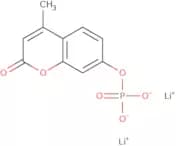
CAS:Formula:C30H28Cl2N6O6·ZnCl2Purezza:>95.0%(T)Colore e forma:Yellow to Brown to Dark green powder to crystalPeso molecolare:775.774-Methylumbelliferyl phosphate dilithium
CAS:4-Methylumbelliferyl phosphate dilithium is a fluorogenic substrate for alkaline phosphatase. After enzymatic cleaveage, free 4-methylumbelliferone (also known as hymecromone) is released, exhibiting blue fluorescence upon excitation with UV light. The strongest fluorescence of 4-methylumbelliferone requires deprotonation of the hydroxyl group (thus requires alkaline pH), with a maximal fluorescence intensity obtained with excitation at 350 to 370 nm and emission at 440 to 470 nm. The use of 4-methylumbelliferyl phosphate dilithiumas a substrate for measuring the alkaline phosphatase activity is used for bone metabolism disorder studies and hypophosphatasia diagnosis.Formula:C10H7O6P•Li2Purezza:Min. 95%Colore e forma:PowderPeso molecolare:268.01 g/molN-Benzoyl-DL-arginine 4-nitroanilide hydrochloride
CAS:<p>N-α-benzoyl-DL-arginine-4-nitroanilide hydrochloride is commonly used as a substrate in various enzymatic assays, particularly for studying proteases like trypsin and chymotrypsin. It serves as a synthetic substrate to measure the activity of these enzymes. For instance, it has been used to determine trypsin activity in different organisms and tissues. The substrate has also been employed in studying the enzymatic properties of various proteases, including those found in latex, snake venoms, and plant seeds. Additionally, it has been utilized to assess the effects of different compounds on trypsin activity, such as condensed tannins and wine.</p>Formula:C19H22N6O4•HClPurezza:Min. 95%Colore e forma:PowderPeso molecolare:434.88 g/mol














![[2-(2-Thiazolylazo)-4-cresyl]phosphate, p-toluidine sal](/_next/image/?url=https%3A%2Fstatic.cymitquimica.com%2Fproducts%2F3D%2Fthumb-webp%2FFT172196.webp&w=3840&q=75)
![[2-(2-Thiazolylazo)-4-cresyl]-β-D-galactopyranoside](/_next/image/?url=https%3A%2Fstatic.cymitquimica.com%2Fproducts%2F3D%2Fthumb-webp%2FFT172198.webp&w=3840&q=75)

![Azoic Diazo Component 24 (Salt) [for Biochemical Research]](/_next/image/?url=https%3A%2Fstatic.cymitquimica.com%2Fproducts%2F3B%2Fthumb-webp%2FB0785.webp&w=3840&q=75)