Substrati enzimatici
I substrati enzimatici sono molecole su cui agiscono gli enzimi per catalizzare reazioni chimiche. Il substrato si lega al sito attivo dell'enzima, dove subisce una trasformazione specifica per formare il prodotto della reazione. I substrati enzimatici sono strumenti essenziali nella ricerca per studiare la cinetica enzimatica, la specificità e il meccanismo d'azione. Sono utilizzati anche in saggi diagnostici e studi biochimici. Presso CymitQuimica, offriamo una selezione diversificata di substrati enzimatici di alta qualità per supportare le vostre ricerche in enzimologia e biochimica.
Sottocategorie di "Substrati enzimatici"
Trovati 1527 prodotti di "Substrati enzimatici"
Ordinare per
Purezza (%)
0
100
|
0
|
50
|
90
|
95
|
100
Aldol® 458 nonanoate solution, 0.75 M in DMSO, Biosynth Patent: EP 2427431 and US 8940909
CAS:Prodotto controllato<p>Aldol 458 nonanoate solution is a high quality, enzyme substrate that can be used for a number of applications. It has been shown to be an excellent chromogenic substrate, bioluminescence, ligand and chemiluminescence. Aldol 458 nonanoate solution has also been used for the detection of staining and diagnostics. The compound is a conjugate with an excellent binding affinity to proteins. This product can be used in food testing, culture media, fluorogenic substrate and environmental testing. CAS No. 2484873-15-4</p>Formula:C25H29NO4Purezza:Of Solute (Hplc) 98.0 To 100.0 Area-%Peso molecolare:407.51 g/molRef: 3D-A-4714_P00
1gPrezzo su richiesta5gPrezzo su richiesta10gPrezzo su richiesta2500mgPrezzo su richiesta-Unit-ggPrezzo su richiestaAldol® 470 phosphate, disodium salt, Biosynth Patent: EP 2427431 and US 8940909
CAS:Aldol 470 phosphate is a chromogenic substrate for phosphatases yielding a yellow precipitate. Furthermore it shows some fluorescence (excitationat 320 nm to 490 nm). In contrast to classical indoxyl substrates, Aldolsubstrates work not only under aerobic but also under anaerobic conditions.Formula:C23H18NNa2O7PPurezza:Min. 95.0 Area-%Peso molecolare:497.34 g/molbeta-Mannachrome
<p>Beta-mannachrome is a chemical compound with the formula of CHN(CH)CO. It is a colorless solid that has been used for staining, as a ligand in coordination chemistry and as a biological substrate for chemiluminescence. Beta-mannachrome is used in diagnostics and as an enzyme substrate in various biochemical reactions.<br><br>Beta-Mannachrome is an organic compound that can be synthesized from benzaldehyde and mannitol. It is also found in nature, where it is produced by the fungus Cladosporium cladosporioides. Beta-Mannachrome reacts with hydrogen peroxide to produce light through chemiluminescence. The light produced by this reaction can be measured using a luminometer or other optical instruments to determine the concentration of beta-Mannachrome present.<br><br>The CAS number of beta-Mannachrome is 619-96-8 and its molecular weight is 134.17</p>Purezza:Min. 95%Tyramine
CAS:<p>Tyramine targets peroxidase to form a brown color</p>Formula:C8H11NOColore e forma:Off-White Slightly Brown PowderPeso molecolare:137.18 g/mol2-(2-Thiazolylazo)-p-cresol
CAS:2-(2-Thiazolylazo)-p-cresol structure enables it to form complexes with certain metal ions, changing color in the process. This color change is highly useful in titrimetric analyses (quantitative chemical analysis method) to determine the concentration of metal ions in a solution. The substrates are colored orange-yellow (absorbance maximum= 375 nm). After the enzymatic conversion, the resulting TAC shows an intense, soluble red-violet color (544 nm) in an alkaline medium (pH = 10.3).Formula:C10H9N3OSPurezza:Min. 96 Area-%Colore e forma:Yellow To Orange Brown SolidPeso molecolare:219.26 g/mol2,2'-Azino-bis(3-ethylbenzothiazoline-6-sulfonic acid) diammonium salt
CAS:<p>ABTS can be used as a peroxidase substrate that gives a metastable cation when in the presence of H2O2. 2,2'-Azino-bis (3-ethylbenzothiazoline-6-sulfonic acid) or ABTS is commonly used in the enzyme-linked immunosorbent assay (ELISA). ABTS is chosen because the enzyme facilitates the reaction to give a green end-product with an absorbance maximum of 420nm and can therefore be detected with a spectrophotometer.</p>Formula:C18H24N6O6S4Purezza:Min. 98.0 Area-%Colore e forma:PowderPeso molecolare:548.68 g/molResorufin N-acetyl-b-D-galactosamine
<p>Resorufin N-acetyl-b-D-galactosamine is a fluorogenic substrate used as a probe to detect and quantify the activity of N-acetyl-beta-D-galactosaminidase (also known as beta-hexosaminidase or HEX(NAG)). Particularly useful in biomedical research, clinical chemistry, and diagnostics, when the substrate is cleaved, the highly fluorescent resorufin dye is produced that can be detected at approximately 598 nm.</p>Purezza:Min. 95%Colore e forma:PowderPeso molecolare:416.38 g/molFast blue B salt
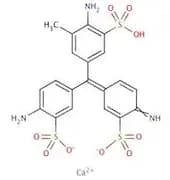
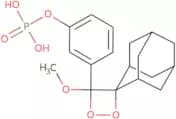
CAS:<p>For visualizing enzymatic activity</p>Formula:C14H12N4O2Cl2·ZnCl2Colore e forma:PowderPeso molecolare:475.46 g/mol3-(2'-Spiroadamantane)-4-methoxy-4-(3''-phosphoryloxy)phenyl-1,2-dioxetane
CAS:<p>As an alternative to commonly used colorimetric and fluorescent substrates, 3-(2'-Spiroadamantane)-4-methoxy-4-(3''-phosphoryloxy)phenyl-1,2-dioxetane, abbreviated AMPPD, is a chemiluminescent substrate for alkaline phosphatase (ALP). It allows detection of alkaline phosphatase at a high sensitivity. Literature reports that the co-presence of 0.1% bovine serum albumin (BSA) leads to a signal increase of 10-folds under selected conditions.</p>Formula:C18H23O7PPurezza:Min. 95%Colore e forma:PowderPeso molecolare:382.34 g/mol[2-(2-Thiazolylazo)-4-cresyl]phosphate, p-toluidine sal
<p>2-(2-Thiazolylazo)-4-cresyl]phosphate, p-toluidine salt is a chromogenic substrate for alkaline phosphatase resulting in a dark red color.</p>Purezza:Min. 95%[2-(2-Thiazolylazo)-4-cresyl]-β-D-galactopyranoside
CAS:<p>Please enquire for more information about [2-(2-Thiazolylazo)-4-cresyl]-β-D-galactopyranoside including the price, delivery time and more detailed product information at the technical inquiry form on this page</p>Formula:C16H19N3SO6Purezza:Min. 95%Colore e forma:PowderPeso molecolare:381.41 g/mol5-Chloro-N-(2-chloro-4-nitrophenyl)-2-(β-D-glucopyranosyloxy)benzamide
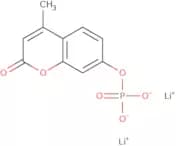
CAS:<p>Please enquire for more information about 5-Chloro-N-(2-chloro-4-nitrophenyl)-2-(β-D-glucopyranosyloxy)benzamide including the price, delivery time and more detailed product information at the technical inquiry form on this page</p>Formula:C19H18Cl2N2O9Purezza:Min. 99 Area-%Peso molecolare:489.26 g/mol4-Methylumbelliferyl phosphate dilithium
CAS:<p>4-Methylumbelliferyl phosphate dilithium is a fluorogenic substrate for alkaline phosphatase. After enzymatic cleaveage, free 4-methylumbelliferone (also known as hymecromone) is released, exhibiting blue fluorescence upon excitation with UV light. The strongest fluorescence of 4-methylumbelliferone requires deprotonation of the hydroxyl group (thus requires alkaline pH), with a maximal fluorescence intensity obtained with excitation at 350 to 370 nm and emission at 440 to 470 nm. The use of 4-methylumbelliferyl phosphate dilithiumas a substrate for measuring the alkaline phosphatase activity is used for bone metabolism disorder studies and hypophosphatasia diagnosis.</p>Formula:C10H7O6P•Li2Purezza:Min. 95%Colore e forma:PowderPeso molecolare:268.01 g/molAc-D-Cha-GR-aminoluciferin
<p>Ac-D-Cha-GR-aminoluciferin is a modified form of D-luciferin used as a luminescent enzyme substrate for protease. This modified substrate provides a longer light emission than normal luciferins, allowing their use in cell-based bioluminescence assays.</p>Formula:C30H41N9O6S2Peso molecolare:687.83 g/molAcetyl coenzyme A trilithium salt trihydrate
CAS:<p>Acetyl coenzyme A trilithium salt trihydrate (ATC) is a glutathione-dependent enzyme that catalyzes the acetylation of compounds with a thiol group. Acetyl coenzyme A trilithium salt trihydrate has been shown to acetylate recombinant human and hek293 cells as well as xenobiotic compounds such as acetaminophen, chlorzoxazone, and phenacetin. The rate of acetylation depends on the concentration of glutathione and the availability of the substrate. There is no evidence that ATC conjugates or transfers acetyllysine to other proteins. It is excreted in the urine after being expressed by recombinant human and hek293 cells.END></p>Formula:C23H35N7O17P3S·3Li·3H2OPurezza:Min. 95%Colore e forma:White PowderPeso molecolare:881.42 g/mol5-Bromo-6-chloro-3-indoxyl choline phosphate
CAS:5-Bromo-6-chloro-3-indoxyl choline phosphate is a chemiluminescent substrate for the detection of bacterial activity. It reacts with an enzyme, luciferase, which is present in a variety of living cells. The reaction produces light. This product has been tested for environmental and food safety by the manufacturer. 5-Bromo-6-chloro-3-indoxyl choline phosphate is used as a diagnostic tool to determine the presence of bacteria in humans, animals, and plants. It can be used to measure levels of bacteria in culture media, water samples, and food products. 5-Bromo-6-chloro-3-indoxyl choline phosphate can also be used as a substrate for enzymes such as phosphatases or esterases that catalyze reactions with substrates with brominated or chlorinated groups.Formula:C13H17BrClN2O4PPurezza:Min. 95%Peso molecolare:411.63 g/molAldol® 515 choline phosphate, Biosynth Patent: EP 2427431 and US 8940909
<p>A useful substrate for the study of enzyme activities</p>Formula:C28H32N3O5PPurezza:Min. 95 Area-%Peso molecolare:521.55 g/molAquaSpark® alpha-D-glucoside, 10 mM in DMSO, Ramot at Tel-Aviv University Ltd. Patent family WO 2017/130191
CAS:<p>AquaSpark® alpha-D-glucoside is a bioluminescent substrate that can be used in assays for detecting enzyme activity in cells or tissues.</p>Formula:C34H39ClO12Purezza:Min. 95%Peso molecolare:675.12 g/molN-Benzoyl-DL-arginine 4-nitroanilide hydrochloride
CAS:<p>N-α-benzoyl-DL-arginine-4-nitroanilide hydrochloride is commonly used as a substrate in various enzymatic assays, particularly for studying proteases like trypsin and chymotrypsin. It serves as a synthetic substrate to measure the activity of these enzymes. For instance, it has been used to determine trypsin activity in different organisms and tissues. The substrate has also been employed in studying the enzymatic properties of various proteases, including those found in latex, snake venoms, and plant seeds. Additionally, it has been utilized to assess the effects of different compounds on trypsin activity, such as condensed tannins and wine.</p>Formula:C19H22N6O4•HClPurezza:Min. 95%Colore e forma:PowderPeso molecolare:434.88 g/mol5-Bromo-3-indolyl b-D-glucopyranoside
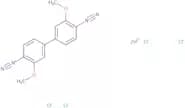
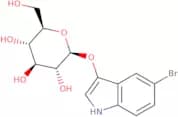
CAS:<p>5-bromo-3-indolyl-b-d-glucopyranoside, also known as 5BIG, is an enzyme substrate for beta-glucosidase. It is used in bacterial assays for the identifcation of Gram-positive bacteria such as Staphylococcus aureus and Bacillus subtilis. After cleavege, it gives an intense blue color.</p>Formula:C14H16BrNO6Purezza:Min. 98 Area-%Colore e forma:PowderPeso molecolare:374.18 g/molAzoic Diazo Component 24 (Salt) [for Biochemical Research]
CAS:Formula:C30H28Cl2N6O6·ZnCl2Purezza:>95.0%(T)Colore e forma:Yellow to Brown to Dark green powder to crystalPeso molecolare:775.778-Hydroxyquinoline b-D-galactopyranoside
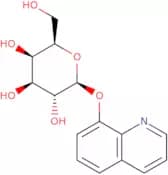
CAS:<p>Chromogenic substrate targeting the beta-galactosidase enzyme</p>Formula:C15H17NO6Purezza:Min. 98 Area-%Colore e forma:PowderPeso molecolare:307.3 g/mol4-Methylumbelliferyl b-D-celloheptaoside
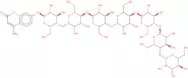
CAS:<p>A fluorogenic MOSCERDAM® substrate targeting cellulases</p>Purezza:Min. 95%Peso molecolare:1,311.15 g/mol3,3'-Diaminobenzidine tetrahydrochloride
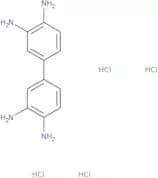
CAS:<p>3,3'-Diaminobenzidine tetrahydrochloride or DAB hydrochloride is the hydrochloride salt of biphenyl tetra-aniline. DAB hydrochloride is a water-soluble formulation of DAB and is used in immunohistochemical staining of nucleic acids and proteins. DAB hydrochloride is used in Alzheimer's disease research, Aβ protein amyloid plaques are targeted by a primary antibody, and subsequently by a secondary antibody, which is conjugated with a peroxidase enzyme. This will bind DAB as a substrate and oxidize causing a colour change. 3,3’-Diaminobenzidine tetrahydrochloride is also available as the tetrahydrochloride hydrate and as the free base.</p>Formula:C12H14N4•4HClPurezza:Min. 95%Colore e forma:Off-White PowderPeso molecolare:360.12 g/molAquaSpark® 510 Peroxide Probe, 10 mM in DMSO, Ramot at Tel-Aviv University Ltd. Patent family WO 2017/130191
CAS:<p>AquaSpark® Peroxide Probe is a dioxetane-based substrate for the luminescence detection of hydrogen peroxide and other peroxides in biological samples. AquaSpark® Peroxide Probe is the most sensitive probe for H2O2 detection available. It is also an extremely versatile probe for oxidase detection applicable in a wide range of biocompatible buffers. For example it can be used for glucose oxidase detection andfor the quantitation of glucose levels (when coupled to the glucoseoxidase activity in an assay). In addition, AquaSpark® Peroxide Probe is used for the quantification of other biologically relevant compounds(e.g. amino acids) using the corresponding peroxide releasing oxidases.</p>Formula:C34H40BClO8Peso molecolare:622.95 g/molResorufin acetate
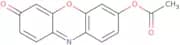
CAS:<p>Resorufin acetate is a fluorogenic substrate for esterase activity measurments in lipid metabolism studies. It is also used as a substrate for chymotrypsin, a digestive enzyme produced by the pancreas that aids in protein digestion in the small intestine.</p>Formula:C14H9NO4Purezza:Min. 95%Colore e forma:PowderPeso molecolare:255.23 g/molMethyl 4-methylumbelliferyl hexyl phosphonate
CAS:<p>Methyl 4-methylumbelliferyl hexyl phosphonate is a lipase suicide inhibitor that is a fluorogenic substrate for lipases which upon enzymatic action, binds irreversibly to the lipase and inactivates it. The substrate can be used for the determination of active sites in lipases and the fluorescent signal can be detected at Ex 363 nm and Em 465 nm.</p>Purezza:Min. 95%Peso molecolare:338.343-Carboxyumbelliferyl b-D-glucuronide
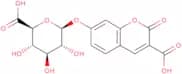
CAS:<p>3-Carboxyumbelliferyl b-D-glucuronide serves as a highly sensitive fluorogenic substrate for detecting b-glucuronidase activity. Upon enzymatic cleavage, it generates a fluorescent product enabling easy and accurate monitoring of enzyme activity in various applications, such as diagnostics, drug discovery, and research.</p>Purezza:Min. 95%Colore e forma:White to off-white solid.Peso molecolare:382.28 g/mol4-Nitrophenyl 2-acetamido-6-O-(2-acetamido-2-deoxy-b-D-glucopyranosyl)-2-deoxy-a-D-galactopyranoside
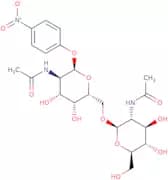
CAS:<p>4-Nitrophenyl 2-acetamido-6-O-(2-acetamido-2-deoxy-b-D-glucopyranosyl)-2-deoxy-a-D-galactopyranoside is a chromogenic pNP glycoside substrate designed for the detection and assay of specific enzymes, particularly glycosidases. Upon enzymatic hydrolysis, this substrate releases a quantifiable 4-nitrophenol moiety enabling straightforward colorimetric measurement. This pNP-linked substrate is versatile and can be efficiently employed in enzyme activity assays, screening enzyme inhibitors, and assessing enzyme mechanisms, enhancing research and development processes in the field of glycobiology.</p>Purezza:Min. 95%Colore e forma:White PowderPeso molecolare:545.49 g/molAquaSpark® beta-D-galactoside, 10 mM in DMSO, Ramot at Tel-Aviv University Ltd. Patent family WO 2017/130191
CAS:<p>AquaSpark® beta-D-galactoside, 10 mM in DMSO is a fluorogenic substrate for beta-galactosidase. This is typically used at 10 – 50 µM final concentration. Cymit Quimica provides AquaSpark® beta-D-galactoside as a 10 mM stock solution in dimethyl sulfoxide (DMSO) for convenience and improved storage stability.</p>Formula:C34H39ClO12Purezza:Min. 95%Peso molecolare:675.12 g/mol4-Methylumbelliferyl a-D-arabinopyranoside
<p>A fluorogenic MOSCERDAM® substrate targeting alpha-arabinofuranosidase</p>Purezza:Min. 95%Peso molecolare:308.28 g/molAldol® 467 N-acetyl-beta-D-glucosaminide, Biosynth Patent: EP 2427431 and US 8940909
CAS:<p>Aldol® 467 N-acetyl-beta-D-glucosaminide is a chromogenic and fluorogenic enzyme substrate used for detection of ?-N-acetyl-glucosaminidase activity. The colorless enzyme substrate is cleaved in the presence of ?-N-acetyl-glucosaminidase yielding development of a yellow product. In addition, green fluorescence is generated when a suitable matrix or Aldol® 355 fluorescence enhancer is present. Aldol® 467 N-acetyl-beta-D-glucosaminide amide can be used in enzymatic assays or in live bacterial cultures. Aldol® 467 N-acetyl-beta-D-glucosaminide is suitable for use in liquid and solid media, under aerobic as well as anaerobic conditions.</p>Formula:C31H31ClN2O9Purezza:Min. 92.0 Area-%Peso molecolare:611.04 g/molDisodium 1-Naphthyl Phosphate Hydrate [Substrate for Phosphatase]
CAS:Formula:C10H7Na2O4P·xH2OPurezza:97.0 to 103.0 %(calcd.on anh.substance)Colore e forma:White to Light yellow to Light red powder to crystalPeso molecolare:268.12 (as Anhydrous)Phenyl-ß-D-Galactopyranoside extrapure, 97%
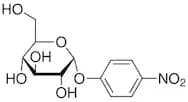
CAS:Formula:C12H16O6Purezza:min. 97%Colore e forma:White to Off-white, Crystalline powder, ClearPeso molecolare:256.3p-Nitrophenyl-a-D-Glucopyranoside extrapure, 98%
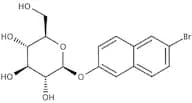
CAS:Formula:C12H15NO8Purezza:min. 98%Colore e forma:White to off-white, Crystalline powderPeso molecolare:301.256-Bromo-2-Naphthyl-ß-D-Glucopyranoside extrapure, 98%
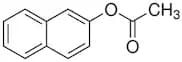
CAS:Formula:C16H17BrO6Purezza:min. 98%Colore e forma:White to off - white, Crystalline powderPeso molecolare:385.22ß-Naphthyl Acetate extrapure AR, 99%
CAS:Formula:C12H10O2Purezza:min. 99%Colore e forma:White to slight pink, Crystalline powder, ClearPeso molecolare:186.21L-Lysine 7-Amido-4-Methylcoumarin Acetate Salt extrapure, 98%
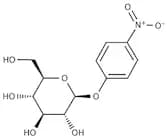
CAS:Formula:C18H25N3O5Peso molecolare:363.4p-Nitrophenyl-ß-D-Glucopyranoside extrapure, 98%
CAS:Formula:C12H15NO8Purezza:min. 98%Colore e forma:White to off-white, Crystalline powderPeso molecolare:301.25D-Fructose-1,6-Diphosphate Octahydrate Trisodium Salt extrapure, 99%
CAS:Formula:C6H11O12P2Na3·8H2OPurezza:min. 99%Colore e forma:White, Crystalline powder, Clear, ColourlessPeso molecolare:550.185-Bromo-4-Chloro-3-Indolyl-B-D-Glucuronide Cyclohexylammonium Salt (X-Gluc CHX) extrapure, 99%
CAS:Formula:C14H13BrClNO7·C6H13NPurezza:min. 99%Colore e forma:White, Crystalline powderPeso molecolare:521.79Casein acc. to Hammarsten, 95% Protein
CAS:Purezza:min. 95% protein (dry basis)Colore e forma:White, Fine powderL-Proline-7-Amido-4-Methylcoumarin Hydrobromide Salt extrapure, 98%
CAS:Formula:C15H17BrN2O3Peso molecolare:353.24-Methylumbelliferyl-N-Acetyl-ß-D-Glucosaminide extrapure, 99%
CAS:Formula:C18H21NO8Purezza:min. 99%Colore e forma:Almost white, PowderPeso molecolare:379.405-Bromo-4-Chloro-3-Indolyl-ß-D-Glucuronide Sodium Salt Trihydrate extrapure, 98%
CAS:Formula:C14H12BrClNNaO7·3H2OPurezza:min.98%Colore e forma:White to off-white, Crystalline powderPeso molecolare:498.641-Naphthyl Phosphate Disodium Salt extrapure
CAS:Formula:C10H7O4P·2NaPurezza:min. 97%Colore e forma:Off white, PowderPeso molecolare:268.113,3,5,5-Tetramethyl Benzidine (TMB) pure, 98%
CAS:Formula:C16H20N2Purezza:min. 98.0%Colore e forma:Off white to pale brown, Crystalline powderPeso molecolare:240.35Phenolphthalein Diphosphate Tetrasodium Salt extrapure AR, 95%
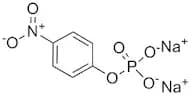
CAS:Formula:C20H12O10P2Na4Purezza:min. 95%Colore e forma:White to off white, Crystalline powder, ClearPeso molecolare:566.20p-Nitrophenylphosphate Disodium Salt Hexahydrate (pNPP) for molecular biology, 99%
CAS:Formula:C6H4NO6PNa2·6H2OPurezza:min. 99%Colore e forma:White to pale yellow, Crystalline powder, Clear, Pale yellowPeso molecolare:371.15




![[2-(2-Thiazolylazo)-4-cresyl]phosphate, p-toluidine sal](/_next/image/?url=https%3A%2Fstatic.cymitquimica.com%2Fproducts%2F3D%2Fthumb-webp%2FFT172196.webp&w=3840&q=75)
![[2-(2-Thiazolylazo)-4-cresyl]-β-D-galactopyranoside](/_next/image/?url=https%3A%2Fstatic.cymitquimica.com%2Fproducts%2F3D%2Fthumb-webp%2FFT172198.webp&w=3840&q=75)





![Azoic Diazo Component 24 (Salt) [for Biochemical Research]](/_next/image/?url=https%3A%2Fstatic.cymitquimica.com%2Fproducts%2F3B%2Fthumb-webp%2FB0785.webp&w=3840&q=75)




![Disodium 1-Naphthyl Phosphate Hydrate [Substrate for Phosphatase]](/_next/image/?url=https%3A%2Fstatic.cymitquimica.com%2Fproducts%2F3B%2Fthumb-webp%2FP0263.webp&w=3840&q=75)