Substrati enzimatici
Sottocategorie di "Substrati enzimatici"
Trovati 1526 prodotti di "Substrati enzimatici"
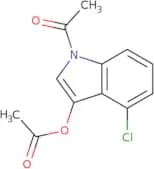
4-Chloro-3-Indoxyl-1,3-diacetate
CAS:4-Chloro-3-indoxyl-1,3-diacetate is a fluorogenic or chromogenic substrate used in food testing. It is also an enzyme substrate that can be used to detect the presence of bioluminescence. 4-Chloro-3-indoxyl-1,3-diacetate has been shown to have high purity and high quality for use in diagnostic kits. 4-Chloro-3-indoxyl-1,3-diacetate is a ligand that is conjugated with other molecules to form complexes for use in fluorescence and chemiluminescence experiments.Purezza:Min. 95%Peso molecolare:251.67 g/mol4-Methylumbelliferyl-beta-D-glucopyranoside
CAS:Fluorogenic substrate for beta-glucosidase yielding a blue fluorescent solution. Used for the detection of beta-glucosidase as an indicator of Enterococci.Formula:C16H18O8Purezza:Min. 99 Area-%Peso molecolare:338.32 g/mol2-Nitrophenyl b-D-xylopyranoside
CAS:Chromogenic substrates targeting beta-xylosidasePurezza:Min. 95%Colore e forma:PowderPeso molecolare:271.22 g/mol3-Indoxyl-β-D-galactopyranoside
CAS:Chromogenic substrate for β-D-galactosidase, yielding a blue precipitate upon cleavage.Formula:C14H17NO6Purezza:Min. 98 Area-%Peso molecolare:295.29 g/molRef: 3D-I-6000
5gPrezzo su richiesta10gPrezzo su richiesta25gPrezzo su richiesta50gPrezzo su richiesta100gPrezzo su richiesta-Unit-ggPrezzo su richiesta4-Methylumbelliferyl-β-L-fucopyranoside
CAS:4-Methylumbelliferyl-beta-L-fucopyranoside is a fluorogenic substrate that is used in food testing. It also has uses as a chromogenic substrate and a ligand for biological studies. 4-Methylumbelliferyl-beta-L-fucopyranoside is a conjugate of 4-methylumbelliferone and beta-D-fucopyranosyl ester, which is an enzyme substrate for the detection of phosphatases. This product can be used to detect the activity of phosphatase enzymes in various media, including culture media, environmental testing, and staining. 4MUFBPY also has chemiluminescent properties that can be used for bioluminescence assays.Formula:C16H18O7Peso molecolare:322.31 g/molRef: 3D-M-5541
1gPrezzo su richiesta5gPrezzo su richiesta250mgPrezzo su richiesta500mgPrezzo su richiesta2500mgPrezzo su richiesta-Unit-ggPrezzo su richiesta4-Methylumbelliferyl phosphate, free acid
CAS:A sensitive fluorogenic substrate for fluorometric and UV-spectrophotometric assays of phosphatases. It is used for the detection of C. perfringens because acid phosphatase is a highly specific indicator for C. perfringens.Formula:C10H9O6PPeso molecolare:256.15 g/mol2-Nitrophenyl α-D-glucopyranoside
CAS:2-Nitrophenyl a-D-glucopyranoside is a chromogenic substrate commonly used to assay the activity of glucosidases. Upon cleavage of the glycosidic bond by glucosidases, the released 2-nitrophenyl group yields a yellow color detectable by spectrophotometry. This substrate has high sensitivity and is widely used in a variety of applications, including drug discovery and enzyme kinetics studies.
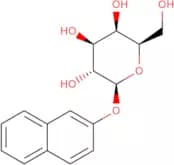
Formula:C12H15NO8Purezza:Min. 95%Colore e forma:White to off-white solid.Peso molecolare:301.25 g/mol2-Naphthyl b-D-galactopyranoside
CAS:2-Naphthyl beta-D-galactopyranoside is a glycoside that is found in the flowers of the plant Eschscholzia californica. It is used as a localizer for bacterial strains and can be hydrolyzed by enzymes to release naphthalene. 2-Naphthyl beta-D-galactopyranoside has been shown to inhibit the growth of corynebacterium and diazonium salt, which may be due to its ability to bind to DNA and disrupt protein synthesis. The potential use of this molecule is for its insolubility, which prevents it from being absorbed by skin cells.
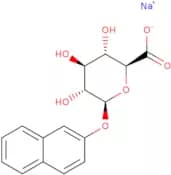
Formula:C16H18O6Purezza:Min. 99 Area-%Colore e forma:PowderPeso molecolare:306.31 g/mol2-Naphthyl-Beta-D-Glucuronide Sodium Salt
CAS:2-Naphthyl-beta-D-glucuronide sodium salt is an enzyme substrate to detect beta-glucuronidase. The enzyme cleaves the glycosidic bond in 2-naphthyl-beta-D-glucuronide to release 2-naphtol and glucuronic acid. Beta-glucuronidase activity assays are important in many fields such as cancer research, as the enzyme is expressed in some tumors and its activity can be targeted for cancer therapy. The enzyme has also an important role in drug metabolism as it recognizes and binds to drug glucuronide conjugate (as 2-naphthyl-beta-D-glucuronide) facilitating its hydrolysis to release the active part. 2-Naphthyl-beta-D-glucuronide sodium salt has a higher solubility as it is in its salt form.Formula:C16H15NaO7Purezza:Min. 95%Colore e forma:PowderPeso molecolare:342.28 g/mol2-Nitrophenyl-N-acetyl-beta-D-glucosaminide
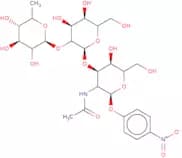
CAS:Chromogenic β-Glucosaminidase substrate yielding a yellow absorbent solution upon cleavage.Formula:C14H18N2O8Purezza:Min. 99 Area-%Peso molecolare:342.31 g/mol4-Nitrophenyl 2-acetamido-3-O-[2-O-a-L-fucopyranosyl-b-D-galactopyranosyl)-2-deoxy-b-D-galactopyranoside
CAS:4-Nitrophenyl 2-acetamido-3-O-[2-O-a-L-fucopyranosyl-b-D-galactopyranosyl)-2-deoxyb-D-galactopyranoside is a water soluble, fluorescent probe that can be used for detecting the presence of β-(1→4) -linked galactosaminoglycans. The dye is a substrate for enzymes such as α--mannosidase, β--glucuronidase and β--galactosidase. The dye is also an excellent ligand for lectins such as concanavalin A and wheat germ agglutinin. This product is a diagnostic reagent that has been shown to have high purity and quality. It has CAS No. 93496-53-8 and can be used in food testing, bioluminescence, environmental testing, or high purity applications.
Formula:C26H38N2O17Purezza:Min. 95%Peso molecolare:650.58 g/mol6-Chloro-3-indoxyl-3-acetate
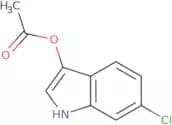
CAS:6-Chloro-3-indoxyl-3-acetate is a chromogenic substrate for carboxylesterase yielding a salmon colored precipitate upon cleavage. Mainly used in histochemistry.Purezza:Min. 95%Colore e forma:White PowderPeso molecolare:209.63 g/molAquaSpark® beta-D-glucuronide, 10 mM in DMSO, Ramot at Tel-Aviv University Ltd. Patent family WO 2017/130191
CAS:For use in bacterial detection
Formula:C34H37ClO13Purezza:Min. 95%Colore e forma:Clear LiquidPeso molecolare:688.19 g/mol5-Iodo-3-indolyl-b-D-galactopyranoside-6-sulfate sodium salt
5-Iodo-3-indolyl-b-D-galactopyranoside-6-sulfate sodium salt is a high purity, water soluble fluorogenic substrate for the detection of beta-galactosidase activity. This product is used in food testing, environmental testing, and diagnostics. 5-Iodo-3-indolyl-b-D-galactopyranoside (5IIAG) is a beta galactosidase substrate that provides a convenient method for determining beta galactosidase activity. This product is also used as an indicator to measure the rate of hydrolysis of ester bonds in other compounds that contain acid functional groups such as glycerides and oils.Purezza:Min. 95%Peso molecolare:523.24 g/mol2-Nitrophenyl b-D-arabinopyranoside
2-Nitrophenyl b-D-arabinopyranoside is a chemical compound that is used in the detection of ATP by chemiluminescence. It acts as a substrate for enzymes such as luciferase and catalase, which catalyze the oxidation of 2-nitrophenyl b-D-arabinopyranoside to phenol and carbon dioxide with the release of light. This reaction can be used in diagnostic applications such as detecting bacteria in culture media or diagnosing food spoilage. 2-Nitrophenyl b-D-arabinopyranoside can also be used as a conjugate to detect proteins or nucleic acids by fluorescence spectroscopy. The CAS number for this compound is 107772-06-1.
Purezza:Min. 95%Peso molecolare:271.22 g/mol4-Methylumbelliferyl N,N',N''-triacetyl-b-D-chitotrioside
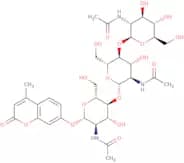
CAS:4-Methylumbelliferyl N,N',N''-triacetyl-beta-D-chitotrioside is a fluorogenic substrate for chitinase. After enzymatic cleaveage, free 4-methylumbelliferone (also known as hymecromone) is released, exhibiting blue fluorescence upon excitation with UV light. The strongest fluorescence of 4-methylumbelliferone requires deprotonation of the hydroxyl group (thus requires alkaline pH), with a maximal fluorescence intensity obtained with excitation at 350 to 370 nm and emission at 440 to 470 nm. The use of 4-methylumbelliferyl N,N',N''-triacetyl-beta-D-chitotriosideas a substrate for measuring the chitinase activity is used for fungal infection assays.Formula:C34H47N3O18Purezza:Min. 95.0 Area-%Colore e forma:White Off-White PowderPeso molecolare:785.75 g/molCoelenterazine e
CAS:Coelenterazine e is a synthetic, fluorescent amino acid that can be used to measure calcium ion concentration. It binds to calcium ions and emits light when excited with blue light. Coelenterazine e is an analog of coelenteramide, which is a luminescent protein found in jellyfish. Coelenterazine e has been shown to emit fluorescence when it interacts with calcium ions, while coelenteramide emits bioluminescence instead. The emission of light from coelenterazine e is due to the stabilization of the molecule by calcium ions.Formula:C28H23N3O3Purezza:Min. 90.0 Area-%Peso molecolare:449.51 g/molRef: 3D-C-7020
5mgPrezzo su richiesta10mgPrezzo su richiesta25mgPrezzo su richiesta50mgPrezzo su richiesta100mgPrezzo su richiesta-Unit-mgmgPrezzo su richiesta6-Chloro-3-indoxyl-alpha-D-galactopyranoside
CAS:Chromogenic substrate for α-galactosidase yielding a salmon-colored precipitate.Formula:C14H16ClNO6Peso molecolare:329.74 g/molLuciferin-β-D-galactoside
CAS:Luciferin-beta-D-galactoside is an acceptor in immunoassays. It is used as a label for specific antibodies and antigens, and the light emitted by this compound can be measured with a luminometer. Luciferin-beta-D-galactoside binds to the bacterial enzyme β-galactosidase, which catalyzes the hydrolysis of lactose to form glucose and galactose. Mammalian cells have been used as a source of β-galactosidase in order to measure luciferin-beta-D-galactoside activity. The substrate specificity of this enzyme has also been studied using mammalian tissue extracts.Formula:C17H18N2O8S2Purezza:Min. 95 Area-%Peso molecolare:442.46 g/molRef: 3D-L-8121
5mgPrezzo su richiesta10mgPrezzo su richiesta25mgPrezzo su richiesta50mgPrezzo su richiesta100mgPrezzo su richiesta-Unit-ggPrezzo su richiestaD-Psicose 6-phosphate sodium
CAS:D-Psicose 6-phosphate sodium is an analog from D-psicose, a rare, natural monosaccharide with 70% the sweetness of sucrose. It is used as a low-calorie sweetener in food industry. In research, it is used to investigate its effects on metabolism, diabetes, and other health conditions.Formula:C6H13O9P•NaPurezza:90%MinColore e forma:PowderPeso molecolare:283.14 g/mol