Substrati enzimatici
Sottocategorie di "Substrati enzimatici"
Trovati 1526 prodotti di "Substrati enzimatici"
4-Methylumbelliferyl phosphate, free acid
CAS:A sensitive fluorogenic substrate for fluorometric and UV-spectrophotometric assays of phosphatases. It is used for the detection of C. perfringens because acid phosphatase is a highly specific indicator for C. perfringens.Formula:C10H9O6PPeso molecolare:256.15 g/molL-Phenylalanine 7-amido-4-methylcoumarin, trifluoroacetate salt
CAS:Please enquire for more information about L-Phenylalanine 7-amido-4-methylcoumarin, trifluoroacetate salt including the price, delivery time and more detailed product information at the technical inquiry form on this pageFormula:C21H19F3N2O5Purezza:Min. 99 Area-%Peso molecolare:436.39 g/mol2-Nitrophenyl α-D-glucopyranoside
CAS:2-Nitrophenyl a-D-glucopyranoside is a chromogenic substrate commonly used to assay the activity of glucosidases. Upon cleavage of the glycosidic bond by glucosidases, the released 2-nitrophenyl group yields a yellow color detectable by spectrophotometry. This substrate has high sensitivity and is widely used in a variety of applications, including drug discovery and enzyme kinetics studies.
Formula:C12H15NO8Purezza:Min. 95%Colore e forma:White to off-white solid.Peso molecolare:301.25 g/molNaphthol AS-BI N-acetyl-beta-D-glucosaminide
CAS:Naphthol AS-BI N-acetyl-beta-D-glucosaminide is a fluorogenic substrate for the pararosaniline-glyoxalase (PG) reaction. This substrate is used to study enzymatic activity in two human isoenzymes of PG, PG I and PG II. The conversion of this substrate by PG I or PG II results in a color change from yellow to red. Naphthol AS-BI N-acetyl-beta-D-glucosaminide may be used as an experimental tool to measure the activity of these enzymes and to study the effect of inhibitors on their activity. It can also be used as a marker for studying enzyme transfer between cells.Formula:C26H27BrN2O8Purezza:Min. 97.0 Area-%Peso molecolare:575.42 g/mol2-Naphthyl b-D-galactopyranoside
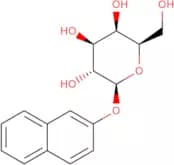
CAS:2-Naphthyl beta-D-galactopyranoside is a glycoside that is found in the flowers of the plant Eschscholzia californica. It is used as a localizer for bacterial strains and can be hydrolyzed by enzymes to release naphthalene. 2-Naphthyl beta-D-galactopyranoside has been shown to inhibit the growth of corynebacterium and diazonium salt, which may be due to its ability to bind to DNA and disrupt protein synthesis. The potential use of this molecule is for its insolubility, which prevents it from being absorbed by skin cells.
Formula:C16H18O6Purezza:Min. 99 Area-%Colore e forma:PowderPeso molecolare:306.31 g/mol4-Methylumbelliferyl-N-acetyl-β-D-glucosaminide-6-sulfate, sodium salt
CAS:4-Methylumbelliferyl 2-acetamido-2-deoxy-beta-D-glucopyranoside-6-sulfate sodium salt is a high-quality fluorogenic substrate specifically designed for the detection and quantification of various enzymes, including beta-glucosidases and sulfatases. Upon hydrolysis by the target enzyme, this substrate releases the highly fluorescent 4-methylumbelliferone, allowing for real-time monitoring and accurate measurement of enzyme activities in biochemical assays, diagnostic tests, and research applications. 4-Methylumbelliferyl 2-acetamido-2-deoxy-beta-D-glucopyranoside-6-sulfate sodium salt has excellent solubility in water, ensuring a consistent and reliable performance in different experimental conditions. This versatile substrate is an essential tool for researchers and industry professionals who require a sensitive and reproducible detection method for enzymes of interest.Formula:C18H20NNaO11SPurezza:Min. 98.0 Area-%Peso molecolare:481.41 g/molRef: 3D-M-5505
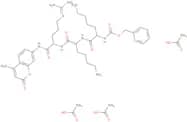
5mgPrezzo su richiesta25mgPrezzo su richiesta50mgPrezzo su richiesta100mgPrezzo su richiesta250mgPrezzo su richiesta-Unit-ggPrezzo su richiestaN-CBZ-L-Lysyl-L-lysyl-L-arginine 7-amido-4-methylcoumarin triacetate
CAS:Prodotto controllatoN-CBZ-L-Lysyl-L-lysyl-L-arginine 7-amido-4-methylcoumarin triacetate is a synthetic peptide substrate used as a fluorogenic substrate for aminopeptidase.Formula:C35H51N9O7•(C2H4O2)3Purezza:Min. 95%Colore e forma:PowderPeso molecolare:903.03 g/molNaphthol AS-BI sulphate potassium
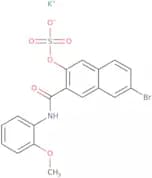
CAS:Naphthol AS-BI sulphate potassium salt is a modified naphtol AS substrate used for alkaline and acid phosphatase.Formula:C18H14BrNO6S•KPurezza:Min. 95%Peso molecolare:491.38 g/mol3-Indoxyl sulfate, potassium salt
CAS:3-Indoxyl sulfate, potassium salt (3ISK) is a chemical compound that is soluble in water. It has been used as a marker for bowel disease, and it has been shown to react with analytical methods such as titration calorimetry and lc-ms/ms. 3ISK can be used to determine the optimum concentration for pharmacological treatment of bowel disease. The metabolic fate of 3ISK has been studied extensively and it is found that 3ISK is metabolized by microbial enzymes in the gut, which may lead to an increased incidence of bowel disease in patients with low levels of microbial metabolism. 3ISK also plays an important physiological function by maintaining mitochondrial membrane potential, which could have implications for pharmacological treatment of bowel disease.Formula:C8H6KNO4SPurezza:Min. 98.0 Area-%Peso molecolare:251.31 g/mol4-Nitrophenyl-beta-D-glucopyranoside
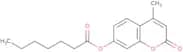
CAS:Chromogenic β-glucosidase substrate yielding a yellow solution upon cleavage.Formula:C12H15NO8Purezza:Min. 99.0 Area-%Peso molecolare:301.25 g/mol4-Methylumbelliferyl heptanoate
CAS:Lipase targeting MOSCERDAM® substrateFormula:C17H20O4Purezza:Min. 95%Colore e forma:White PowderPeso molecolare:288.34 g/molGlycyl-glycine 7-amido-4-methylcoumarin hydrochloride
CAS:Glycyl-glycine 7-amido-4-methylcoumarin hydrochloride (Gly-Gly-AMC) is a fluorescent compound that can be used as a probe for the transfer of glycine in the brain. Gly-Gly-AMC binds to Langerhans cells and is transferred by an anterograde axonal transport mechanism from the peripheral nervous system to the central nervous system. The binding of Gly-Gly-AMC to Langerhans cells has been shown to activate them, which induces the release of inflammatory mediators into the surrounding tissue. This activity may be due to increased levels of calcium ions, which are known to induce exocytosis in these cells. Glycine is also involved in depression and other mental disorders, as well as muscle and brain activity.Formula:C14H16ClN3O4Peso molecolare:325.75 g/molRef: 3D-G-6100
1gPrezzo su richiesta5gPrezzo su richiesta10gPrezzo su richiesta500mgPrezzo su richiesta2500mgPrezzo su richiesta-Unit-ggPrezzo su richiesta4-Nitrophenyl-alpha-D-glucopyranoside
CAS:Chromogenic substrate for α-D-glucosidase yielding a yellow solution upon cleavage. Also used for the detection of glucansucrases and for yeast α-D-glucosidase and for studies of the crystal structure of the complexes of concanavalin A.
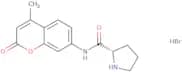
Formula:C12H15NO8Purezza:Min. 98.0 Area-%Peso molecolare:301.26 g/molL-Proline 7-amido-4-methylcoumarin hydrobromide
CAS:L-Proline 7-amido-4-methylcoumarin hydrobromide is a fluorogenic substrate that is used to measure esterase and peptidase activity in a variety of animal and microbial sources. This compound has been shown to have a lipase activity. L-Proline 7-amido-4-methylcoumarin hydrobromide is also used as an enzyme preparation and as an enzyme source.Formula:C15H17BrN2O3Peso molecolare:353.22 g/molRef: 3D-P-7280
1gPrezzo su richiesta5gPrezzo su richiesta10gPrezzo su richiesta500mgPrezzo su richiesta2500mgPrezzo su richiesta-Unit-ggPrezzo su richiesta4-Nitrophenyl 2-acetamido-2-deoxy-a-D-glucopyranoside
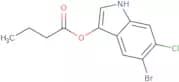
CAS:4-Nitrophenyl 2-acetamido-2-deoxy-a-D-glucopyranoside is a chromogenic pNP substrate specifically designed for the analysis of N-acetylglucosaminidase activity. Upon enzyme action, the substrate releases 4-nitrophenol, a yellow compound that can be detected by spectrophotometric methods, providing a reliable and sensitive means of quantifying enzyme activity. This versatile substrate is widely used in biochemical studies, disease diagnostics, and the enzyme production industry.Formula:C14H18N2O8Colore e forma:White Off-White PowderPeso molecolare:342.3 g/mol5-Bromo-6-chloro-3-indoxyl butyrate
CAS:5-Bromo-6-chloro-3-indoxyl butyrate is a chromogenic substrate that yields a magenta-colored product after cleavage. The chromophore 5-bromo-6-chloro-indoxyl is released, generating the observable color. It is used in lipid digestion assays.Formula:C12H11BrClNO2Purezza:Min. 95%Colore e forma:PowderPeso molecolare:316.58 g/molAldol® 515 caprylate solution, 0.50 M in DMSO, Biosynth Patent: EP 2427431 and US 8940909
CAS:Aldol® 515 caprylate is a chromogenic and fluorogenic enzyme substrate used for detection of lipase activity. The colorless enzyme substrate is cleaved by C8 esterases, yielding development of red coloration. In addition, red fluorescence is generated when Aldol® 355 fluorescence enhancer or a suitable matrix is present. Aldol® 515 caprylate can be used in enzyme assays and live bacterial cultures. Aldol® 515 caprylate is suitable for use in liquid and solid media, under aerobic as well as anaerobic conditions.Formula:C31H34N2O3Purezza:Min. 95%Colore e forma:Clear Liquid PowderPeso molecolare:482.62 g/molSalmon-pal
CAS:6-Chloro-1H-indol-3-yl hexadecanoate is a chromogenic substrate for an enzyme that oxidizes it to produce a blue color. It can be used in the diagnosis of bacterial infections, such as tuberculosis and leprosy. 6CHIH is a ligand for various enzymes, including lactate dehydrogenase, which catalyzes the conversion of pyruvate to lactic acid. This compound reacts with oxygen to produce light in the presence of a catalyst. 6CHIH is also used as a fluorescent tag for protein labeling and detection. 6CHIH has been shown to be effective in detecting bacteria in food products and water samples using bioluminescence techniques. The high purity and quality of this compound make it suitable for use in diagnostics, culture media, and environmental testing.Purezza:Min. 95%Peso molecolare:406 g/mol2-Chloro-4-nitrophenyl α-D-mannopyranoside
CAS:2-Chloro-4-nitrophenyl alpha-D-mannopyranoside is a substrate used to measure the alpha-mannosidase activity. This enzyme plays a crucial role in the lysosomal degradation of asparagine-linked carbohydrate cores of glycoproteinsis. The use of 2-Chloro-4-nitrophenyl alpha-D-mannopyranoside in diagnostic assays is important as a deficiency in alpha-mannosidase leads to the accumulation of mannose-rich oligosaccharides in lysosomes, causing a range of health problems collectively known as alpha-mannosidosis.
Formula:C12H14ClNO8Purezza:Min. 98 Area-%Colore e forma:White PowderPeso molecolare:335.69 g/mol2-Nitrophenyl b-D-arabinopyranoside
2-Nitrophenyl b-D-arabinopyranoside is a chemical compound that is used in the detection of ATP by chemiluminescence. It acts as a substrate for enzymes such as luciferase and catalase, which catalyze the oxidation of 2-nitrophenyl b-D-arabinopyranoside to phenol and carbon dioxide with the release of light. This reaction can be used in diagnostic applications such as detecting bacteria in culture media or diagnosing food spoilage. 2-Nitrophenyl b-D-arabinopyranoside can also be used as a conjugate to detect proteins or nucleic acids by fluorescence spectroscopy. The CAS number for this compound is 107772-06-1.
Purezza:Min. 95%Peso molecolare:271.22 g/mol