40-PHPT-016 - usp-467-proficiency-test-for-residual-solvents-in-solid-pharmaceutical-materials
Ref: 23-PHR10005
1gPrezzo su richiesta10gPrezzo su richiestaPharmaceutical Journal (The)
Scheduled closure of pharmpress.com
ISSN 0031-6873
DESCRIPTION:
All the latest news, information and learning resources on pharmacy and pharmaceutical sciences Published by the Royal Pharmaceutical Society, The Pharmaceutical Journal is updated online daily with authoritative content on global pharmacy and pharmaceutical science. You can also download the PJ app on Android and iPhone for easy access to content when on the move. The Pharmaceutical Journal brings you the latest news on policies and clinical research to developments affecting the pharmacy profession and the industry. It provides insightful comment articles and career advice, as well as comprehensive learning and continuing professional development (CPD) resources. The Pharmaceutical Journal is free with RPS Membership - Join now
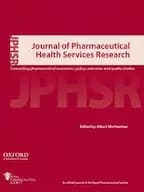
Journal of Pharmaceutical Health Services Research
Wertheimer, Albert
Scheduled closure of pharmpress.com
Edited by Albert Wertheimer, Temple University School of Pharmacy, Philadelphia, USA
ISSN 1759-8885
Paperback 275 x 210mm
DESCRIPTION:
The Royal Pharmaceutical Society's learned journals are published by Oxford University Press on behalf of the Society.
Journal of Pharmaceutical Health Services Research aims to become a focal point for the publication of all aspects of research within the field of health services research that relate to pharmaceuticals.
Health services research (HSR) can be defined as the multidisciplinary field of scientific investigation that studies how social factors, financing systems, organizational structures and processes, health technologies, and personal behaviours affect access to health care, the quality and cost of health care, and quantity and quality of life. Studies in health services research examine outcomes at the individual, family, organizational, institutional, community, and population level. HSR studies examine how people get access to health care, how much care costs, and what happens to patients as a result of this care. The primary goals of HSR are to identify the most effective ways to organize, manage, finance, and deliver high quality care, reduce medical errors and improve patient safety.
Pharmaceutical health services research incorporates pharmacoeconomics, health economics, finance, health outcomes, health planning and policy analysis, technology assessment and pharmacoepidemiology. The Journal welcomes papers on cost-benefit and cost-effectiveness studies, and the financial implications and political outcomes of drug policy.
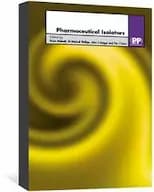
Pharmaceutical Isolators
Midcalf, Brian; Phillips, Mitchell; Neiger, John S; Coles, Tim J
First edition
Scheduled closure of pharmpress.com
Edited by Brian Midcalf - Assistant PTQA Course Director, School of Continuing Education, University of Leeds, Mitchell Phillips - West Midlands Quality Assurance Pharmacist, John S Neiger - Chairman, Envair Limited, Haslingden and Tim J Coles - Isolator Specialist, GRC Consultants, Alton
ISBN 978 0 85369 573 8
Published May 2004
Paperback 234 x 156mm (288pp)
DESCRIPTION:
Pharmaceutical Isolators is an indispensable guide to the design, construction, commissioning, maintenance, use and monitoring of pharmaceutical isolators. The current validation protocols are explained and the book includes some useful technical appendices.
Written through the combined technical expertise of the Isolator Working Party, this new title will assist both experienced and new users to understand and manage this technology. The book will also be a useful reference source for auditors, inspectors and all those involved in standard setting and monitoring.
CONTENTS:
1. Isolator Applications
2. Design
3. Transfer Devices
4. Access Devices
5. Siting of Isolators and Clothing Regimes
6. Cleaning, Decontamination & Disinfection
7. Physical Monitoring
8. Leak Testing
9. Microbiological Monitoring
10. Validation
11. Standards and Guidelines
12. Definiton of Terms
A1. 'Handling Cytotoxic Drugs in Isolators in NHS Pharmacies.' HSE/MCA Guidance
A2. Training
A3. Stainless Steel for Isolators
A4. HEPA Filtration Mechanisms, MPPS and Typical Particle Sizes
A5. Calculations to Estimate the Size of a Leak That Can Be Detected Using DOP
A6. Activated Carbon Filters
A7. Useful Tables
REVIEWS:
01-Mar-05, Drug Development and Industrial Pharmacy
'The text is written in a clear and concise manner and desired information is readily accessible.'
Linda Felton, University of Mexico, College of Pharmacy, Mexico
Colore e forma:234 x 156mmPharmaceutical Toxicology
Mulder, Gerard J; Dencker, Lennart
First edition
Scheduled closure of pharmpress.com
Edited by Gerard J Mulder - Director of Research and Lennart Dencker - Professor and Chairman of Toxicology; Dean, Faculty of Pharmacy at Uppsala University
ISBN 978 0 85369 593 6
Published Jun 2006
Paperback 234 x 156mm (280pp)
DESCRIPTION:
Pharmaceutical Toxicology explains the methodology and requirements of pre-clinical safety assessments of new medicines. With the focus on medicinal drugs, the most important safety issues of drugs are covered. This includes registration requirements of new drugs and pharmacovigilance. After a general introduction and a number of chapters on basic toxicological principles, organ toxicity of drugs is illustrated by chapters on toxicity in the liver, in the kidney, in the respiratory system and in the immune system. This book combines a broad treatment of the issues relevant for assessing the safety/efficacy balance of a new drug with information on the toxicological knowledge base and methodology.
Toxicology studies are carried out on all drug substances to ensure safety. This is an introductory text for students at BSc, MSc and PhD levels, and will be an excellent companion to pharmacology textbooks.
CONTENTS:
1. General Toxicology
2. Drug Metabolism: Inactivation and Bioactivation of Xenobioptics
3. Molecular and Cellular Mechanisms of Toxicity
4. Teratology
5. Genotoxicity
6. Carcinogenicity of Drugs
7. Liver Toxicity
8. Kidney Toxicity
9. Toxicology in the Respiratory System
10. Immunotoxicity
11. Clinical Toxicology
12. Safety Assessment of Pharmaceuticals: Regulatory Aspects
13. Pharmacovigilance
REVIEWS:
01-Jun-07, Summer 2007 Issue of the British Toxicology Society Newsletter
'...this is a great little book...the text is aimed primarily at new PHD students in the pharmaceutical and related sciences but could equally well serve taught postgraduate students on toxicology, clinical pharmacology, drug development and safety or similar courses. The book 'does exactly what it says on the tin' and will definitely whet the appetite of enthusiastic young researched for toxicology.'
Heather M Wallace, Summer 2007 issue of the British Toxicology Society Newsletter
01-Nov-06, Irish Pharmacy Journal
'The text is well written, concise and easy to understand with informative and helpful illustrations, figures and tables...it serves as an excellent companion to pharmacology textbooks, dealing with the issues relevant for assessing the safety of new drugs...a good starting point for the novice toxicologist, ambitious undergraduate student or graduate students working in the pharmaceutical sciences.'
Irish Pharmacy Journal, November 2006, p418
Colore e forma:234 x 156mmPharmaceutical Calculations Workbook
Rees, Judith A; Smith, Ian
First edition
Scheduled closure of pharmpress.com
Judith A Rees - Senior Lecturer, School of Pharmacy and Pharmaceutical Sciences, University of Manchester and Ian Smith - Boots Teacher Practitioner, School of Pharmacy and Pharmaceutical Sciences, University of Manchester
ISBN 978 0 85369 602 5
Published Nov 2005
Paperback 246 x 189mm (240pp)
DESCRIPTION:
Pharmaceutical Calculations Workbook is the companion self-study aid to Introduction to Pharmaceutical Calculations . It contains practice calculations (with answers) similar to those encountered in pharmacy exams and in practice. Each chapter contains a variety of exercises for practising calculations using the methods covered in the companion text. Tables for completion are included in addition to individual drug- or patient-specific questions. This workbook will be invaluable to pharmacy students and preregistration pharmacists, as well as others who want to practise basic pharmaceutical calculations.
Save money by buying our special calculations package.
CONTENTS:
1. Calculations involving rational numbers
2. Calculations involving systems of units
3. Calculations involving concentrations
4. Calculations involving dilutions
5. Calculations involving formulations
6. Calculations involving doses
7. Calculations involving density, displacement volumes and displacement values
8. Calculations involving molecular weights
9. Calculations involving parenteral solutions
REVIEWS:
15-Oct-06, American Journal of Pharmaceutical Education
'Pharmaceutical Calculations Workbook provides a source of practice problems for students desiring more preparation, as well as providing a self-assessment resource to assure basic pharmacy calculations skills.'
Ann Zweber, BPharm, Oregon State University. American Journal of Pharmaceutical Education. v.70(5); Oct 15, 2006 (review received from the authors)
Colore e forma:246 x 189mmIntroduction to Statistics in Pharmaceutical Clinical Trials
Durham, Todd A; Turner, J Rick
First edition
Scheduled closure of pharmpress.com
Todd A Durham - Senior Director, Biostatistics and Data Management, Inspire Pharmaceuticals and J Rick Turner - Associate Professor of Clinical Research
ISBN 978 0 85369 714 5
Published Mar 2008
Paperback 246 x 189mm (240pp)
DESCRIPTION:
Introduction to Statistics in Pharmaceutical Clinical Trials is presented in the context of clinical trials conducted during pharmaceutical drug development.
This novel approach teaches the computational steps needed to conduct analyses. It also provides a conceptual understanding of how these analyses provide information that forms the basis for decision making throughout the drug development process.
This textbook conveys:
- why, and how data are collected in clinical studies
- how these data are summarized and analyzed
- what the results mean in the context of the clinical research question
- how the results are communicated to regulatory agencies and to the scientific and medical communities.
All students of pharmaceutical sciences and clinical research need a solid knowledge and understanding of the nature, methods, application, and importance of statistics. Introduction to Statistics in Pharmaceutical Clinical Trials will also be invaluable to professionals entering the pharmaceutical, biotechnology, and contract research organization industries who wish to gain a broader understanding of study design, research methodology, and statistical analysis and interpretation in clinical trials.
CONTENTS:
1. The Discipline of Statistics: Introduction and Terminology
2. The Role of Clinical Trials in New Drug Development
3. Research Questions and Research Hypotheses
4. Study Design and Experimental Methodology
5. Data, Central Tendency and Variation
6. Probability, Hypothesis Testing and Estimation
7. Early-phase Clinical Trials
8. Confirmatory Clinical Trials: Safety Data I
9. Confirmatory Clinical Trials: Safety Data II
10. Confirmatory Trials: Analysis of Categorical Efficacy Data
11. Confirmatory Clinical Trials of Analysis of Continuous Efficacy Data
12. Additional Statistical Considerations in Clinical Trials
13. Concluding Comments: Appendix: References
REVIEWS:
01-Aug-08, Doody Enterprises, Inc
'It fills the gap that exists between books that focus on research design and those that address statistical methods. The authors have clearly met this worthy objective. This book fills a unique position and uses innovative method.'
Michael R Jacobs, BS, PharmD (Temple University of Pharmacy) Doody Enterprises July 2008
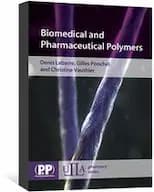
Colore e forma:246 x 189mmBiomedical and Pharmaceutical Polymers
Labarre, Denis; Ponchel, Gilles; Vauthier, Christine
First edition
Scheduled closure of pharmpress.com
Denis Labarre, Faculty of Pharmacy, University Paris South, France; Gilles Ponchel, Faculty of Pharmacy, University Paris South, France; Christine Vauthier, CNRS, France
ISBN 978 0 85369 730 5
Published Oct 2010
Paperback 234 x 156mm (176pp)
DESCRIPTION:
Biomedical and Pharmaceutical Polymers is the only book available for introducing polymers to graduate or post-graduate students who use them in the biomedical and pharmaceutical fields.
Polymers are becoming increasingly present in the domain of health yet introduction to polymers is not frequently taught. This much needed and timely book will provide students with an introduction to general concepts of polymer science and some insights into speciality polymers. In four sections the book covers:
- why study polymers for the health sciences?
- general characteristics of polymers
- main methods and processes to synthesize polymers
- special properties of polymers
The final section of the book also contains case studies and detailed examples of biomedical and pharmaceutical applications.
Biomedical and Pharmaceutical Polymers is a user-friendly textbook which will be an essential reference for postgraduate pharmaceutical science students, pharmaceutical scientists worldwide and pharmacy undergraduate students with an interest in polymers.
Biomedical and Pharmaceutical Polymers is also available as an eBook.
CONTENTS:
1. Introduction: Why study polymers for the health sciences
- Polymers are large molecules that nature relies on
- A brief history of polymers
- Definitions
- Morphology and nomenclature of polymers
2. General characteristics of polymers
- Characterisation of polymers
- Specific properties of polymers in the presence of liquid media
- Relationships between structure of polymers and cohesion of materials
- Properties of polymers as materials
3. Main methods and processes to synthesise polymers
- Why there is a need to synthesise polymers
- Introducing step and chain polymerisation
- Some examples of step polymerisation: from small reagents and from prepolymers
- Free radical chain polymerisation
- Limitations of polymerisation
- Overview of other synthetic methods
- Polymerisation reaction processes
- Copolymerisation
- Modifications of polymers
4. Special properties of polymers, case studies and detailed examples of applications
- Properties of block copolymers: phase separation in solution and at solid state
- Biodegradable and bioerodible polymers
- Applications of polymers in biomedical uses
- Applications of polymers in pharmaceutical uses
Glossary
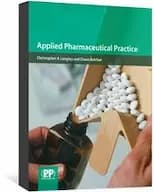
Colore e forma:234 x 156mmApplied Pharmaceutical Practice
Langley, Christopher A; Belcher, Dawn
First edition
Scheduled closure of pharmpress.com
Christopher A Langley - Senior Lecturer in Pharmacy Practice, Aston University School of Pharmacy and Dawn Belcher - Teaching Fellow, Pharmacy Practice, Aston University School of Pharmacy
ISBN 978 0 85369 746 6
Published Sep 2008
Paperback 246 x 189mm (304pp)
DESCRIPTION:
Applied Pharmaceutical Practice guides the student pharmacist and pharmacy technician through the steps involved in pharmaceutical dispensing. It is ideal as a companion to the compulsory dispensing courses found in all undergraduate MPharm programmes and the equivalent technical training courses.
Contents include:
- medicines classification and standard operating procedures
- NHS supply in the community and within hospitals
- non-NHS supply
- controlled drugs
- emergency supply
- patient counselling and communication
- poisons and spirits
This practical textbook contains useful exercises with an answers section and numerous examples. It is written by authors with extensive experience within the field.
CONTENTS:
1. Introduction and the Basics of Medicines Supply
2. NHS Supply in the Community 1
3. NHS Supply in the Community 2
4. NHS Supply Within Hospitals
5. Non-NHS Supply
6. Controlled Drugs
7. Emergency Supply
8. Patient Counselling and Communication 1
9. Patient Counselling and Communication 2
10. Poisons and Spirits
REVIEWS:
2013, BPSA
"Fantastic book...The topics are relevant for student pharmacists, newly qualified pharmacists and everything in between...
...The book explains all of the concepts necessary to make an informed choice when dealing with problems. The patient counselling section has particularly helped me during my pre-reg year, firstly in OSCEs, but more importantly ensuring I give understandable information to patients on the range of dosage forms discussed in the book. The whole book in general helps me, as a hospital pre-reg, as it discusses many of the problems one may come across in community which I do not have much experience at...
...I would buy this book and I have already recommended it to student technicians at the hospital I work at...One of the reasons for recommendation is that I have found it very helpful at providing practical information that is not particularly explained well in other books."
Philip Newland-Jones, Preregistration Pharmacist,
21-Mar-09, The Pharmaceutical Journal
"This is an excellent book...this book covers all current key issues concerning pharmacy. I am not aware of any book in the current market that could compare with this one"
Halima Katune, The Pharmaceutical Journal, Volume 282, 21 March 2009
30-Jan-09, Doody's Notes
"The book meets its objectives with practical presentations of various real-time pharmacist activities...this book provides some very specific information relating to the National Health Service in the UK and highlights detail-orientated requirements for the practice of pharmacy in that country."
Patrick J. McDonnell, PharmD, Doody's Notes, 30th January 2009
//<![CDATA[
//]]>
Colore e forma:246 x 189mmMCQs in Pharmaceutical Calculations
Donnelly, Ryan; Barry, Johanne
First edition
Scheduled closure of pharmpress.com
Ryan F Donnelly - Lecturer in Pharmaceutics and Johanne Barry - Teaching Fellow, Queen's University Belfast
ISBN 978 0 85369 836 4
Published Jun 2009
Paperback 216 x 138mm (224pp)
DESCRIPTION:
MCQs in Pharmaceutical Calculations aims to help pre-registration trainees and pharmacy students with their revision, enabling them to perform calculations accurately and with confidence.
Pharmacists frequently perform simple calculations as part of their professional practice. It is therefore vital that they are able to employ basic numeracy skills accurately so as not to compromise patient safety.
This book contains:
- 360 calculations questions in three commonly used multiple choice formats
- questions based on important areas in pharmaceutical science and practice:
- manipulation of formulae and dilutions
- dosing
- pharmacokinetics
- formulation and dispensing
- pharmaceutical chemistry
- descriptive answers giving the reasoning behind the answers.
MCQs in Pharmaceutical Calculations will be indispensable to pre-registration trainees and pharmacy students to help them prepare for their future career.
MCQs in Pharmaceutical Calculations is also available as an eBook.
CONTENTS:
1. Manipulation of Formulae and Dilutions
2. Dosing
3. Pharmacokinetics
4. Formulations and Dispensing
5. Pharmaceutical Chemistry
6. Practice Tests
REVIEWS:
24-Jul-09, IJPC
'Not only is this book a good review for pharmacy students AND pharmacists, but it can also serve to provide training to pharmacy technicians.'
The International Journal of Pharmaceutical Compounding, Volume 6, Issue 30 24th July 2009
Colore e forma:216 x 138mmResearch Methods for Pharmaceutical Practice and Policy
Aparasu, Rajender
First edition
Scheduled closure of pharmpress.com
Rajender Aparasu, Division of Pharmacy, Administration and Public Health, Department of Clinical Sciences and Administration, College of Pharmacy, University of Houston, Texas, USA
ISBN 978 0 85369 880 7
Published Nov 2010
Paperback 234 x 156mm (336pp)
DESCRIPTION:
Using a scientific approach, Research Methods for Pharmaceutical Practice and Policy outlines a thorough process for conducting pharmaceutical practice and policy research. The book presents a theoretical and practical framework for research methods, supported by applications and examples.
Each chapter includes learning objectives, review questions, references, and recommended online resources to assist students.
The following topics are covered:
- conceptualizing and operationalizing research
- systematic review of literature
- experimental designs
- non-experimental research
- program evaluation
- measurement theory and methods
- sampling and data collection methods
- survey design
- secondary data analysis
As the only book available in this area, Research Methods for Pharmaceutical Practice and Policy will be an invaluable resource for graduate students in pharmacy administration and health services research, undergraduate students in pharmaceutical science, and practicing pharmacists.
Research Methods for Pharmaceutical Practice and Policy is also available as an eBook .
CONTENTS:
1. Scientific Approach to Pharmaceutical Practice and Policy Research
2. Conceptualizing Research
3. Operationalizing Research
4. Measurement Theory and Methods
5. Experimental Designs
6. Non-experimental Research
7. Sampling Methods
8. Systematic Review of Literature
9. Data Collection Methods
10. Survey Design
11. Statistical Analysis
12. Secondary Data Analysis: Administrative Data
13. Secondary Data Analysis: Commercial Data
14. Secondary Data Analysis: National Sample Data
15. Program Evaluation
16. Future of Pharmaceutical Policy Research
REVIEWS:
2011, ScienceDirect
"Although Research Methods for Pharmaceutical Practice and Policy was designed to be an introductory textbook for graduate students in the social and administrative sciences in pharmacy, this book will be useful to other groups, including faculty and researchers in this area, and professional program students who desire to learn more about this type of research. The book is scholarly in tone and exceptionally well referenced. The book is easy to read and makes extensive use of research that has been conducted in this field.
David P. Zgarrick - ScienceDirect, 2011
2011, American Journal of Pharmaceutical Education
"The editor has assembled a book that will take the reader through the steps of research from the conception of the research question through possible journals for submission...Individuals who are interested in teaching or performing research in the area of pharmacy practice and policy should consider obtaining this book as a resource for their library.
Dean L. Arneson, PharmD, PhD, American Journal of Pharmaceutical Education Vol 75 (5), 2011
Colore e forma:234 x 156mmPharmaceutical Compounding and Dispensing
Marriott, John; Wilson, Keith; Langley, Christopher A; Belcher, Dawn
Second edition
Scheduled closure of pharmpress.com
John F Marriott - Senior Lecturer, Pharmacy Practice, Aston University School of Pharmacy, Keith A Wilson - Head of School , Aston University School of Pharmacy, Christopher A Langley - Lecturer in Pharmacy Practice, Aston University School of Pharmacy and Dawn Belcher - Teaching Fellow, Pharmacy Practice, Aston University School of Pharmacy
ISBN 978 0 85369 912 5
Published May 2010
Paperback 246 x 189mm (304pp)
DESCRIPTION:
Pharmaceutical Compounding and Dispensing is a comprehensive guide to producing extemporaneous formulations safely and effectively. This is a modern, detailed and practical book on the theory and practice of extemporaneous compounding and dispensing.
The book covers three core sections:
- the history of compounding
- pharmaceutical forms and their preparation
- product formulae.
Pharmacists have been responsible for compounding medicines for centuries. Although most modern medicines are not compounded in a local pharmacy environment, there are still occasions when it is imperative that pharmacists have this knowledge.
Fully revised and updated, this new edition of Pharmaceutical Compounding and Dispensing is an indispensable reference for pharmacy students and practicing pharmacists.
Videos of dispensing procedures can be viewed with the password from the book.
Pharmaceutical Compounding and Dispensing is also available as an eBook.
CONTENTS:
Part 1 - History of compounding
1. Historical perspective
2. Obsolete dosage forms, equipment and methods of preparation
3. Historical weights and measures
Part 2 - Pharmaceutical forms and their preparation
4. Key formulation skills
5. Extemporaneous dispensing
6. Solutions
7. Suspensions
8. Emulsions
9. Creams
10. Ointments, pastes and gels
11. Suppositories and pessaries
12. Powders and capsules
13. Specialised formulation issues
Part 3 - Product formulae
14. Creams
15. Dusting powders
16. Internal mixtures
17. Liniments, lotions and applications
18. Ointments and pastes
19. Powders
20. Miscellaneous formulae
Appendix 1. Glossary of terms used in formulations
Appendix 2. Abbreviations commonly used in pharmacy
Appendix 3. Changing substance names from British Approved Names to recommended International Non-Proprietary Names
REVIEWS:
February 2011, American Journal of Pharmaceutical Education
"The book is well received, since there are few textbooks or reference books available devoted specifically to compounding. The authors should be commended for emphasizing the historical content in tandem with the preparation instruction...the book remains a good resource for anyone interested in compounding"
Christine R. Birnie, PhD, American Journal of Pharmaceutical Education 75(1), Feb 2011
Colore e forma:246 x 189mmMCQs in Pharmaceutical Science and Technology
Garg, Sanjay
First edition
Scheduled closure of pharmpress.com
Edited by Sanjay Garg - Associate Professor and Deputy Head, School of Pharmacy, University of Auckland, New Zealand
ISBN 978 0 85369 913 2
Published Dec 2010
Paperback 234 x 156mm (296pp)
DESCRIPTION:
MCQs in Pharmaceutical Science and Technology is an invaluable resource for students and instructors in pharmaceutical science. With 600 MCQs and answers divided into six sections, the book progresses logically from basic science through to clinical considerations.
Multiple choice questions (MCQs) are a key assessment and study tool in pharmacy courses throughout the world. Questions included in each chapter cover basic, conventional and novel delivery systems and allow you to gain valuable practice in this discipline.
Topics covered include:
- physical pharmaceutics
- pharmacokinetics and biopharmaceutics
- particle science and calculations
- dosage form design
- advanced drug delivery systems
This book, edited by Sanjay Garg and with contributions from a range of distinguished pharmacy educators worldwide, provides a much-needed examination and study guide for pharmacy students in the scientific aspects of their studies.
MCQs in Pharmaceutical Science and Technology is also available as an eBook .
CONTENTS:
Test 1. Physical pharmaceutics
Test 2. Pharmacokinetics and biopharmaceutics
Test 3. Particle Science and calculations
Test 4. Dosage form design
Test 5. Advanced drug-delivery systems
Test 6. Miscellaneous topics
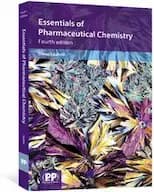
Colore e forma:234 x 156mmEssentials of Pharmaceutical Chemistry
Cairns, Donald
Fourth edition
Scheduled closure of pharmpress.com
Donald Cairns - Associate Head of School of Pharmacy, The Robert Gordon University, Aberdeen, UK
ISBN 978 0 85369 979 8
Published Jan 2012
Paperback 234 x 156mm (320pp)
DESCRIPTION:
Essentials of Pharmaceutical Chemistry is an introduction to pharmaceutical chemistry for undergraduate pharmacy, chemistry and medicinal chemistry students. It covers all of the core material necessary to provide an understanding of the basic chemistry of drug molecules. Now a core text on many university courses, the book contains numerous worked examples and problems.
The 4th edition includes new chapters on Chromatographic Methods of Analysis, and Medicinal Chemistry - The Science of Drug Design.
Read an interview with author Donald Cairns talking about his interest in the chemistry of drugs and poisons, the new edition of his book, and his desert island essentials.
CONTENTS:
1. Chemistry of acids and bases
2. Partition coefficient and biopharmacy
3. Physicochemical properties of drugs
4. Stereochemistry
5. Drug metabolism
6. Volumetric analysis of drugs
7. Analytical spectroscopy
8. Chromatographic methods of analysis
9. Stability of drugs and medicines
10. Kinetics of drug stability
11. Licensing of drugs and the British Pharmacopoeia
12. Medicinal chemistry: the science of rational drug design
13. Answers to problems
REVIEWS:
June 2013
"An essential chemistry textbook which supports the integrated pharmacy education and helps the students to grasp the principles of pharmaceutical chemistry and how they are applied in pharmacy."
Dr Praveen Bhugra, University of Sunderland, June 2013
May 2012, Doody's Notes
"...Donald Cairns is a well-known educator, mentor, and researcher...this is an excellent resource for pharmacy students taking pharmaceutical chemistry and for individuals who intend to pursue a career in the pharmaceutical industry...Readers will find this as a useful reference.
Rahmat M Talukder, Ph.D., Doody's Notes, May 2012
January 2012, Compounding Today
"NOT 'Medicinal Chemistry,' but 'Pharmaceutical Chemistry.' This is a great book detailing the basic chemistry of drugs...Throughout the book there are problems that can be worked, and it includes the answers at the end of the book. It is very easy-to-read and has very good graphics to support the discussions. In addition to being a good text, it is a good refresher for those that would like to review this topic."
Compounding Today, 27 Jan 2012.
Colore e forma:234 x 156mmFASTtrack: Pharmaceutical Compounding and Dispensing
Langley, Christopher A; Belcher, Dawn
Second edition
Scheduled closure of pharmpress.com
Christopher A. Langley - Senior Lecturer in Pharmacy Practice, Aston University School of Pharmacy, and Dawn Belcher - Lecturer in Pharmacy Practice, Aston University School of Pharmacy
ISBN 978 0 85711 055 8
Published May 2012
Paperback 234 x 156mm (224pp)
DESCRIPTION:
FASTtrack: Pharmaceutical Compounding and Dispensing focuses on what you really need to know in order to pass exams. Concise, bulleted information, key points, tips and an all-important self-assessment section which includes MCQs, case studies, sample essay questions and worked examples. Based on the successful textbook, Pharmaceutical Compounding and Dispensing , this FASTtrack book has been designed to assist the student compounder in understanding the key dosage forms encountered within extemporaneous dispensing.
For this new second edition all the references to modern texts (for example, the BNF ) have been updated, as well as labelling to reflect changes since the publication of the first edition. Some worked examples have been changed owing to the availability of pharmaceutical ingredients. Free access to online videos demonstrating various dispensing procedures is included.
Are your exams coming up? Are you drowning in textbooks and lecture notes and wondering where to begin? Take the FASTtrack route to successful study for your examinations. FASTtrack provides the ultimate lecture notes and is a must-have for all pharmacy students wanting to study and test themselves for forthcoming exams.
FASTtrack: Pharmaceutical Compounding and Dispensing is also available as an ebook.
CONTENTS:
1. Introduction
2. Solutions
3. Suspensions
4. Emulsions
5. Creams
6. Ointments, Pastes and Gels
7. Suppositories and Pessaries
8. Powders and Capsules
Bibilography
Further Reading
Appendix 1: Glossary of Terms Used in Formulations
Appendix 2: Abbreviations Commonly Used Within Pharmacy
Appendix 3: Formulae Contents
REVIEWS:
Jul-2012, Doody's Notes
"Of value to new practitioners involved in compounding nonsterile pharmaceutical preparations...Each chapter starts with an overview of the dosage form followed by discussions of general methods, a number of worked examples, and then a self-assessment section...each chapter includes both key points and tips. The detail included in the examples in the chapters on dosage forms is exceptional...it delivers a practical guide for students whose curricula continue to provide didactic and practice experiences in compounding."
Joseph Boullata, PharmD (University of Pennsylvania College of Nursing), Doody's Notes, July 2012
From the reviews of the previous edition:
15-Nov-09, Future Pharmacist
'This book (has the) ability to stand as both a perfect revision guide and possible reference resource. This book is well worth the money paid and time spent reading. I would definitely say this book is an essential read for all pharmacy students'
Ryan Hamilton, Future Pharmacist, British Pharmaceutical Students' Association, Winter 2009
08-Oct-08, American Journal of Pharmaceutical Education
'This book is a well organised and comprehensive review of extemporaneous pharmaceutical compounding and dispensing written by British educators. Overall this book is an excellent review of extemporaneous compounding and dispensing following the British National Formulary. This book would be a useful addition to the resource and reference library of pharmacy educators and practicing pharmacists seeking a review of extemporaneous pharmaceutical compounding and dispensing.'
Deborah Lester Strong, PharmD, American Journal of Pharmaceutical Education 2008 72 (5) Article 123 October 2008
08-Oct-08, Chemist and Druggist
'FASTtrack Pharmaceutical Compounding and Dispensing is an ideal small and compact textbook for both students and pharmacists involved in extemporaneous dispensing.'
Elizabeth Robinson, student, Keele University, Chemist and Druggist published online on October 2008
01-Feb-08, Doody Enterprises, Inc
'This book provides readers with a handy and useful guide to preparing accurate and effective pharmaceutical compounds and extemporaneous preparations. This is certainly written for students of pharmacy, but it is also useful for working pharmacists as a handy reference when they need to recall how to prepare/compound different dosage forms. Calculation examples and self assessment questions are a nice feature, particularly for pharmacy students. I was pleasantly surprised by this book. It certainly refreshed my memory of these topics from pharmacy school and it serves to remind us as pharmacists that this still is part of the job, albeit much less frequently.'
Patrick J. McDonnell, PharmD. Temple University School of Pharmacy. Doody Enterprises, Inc. February 2008
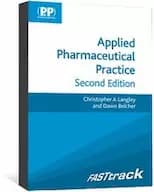
Colore e forma:234 x 156mmFASTtrack: Applied Pharmaceutical Practice
Langley, Christopher A; Belcher, Dawn
Second edition
Scheduled closure of pharmpress.com
Christopher A. Langley - Professor of Pharmacy Law and Practice, Aston University School of Pharmacy, and Dawn Belcher - Teaching Fellow, Pharmacy Practice, Aston University School of Pharmacy.
ISBN 978 0 85711 056 5
Published Apr 2012
Paperback 234 x 156mm (208pp)
DESCRIPTION:
FASTtrack: Applied Pharmaceutical Practice focuses on what you really need to know in order to pass exams. Concise, bulleted information, chapter overviews, key points, and an all-important self-assessment section which includes MCQs. This FASTtrack book has been written to guide the student pharmacist or pharmacy technician through the main stages involved in pharmaceutical dispensing.
FASTtrack: Applied Pharmaceutical Practice accompanies the compulsory dispensing courses found in all undergraduate MPharm programmes and equivalent technical training courses. It is an invaluable resource either as a study aid or as a companion to the core reference text Applied Pharmaceutical Practice .
Changes for the new edition include:
- Information on revisions to the community pharmacy contract
- Additional content on new advanced community pharmacy services
- Revised worked examples and student questions
- Updated prescription labelling information, including the use of new cautionary and warning labels
- Updated references and bibliography.
Read an interview with the authors discussing the new edition of the book, recording videos together, and their desert island essentials.
Are your exams coming up? Are you drowning in textbooks and lecture notes and wondering where to begin? Take the FASTtrack route to study successfully for your examinations. FASTtrack provides the ultimate lecture notes and is a must-have for all pharmacy students wanting to study and test themselves for forthcoming exams.
FASTtrack: Applied Pharmaceutical Practice is also available as an ebook.
CONTENTS:
1. Introduction, medicines classification and standard operating procedures
2. NHS supply in the community 1: prescription forms and prescribing
3. NHS supply in the community 2: prescribers and the dispensing process
4. NHS supply within hospitals
5. Non-NHS supply
6. Controlled drugs
7. Emergency supply
8. Patient counselling and communication 1: the basics of patient communication
9. Patient counselling and communication 2: product-specific counselling points
10. Poisons and spirits
Appendix 1: Commonly encountered qualifications of healthcare professionals
Appendix 2: Abbreviations commonly used within pharmacy
REVIEWS:
2013
"Applied Pharmaceutical Practice is good for all years and all stages of the MPharm course whether you are a first year learning from scratch or just refreshing your addled fourth year memory. It's great for practical dispensing, OSCEs, law exams or for anyone working in a pharmacy as a student, technician or newly qualified pharmacist...a brilliantly written book, student friendly, as well as being clear and interesting enough to read from cover to cover"
Katrina Fredericks, BPSA pharmacy student, 2013.
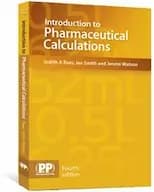
Colore e forma:234 x 156mmIntroduction to Pharmaceutical Calculations
Rees, Judith A; Smith, Ian; Watson, Jennie
Fourth edition
Scheduled closure of pharmpress.com
Judith A Rees - Senior Lecturer, School of Pharmacy, Keele University; Ian Smith - Lecturer in Pharmacy Practice, Keele University; Jennie Watson - Boots Teacher Practitioner, University of Central Lancashire
ISBN 978 0 85711 168 5
Published Apr 2015
Paperback 234 x 156mm (288pp)
DESCRIPTION:
Introduction to Pharmaceutical Calculations is your comprehensive guide to successfully performing pharmaceutical calculations. Now in its fourth edition, this popular book covers everything you need to know to pass those all important pharmacy calculation exams.
Every chapter contains learning objectives, worked examples and sample questions and has been fully updated.
Brand new features include:
- Introduction (including expert tips for approaching calculations)
- Doses in children
- 8 short videos (to help you grasp some of the key concepts) covering:
- Simple dilution
- Proportional sets
- Conversion of units
- Representations of concentrations
- Mixing two concentrations without a final volume
- Displacement values
- Parenteral doses
- Moles
- More images and diagrams
Written by experienced pharmacy lecturers and a teacher practitioner, this book will help you tackle every type of pharmaceutical calculation and is ideal for both students and pre-regs.
We recommend you use it alongside the companion Pharmaceutical Calculations Workbook to practice and perfect your calculation skills.
Good luck in your exams!
Save money by buying our special calculations package .
Videos demonstrating calculations concepts can be viewed with the password from the book.
CONTENTS:
Introduction
Rational numbers
Systems of units
Concentrations
Dilutions
Formulations
Calculation of doses
Doses in children
Density, displacement volumes and displacement values
Calculations involving molecular weights
Parenteral solutions and isotonicity
Accuracy of measurement
Calculations involving information retrieval
Appendix 1: Metric prefixes
Appendix 2: Conversion factors
Appendix 3: Multiplication and division
Appendix 4: Atomic weights of the elements
Appendix 5: Body surface area in children
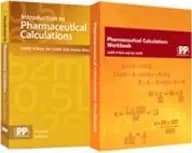
Introduction to Pharmaceutical Calculations and Pharmaceutical Calculations Workbook
Scheduled closure of pharmpress.com
ISBN 978 0 85711 246 0
Published Apr 2015
DESCRIPTION:
Buy both of these books together to take advantage of the special package price.
If bought individually, £54.98.
Package contains:
Introduction to Pharmaceutical Calculations , 4th edition
Written by experienced pharmacy lecturers and a teacher practitioner, this book will help you tackle every type of pharmaceutical calculation and is ideal for both students and pre-regs. Every chapter contains learning objectives, worked examples and sample questions and has been fully updated.
Pharmaceutical Calculations Workbook
This is the companion self-study workbook to Introduction to Pharmaceutical Calculations. It contains practice calculations (with answers) similar to those that might be presented in pharmacy examinations and in practice. This workbook will be invaluable to pharmacy undergraduates and preregistration pharmacists, as well as others who want to practise basic pharmaceutical calculations.
Handbook of Pharmaceutical Excipients Ninth edition
Paul J Sheskey, Bruno C Hancock, Gary P Moss, David J Goldfarb
Ninth Edition
Scheduled closure of pharmpress.com
ISBN 9780 85711 375 7
Published Oct 2020
Hardback276 × 219 mm (1296pp)
DESCRIPTION:
The Handbook of Pharmaceutical Excipients is internationally recognised as the worlds most authoritative source of information on pharmaceutical excipients. It provides you with a one stop resource when researching an excipient for use. The 400+ monographs are also thoroughly cross referenced and indexed to allow their identification by chemical, non proprietary or trade names. Extensive content updates in the new edition include: - Over 420 fully referenced excipient monographs, many including IR, Raman, and NIR spectra - 13 new monographs including several amino acids and hydrated silicon dioxide - 250 existing monographs reviewed - New chapters include excipient selection for orally inhaled and injectable formulations Order your copy today and: Get the full picture on excipients - all the information you need on the physical properties of excipients Save research time - each monograph contains everything you need to ensure the correct excipient is selected Ease of use - monographs are thoroughly cross-referenced and indexed so that excipients can easily be identified by either a chemical, a non-proprietary or a trade name Get up to speed quickly on unfamiliar areas with educational chapters on topics such as the characteristics of excipients in formulations
CONTENTS:
Table of Contents
New Formulation Considerations and Related Information chapters on:
Functional Categories of Pharmaceutical Excipients
Pharmaceutical Excipients in Pediatric Formulations
The Selection of Excipients for Oral Solid Dosage Forms
The Selection of Excipients for Injectable Formulations
Formulation Considerations for Orally Inhaled Dosage Forms
Reactive Components in Pharmaceutical Excipients
Biological Effects of Pharmaceutical Excipients
The Use of Counter-ions and Co-formers in the Creation of Salt and Co-crystal Forms of Active Pharmaceutical Ingredients (APIs)
Over 400 Monographs benefiting from a standardized, easy-to-use template including:
pharmacopoeial information from the UK, Europe, Japan and the United States
non-proprietary names and synonyms
chemical name and structure, CAS Registry number, empirical formula, molecular weight
functional category, applications and incompatibilities
material description and typical excipient properties
safety, stability, storage and handling information
method of drug manufacture
related substances
primary references
editorial comments
author details and revision date
Appendices
Suppliers directory
List of Monographs by Functional Category
List of Related Substances
List of Excipients by E number
List of Excipients by EINECS number
List of Excipients by CAS number
Pharmaceutical Excipients Assessed by the FDA Select Committee on GRAS Substances (SCOGS)
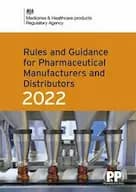
Rules and Guidance for Pharmaceutical Manufacturers and Distributors 2022 (The MHRA Orange Guide)
MHRA (Medicines and Healthcare products Regulatory Agency)
Scheduled closure of pharmpress.com
Compiled by the Inspection, Enforcement and Standards Division, Medicines and Healthcare products Regulatory Agency (MHRA), London, UK
ISBN 978 0 85711 439 6
Published Mar 2022
Paperback 244x172mm (1140pp)
DESCRIPTION:
The 2022 edition of Rules and Guidance for Pharmaceutical Manufacturers and Distributors, known as "The MHRA Orange Guide, is the essential reference for all manufacturers and distributors of medicines in the UK. It provides you with a single authoritative source of European and UK guidance, information and UK legislation relating to the manufacture and distribution of human medicines, active substances, and brokering medicines. The new 11th edition has been updated to incorporate changes made after the UKs exit from the European Union on the 31st January 2020. Comprehensive new content includes: Amended extracts from the Human Medicines Regulations 2012 relating to: manufacture, importation and assembly wholesale dealing brokering medicine manufacturing, importing and distributing active substances The Code of Practice for Qualified Persons, Guidance on Manufacture and Importation UK guidance on complying with the EU guidelines on Good Distribution Practice for wholesale distributors and brokers of medicines and manufacturers, importers and distributors or active substances UK guidance on: risk-based inspections, conditions of holding a manufacturers licence, wholesale dealers licence, a broker registration and an active substance registration, and controls on certain medicinal products. New guidance on: conditions of holding a manufacturing authorisation for investigational medicinal products, importing guidance for investigational medicinal products from countries on a list to Great Britain, Pharmaceutical Quality System expectations and Authorisation requirements for investigational medicinal products importation oversight, list of approved countries for import, pharmacovigilance for wholesalers, the naming of sites on a wholesale dealers licence, self-inspection for wholesale dealers and the responsible person for import. Plus, revised GMP Annexes 2 and 17, and Commission guidance on principles and guidelines for good manufacturing practice for investigational medicinal products for human use and arrangements for inspections, for medicinal products for human use and for active substances for medicinal products for human use. The MHRA Orange Guide is compiled by the Medicines and Healthcare products Regulatory Agency.