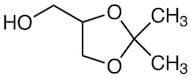
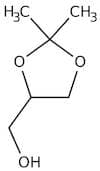
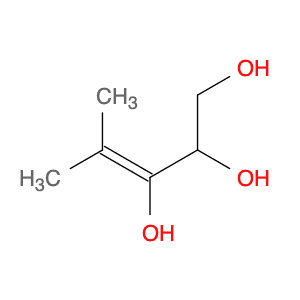
CAS 100-79-8
:Solketal
Descrição:
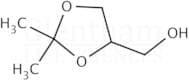
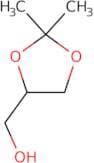
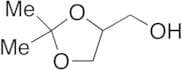
Solketal, também conhecido como 2-metoxi-1,2-propanodiol, é um composto orgânico caracterizado por sua estrutura como um cetal derivado de glicerol e acetona. Aparece como um líquido incolor e viscoso com um leve odor adocicado. Solketal é solúvel em água e em solventes orgânicos, tornando-o versátil para várias aplicações. É utilizado principalmente como solvente e como intermediário na síntese de produtos farmacêuticos e outros compostos orgânicos. A substância apresenta baixa toxicidade e é considerada relativamente segura para manuseio, embora precauções de segurança padrão devam ser observadas. Solketal também é notado por sua estabilidade sob uma variedade de condições, o que contribui para sua utilidade em processos químicos. Além disso, foi explorado por seu potencial como aditivo para biocombustíveis devido às suas propriedades favoráveis. No geral, as características químicas únicas e a versatilidade funcional de Solketal fazem dele um composto valioso tanto em ambientes industriais quanto de pesquisa.
Fórmula:C6H12O3
InChI:InChI=1S/C6H12O3/c1-6(2)8-4-5(3-7)9-6/h5,7H,3-4H2,1-2H3
Chave InChI:InChIKey=RNVYQYLELCKWAN-UHFFFAOYSA-N
SMILES:C(O)C1OC(C)(C)OC1
Sinónimos:- (.+-.)-1,2-O-Isopropylideneglycerol
- (.+-.)-2,2-Dimethyl-1,3-dioxolane-4-methanol
- (.+-.)-Glycerol 1,2-acetonide
- (2,2-Dimethyl-[1,3]-dioxolan-4-yl)methanol
- (4RS)-2,2-Dimethyl-1,3-dioxolane-4-methanol
- (RS)-Solketal
- 1,2-Isopropylideneglycerin
- 1,2-Isopropylideneglycerol
- 1,2-O,O-Isopropylideneglycerin
- 1,2-O-Isopropylidene-rac-glycerol
- 2,2-Dimethyl-1,3-Dioxolanne-4-Ylmethanol
- 2,2-Dimethyl-1,3-dioxolan-4-methanol
- 2,2-Dimethyl-1,3-dioxolan-4-ylmethanol
- 2,2-Dimethyl-1,3-dioxolane-5-methanol
- 2,2-Dimethyl-4-hydroxymethyl-1,3-dioxolan
- 2,2-Dimethyl-4-hydroxymethyl-1,3-dioxolane
- 2,2-Dimethyl-4-hydroxymethyldioxolane
- 2,2-Dimethyl-5-hydroxymethyl-1,3-dioxolane
- 2,2-Dimethyldioxolane-4-methanol
- 2,2-Dimetil-1,3-Dioxolan-4-Ilmetanol
- 2,3-(Isopropylidenedioxy)propanol
- 2,3-Isopropylideneglycerol
- 2,3-O-Isopropylideneglycerol
- 2-Dimethyl-4-oxymethyl-1,3-dioxolane
- 4-(Hydroxymethyl)-2,2-dimethyl-1,3-dioxolane
- <span class="text-smallcaps">D</smallcap><smallcap>L</span>-1,2-Isopropylidene glycerol
- <span class="text-smallcaps">D</smallcap><smallcap>L</span>-1,2-Isopropylideneglycerol
- <span class="text-smallcaps">DL</span>-Isopropylideneglycerol
- Acetone Glyceryl Acetal
- Acetone glycerin ketal
- Acetone monoglycerol ketal
- Augeo 191
- Augeo Clean Multi
- Augeo MC
- Augeo SL 191
- DL-Isopropylideneglycerol
- Dioxolan
- Dioxolan (1,3)-4-Hydroxymethyl-2,2-Dimethyl-
- GIE
- Glycerin aceton ketal
- Glycerin acetone ketal
- Glycerin isopropylidene ether
- Glycerol acetonide
- Glycerol dimethylketal
- Glycerol α,β-isopropylidene ether
- Glycerolacetone
- Isopropylidene glycerol
- Isopropylideneglycerin
- Nsc 59720
- Racemic solketal
- Solketal
- Solketol
- α,β-Isopropylideneglycerol
- [(4S)-2,2-dimethyl-1,3-dioxolan-4-yl]methanol
- glycerol 1,2-isopropylidene ether
- 1,3-Dioxolane-4-methanol, 2,2-dimethyl-
- 1,2-Isopropylidene-rac-glycerol
- [(4R)-2,2-dimethyl-1,3-dioxolan-4-yl]methanol
- DL-alpha,beta-Isopropylideneglycerol
- 1,2-dioxolane
- Acetone ketal of glycerine
- Ver mais sinónimos
Ordenar por
Pureza (%)
0
100
|
0
|
50
|
90
|
95
|
100
9 produtos.
2,2-Dimethyl-1,3-dioxolane-4-methanol
CAS:Fórmula:C6H12O3Pureza:>97.0%(GC)Cor e Forma:Colorless to Almost colorless clear liquidPeso molecular:132.16Solketal, 97%
CAS:Solketal is useful for synthesis of mono-, di- and triglycerides. It is used as the starting reagent for synthesis of tulipaline derivatives. It acts as a fuel additive in gasoline. It is an inhibitor of Methyl ethyl ketone . This Thermo Scientific Chemicals brand product was originally part of theFórmula:C6H12O3Pureza:97%Cor e Forma:Clear, colorless, LiquidPeso molecular:132.162,2-Dimethyl-1,3-dioxolan-4-ylmethanol
CAS:2,2-Dimethyl-1,3-dioxolan-4-ylmethanolFórmula:C6H12O3Pureza:98%Cor e Forma: colourless liquidPeso molecular:132.15767g/molSolketal
CAS:Fórmula:C6H12O3Pureza:(GC) ≥ 97.0%Cor e Forma:Clear, colourless liquidPeso molecular:132.16DL-1,2-Isopropylideneglycerol
CAS:Fórmula:C6H12O3Pureza:95.00%Cor e Forma:ClearPeso molecular:132.1591,2-O-Isopropylideneglycerol
CAS:1,2-O-Isopropylideneglycerol is an inhibitor of glycerin and glycerol dehydrogenase. It is a colorless liquid that has been shown to have a kinetic inhibitory effect on the enzyme activities of glycerin and glycerol dehydrogenase in vitro. 1,2-O-Isopropylideneglycerol has also been shown to react with light at wavelengths of 250 nm or less. This reaction produces reactive oxygen species that may lead to the degradation of the enzyme's active site. In vivo, 1,2-O-isopropylideneglycerol is converted into an acidic metabolite that can accumulate in cells. This metabolite can react with other molecules such as proteins and nucleic acids, which may result in structural changes and/or modification of their function.Fórmula:C6H12O3Pureza:Min. 95%Cor e Forma:Clear LiquidPeso molecular:132.16 g/mol(R,S)-2,2-Dimethyl-1,3-dioxolane-4-methanol
CAS:Produto ControladoApplications A MEK inhibitor with antitumor activity.
References Lee, W., et al.: Bioorg. Med. Chem. Lett., 15, 3573 (2005), Normanno, N., et al.: J. Cell. Physiology, 207, 420 (2006), Narlawar, R., et al.: J. Med. Chem., 49, 7588 (2006),Fórmula:C6H12O3Cor e Forma:NeatPeso molecular:132.16