CAS 101-39-3
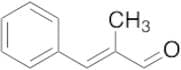
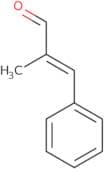
:α-Metilcinamaldeído
Descrição:
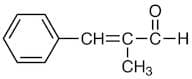
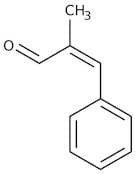
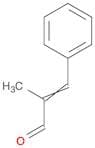
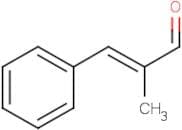
α-Metilcinamaldeído, com o número CAS 101-39-3, é um composto orgânico que pertence à classe dos aldeídos. É caracterizado por sua estrutura aromática, apresentando um grupo metila adjacente a uma parte de cinamaldeído. Este composto geralmente aparece como um líquido incolor a amarelo pálido com um odor doce, floral e ligeiramente picante, tornando-o valioso nas indústrias de fragrâncias e sabores. Sua fórmula molecular é C10H10O, e possui um ponto de ebulição relativamente baixo, indicando que pode evaporar facilmente à temperatura ambiente. α-Metilcinamaldeído é conhecido por suas potenciais aplicações em perfumaria, bem como na síntese de vários compostos orgânicos. Além disso, exibe algumas propriedades antimicrobianas, que podem contribuir para seu uso na preservação de alimentos e formulações cosméticas. No entanto, como muitos compostos orgânicos, deve ser manuseado com cuidado devido aos potenciais efeitos irritantes na pele e no sistema respiratório. No geral, α-Metilcinamaldeído é um composto versátil com relevância industrial significativa.
Fórmula:C10H10O
InChI:InChI=1S/C10H10O/c1-9(8-11)7-10-5-3-2-4-6-10/h2-8H,1H3
Chave InChI:InChIKey=VLUMOWNVWOXZAU-UHFFFAOYSA-N
SMILES:C(=C(C=O)C)C1=CC=CC=C1
Sinónimos:- (2E)-2-methyl-3-phenylprop-2-enal
- (2Z)-2-methyl-3-phenylprop-2-enal
- 2-Methyl-3-Phenylprop-2-Enal
- 2-Methyl-3-phenyl-2-propen-1-al
- 2-Methyl-3-phenyl-2-propenal
- 2-Methyl-3-phenylacrolein
- 2-Methyl-3-phenylacrylaldehyde
- 2-Methyl-3-phenylpropenal
- 2-Methylcinnamic aldehyde
- 2-Propenal, 2-methyl-3-phenyl-
- Cinnamaldehyde, α-methyl-
- Methyl Cinnamic Aldehyde
- Methylcinnamaldehyde
- NSC 22283
- NSC 49286
- α-Methylcinnamaldehyde
- Ver mais sinónimos
Ordenar por
Pureza (%)
0
100
|
0
|
50
|
90
|
95
|
100
8 produtos.
α-Methylcinnamaldehyde
CAS:Fórmula:C10H10OPureza:>95.0%(GC)Cor e Forma:Colorless to Yellow to Yellow green clear liquidPeso molecular:146.19α-Methylcinnamaldehyde, predominantly (E), 97%
CAS:This Thermo Scientific Chemicals brand product was originally part of the Alfa Aesar product portfolio. Some documentation and label information may refer to the legacy brand. The original Alfa Aesar product / item code or SKU reference has not changed as a part of the brand transition to Thermo SciFórmula:C10H10OPureza:97%Cor e Forma:Clear pale yellow to yellow, LiquidPeso molecular:146.192-Methyl-3-phenylacrylaldehyde
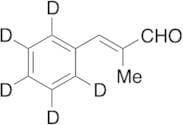
CAS:Fórmula:C10H10OPureza:95%Cor e Forma:LiquidPeso molecular:146.1858α-Methyl-trans-cinnamaldehyde-d5
CAS:Produto ControladoApplications α-Methylcinnamaldehyde-d5 is an isotope labelled intermediate in the synthesis of Epalrestat (E565300), an aldose reductase inhibitor. It is used in treatment of diabetic neuropathy.
References Sarigol, D., et al.: Bioorg. Med. Chem., 23, 2518 (2015);Fórmula:C10H5D5OCor e Forma:NeatPeso molecular:151.22α-Methylcinnamaldehyde
CAS:Produto ControladoApplications (cas# 15174-47-7) is a useful research chemical.
Fórmula:C10H10OCor e Forma:NeatPeso molecular:146.19α-Methylcinnamic aldehyde
CAS:Methyl anthranilate is a chiral compound with the chemical formula C9H7NO3. It has been shown to have cancer-detecting properties in vitro, as well as anti-cancer activity in laboratory animals. Methyl anthranilate has also been shown to inhibit the growth of tumor cells and induce apoptosis. The methyl anthranilate molecule is found in urine samples of patients with bladder cancer. This chemical can be synthesized by reacting phenol with formaldehyde followed by condensation with methylamine. Methyl anthranilate can be used as a test compound for cancer diagnosis. Methyl anthranilate reacts with diphenolase (a type of enzyme) to produce a blue product, which can be detected using an assay that measures absorbance at 545 nm wavelength. The reaction between methyl anthranilate and tyrosinase produces a yellow product that can be measured at 600 nm wavelength.Fórmula:C10H10OPureza:Min. 95%Cor e Forma:Clear LiquidPeso molecular:146.19 g/mol