CAS 1012886-75-7
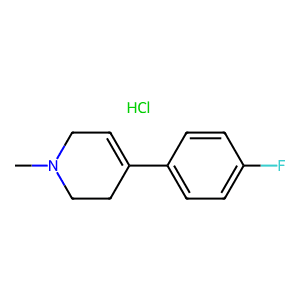
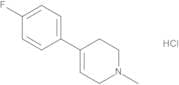
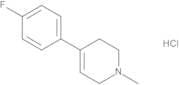
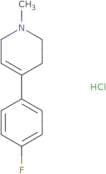
:Paroxetine Related Compound E (4-(4-Fluorophenyl)-1-methyl-1,2,3,6-tetrahydropyridine hydrochloride)
CAS:Compounds containing an unfused pyridine ring in the structure, nesoiFórmula:C12H14FN·HClCor e Forma:White PowderPeso molecular:191.111034-(4-Fluorophenyl)-1-methyl-1,2,3,6-tetrahydropyridine hydrochloride (Paroxetine Hydrochloride Impurity)
CAS:4-(4-Fluorophenyl)-1-methyl-1,2,3,6-tetrahydropyridine hydrochloride (Paroxetine Hydrochloride Impurity)Pureza:98%Paroxetine EP Impurity G (Paroxetine USP Related Compound E) as Hydrochloride
CAS:Produto ControladoFórmula:C12H14FN·ClHCor e Forma:NeatPeso molecular:227.714-(4-Fluorophenyl)-1-methyl-1,2,3,6-tetrahydropyridine Hydrochloride
CAS:Produto ControladoImpurity Paroxetine EP Impurity G
Applications 4-(4-Fluorophenyl)-1-methyl-1,2,3,6-tetrahydropyridine Hydrochloride (Paroxetine EP Impurity G) is the active metabolite of 1-Methyl-4-phenyl-1,2,3,6-tetrahydropyridine (MPTP) (M325910), N-Methyl-4-phenylpyridinium (MPP+), selectively destroys the dopaminergic neurons and induces the symptoms of Parkinson's disease.
Not a dangerous good if item is equal to or less than 1g/ml and there is less than 100g/ml in the package
References Gerlach, M., et al.: Eur. J. Pharmacol., 208, 273 (1991), Tipton, K., et al.: J. Neurochem., 61, 1191 (1993), Wimalasena, D., et al.: J. Biol. Chem., 279, 15298 (2004),Fórmula:C12H14FN·ClHCor e Forma:Light YellowPeso molecular:227.714-(4-Fluorophenyl)-1,2,3,6-tetrahydro-1-methylpyridine hydrochloride (1:1)
CAS:4-(4-Fluorophenyl)-1,2,3,6-tetrahydro-1-methylpyridine hydrochloride (1:1) is a neuroleptic drug that has analgesic and antihistaminic effects. It is an alkylthio compound that inhibits serotonin release from the pre-synaptic neuron. 4-(4-Fluorophenyl)-1,2,3,6-tetrahydro-1-methylpyridine hydrochloride (1:1) also blocks the uptake of dopamine by nerve cells in the brain and prevents its conversion to norepinephrine. This medicine acts as an antagonist for both alpha and beta receptors because it binds to the benzene ring of these neurotransmitters. The alpha receptor antagonist properties of this drug are due to its ability to prevent norepinephrine from binding with alpha receptors on muscle cells. The beta receptor antagonist properties are due to its abilityFórmula:C12H14FN•HClPureza:Min. 95%Cor e Forma:PowderPeso molecular:227.71 g/molUSP Paroxetine Related Compound E Mixture
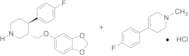
CAS:Produto ControladoApplications USP Paroxetine Related Compound E Mixture is a reference standard composed of Paroxetine Hydrochloride (P205750) spiked with 4-(4-Fluorophenyl)-1,2,3,6-tetrahydro-1-methyl-pyridine Hydrochloride (F595220). Paroxetine Hydrochloride (P205750) is a selective serotonin reuptake inhibitor. Used as an antidepressant. 4-(4-Fluorophenyl)-1,2,3,6-tetrahydro-1-methyl-pyridine Hydrochloride (F595220) is the active metabolite of 1-Methyl-4-phenyl-1,2,3,6-tetrahydropyridine (MPTP) (M325910), N-Methyl-4-phenylpyridinium (MPP+), selectively destroys the dopaminergic neurons and induces the symptoms of Parkinson's disease.
Not a dangerous good if item is equal to or less than 1g/ml and there is less than 100g/ml in the package
References Lassen, J.B.: Eur. J. Pharmacol., 47, 351 (1978), Lund, J., et al.: Acta Pharmacol. Toxicol., 51, 351, (1982); Gerlach, M., et al.: Eur. J. Pharmacol., 208, 273 (1991), Tipton, K., et al.: J. Neurochem., 61, 1191 (1993), Wimalasena, D., et al.: J. Biol. Chem., 279, 15298 (2004),Fórmula:C19H20FNO3·C12H14FN·HClCor e Forma:NeatPeso molecular:557.07Paroxetine EP Impurity G HCl (Paroxetine USP Related Compound E)
CAS:Fórmula:C12H14FN·HClCor e Forma:Off-White SolidPeso molecular:191.25 36.46Ref: 4Z-P-0211
Produto descontinuado