CAS 104339-66-4
:Histatina 5
Descrição:
Histatina 5 é um peptídeo que faz parte da família das histatinas, que são proteínas ricas em histidina encontradas principalmente na saliva humana. É conhecido por suas propriedades antimicrobianas, particularmente contra várias bactérias e fungos, tornando-o significativo na saúde bucal e em potenciais aplicações terapêuticas. O peptídeo consiste em 24 aminoácidos e é caracterizado por seu alto teor de histidina, que contribui para sua capacidade de se ligar a íons metálicos e exibir atividade antimicrobiana. Histatina 5 também desempenha um papel na cicatrização de feridas e demonstrou promover a proliferação e migração celular, que são processos essenciais na reparação de tecidos. Seu mecanismo de ação envolve a interrupção das membranas microbianas e a interferência nos processos celulares em patógenos. Além disso, Histatina 5 tem sido estudado por seu potencial em sistemas de entrega de medicamentos e como um modelo para o design de novos agentes antimicrobianos. No geral, suas propriedades únicas o tornam um assunto de interesse tanto na microbiologia quanto na pesquisa bioquímica.
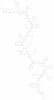
Fórmula:C133H195N51O33
InChI:InChI=1/C133H195N51O33/c1-71(164-120(206)96(46-76-54-146-65-158-76)181-128(214)103(62-185)183-110(196)84(138)52-108(193)194)109(195)167-86(18-5-9-35-134)113(199)172-91(24-15-41-154-133(143)144)118(204)178-99(49-79-57-149-68-161-79)125(211)176-95(45-75-53-145-64-157-75)112(198)156-60-105(189)165-93(43-73-25-29-82(187)30-26-73)121(207)173-87(19-6-10-36-135)114(200)171-90(23-14-40-153-132(141)142)115(201)169-88(20-7-11-37-136)116(202)175-94(42-72-16-3-2-4-17-72)122(208)179-97(47-77-55-147-66-159-77)124(210)174-92(33-34-107(191)192)119(205)170-89(21-8-12-38-137)117(203)177-100(50-80-58-150-69-162-80)126(212)180-101(51-81-59-151-70-163-81)127(213)184-104(63-186)129(215)182-98(48-78-56-148-67-160-78)123(209)168-85(22-13-39-152-131(139)140)111(197)155-61-106(190)166-102(130(216)217)44-74-27-31-83(188)32-28-74/h2-4,16-17,25-32,53-59,64-71,84-104,185-188H,5-15,18-24,33-52,60-63,134-138H2,1H3,(H,145,157)(H,146,158)(H,147,159)(H,148,160)(H,149,161)(H,150,162)(H,151,163)(H,155,197)(H,156,198)(H,164,206)(H,165,189)(H,166,190)(H,167,195)(H,168,209)(H,169,201)(H,170,205)(H,171,200)(H,172,199)(H,173,207)(H,174,210)(H,175,202)(H,176,211)(H,177,203)(H,178,204)(H,179,208)(H,180,212)(H,181,214)(H,182,215)(H,183,196)(H,184,213)(H,191,192)(H,193,194)(H,216,217)(H4,139,140,152)(H4,141,142,153)(H4,143,144,154)/t71-,84-,85-,86-,87-,88-,89-,90-,91-,92-,93-,94-,95-,96-,97-,98-,99-,100-,101-,102-,103-,104-/m0/s1
SMILES:C[C@@H](C(=N[C@@H](CCCCN)C(=N[C@@H](CCCNC(=N)N)C(=N[C@@H](Cc1cnc[nH]1)C(=N[C@@H](Cc1cnc[nH]1)C(=NCC(=N[C@@H](Cc1ccc(cc1)O)C(=N[C@@H](CCCCN)C(=N[C@@H](CCCNC(=N)N)C(=N[C@@H](CCCCN)C(=N[C@@H](Cc1ccccc1)C(=N[C@@H](Cc1cnc[nH]1)C(=N[C@@H](CCC(=O)O)C(=N[C@@H](CCCCN)C(=N[C@@H](Cc1cnc[nH]1)C(=N[C@@H](Cc1cnc[nH]1)C(=N[C@@H](CO)C(=N[C@@H](Cc1cnc[nH]1)C(=N[C@@H](CCCNC(=N)N)C(=NCC(=N[C@@H](Cc1ccc(cc1)O)C(=O)O)O)O)O)O)O)O)O)O)O)O)O)O)O)O)O)O)O)O)O)O)N=C([C@H](Cc1cnc[nH]1)N=C([C@H](CO)N=C([C@H](CC(=O)O)N)O)O)O
Sinónimos:- Histatin-5
Ordenar por
Pureza (%)
0
100
|
0
|
50
|
90
|
95
|
100
3 produtos.
Histatin 5
CAS:Peptide Histatin 5 is a Research Peptide with significant interest within the field academic and medical research. This peptide is available for purchase at Cymit Quimica in multiple sizes and with a specification of your choice.Fórmula:C133H195N51O33Peso molecular:3,036.36 g/molHistatin 5
CAS:Custom research peptide; min purity 95%.
Fórmula:C133H195N51O33Pureza:Min. 95%Peso molecular:3,036.36 g/molHistatin 5, human
CAS:As a member of the Histatin family, Histatin 5 is a 24 amino acid, antimicrobial peptide rich in histidine. The Histatin family’s large histidine presence allow Histatins to associate with metal ions through the histidine side chains.Histatin 5 is found naturally in human saliva, and is a proteolytic fragment of Histatin 3. It exhibits antifungal properties and is thus useful in inhibiting the growth of yeast and C. albicans. Histatin 5 contains a functional domain located at amino acids 11 to 24 and this is where the antimicrobial activity of Histatin 5 takes place. It also has a random secondary structure with α-helices which are believed to allow it to enter the cytoplasm of the pathogenic cell. Once it has gained entry into the cells of pathogens, it is known to induce an ATP influx and the production of reactive oxygen species.However it is important to note that while Histatin 5 displays potent antifungal activity, this is reduced when in saliva due to the exposure to interfering metals, proteins and salts.Fórmula:C133H195N51O33Pureza:Min. 95%Peso molecular:3,036.3 g/mol