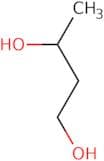
CAS 107-88-0
:1,3-Butanodiol
Descrição:
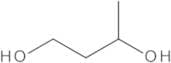
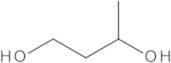
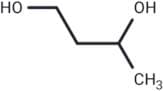
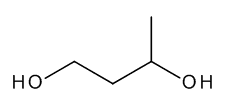
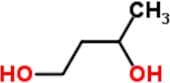
1,3-Butanodiol, com o número CAS 107-88-0, é um líquido incolor e viscoso que é higroscópico e tem um odor levemente adocicado. É um diol, o que significa que contém dois grupos funcionais hidroxila (-OH), o que contribui para sua solubilidade em água e em vários solventes orgânicos. Este composto é utilizado principalmente como solvente, na produção de plásticos e como intermediário na síntese de outros produtos químicos. Tem um perfil de toxicidade relativamente baixo, tornando-o adequado para aplicações em alimentos e cosméticos, embora ainda sejam necessárias precauções de segurança. O ponto de ebulição de 1,3-Butanodiol é mais alto do que o de muitos álcoois simples e apresenta uma pressão de vapor moderada. Além disso, pode participar de várias reações químicas, incluindo esterificação e desidratação, o que o torna versátil na síntese orgânica. No geral, 1,3-Butanodiol é um composto importante tanto em ambientes industriais quanto de pesquisa devido às suas propriedades únicas e versatilidade funcional.
Fórmula:C4H10O2
InChI:InChI=1S/C4H10O2/c1-4(6)2-3-5/h4-6H,2-3H2,1H3
Chave InChI:InChIKey=PUPZLCDOIYMWBV-UHFFFAOYSA-N
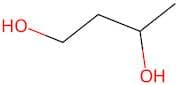
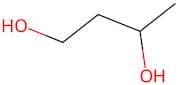
SMILES:C(C(C)O)CO
Sinónimos:- (.+-.)-Butane-1,3-diol
- (RS)-1,3-Butanediol
- 1,3-Butylene glycol
- 1,3-Dihydroxybutane
- 1-Methyl-1,3-propanediol
- 13Bgk
- 3-Hydroxy-1-butanol
- <span class="text-smallcaps">DL</span>-1,3-Butanediol
- Butan-1,3-diol
- Butanediol, 1,3-
- Butano-1,3-Diol
- Butylene glycol
- Celtol 1,3-BG
- DL-1,3-Butanediol
- Haisugarcane BG
- Jeechem Bugl
- Methyltrimethylene glycol
- Niax DP 1022
- Nsc 402145
- β-Butylene glycol
- (3S)-butane-1,3-diol
- (3R)-butane-1,3-diol
- Butanediol
- Ver mais sinónimos
Ordenar por
Pureza (%)
0
100
|
0
|
50
|
90
|
95
|
100
14 produtos.
1,3-Butanediol
CAS:Fórmula:C4H10O2Pureza:>99.0%(GC)Cor e Forma:Colorless to Light yellow clear liquidPeso molecular:90.12(+/-)-1,3-Butanediol, 99%
CAS:()-1,3-Butanediol acts as a co-monomer in the production of polyurethane and polyester resins. It is used as a humectant (to prevent loss of moisture) in cosmetics, especially in hair sprays and setting lotions. It is used in surfactants, inks, solvents for natural and synthetic flavorings. It is iFórmula:C4H10O2Pureza:99%Cor e Forma:Liquid, Clear colorlessPeso molecular:90.12Butane-1,3-diol
CAS:Acyclic dihydric alcohols, nesoiFórmula:C4H10O2Cor e Forma:Colorless Clear LiquidPeso molecular:90.068081,3-BUTANEDIOL, 10mM (in DMSO)
CAS:1,3-BUTANEDIOL, 10mM (in DMSO)Pureza:≥95%Peso molecular:90.12g/mol1,3-Butanediol
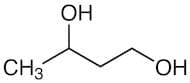
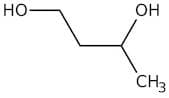
CAS:1,3-ButanediolPureza:99%,SafeDry,with molecular sieves,SafesealPeso molecular:90.12g/mol1,3-Butanediol [for Biochemical Research]
CAS:Fórmula:C4H10O2Pureza:>99.0%(GC)Cor e Forma:Colorless to Light yellow clear liquidPeso molecular:90.121,3-BUTANEDIOL
CAS:1,3-Butanediol is a keto compound aiding energy and potentially enhancing disease prevention and longevity.Fórmula:C4H10O2Pureza:98%Cor e Forma:Viscous Liquid LiquidPeso molecular:90.121,3-Butanediol
CAS:Produto ControladoApplications 1,3-Butanediol is used in the synthesis of colchicine derivatives as anticancer agents. Also used in the synthesis of dual peroxisome proliferator-activated gamma and delta agonists acting as euglycemic agents in the treatment of diabetes.
References Shen, L. et al.: Asian J. Chem., 25, 3294 (2013); Xu, Y. et al.: J. Med. Chem., 49, 5649 (2006);Fórmula:C4H10O2Cor e Forma:NeatPeso molecular:90.121,3-Butanediol
CAS:1,3-Butanediol is a glycol ether that is used in the manufacture of polyester resins and films. It is also used as an active ingredient in some medications, such as acetaminophen and ibuprofen. 1,3-Butanediol has been shown to increase the metabolic rate by stimulating the production of glucose in the liver. This compound also has a number of other effects on metabolism, including an ability to stimulate insulin production and reduce fatty acid synthesis. 1,3-Butanediol can also act as a hydrogen bond acceptor or donor depending on its environment. This chemical's properties make it suitable for use in polymerase chain reactions (PCRs) to amplify DNA sequences.Fórmula:C4H10O2Pureza:Min. 99 Area-%Cor e Forma:Colorless PowderPeso molecular:90.12 g/mol





![1,3-Butanediol [for Biochemical Research]](/_next/image/?url=https%3A%2Fstatic.cymitquimica.com%2Fproducts%2F3B%2Fthumb%2FB3770.jpg&w=3840&q=75)