CAS 109292-46-8
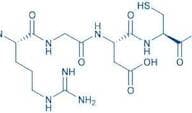
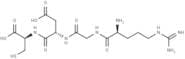
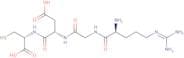
:H-Arg-Gly-Asp-Cys-OH
Descrição:
H-Arg-Gly-Asp-Cys-OH, também conhecido como um peptídeo, é um composto sintético que consiste em uma sequência de aminoácidos: arginina (Arg), glicina (Gly), ácido aspártico (Asp) e cisteína (Cys). Este peptídeo é notável por seu papel em processos biológicos, particularmente na adesão celular e sinalização devido à presença do motivo RGD (arginina-glicina-ácido aspártico), que é reconhecido pelos receptores de integrina nas superfícies celulares. O resíduo de cisteína permite a formação de ligações dissulfeto, que podem estabilizar a estrutura do peptídeo e influenciar sua atividade biológica. O composto é frequentemente estudado no contexto de entrega de medicamentos, engenharia de tecidos e como um potencial agente terapêutico devido à sua capacidade de interagir com vários tipos de células. Seu número CAS, 109292-46-8, identifica exclusivamente este peptídeo específico em bancos de dados químicos. No geral, H-Arg-Gly-Asp-Cys-OH exemplifica a importância das sequências de peptídeos na bioquímica e suas aplicações em campos médicos e biotecnológicos.
Fórmula:C15H27N7O7S
Ordenar por
Pureza (%)
0
100
|
0
|
50
|
90
|
95
|
100
4 produtos.
H-Arg-Gly-Asp-Cys-OH
CAS:Surfaces modified with RGDC were shown to be effective for osteoblast binding and proliferation. RGDC binds via its sulfhydryl moiety to gold particles and gold-coated implants increasing the biocompatibility of the latter. The surface of titanium implants has to be modified beforehand to allow covalent S binding.Fórmula:C15H27N7O7SPureza:> 97%Cor e Forma:White Crystalline PowderPeso molecular:449.49Arg-Gly-Asp-Cys
CAS:Arg-Gly-Asp-Cys is the binding motif of fibronectin and cell adhesion molecules, which can inhibit platelet aggregation and fibrinogen binding.Fórmula:C15H27N7O7SPureza:98%Cor e Forma:SolidPeso molecular:449.48H-Arg-Gly-Asp-Cys-OH
CAS:H-Arg-Gly-Asp-Cys-OH is a biomimetic amino acid that possesses the same three-dimensional structure as the amino acid sequence found in the human epidermal growth factor receptor 2 (HER2). This compound has been shown to inhibit the activity of enzymes, such as kinases, which are involved in cancer cell division. It also can be used to target and destroy cancer cells using gene therapy. H-Arg-Gly-Asp-Cys-OH binds to messenger RNA and inhibits its translation into protein, which may lead to cell death. H-Arg-Gly-Asp-Cys -OH has been shown to bind specifically with HER2 receptors on breast cancer cells and promote their destruction by inducing apoptosis.Fórmula:C15H27N7O7SPureza:Min. 95%Cor e Forma:PowderPeso molecular:449.48 g/mol