CAS 110-19-0
:Acetato de isobutila
Descrição:
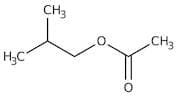
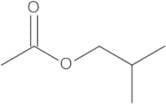
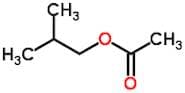
Acetato de isobutila, com o número CAS 110-19-0, é um composto orgânico classificado como um éster. É formado a partir da reação de isobutanol e ácido acético. Este líquido incolor é conhecido por seu odor frutado, muitas vezes reminiscente de peras ou maçãs, tornando-se uma escolha popular como solvente nas indústrias de tintas, revestimentos e adesivos, bem como na produção de aromatizantes e fragrâncias. Acetato de isobutila tem um ponto de ebulição moderado e é relativamente volátil, o que contribui para sua eficácia como solvente. É solúvel em solventes orgânicos, mas tem solubilidade limitada em água. O composto é considerado de baixa toxicidade, mas o manuseio adequado é essencial para evitar inalação ou contato com a pele. Além disso, Acetato de isobutila é inflamável, exigindo precauções ao ser armazenado ou utilizado em ambientes industriais. Sua fórmula química é C5H10O2, e exibe reatividade típica de éster, incluindo hidrólise e transesterificação em condições apropriadas.
Fórmula:C6H12O2
InChI:InChI=1S/C6H12O2/c1-5(2)4-8-6(3)7/h5H,4H2,1-3H3
Chave InChI:InChIKey=GJRQTCIYDGXPES-UHFFFAOYSA-N
SMILES:C(OC(C)=O)C(C)C
Sinónimos:- 2-Methyl-1-propyl acetate
- 2-Methylpropyl acetate
- 2-Methylpropyl ester acetic acid
- Acetate d'isobutyle
- Acetate, 2-Methylpropyl
- Acetato De Isobutilo
- Acetic acid 2-methylpropyl ester
- Acetic acid iso-butyl ester
- Acetic acid, isobutyl ester
- Butyl-Iso Acetate
- Essigsaeure-Isobutylester
- Isobutylacetat
- Nsc 8035
- iso-Butyl acetate
- β-Methylpropyl ethanoate
- Ver mais sinónimos
Ordenar por
Pureza (%)
0
100
|
0
|
50
|
90
|
95
|
100
10 produtos.
Isobutyl Acetate
CAS:Fórmula:C6H12O2Pureza:>99.0%(GC)Cor e Forma:Colorless to Almost colorless clear liquidPeso molecular:116.16Isobutyl acetate, 98%
CAS:Isobutyl acetate is used as a solvent for lacquer, thinners, sealants, perfumes and nitrocellulose. Further, it is used as a flavoring agent. This Thermo Scientific Chemicals brand product was originally part of the Alfa Aesar product portfolio. Some documentation and label information may refer toFórmula:C6H12O2Pureza:98%Cor e Forma:Clear colorless to pale yellow, LiquidPeso molecular:116.16Isobutyl Acetate
CAS:Isobutyl acetateFórmula:C6H12O2Cor e Forma:Colorless LiquidPeso molecular:116.08373Acetic acid-isobutyl ester
CAS:Produto ControladoFórmula:C6H12O2Cor e Forma:NeatPeso molecular:116.16Acetic acid-isobutyl ester 1000 µg/mL in Acetonitrile
CAS:Fórmula:C6H12O2Cor e Forma:Single SolutionPeso molecular:116.16Canada Residual Solvents Mixture 1046 5000 µg/mL in Triacetin
CAS:Produto Controlado- 100-66-3
- 108-21-4
- 109-60-4
- 109-66-0
- 109-94-4
- 110-19-0
- 121-44-8
- 123-51-3
- 123-86-4
- 141-78-6
- 142-82-5
- 1634-04-4
- 60-29-7
- 64-17-5
- 64-18-6
- 64-19-7
- 67-63-0
- 67-64-1
- 67-68-5
- 71-23-8
- 71-36-3
- 71-41-0
- 78-83-1
- 78-92-2
- 78-93-3
- 79-20-9
Fórmula:C3H8OCor e Forma:MixturePeso molecular:60.10Isobutyl acetate
CAS:Isobutyl acetate is an organic compound that is used in the synthesis of other chemicals and as a solvent. Isobutyl acetate is synthesized by reacting ethyl decanoate with water vapor, a reaction that requires constant pressure. The product of this reaction has a fatty acid chain with a hydroxyl group on the third carbon atom. This hydroxyl group reacts with caproic acid to form an ester. Isobutyl acetate is acidic, which can be seen in its biochemical properties. It also has an acidic complex, which consists of the conjugated carboxylic acid and the hydroxyl group. The methyl ethyl group is connected to the second carbon atom from the alcohol group. Wild-type strains have been shown to be more reactive than mutants, so Isobutyl acetate is reactive when it interacts with certain substances.Fórmula:C6H12O2Pureza:Min. 95%Cor e Forma:Clear LiquidPeso molecular:116.16 g/molIsobutyl Acetate extrapure, 98%
CAS:Fórmula:C6H12O2Pureza:min. 98%Cor e Forma:Clear, Almost colourless, LiquidPeso molecular:116.16