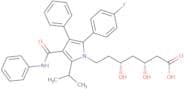
CAS 110862-48-1
:Atorvastatina
- (3R,5R)-7-[2-(4-Fluorophenyl)-3-Phenyl-4-(Phenylcarbamoyl)-5-Propan-2-Yl-Pyrrol-1-Yl]-3,5-Dihydroxy-Heptanoic Acid
- Atorvastatin Acid
- 1H-Pyrrole-1-heptanoic acid, 2-(4-fluorophenyl)-β,δ-dihydroxy-5-(1-methylethyl)-3-phenyl-4-[(phenylamino)carbonyl]-, (βR,δR)-rel-
- 1H-Pyrrole-1-Heptanoic Acid
- (3S,5S)-7-[2-(4-Fluorophenyl)-3-phenyl-4-(phenylcarbamoyl)-5-propan-2-ylpyrrol-1-yl]-3,5-dihydroxyheptanoic acid
- calcium bis{(3R,5R)-7-[2-(4-fluorophenyl)-3-phenyl-4-(phenylcarbamoyl)-5-(propan-2-yl)-1H-pyrrol-1-yl]-3,5-dihydroxyheptanoate}
- (3R,5R)-7-[2-(4-fluorophenyl)-3-phenyl-4-(phenylcarbamoyl)-5-(propan-2-yl)-1H-pyrrol-1-yl]-3,5-dihydroxyheptanoic acid
- (3S,5S)-7-[2-(4-fluorophenyl)-3-phenyl-4-(phenylcarbamoyl)-5-(propan-2-yl)-1H-pyrrol-1-yl]-3,5-dihydroxyheptanoic acid
- 1H-pyrrole-1-heptanoate, 3-benzoyl-5-(4-fluorophenyl)-β,δ-dihydroxy-2-(1-methylethyl)-4-phenyl-, calcium salt, (betaR,deltaR)- (1:1)
rel-(βR,δR)-2-(4-Fluorophenyl)-β,δ-dihydroxy-5-(1-methylethyl)-3-phenyl-4-[(phenylamino)carbonyl]-1H-pyrrole-1-heptanoic acid
CAS:Fórmula:C33H35FN2O5Pureza:98.0%Peso molecular:558.6398Atorvastatin
CAS:Atorvastatin is a statin used to reduce low-density lipoprotein (LDL) cholesterol and triglyceride levels in the blood. It is marketed under the trade name Lipitor®. Atorvastatin inhibits the enzyme HMG-CoA reductase, which is responsible for the production of cholesterol. This drug also reduces plaque formation in atherosclerotic lesions by inhibiting inflammation and has been shown to be effective in reducing mortality from coronary heart disease. In addition, atorvastatin has a low incidence of side effects, particularly when compared with other statins such as simvastatin, pravastatin, or lovastatin. The risk of developing adverse reactions to this drug increases with age and prolonged use. The most common side effects are muscle pain or weakness, headache, nausea, high blood sugar levels (elevated glucose), and liver problems.
Fórmula:C33H35FN2O5Pureza:Min. 95%Cor e Forma:PowderPeso molecular:558.64 g/mol