CAS 112-30-1
:1-Decanol
Descrição:
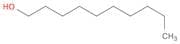
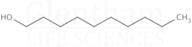
1-Decanol, com o número CAS 112-30-1, é um álcool graxo de cadeia reta que consiste em uma cadeia alquila de dez carbonos com um grupo funcional hidroxila (-OH) em uma extremidade. É um líquido incolor e viscoso à temperatura ambiente, exibindo um odor suave e agradável que lembra substâncias gordurosas. 1-Decanol é pouco solúvel em água, mas é mais solúvel em solventes orgânicos como etanol e éter. Sua fórmula molecular é C10H22O, e tem um ponto de ebulição relativamente alto em comparação com álcoois de cadeia mais curta, refletindo seu maior tamanho molecular e caráter hidrofóbico. Este composto é utilizado principalmente na produção de surfactantes, emulsificantes e como lubrificante. Além disso, serve como precursor na síntese de vários ésteres e é utilizado na formulação de produtos de cuidados pessoais e fragrâncias. Devido à sua natureza hidrofóbica, 1-Decanol também pode atuar como um catalisador de transferência de fase em certas reações químicas. As considerações de segurança incluem seu potencial para causar irritação na pele e a necessidade de manuseio adequado para evitar inalação ou ingestão.
Fórmula:C10H22O
InChI:InChI=1S/C10H22O/c1-2-3-4-5-6-7-8-9-10-11/h11H,2-10H2,1H3
Chave InChI:InChIKey=MWKFXSUHUHTGQN-UHFFFAOYSA-N
SMILES:C(CCCCC)CCCCO
Sinónimos:- 1-Decanol
- 1-Hydroxydecane
- Alcohol C-10
- Alcohol C-10 (1-Decanol)
- Alfol 10
- Antak
- Capric alcohol
- Caprinic alcohol
- Capryl alcohol
- Conol 1098
- Conol 10N
- Decan-1-ol
- Decane-1-Ol
- Decanol
- Decylalcohol
- Epal 10
- Kalcohl 10
- Kalcohl 1098
- Kalcohl 10H
- Kalcol 1098
- Lorol C 10
- Lorol C 10-98
- N-Decanol
- Nacol 10
- Nacol 10-99
- Nafol 10
- Nafol 10D
- Nonyl acarbinol
- Nonylcarbinol
- Nsc 406313
- Royaltac
- Sipol L 10
- T 148
- n-Decyl Alcohol
- Ver mais sinónimos
Ordenar por
Pureza (%)
0
100
|
0
|
50
|
90
|
95
|
100
14 produtos.
1-Decanol
CAS:Fórmula:C10H22OPureza:>98.0%(GC)Cor e Forma:Colorless to Almost colorless clear liquidPeso molecular:158.291-Decanol, 98+%
CAS:1-Decanol is used in the production of plasticizers, lubricants, surfactants and solvents. It is also used to study the thermal properties of polymer-monolithic stationary phases. Further, it is used to enhance homomeric glycine receptor function. In addition to this, it is used in daily flavor, fooFórmula:C10H22OPureza:98+%Cor e Forma:Clear colorless, LiquidPeso molecular:158.29Capric Alcohol
CAS:Saturated monohydric acyclic alcohols and their halogenated, sulfonated, nitrated or nitrosated derivatives, nesoiFórmula:C10H22OCor e Forma:Colorless Pale Yellow Slightly ViscousPeso molecular:158.167071-Decanol
CAS:1-Decanol inhibits various bacteria and fungi, including Candida albicans, Penicillium, Aspergillus niger, Bacillus subtilis, Propionibacterium, and others.Fórmula:C10H22OPureza:98%Cor e Forma:SolidPeso molecular:158.281-Decanol
CAS:Produto ControladoApplications 1-Decanol is a long chain alcohol that has been seen to enhance homomeric glycine receptor function. In addition, the 5HT2α receptors were inhibited by the presence of 1-decanol. This action has many psychological repercussions on an individual.
Not a dangerous good if item is equal to or less than 1g/ml and there is less than 100g/ml in the package
References Mascia, M. et al.: Brit. J. Pharm., 119, 1311 (1996); Minami, K. et al.: J. Pharm. Exp. Ther., 281, 1136 (1997);Fórmula:C10H22OCor e Forma:ColourlessPeso molecular:158.281-Decanol
CAS:1-Decanol is a fatty acid that is soluble in water and has a hydroxyl group. It is used as a raw material for the production of surfactants and other products. 1-Decanol has significant interactions with hydrogen bond, hydrochloric acid, cationic surfactants, biological products, water vapor, and surfaces. The surface methodology for 1-decanol includes surface tension measurements, contact angle measurements, and surface morphology characterization. The hydroxyl group on 1-decanol can react with oxygen or other molecules to form peroxides or other reactive intermediates. Kinetic data for 1-decanol include the rate of reaction with chlorine at various concentrations of hydrogen chloride in an inert atmosphere. Stability data for 1-decanol include thermal expansion coefficients at different temperatures from −10°C to 100°C. Caproic acid is an impurity found in 1-decanol that can form during its production or by degradation during storage.Fórmula:C10H22OPureza:Min. 95%Peso molecular:158.29 g/molDecyl Alcohol pure, 99%
CAS:Fórmula:C10H22OPureza:min. 99%Cor e Forma:Clear, Colourless, LiquidPeso molecular:158.29