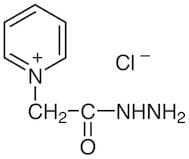
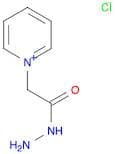
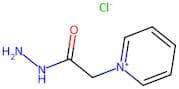
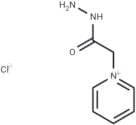
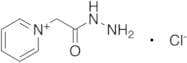
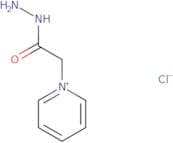
CAS 1126-58-5
:Girard's
Descrição:
O reagente Girard's T, também conhecido como 2,4-dinitrofenilhidrazina (DNPH), é um composto químico comumente utilizado em química orgânica para a identificação e caracterização de compostos carbonílicos, como aldeídos e cetonas. É caracterizado por sua capacidade de formar derivados de hidrazona estáveis ao reagir com grupos carbonílicos, que podem ser facilmente isolados e analisados. O reagente é tipicamente um sólido cristalino amarelo a laranja, e seus derivados frequentemente exibem pontos de fusão distintos, auxiliando na identificação do composto carbonílico original. O reagente Girard's T também é notável por sua sensibilidade e especificidade, tornando-o uma ferramenta valiosa em aplicações laboratoriais e industriais, incluindo a análise de produtos farmacêuticos e amostras ambientais. Além disso, é importante manusear este reagente com cuidado devido à sua potencial toxicidade e à necessidade de medidas de segurança adequadas durante o uso. No geral, o reagente Girard's T desempenha um papel significativo na síntese orgânica e na química analítica.
Fórmula:C7H10N3O·Cl
InChI:InChI=1S/C7H9N3O.ClH/c8-9-7(11)6-10-4-2-1-3-5-10;/h1-5H,6,8H2;1H
Chave InChI:InChIKey=NDXLVXDHVHWYFR-UHFFFAOYSA-N
SMILES:C(C(NN)=O)[N+]=1C=CC=CC1.[Cl-]
Sinónimos:- 1-(2-Hydrazino-2-oxoethyl)pyridinium chloride
- 1-(2-Hydrazinyl-2-Oxoethyl)Pyridinium Chloride
- 1-(2-Hydrazinyl-2-oxoethyl)pyridin-1-iumchloride
- 1-(Carboxymethyl)pyridinium chloride, hydrazide
- 1-[(Hydrazinecarbonyl)methyl]pyridin-1-ium chloride
- 1126-58-5
- Girard's P reagent
- Girard-P reagent
- Pyridinioacetohydrazide chloride
- Pyridinium, 1- (2-hydrazino-2-oxoethyl)-, chloride
- Pyridinium, 1-(2-Hydrazinyl-2-Oxoethyl)-, Chloride (1:1)
- Pyridinium, 1-(carboxymethyl)-, chloride, hydrazide
- Ver mais sinónimos
Ordenar por
Pureza (%)
0
100
|
0
|
50
|
90
|
95
|
100
9 produtos.
Girard's Reagent P
CAS:Fórmula:C7H10ClN3OPureza:>95.0%(T)Cor e Forma:White to Light yellow to Light orange powder to crystalPeso molecular:187.631-(2-Hydrazinyl-2-oxoethyl)pyridin-1-ium chloride
CAS:Fórmula:C7H10ClN3OPureza:97%Cor e Forma:SolidPeso molecular:187.62681-(2-Hydrazinyl-2-oxoethyl)pyridin-1-ium chloride
CAS:1-(2-Hydrazinyl-2-oxoethyl)pyridin-1-ium chloridePureza:97%Peso molecular:187.63g/molGirard's reagent P
CAS:Fórmula:C7H10ClN3OPureza:≥ 95.0%Cor e Forma:White to light yellow or light orange crystalline powderPeso molecular:187.63Girard's Reagent P
CAS:Girard's Reagent P, a cationic hydrazine compound, serves as a derivatization agent for the quantification of glycans, oxysterols, and 5-methylcytosineFórmula:C7H10N3O·ClCor e Forma:SolidPeso molecular:187.63Girard's Reagent P
CAS:Produto ControladoApplications Girard’s reagent used in the identification and quantification of protein carbonylation as well as in the modification of nucleosides and nucleotides. Used in the preparation of potent photoactive agents.
References Mirzaei, H., et al.: J. Chrom. A, 1134, 122 (2007); Kanofsky, J.R., et al.: Photochem. Photobiol., 73, 349 (2001);Fórmula:C7H10N3O•ClCor e Forma:NeatPeso molecular:152.183545Girard's reagent P
CAS:Girard's reagent P is a mixture of phenylhydrazine and p-chloro-phenylhydrazine. It is used as a chemical test for the detection of carbonyl groups in organic compounds. This test has been shown to be sensitive to carotenoids, which are found in human serum or urine samples. Girard's reagent P can be used to identify cancer tissues by detecting the presence of hydroxyl groups that are found in the amino acids methionine and cysteine. The hydroxyl group reacts with the phenylhydrazine component of Girard's reagent P, giving off a purple color. Additionally, Girard's reagent P can be used in conjunction with other chemicals to identify specific types of cancer cells such as cerebrotendinous xanthomatosis and neuroblastoma, which have chemical structures that contain hydroxyl groups.Fórmula:C7H10ClN3OPureza:Min. 95%Cor e Forma:White PowderPeso molecular:187.63 g/mol1-(2-Hydrazinyl-2-oxoethyl)pyridin-1-ium chloride
CAS:Fórmula:C7H10ClN3OPureza:97%Cor e Forma:SolidPeso molecular:187.63