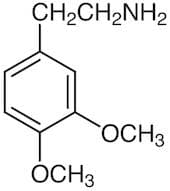
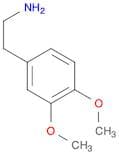
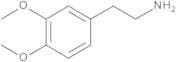
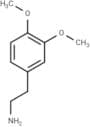
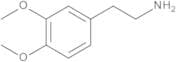
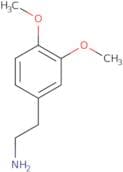
CAS 120-20-7
:3,4-Dimetoxifenetilamina
- 2-(3,4-Dimethoxyphenyl)-1-aminoethane
- 2-(3,4-Dimethoxyphenyl)ETHYLAMINE
- 2-(3,4-Dimethoxyphenyl)ethan-1-amine
- 2-(3,4-Dimethoxyphenyl)ethanamine
- 2-(3,4-Dimethoxyphenyl)ethaneamine
- 2-(3,4-Dimethyloxyphenyl)ethylamine Homoveratrylamine
- 3,4-Di-O-methyldopamine
- 3,4-Dimethoxy Phenylethylamine
- 3,4-Dimethoxy-β-phenylethylamine
- 3,4-Dimethoxybenzeneethanamine
- 3,4-Dimethoxyphenethylamin
- 3,4-Dimethoxyphenethylamine
- 3,4-Dimethyloxy Phenylethylamine
- 3,4-DimethyloxyPhenylethylamine
- 3,4-Dimetoxifenetilamina
- Akos 235-24
- Akos Bbs-00003591
- Akos Ncg1-0105
- Benzeneethanamine, 3,4-dimethoxy-
- Dimpea
- Dmpe
- Dmpea
- Dopamine dimethyl ether
- Ethylamine, 2-(3,4-Dimethoxyphenylene)-
- Homoveratrylamin
- Homoveratrylamine
- Nsc 16948
- Nsc 26152
- Nsc 6328
- O,O-Dimethyldopamine
- Phenethylamine, 3,4-dimethoxy-
- Ver mais sinónimos
Homoveratrylamine
CAS:Fórmula:C10H15NO2Pureza:>98.0%(GC)(T)Cor e Forma:Colorless to Red to Green clear liquidPeso molecular:181.24Dopamine Related Compound C (2-(3,4-Dimethoxyphenyl)ethan-1-amine)
CAS:Amino-naphthols and other amino-phenols, their ethers and esters, other than those cont more than one kind of oxygen function; salts thereof, nesoiFórmula:C10H15NO2Cor e Forma:Yellow Brown LiquidPeso molecular:181.110282-(3,4-dimethoxyphenyl)ethan-1-amine
CAS:Fórmula:C10H15NO2Pureza:98%Cor e Forma:LiquidPeso molecular:181.2316Ref: IN-DA000Q05
5g24,00€10gA consultar1kg194,00€25g28,00€50g31,00€5kgA consultar100g46,00€250g73,00€500g124,00€50kgA consultar100kgA consultarDopamine EP Impurity C (Dopamine USP Related Compound C)
CAS:Fórmula:C10H15NO2Cor e Forma:Colorless LiquidPeso molecular:181.242-(3,4-Dimethoxyphenyl)ethanamine
CAS:Produto ControladoFórmula:C10H15NO2Cor e Forma:NeatPeso molecular:181.233,4-Dimethoxyphenethylamine
CAS:3,4-Dimethoxyphenethylamine is a human endogenous metabolite.Fórmula:C10H15NO2Pureza:95.19%Cor e Forma:Clear Yellowish Liquid LiquidPeso molecular:181.23Homoveratrylamine
CAS:Produto ControladoApplications A methylated metabolite of Dopamine (D533780); a potent inhibitor of brain mitochondrial respiration used in Parkinson’s disease studies.
References Gluck, M.R. et al.: J. Neurochem., 91, 788 (2004); Charlton, C.G. et al.: Life Sci., 66, 2159 (2000);Fórmula:C10H15NO2Cor e Forma:Light YellowPeso molecular:181.23Homoveratrylamine
CAS:Produto ControladoHomoveratrylamine is a dopamine-based analog of mivacurium chloride that is used as a pharmacological agent. Homoveratrylamine has been shown to be an effective blocker of the enzyme dopamine β-hydroxylase and is used to inhibit the synthesis of norepinephrine and epinephrine. It is also used in kinetic studies to produce stable complexes with dibutyltin oxide, which are then used to determine the kinetic energy of amines. Homoveratrylamine has been found in urine samples at concentrations of up to 4% and has shown no toxicological effects in animal studies or human clinical trials.
Fórmula:C10H15NO2Pureza:Min. 95%Cor e Forma:Clear LiquidPeso molecular:181.23 g/mol