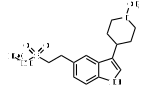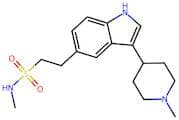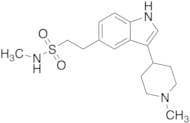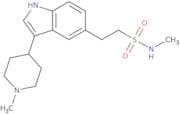
CAS 121679-13-8
:Naratriptano
- N-Methyl-3-(1-methyl-4-piperidinyl)-1H-indole-5-ethanesulfonamide
- N-Methyl-3-(1-methyl-4-piperidyl)indole-5-ethanesulfonamide
- Naratriptan
- 1H-Indole-5-ethanesulfonamide, N-methyl-3-(1-methyl-4-piperidinyl)-
N-methyl-2-[3-(1-methylpiperidin-4-yl)-1H-indol-5-yl]ethane-1-sulfonamide
CAS:Fórmula:C17H25N3O2SPureza:98%Cor e Forma:SolidPeso molecular:335.4643Naratriptan
CAS:Naratriptan is a selective agonist of 5-HT1 receptor and is is used for the treatment of migraine headaches.Fórmula:C17H25N3O2SPureza:99.08%Cor e Forma:SolidPeso molecular:335.47Ref: TM-T8666
1mg39,00€2mg50,00€5mg73,00€10mg92,00€25mg166,00€50mg240,00€100mg360,00€1mL*10mM (DMSO)88,00€Naratriptan
CAS:Produto ControladoApplications Naratriptan is a triptan drug that is used for the treatment of migraine headaches.
References Dulery, B.D., et al.: J. Pharm. Biomed. Anal., 15, 1009 (1997), Havanka, H., et al.: Clin. Ther., 22, 970 (2000),Fórmula:C17H25N3O2SCor e Forma:NeatPeso molecular:335.464Naratriptan
CAS:Naratriptan is a non-steroidal anti-inflammatory drug that belongs to the group of triptans. Naratriptan has been shown to be effective against migraine headaches, although its efficacy may depend on the individual's susceptibility to side effects. This drug has been shown to bind to 5HT receptors in rat ileum and vas deferens, which are involved in the physiological effects of naratriptan. Naratriptan also inhibits the release of inflammatory mediators such as histamine and serotonin from mast cells and platelets, respectively. Naratriptan has been shown to cause cardiac abnormalities such as tachycardia and hypertension in rats. These adverse effects have not been observed in humans, but it is possible that they may occur at higher doses or in certain populations (e.g., children).
Fórmula:C17H25N3O2SPureza:Min. 95%Peso molecular:335.47 g/mol
![N-methyl-2-[3-(1-methylpiperidin-4-yl)-1H-indol-5-yl]ethane-1-sulfonamide](/_next/image/?url=https%3A%2Fstatic.cymitquimica.com%2Fproducts%2FIN%2Fthumb%2FDA0015K1.jpg&w=3840&q=75)