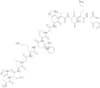
CAS 122018-58-0
:PLP (139-151)
Descrição:
PLP, ou fosfato de piridoxal, é a forma ativa da vitamina B6 e desempenha um papel crucial como coenzima em várias reações bioquímicas, particularmente no metabolismo de aminoácidos. É caracterizado por sua capacidade de participar em reações de transaminação, descarboxilação e racemização, facilitando a conversão de aminoácidos e a síntese de neurotransmissores. A substância é um pó cristalino amarelo que é solúvel em água e exibe um perfil de estabilidade dependente do pH, sendo mais estável em condições neutras a ligeiramente alcalinas. O PLP é essencial para o funcionamento adequado das enzimas envolvidas no metabolismo de carboidratos, lipídios e aminoácidos, tornando-o vital para numerosos processos fisiológicos. A deficiência de PLP pode levar a vários problemas de saúde, incluindo anemia e distúrbios neurológicos. Seu número CAS, 122018-58-0, identifica-o de forma única em bancos de dados químicos, auxiliando em contextos de pesquisa e regulamentação. No geral, o PLP é um composto bioquímico significativo com papéis diversos na saúde humana e no metabolismo.
Fórmula:C72H104N20O17
Sinónimos:- Proteolipid Protein
- Myelin Proteolipid Protein Fragment (139-151)
- (Ser140)-Myelin Proteolipid Protein (139-151), Depalmitoylated, Human, Bovine, Dog, Mouse, Rat
- [Ser140]-Myelin Proteolipid Protein (139-151) (Human, Bovine, Dog, Mouse, Rat)
- H2N-Hslgkwlghpdkf-Oh
Ordenar por
Pureza (%)
0
100
|
0
|
50
|
90
|
95
|
100
Foram encontrados 7 produtos.
(Ser¹⁴⁰)-Myelin Proteolipid Protein (139-151) (depalmitoylated) (human, bovine, dog, mouse, rat)
CAS:This fragment of myelin proteolipid protein is an encephalitogenic determinant, able to bind to diverse sets of T cell receptors.Fórmula:C72H104N20O17Pureza:97.0%Cor e Forma:WhitePeso molecular:1521.74[SER140]-PLP(139-151)
CAS:[SER140]-PLP(139-151) is a polypeptide fragment of the lipid protein of myelin.Fórmula:C72H104N20O17Pureza:98%Cor e Forma:SolidPeso molecular:1521.72PLP (139-151)
CAS:PLP (139-151) is derived from Proteolipid Protein (PLP), an epitope of immunodominant encephalitogenic PLP and is involved in promoting encephalomyelitis.Fórmula:C72H104N20O17Pureza:Min. 95%Cor e Forma:PowderPeso molecular:1,520.8 g/molMyelin PLP (139-151)
CAS:Myelin PLP (139-151) is a basic protein that belongs to the family of oligodendrocyte-myelin glycoproteins. It has been shown to activate toll-like receptor, which is a pattern recognition receptor that recognizes invading pathogens and triggers an immune response. Myelin PLP (139-151) may play a role in the development of autoimmune diseases, as it has been found to be a target for autoantibodies. It has also been shown to have antioxidative properties, which may help prevent free radical damage in the brain and other tissues. The monoclonal antibody against this protein can be used for immunohistological analysis.Fórmula:C72H104N20O17Pureza:Min. 95%Peso molecular:1,521.72 g/molPLP (139-151)
CAS:PLP (139-151) peptide is a fragment of myelin proteolipid protein (PLP or lipophilin), from amino acid residue 139 to 151 (HCLGKWLGHPDKF – CAS 131334-43-5 ). Myelin proteolipid protein is the major myelin protein from the central nervous system. PLP (139-151) peptide is commonly used to induce experimental autoimmune encephalomyelitis (EAE) in SJL/J mice. The PLP (139-151) peptide C140S is mutant of the wild-type version where the cystein is replaced by a serine to make the peptide more stable without impacting its antigenic activity.Fórmula:C72H104N20O17Peso molecular:1,521.7 g/molMyelin PLP (139-151) acetate
CAS:Myelin PLP (139-151) acetate salt is a cyclic peptide that is derived from the sequence of human myelin basic protein and contains the sequence PLP (139-151). This peptide has shown to have antioxidative properties. It has been shown to have an inhibitory effect on the production of proinflammatory cytokines in experimental autoimmune encephalomyelitis (EAE), which is a model for multiple sclerosis. The peptide has also been shown to block signal pathways, such as toll-like receptor 4, and decrease Ca2+ overload. Clinical relevance remains unclear.
Fórmula:C72H104N20O17•(C2H4O2)xPureza:Min. 95%Peso molecular:1,521.76 g/mol


![[SER140]-PLP(139-151)](/_next/image/?url=https%3A%2Fstatic.cymitquimica.com%2Fproducts%2FTM%2Fthumb%2FTP1312.jpg&w=3840&q=75)