CAS 123-38-6
:Propanal
Descrição:
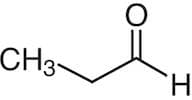
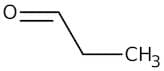
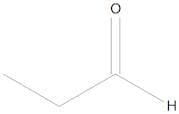
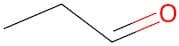
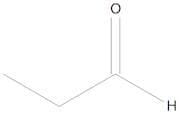
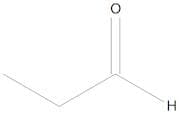
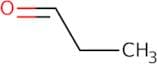
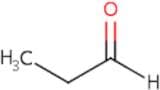
Propanal, também conhecido como propionaldeído, é um aldeído alifático com a fórmula molecular C3H6O. É caracterizado por uma cadeia de três carbonos com um grupo funcional aldeído terminal, que confere propriedades químicas distintas. Propanal é um líquido incolor à temperatura ambiente, exibindo um odor pungente e frutado. É solúvel em água e solventes orgânicos, tornando-o versátil em várias aplicações. O composto é inflamável e deve ser manuseado com cuidado, pois pode formar misturas explosivas com o ar. Propanal é utilizado principalmente na síntese de outros produtos químicos, incluindo produtos farmacêuticos e agentes aromatizantes, e serve como intermediário na síntese orgânica. Sua reatividade é típica dos aldeídos, permitindo que participe de várias reações químicas, como oxidação para formar ácido propanoico ou redução para produzir propanol. Além disso, Propanal pode passar por reações de condensação, tornando-o valioso na produção de moléculas orgânicas maiores. No geral, Propanal é um composto importante tanto em ambientes industriais quanto laboratoriais devido à sua reatividade e utilidade na síntese orgânica.
Fórmula:C3H6O
InChI:InChI=1/C3H6O/c1-2-3-4/h3H,2H2,1H3
Chave InChI:InChIKey=NBBJYMSMWIIQGU-UHFFFAOYSA-N
SMILES:C(C=O)C
Sinónimos:- 1-Propanal
- 1-Propanone
- Ethylcarboxaldehyde
- Methylacetaldehyde
- Nsc 6493
- Propaldehyde
- Propanaldehyde
- Propional
- Propionaldehido
- Propionaldehyd
- Propionaldehyde
- Propionic aldehyde
- Propyl aldehyde
- Propylaldehyde
- Propylic aldehyde
- n-Propanal
- n-Propionaldehyde
- Propionaldhyde
- propanal
- Proprionaldehyde
- Aldehyde C(3)
- Propanal
- ethanecarbaldehyde
- ALDEHYDE C3
- femanumber2923
- Aldehyde propionique
- TRIMETHYLENE GLYCOL
- aldehydepropionique(french)
- C2H5CHO
- aldehydepropionique
- FEMA 2923
- Ver mais sinónimos
Ordenar por
Pureza (%)
0
100
|
0
|
50
|
90
|
95
|
100
17 produtos.
Propionaldehyde
CAS:Fórmula:C3H6OPureza:>98.0%(GC)Cor e Forma:Colorless clear liquidPeso molecular:58.08Propionaldehyde, 97%
CAS:Propionaldehyde applications include as an intermediate, in pharmaceuticals, perfumes, plastics and polyols or polyhydric alcohols. It is also used as a precursor to trimethylolethane (CH3C(CH2OH)3) through a condensation reaction with formaldehyde, this triol is an important intermediate in the proFórmula:C3H6OPureza:97%Cor e Forma:Clear colorless to pale yellow, LiquidPeso molecular:58.08Propionaldehyde
CAS:Fórmula:CH3CH2CHOPureza:≥ 98.0%Cor e Forma:Clear, colourless liquidPeso molecular:58.08Propanal
CAS:PropanalFórmula:C3H6OPureza:≥95%Cor e Forma: clear. almost colourless liquidPeso molecular:58.08g/molPropionaldehyde (>80%)
CAS:Produto ControladoFórmula:C3H6OPureza:>80%Cor e Forma:ColourlessPeso molecular:58.08Propionaldehyde
CAS:Produto ControladoStability Moisture Sensitive, Volatile
Applications Propionaldehyde is a reagent combined with formaldehyde to produce trimethylolethane, a compound important in the production of alkyd resins. Propionaldehyde is also a strong inducer of aneuploidy in cultured Chinese hamster cells.
Not a dangerous good if item is equal to or less than 1g/ml and there is less than 100g/ml in the package
References Furnus, C., et al.: Mutagenesis, 5, 323 (1990); Kraft, W. & Forschirm, A.: J. Am. Oil Chem. Soc., 36, 164 (1959); Laemmle, G., et al.: Ind. Eng. Chem., 52, 33 (1960);Fórmula:C3H6OCor e Forma:ColourlessPeso molecular:58.08Propionaldehyde
CAS:Propionaldehyde is a simple aliphatic aldehyde that is used in the synthesis of other compounds. It can be synthesized by oxidizing propylene with an oxidation catalyst such as manganese dioxide or platinum metal under pressure. Propionaldehyde can also be formed by the direct oxidation of propanol using ferric chloride, but this reaction has been shown to produce a mixture of products. Propionaldehyde can be produced by the oxidation of acetaldehyde with hydrogen peroxide, which produces formaldehyde and acetone. In addition to its use as a chemical reagent, propionaldehyde has been used as an additive in nutrient solutions for experiments in plant physiology and microbiology. The kinetic data for reactions involving propionaldehyde have been determined using methyl ethyl ketone (MEK) as the solvent and copper(II) sulfate pentahydrate as the catalyst. The redox potential for this molecule is -0.034 volts at pH 7,Fórmula:C3H6OPureza:Min. 95%Cor e Forma:Colorless Clear LiquidPeso molecular:58.08 g/molPropionaldehyde (Propanal) pure, 97%
CAS:Fórmula:C3H6OPureza:min. 97%Cor e Forma:Clear, Yellow, LiquidPeso molecular:58.08