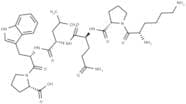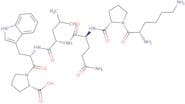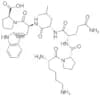
CAS 130348-99-1
:Fragmento de proteína C-reativa 201-206
Descrição:
Fragmento de proteína C-reativa 201-206, associado ao número CAS 130348-99-1, é um peptídeo derivado da proteína C-reativa (PCR), que é uma proteína de fase aguda produzida pelo fígado em resposta à inflamação. Este fragmento específico consiste em uma sequência de aminoácidos que desempenha um papel na resposta imunológica e na regulação da inflamação. Caracteristicamente, é hidrofílico, o que influencia sua solubilidade em ambientes aquosos, e pode apresentar propriedades imunogênicas, potencialmente provocando uma resposta imune. O fragmento é frequentemente estudado no contexto de doenças inflamatórias e pode servir como um biomarcador para várias condições, incluindo infecções e distúrbios autoimunes. Sua estrutura e função podem fornecer insights sobre os mecanismos de inflamação e a resposta do corpo a lesões ou infecções. Além disso, as interações do fragmento com outras proteínas e células no sistema imunológico são de grande interesse tanto em ambientes clínicos quanto de pesquisa.
Fórmula:C38H57N9O8
Sinónimos:- C-Reactive Protein (CRP) (201-206)
- H-Lys-Pro-Gln-Leu-Trp-Pro-OH
- C-Reactive Protein (201-206)
Ordenar por
Pureza (%)
0
100
|
0
|
50
|
90
|
95
|
100
2 produtos.
C-Reactive Protein (CRP) (201-206)
CAS:C-Reactive Protein (CRP) (201-206) is the peptide fragment of C-Reactive Protein. CRP is a cardiovascular risk marker and may promote atherogenesis.Fórmula:C38H57N9O8Pureza:98%Cor e Forma:SolidPeso molecular:767.91C-Reactive Protein (CRP) (201-206)
CAS:C-reactive protein (CRP) is a protein that is synthesized by the liver in response to inflammation. It has a variety of functions, including the regulation of energy metabolism and glycolysis. CRP also has a role in regulating production of neutrophil chemotactic factors, cytokines, and reactive oxygen species. In addition, it binds to zymosan and can be used as an inflammatory marker in medical diagnostics. The amino acid sequence for CRP was first determined in 1971. The primary structure for CRP consists of two alpha helices connected by two beta strands. Its tertiary structure consists of four alpha helices that are connected through loops and turns by three beta sheets with an additional loop connecting one helix to the other strand. CRP contains no disulfide bonds or hydrophobic interactions; instead, it relies on hydrogen bonds to maintain its shape.br>br>Fórmula:C38H57N9O8Pureza:Min. 95%Peso molecular:767.92 g/mol