CAS 136461-80-8
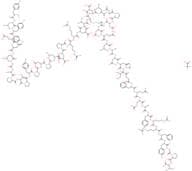
:H-TYR-LEU-TYR-GLN-TRP-LEU-GLY-ALA-PRO-VAL-PRO-TYR-PRO-ASP-PRO-LEU-GLA-PRO-ARG-ARG-GLA-VAL-CYS-GLA-LEU-ASN-PRO-ASP-CYS-ASP-GLU-LEU-ALA-ASP-HIS-ILE-GLY-PHE-GLN-GLU-ALA-TYR-ARG-ARG-PHE-TYR-GLY-PRO-VAL-OH
Descrição:
A substância química com o nome "H-TYR-LEU-TYR-GLN-TRP-LEU-GLY-ALA-PRO-VAL-PRO-TYR-PRO-ASP-PRO-LEU-GLA-PRO-ARG-ARG-GLA-VAL-CYS-GLA-LEU-ASN-PRO-ASP-CYS-ASP-GLU-LEU-ALA-ASP-HIS-ILE-GLY-PHE-GLN-GLU-ALA-TYR-ARG-ARG-PHE-TYR-GLY-PRO-VAL-OH" e número CAS "136461-80-8" é um peptídeo composto por uma sequência de aminoácidos. Este peptídeo exibe características típicas de polipeptídeos, incluindo uma sequência específica que determina sua função biológica e atividade. A presença de vários aminoácidos, como tirosina (Tyr), leucina (Leu) e arginina (Arg), sugere papéis potenciais em sinalização, suporte estrutural ou atividade enzimática. A estrutura do peptídeo pode influenciar sua solubilidade, estabilidade e interação com alvos biológicos, como receptores ou enzimas. Além disso, o grupo hidroxila terminal indica que pode ter propriedades específicas relacionadas à sua reatividade e interação com outras moléculas. No geral, as características deste peptídeo são definidas por sua composição de aminoácidos, sequência e conformação estrutural, que coletivamente contribuem para sua importância biológica.
Fórmula:C269H381N67O82S2
Sinónimos:- Osteocalcin (Human, Gla17,21,24)
- Osteocalcin (1-49) (Human)
- Tyr-Leu-Tyr-Gln-Trp-Leu-Gly-Ala-Pro-Val-Pro-Tyr-Pro-Asp-Pro-Leu-Gla-Pro-Arg-Arg-Gla-Val-Cys-Gla-Leu-Asn-Pro-Asp-Cys-Asp-Glu-Leu-Ala-Asp-His-Ile-Gly-Phe-Gln-Glu-Ala-Tyr-Arg-Arg-Phe-Tyr-Gly-Pro-Val
- Ylyqwlgapvpypdpl-Gla-Prr-Gla-Vc-Gla-Lnpdcdeladhigfqeayrrfygpv
- [Gla17,21,24]-Osteocalcin (1-49)
- Gla17,21,24-Osteocalcin (Human)
- Bone Gla Protein (Human)
Ordenar por
Pureza (%)
0
100
|
0
|
50
|
90
|
95
|
100
4 produtos.
Osteocalcin (1-49) (human)
CAS:Bachem ID: 4034491.
Fórmula:C269H381N67O82S2Pureza:93.2%Cor e Forma:WhitePeso molecular:5929.52Gla17,21,24-Osteocalcin (Human)
CAS:Gla17,21,24-Osteocalcin is a peptide that belongs to the family of proteins that have bone-building properties. Osteocalcin is produced by osteoblasts and its production increases in response to activation by parathyroid hormone. It is also an activator of ion channels and has been found to be involved in regulating calcium homeostasis. Gla17,21,24-Osteocalcin has been shown to inhibit protein interactions with the receptor and ligand. This peptide also binds to receptor sites on cells and inhibits the activity of G protein-coupled receptors (GPCRs).
Fórmula:C269H381N67O82S2Pureza:Min. 95%Peso molecular:5,929.4 g/molOsteocalcin (1-49) (human) acetate salt
CAS:Osteocalcin is a protein that is synthesized by osteoblasts and released into the extracellular matrix. It is involved in the regulation of bone metabolism, including the synthesis and mineralization of bone matrix. Osteocalcin has been shown to be a marker for osteoarthritis, which may be due to its role in cartilage degradation. This protein has also been implicated in prognosis and diagnosis of this condition. Osteocalcin can be used as a marker for monitoring disease-modifying therapies such as chondroitin sulfate or cross-linking agents.Fórmula:C269H381N67O82S2Pureza:Min. 95%Peso molecular:5,929.44 g/mol