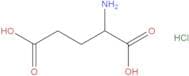
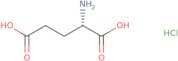
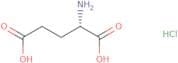
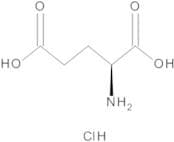
CAS 138-15-8
:Ácido L(+)-glutâmico cloridrato
Descrição:
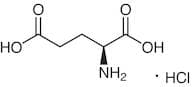
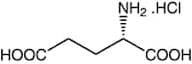
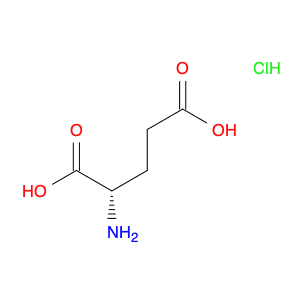
Ácido L(+)-glutâmico cloridrato, com o número CAS 138-15-8, é o sal cloridrato do ácido L-glutâmico, um aminoácido que desempenha um papel crucial no metabolismo celular e na neurotransmissão. Este composto é tipicamente um pó cristalino branco que é solúvel em água, tornando-o útil em várias aplicações, incluindo aromatização de alimentos e como suplemento dietético. O ácido L-glutâmico é classificado como um aminoácido não essencial, o que significa que pode ser sintetizado pelo corpo. É conhecido por seu papel como neurotransmissor excitatório no sistema nervoso central, contribuindo para funções cognitivas como aprendizado e memória. Além de sua importância biológica, Ácido L(+)-glutâmico cloridrato é frequentemente utilizado na indústria farmacêutica e em ambientes de pesquisa. Seu perfil de segurança é geralmente favorável, embora a ingestão excessiva possa levar a efeitos adversos em indivíduos sensíveis. No geral, este composto é valorizado por suas propriedades funcionais em contextos biológicos e industriais.
Fórmula:C5H10ClNO4
InChI:InChI=1/C5H9NO4.ClH/c6-3(5(9)10)1-2-4(7)8;/h3H,1-2,6H2,(H,7,8)(H,9,10);1H/t3-;/m0./s1
Chave InChI:InChIKey=RPAJSBKBKSSMLJ-DFWYDOINSA-N
SMILES:[C@H](CCC(O)=O)(C(O)=O)N.Cl
Sinónimos:- 2-Aminopentanedioic acid hydrochloride
- <span class="text-smallcaps">L</span>(+)-Glutamic acid hydrochloride
- <span class="text-smallcaps">L</span>-Glutamic acid monohydrochloride
- <span class="text-smallcaps">L</span>-Glutamic acid, hydrochloride (1:1)
- Acidalin
- Acidogen
- Acidoride
- Acidothyn
- Acidulen
- Acidulin
- Aciglumin
- Aclor
- Acridogen
- Acridoride
- Antalka
- Gastuloric
- Glusatin
- Glutamic Acid Hydrochloride (1:1)
- Glutamic acid hydrochloride
- Glutamic acid monohydrochloride
- Glutamic acid, hydrochloride, <span class="text-smallcaps">L</span>-
- Glutamidin
- Glutan HCl
- Glutan Hydrochloric
- Glutan hydrochloride
- Glutasin
- Hydrionic
- Hypochylin
- L-Glutamic Acid HCL
- Muriamic
- NSC 9239
- Pepsdol
- Pepsidol
- Glutamic acid, hydrochloride, L-
- L-Glutamic acid, hydrochloride (1:1)
- L-(+)-Glutamic acid hydrochloride
- L-Glutamic acid, hydrochloride
- L-Glutamic acid hydrochloride
- L-(+)-Glutamic Acid Hydrochloride
- GLUTAMIC ACID HCL
- L-GLU HCL
- L-2-AMINOGLUTARIC ACID HYDROCHLORIDE
- 2-aminopentanedioicacidhydrochloride
- H-GLU-OH HCL
- [S]-2-AMINOPENTANEDIOIC ACID HYDROCHLORIDE
- (S)-2-AMINOGLUTARIC ACID HYDROCHLORIDE
- Ver mais sinónimos
Ordenar por
Pureza (%)
0
100
|
0
|
50
|
90
|
95
|
100
10 produtos.
L-Glutamic Acid Hydrochloride
CAS:Fórmula:C5H9NO4·HClPureza:>98.0%(T)(HPLC)Cor e Forma:White to Almost white powder to crystalPeso molecular:183.59L-Glutamic acid hydrochloride, 99%
CAS:L-Glutamic acid hydrochloride is used as a digestive aid. It is used in cell culture as a component of MEM non-essential amino acids solution. It has been used as a nitrogen source in the culture of Aspergillus fumigatus NRRL 2436 for fumagillin production. This Thermo Scientific Chemicals brand proFórmula:C5H10ClNO4Pureza:99%Cor e Forma:White, Crystals or powder or crystalline powderPeso molecular:183.59L-Glutamic Acid Hydrochloride
CAS:Glutamic acid and its saltsFórmula:C5H9NO4·HCICor e Forma:PowderPeso molecular:286.96545Glutamic acid, hydrochloride
CAS:Fórmula:C5H10ClNO4Pureza:98%Cor e Forma:SolidPeso molecular:183.5902L-Glutamic acid hydrochloride
CAS:Fórmula:C5H9NO4HClPureza:(Titration) ≥ 99.0%Cor e Forma:White to almost white powderPeso molecular:183.59L-Glutamic acid hydrochloride
CAS:L-Glutamic acid hydrochloride is a high quality reagent that is used as an intermediate in the production of fine chemicals. It is also used as a useful scaffold for the synthesis of valuable compounds and as a useful building block for research chemicals. L-Glutamic acid hydrochloride can be used in reactions to produce versatile building blocks, reaction components, and other speciality chemicals.Fórmula:C5H10ClNO4Pureza:Min. 98 Area-%Peso molecular:183.59 g/molL-(+)-Glutamic acid HCl
CAS:L-(+)-Glutamic acid HCl is a monosodium salt that belongs to the group of water-soluble organic acids. It has been used as a food additive and in wastewater treatment, as well as for the production of polymers and pharmaceuticals. Glutamate can be converted to glutamic acid by hydrolysis with sodium hydroxide or other strong bases. Glutamic acid is an important biochemical precursor in the synthesis of proteins, peptides, and nucleic acids. It also functions as a neurotransmitter in the central nervous system. L-(+)-glutamic acid HCl has been shown to induce apoptosis in human HL-60 cells by increasing reactive oxygen species (ROS) levels and activating caspase-3 activity in these cells. The crystalline cellulose used in this study was obtained from cellulose powder (Avicel PH101).Fórmula:C5H9NO4·HClPureza:Min. 95%Cor e Forma:White PowderPeso molecular:183.59 g/molL-Glutamic Acid Hydrochloride
CAS:Produto ControladoFórmula:C5H9NO4·ClHCor e Forma:NeatPeso molecular:183.59